Tag Archives: entrepreneurship

The HBCUpreneur Corner – Prairie View A&M and Florida A&M’s Misha Granado & Love Grows

-1

Name: Misha N. Granado, MPH,MS

Alma Mater: Prairie View A&M University (1998), Florida A&M University (2004/2007)

Business Name & Description: Love Grows: The Relationship Consultants is a boutique firm specializing in improving all relationships, beginning with the relationship one has with self. We use a strength-based, love centered approach and offer services: Bringing Love into Existence (counseling, interactive workshops), Speaking Love into Existence (lectures) and Writing Love into Existence (books & editorials) to help our clients heal their emotional wounds in order to experience an amazing life and relationships.

What year did you found your company? 2010

What was the most exciting and/or fearful moment during your HBCUpreneur career? Love Grows is more than a business, it is a lifestyle, my purpose and life work therefore the opportunity to make a sustainable living and life doing what I love, which is to grow love is absolutely amazing. Love is one of the most sustainable, renewable resources we have and unfortunately many people are not maximizing their potential because of the various blocks (unhealed emotional wounds) that prohibit the movement of love through their life. Love Grows is doing our part to help people heal their emotional wounds in order to love self fully and others better; and in that way we are an environmental company as well, making the world a better place one relationship at a time.

In my life and as an entrepreneur, I learned quite quickly that there is no room for fear which affects my vision and critical thinking because valuable time and energy is spent thinking about the worst case scenario instead of possible solutions. Although unexpected situations may occur, I now choose to view them as opportunities to be creative, to find the most optimal solution to this new challenge. A ‘challenging situation’ presented itself during the late summer when I received word that the building where I had my office had been sold (I did not know it was on the market) and myself (along with the other tenants) had to find a new space. I had only been in the office for 5 months and had invested a great amount of resources to convert the space (wood floors, painted, new fixtures, etc.). I had acquired new clients and now needed to find a new space that was inside the loop, artsy, offered 24/7 access and had beautiful energy (yes, energy is very important to my business).

Although Houston is a large city, it is somewhat challenging to locate a ‘non-traditional’ office space inside the loop that is artsy and would allow me to renovate the space to my specifications all under $1000 and this was the challenge, to locate such a space without disrupting my clients. Since I no longer operate from fear, I was able to view this as a challenge and began to explore various ‘non-traditional’ spaces to determine if any of them would work for Love Grows. During this exploration time, I also contacted the property manager at a beautiful location that was significantly out of my budget when I inquired earlier this year. Well I was in luck, this magnificent space had expanded and the new space also carried a lower price tag than the original space and Love Grows had a new home. If I would have operated in fear, I would not have thought to contact the property manager and I may have made compromises to what I wanted and needed from a space.

What made you want to start your own company? Prior to beginning Love Grows, I had 10 years counseling experience which included an adjunct professorship. I implemented a ’10 minute freestyle session’ in my Introduction to Psychology class, which provided the students with the opportunity to discuss current events or any other topic of interest. This was implemented as a way to unite the diverse student body that ranged from freshman to seniors. Trust and rapport was quickly established and these 10 minute sessions, quickly turned into a ‘therapy session’ of sorts. My students revealed all type of experiences and it became evident that these young people did not have a healthy outlet to process their feelings and when given the opportunity all they wanted (and needed to do) was get it all out. This was a class that swelled to 150 students (some of whom were not registered) who showed up every session because we were able to create a safe space to grow. After the course, many students inquired if I had a book or if I was available for individual therapy sessions. This is when I knew I had a gift, the ability to establish and nurture relationships in which people felt safe to share. Life is comprised of relationships, and the relationship one has with self, determines and influences all the relationships in one’s life. Through years of professional and personal experience, I knew that the key to improving the relationships in our lives is to improve the relationship we have with self. In the summer of 2010, I established Love Grows: The Relationship Consultants with the purpose of helping others heal their emotional wounds in order to love self and others better, which would ultimately improve their relationships.

Who was the most influential person/people for you during your time in college? At Prairie View A&M University, Drs. Janet Beal and Kevin Washington and at Florida A&M Unviersity Drs. Huberta Jackson-Lowman and Cynthia Warrick.

How do you handle complex problems? As a creative being, my complex problems require open space, I literally have to get out of the building and step into nature. I take my shoes off and wiggle my toes in the grass. It is here under the blue skies, breathing natural air and the absence of gadgets (yes, I take a notebook and pen with me on these journeys) where I begin to view the situation from all angles. I identify the resources I have access to and the ones I need to obtain. I create a plan and the steps needed to execute.

What is something you wish you had known prior to starting your company? More information about the funding available to entrepreneurs.

What do you believe HBCUs can do to spur more innovation and entrepreneurship while their students are in school either as undergraduate or graduate students? Allow more critical thinking in the classroom. Unfortunately, I think many programs are focused on teaching information and the students who have great memories are the ones who usually perform the best, repeating the information; however, I think the true key to learning is to provide a concept and allow students to build around or from it. To partner with entrepreneurs and establish a mentorship program where students have direct access to people who are actually built and are living their dream. There are infinite ways to achieve success and success varies for everyone. The opportunity to have a mentor who truly invests in his/her mentee is priceless.

How do you deal with rejection? I know I sound like I am the one repeating information now *lol* but my answer remains the same, perception. I view rejection from one as the clearing of space for another.

When you have down time how do you like to spend it? I adore art and beauty and like to spend my time engaging in both. I recently began painting (acrylic) and actually completed my first painting Dec. 1 (a great way to begin the month). I also adore traveling, especially internationally and being that relationships are my life, spending time with vintage (established) and new friends and loved ones.

-2

What was your most memorable HBCU memory? Oh wow, it has to be from my undergraduate years at PV, spending time with the ‘Cali homies’, the shenanigans that took place on the yard, the parties and the simple life we had back then which consisted of class, friends and beginning the journey of discovering who we were and who we were meant to become.

In leaving is there any advice you have for budding HBCUpreneurs?

  1. Do not be afraid to have astronomical dreams!
  2. Get a mentor, but do not ‘rewrite’ your dream to mirror another’s so much that it is no longer your own.
  3. Shift your perspective (unless you are a trust fund baby *lol*), becoming an entrepreneur will require you to redirect your discretionary funds into your business.
  4. Learn to delay your gratification, you may not be able to go to Miami for Memorial Day Weekend with your friends, but you can redirect those funds into revamping your website, purchasing other materials/equipment/etc. for the business, paying the office rent for a few months or investing in yourself by taking a course, attending a retreat, etc.
  5. An entrepreneur lives a very different life than the individual working for someone else because the entrepreneur has very different goals and aspirations. Your life and the investment of your time, energy and resources should reflect these differences.


The HBCUpreneur Corner – Prairie View A&M University’s Alysha Sample & Pearluxe

pearluxe logo-1

Name: Alysha Sample

Alma Mater: Prairie View A&M University

Business Name & Description: Pearluxe / We specialize in custom made accessories & clothing that accentuate any ensemble and appeal to the chic urbanite.

What year did you found your company? 2011

What was the most exciting and/or fearful moment during your HBCUpreneur career? My most exciting moment would have to be making my first sale. It was an exhilarating experience to know that someone admired my creativity and wanted to have a custom piece made by me.

What made you want to start your own company? I started my own company because I simply wanted to be my own boss. I’ve always known that a regular 8-5 job was just not for me because I like to be on my own schedule. Since graduation, I have learned this even more. Starting Pearluxe, gave me an opportunity to do something that I love, and nothing warms my heart more that being able to share my designs and creations with the world.

Who was the most influential person/people for you during your time in college? I would have to say the most influential person to me during my time in college was my mother, Lisa Sample. She is such an inspiration. No matter what she was there with me every step of the way and I greatly appreciate her for all that she has done and continues to do.

How do you handle complex problems? I handle complex problems by identifying the root of the issue so I can have a clear view of what the problem is. Once that is established, I face it head on and begin actively working to resolve it. I never dwell on problems because they are only temporary and once addressed they will no longer have power over you.

What is something you wish you had known prior to starting your company? I wish I would have know more about the financial side of owning a business especially when it comes to the matters of the state, such as taxes. I learned a valuable lesson early on in my business and educated myself so that I wouldn’t be faced with any similar issues moving forward.

What do you believe HBCUs can do to spur more innovation and entrepreneurship while their students are in school either as undergraduate or graduate students? I believe more one-on-one meetings and fairs with entrepreneurs would be very valuable. As a Political Science major in college, I felt that those opportunities were primarily reserved for Business majors. I also believe that school wide entrepreneurship initiatives and endeavors would be quite beneficial because I don’t believe that a person will find true happiness in their career until they are doing something that they absolutely love.

How do you deal with rejection? Dealing with rejection is something that I’ve had to deal with a few times since I started my company. You have to have a tough skin. There will be obstacles on the path to success but you will definitely become a better person and business owner because of it.

When you have down time, how do you like to spend it? I like to spend my downtime traveling, exploring new places, spending time with family and friends, reading, and watching movies.

sample

What was your most memorable HBCU memory? I would have to say the year I traveled with my school to the 2009 SWAC Championship in Birmingham, AL where we WON. That was one of the best weekends of my college career because the school spirit was so high. It was such an honor to be able to enjoy that moment with my friends and classmates.

In leaving is there any advice you have for budding HBCUpreneurs? Please research the market that you would like enter and see exactly where your type of business would fit into it. You will also need determine how your business with stand out among the competition. Once that is done, make it happen. Time waits for no man so create your opportunity and watch yourself prosper. You will definitely be glad that you did!

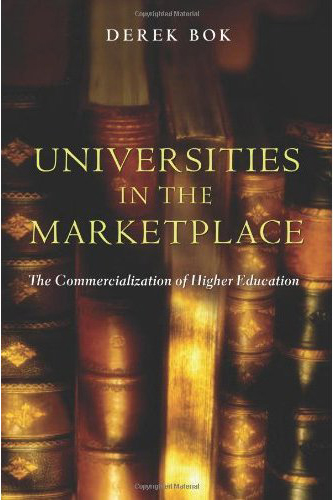
HBCU Money™ Business Book Feature – Universities in the Marketplace

Universities in the Marketplace

Is everything in a university for sale if the price is right? In this book, one of America’s leading educators cautions that the answer is all too often “yes.” Taking the first comprehensive look at the growing commercialization of our academic institutions, Derek Bok probes the efforts on campus to profit financially not only from athletics but increasingly, from education and research as well. He shows how such ventures are undermining core academic values and what universities can do to limit the damage.

Commercialization has many causes, but it could never have grown to its present state had it not been for the recent, rapid growth of money-making opportunities in a more technologically complex, knowledge-based economy. A brave new world has now emerged in which university presidents, enterprising professors, and even administrative staff can all find seductive opportunities to turn specialized knowledge into profit.

Bok argues that universities, faced with these temptations, are jeopardizing their fundamental mission in their eagerness to make money by agreeing to more and more compromises with basic academic values. He discusses the dangers posed by increased secrecy in corporate-funded research, for-profit Internet companies funded by venture capitalists, industry-subsidized educational programs for physicians, conflicts of interest in research on human subjects, and other questionable activities.

While entrepreneurial universities may occasionally succeed in the short term, reasons Bok, only those institutions that vigorously uphold academic values, even at the cost of a few lucrative ventures, will win public trust and retain the respect of faculty and students. Candid, evenhanded, and eminently readable, Universities in the Marketplace will be widely debated by all those concerned with the future of higher education in America and beyond.

The HBCUpreneur Corner – Delaware State University’s Chris Stevens & Stevens Communications & Consulting

StevensC&CFinal

Name: Chris Stevens

Alma Mater: Delaware State University, Class of 2007

Business Name & Description: Stevens Communications & Consulting (stevenscommcons.com), a multi-media business specializing in assistance with writing/editing, social media management and consulting for small businesses, as well as producing an internet radio show/podcast, “All Subjects Everything.” We also have advertising space open on the show, which is $10 per week or $40 per month for anyone who wants to advertise their business/organization/event on our show.

What year did you found your company? 2012

What was the most exciting and/or fearful moment during your HBCUpreneur career? Actually just getting started. It’s been an ongoing process these first 9 months as I’ve had to re-assess everything I thought I knew about the media industry and most important of all, myself. A social introvert starting a business that thrives on interpersonal communication has been a harrowing experience, but a necessary step.

What made you want to start your own company? I worked as a sports reporter for community newspapers for 5 years and I didn’t like the direction the business was going in as well as I wanted to do my own thing and not have to answer to anyone but myself and my clients/customers. So I took the things I knew best (social media, writing, editing) and decided to strike out on my own.

Who was the most influential person/people for you during your time in college? Two professors for different reasons. Dr. Yohuru Williams, who is now at Fairfield University, and DeWayne Wickham, a syndicated columnist with USA Today, who was a scholar-in-residence at DSU for a while. Dr. Williams gave me the courage and confidence to be a student of life, just to keep learning and incorporate what you’ve learned into whatever you’re doing in life while Professor Wickham showed me how vital networking is and I’m still putting those lessons about “who you know” into practice.

How do you handle complex problems? For me, asking questions is vital. You never want to have misunderstanding or miscommunication with a client or customer, so you always ask questions to make sure you have everything tailored to their needs and if you fall short, keep trying until you get it right. My first client, I did some serious re-writing for and it was a fun and challenging experience that let me know that this wasn’t going to be easy, but it would be rewarding.

What is something you wish you had known prior to starting your company? Never a good idea to start cold. If you’re starting a business, be sure to save some money and be in a position to weather some rough times. I left my job thinking I could apply my knowledge and start off well. I’ve had some lean periods because of that, but I wouldn’t change the journey because I get to share that experience now and hopefully someone else will learn from the mistakes I’ve made.

What do you believe HBCUs can do to spur more innovation and entrepreneurship while their students are in school either as undergraduate or graduate students? Certainly one way is to show them the perils of traditional employment. You can see it everyday – people who give their all to improve someone else’s bottom line can find themselves jobless at the drop of a hat. Depending on someone else signing your check to live life is so overrated. Also, HBCUs can draw on their own history as self-starters and self-reliant institutions to foster that spirit of entrepreneurship, that it’s “in the blood,” so to speak.

How do you deal with rejection? I hate rejection in ALL facets of my life, but surprisingly, business rejection is much easier to take because I know it’s not personal. It bothers me, but the key is to keep trying. The no’s are plentiful, but the one or two acceptances you get are your chance to make an impression and set yourself up for something bigger. The key is to keep plugging away. If you believe in your vision and what you’re offering, sooner or later, people will see that and will be willing to help and take a chance on you and your business.

When you have down time how do you like to spend it? I’m always reading, I just finished up “The Warmth of Other Suns” by Isabel Wilkerson which is a phenomenal book about the Great Migration of Blacks from the South to the Midwest, East and West Coasts. I love music also, I blog about music on my personal website (chrisstevenssite.com) from time to time and I love discussing/arguing sports with just about anyone.

What was your most memorable HBCU memory? It’s hard to pinpoint just one because I’ve had so many, so I’ll just say the experience of being a part of the HBCU experience. My own good times at Del State, visiting other HBCUs while working for the Hornet newspaper, it was a special time for me and I’m proud to be a part of HBCU tradition and I will stand for Black Colleges until I can’t stand up anymore. And even then I’ll be shouting for them from my bed or wheelchair.

HBCUPreneurHeadShot

In leaving is there any advice you have for budding HBCUpreneurs? A few things to note: Have a vision, be confident in that vision and go for it. You never want to spend the rest of your life wondering “Woulda, coulda, shoulda.” My mother always tells me “nothing beats a failure but a try,” so go for it. If there’s an idea that you have that you think people can benefit from and that you can execute for them, float it out there, prepare yourself for the road ahead and make it happen.

The HBCUpreneur Corner – Morgan State’s Jarrett Carter, Sr. & Carter Media Enterprises

carterlogo

Name: Jarrett Carter Sr.

Alma Mater: Morgan State University, Class of 2003

Business Name & Description: Carter Media Enterprises, a new media development and consulting company with focus on coverage of African-American news and lifestyle.

What year did you found your company? 2008

What was the most exciting and/or fearful moment during your HBCUpreneur career? One of the most exciting highlights of my career thus far was the chance to give the keynote address to Hampton University’s Greer-Dawson-Wilson Student Leadership program. To take a stage at one of the nation’s most prestigious HBCUs headed by perhaps the greatest black college president in history, and to speak to students who will soon become esteemed leaders in a wide range of fields is something I will never forget. And I will be forever grateful to Hampton University for such a honor.

jcarter

What made you want to start your own company? Understanding that media was changing in a way that would give more black people a chance to have media leverage and credibility, I thought that I would bring a unique perspective to some underrepresented elements of our culture, and so I started a series of blogs focusing on HBCU news and issues, black images in mass media, and hip-hop culture from an artistic perspective. (StereotypeSquad.com and RapReservoir.com, respectively.)

Who was the most influential person/people for you during your time in college? Morgan gave me so many great role models. Among my professors was Frank Dexter Brown, the creator of YSB Magazine, Dr. Ruthe Sheffey, one of the world’s leading experts on William Shakespeare and Zora Neale Hurston, Dr. Michael Bayton, a brilliant scholar and professor of American literature, and Dr. Burney Hollis, my Dean Emeritus of the MSU College of Liberal Arts who to this day remains a source of humor, insight and inspiration as a Morgan Man. All of these people taught me, but also inspired me to think as a creator and observer, and not just as a student.

How do you handle complex problems? I talk to my wife constantly. She really is my best friend, my harshest critic, and the love of my life. Between her perspective and mine, we are frequently able to hash out solutions for difficult problems. I’m also blessed to have great mentors and friends, whom I can depend on to talk critical issues in my life, or even to have discourse on cultural problems and issues. Many times, the discourse is a good way to exercise the brain in such a way that complex personal problems often reveal simple answers.

What is something you wish you had known prior to starting your company? I wish I had established a larger network of media industry contacts and officials at schools. Hampton President William Harvey once told me that the key to running a college is to run it as a business with educational objectives. I set out to tell stories and to improve perceptions about HBCUs, but if I could do it over again, I would have managed my company to operate as a media brand with outreach objectives from Day One.

What do you believe HBCUs and colleges of the African Diaspora can do to spur more innovation and entrepreneurship with their students and the local community? – I think that if colleges and universities mandated for the major courses to examine ownership and business building, our students would have a different outlook on what it means to be a professional, a community member and philanthropist. They would approach work from what they could own one day, and not what company is most prestigious to work for. In turn, I think our alumni and supporters would buy into this concept enough to support by giving money and expertise.

How do you deal with rejection? When I first got started, not well. I would buy into the stereotype that black people were hesitant to support their own. But three years in, I understand that when you don’t have a lot of resources, and you are a great idea with low-level executions, our people are much more likely to invest in a personality and vision than they are an actual product. Paul Quinn President Michael Sorrell once told me that there’s no such thing as ‘no,’ only ‘not yet.’ I have found this to be true at a professional and personal level, if you invest a lot of time analyzing your vision and personality, and working to make those things come to the front of every approach you make in business or in life.

When you have down time how do you like to spend it? I’m a very simple guy, so I love being with my wife and two sons. Watching sports, playing video games, and reading are the ways I get away to think about new ideas, or to just take my mind off of overwhelming topics, requests or development strategies. I’ve learned that you have to incorporate time off to let your mind, body and spirit recover from fully investing in your calling. If you don’t, you can’t appreciate the work that you’re called to do, or the fact that you are called to do it.

What was your most memorable HBCU memory? Strangely enough, graduating from a PWI with my master’s in communication management. The five years it took me to finish that degree – a year and a half to do course requirements and three years to assemble a non-racist, supportive thesis committee, were the toughest times I ever encountered. Finishing the program made me realize several things – one, how much tougher it must have been for our forbearers to seek and endure integration in the throes of civil rights. Two, how spoiled I was by the HBCU experience of having faculty push and support you beyond the classroom. Three, how much harder I need to work for HBCUs to get fair representation in the media, so that they won’t have to endure potential scenarios of isolation, racism or discrimination at a PWI as they work towards college degrees.

In leaving is there any advice you have for budding HBCUpreneurs? – College is a professional development and networking haven. You are there to learn about an industry, and to find your place within it. If you aren’t a business major, take some business courses for electives, and learn all that you can through volunteering and internship about how to do a job and manage a product. Before you leave, make sure that you have incorporated an LLC, and even if you don’t know what product or service you can offer, create a business idea that can evolve into a business plan. In a down economoy, it is the person with the most creativity, the most innovation, and the one who finds a need to fill that will become wealthy, and will be able to give back to our people to build more entrepreneurship in our communities.