Tag Archives: Economics

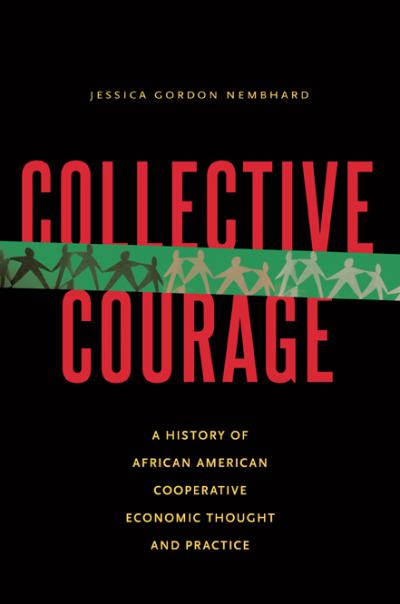
HBCU Money™ Business Book Feature – Collective Courage: A History of African American Cooperative Economic

collective_courage_hi-res_0

In Collective Courage, Jessica Gordon Nembhard chronicles African American cooperative business ownership and its place in the movements for Black civil rights and economic equality. Not since W. E. B. Du Bois’s 1907 Economic Co-operation Among Negro Americans has there been a full-length, nationwide study of African American cooperatives. Collective Courage extends that story into the twenty-first century. Many of the players are well known in the history of the African American experience: Du Bois, A. Philip Randolph and the Ladies’ Auxiliary to the Brotherhood of Sleeping Car Porters, Nannie Helen Burroughs, Fannie Lou Hamer, Ella Jo Baker, George Schuyler and the Young Negroes’ Co-operative League, the Nation of Islam, and the Black Panther Party. Adding the cooperative movement to Black history results in a retelling of the African American experience, with an increased understanding of African American collective economic agency and grassroots economic organizing.

To tell the story, Gordon Nembhard uses a variety of newspapers, period magazines, and journals; co-ops’ articles of incorporation, minutes from annual meetings, newsletters, budgets, and income statements; and scholarly books, memoirs, and biographies. These sources reveal the achievements and challenges of Black co-ops, collective economic action, and social entrepreneurship. Gordon Nembhard finds that African Americans, as well as other people of color and low-income people, have benefitted greatly from cooperative ownership and democratic economic participation throughout the nation’s history.

HBCU Money™ Business Book Feature – War! What Is It Good For?: Conflict and the Progress of Civilization

2014.07.13-Book-review-Ian-Morris’s-“War”

A powerful and provocative exploration of how war has changed our society–for the better

“War! . . . . / What is it good for? / Absolutely nothing,” says the famous song–but archaeology, history, and biology show that war in fact has been good for something. Surprising as it sounds, war has made humanity safer and richer.

In War! What Is It Good For?, the renowned historian and archaeologist Ian Morris tells the gruesome, gripping story of fifteen thousand years of war, going beyond the battles and brutality to reveal what war has really done to and for the world. Stone Age people lived in small, feuding societies and stood a one-in-ten or even one-in-five chance of dying violently. In the twentieth century, by contrast–despite two world wars, Hiroshima, and the Holocaust–fewer than one person in a hundred died violently. The explanation: War, and war alone, has created bigger, more complex societies, ruled by governments that have stamped out internal violence. Strangely enough, killing has made the world safer, and the safety it has produced has allowed people to make the world richer too.

War has been history’s greatest paradox, but this searching study of fifteen thousand years of violence suggests that the next half century is going to be the most dangerous of all time. If we can survive it, the age-old dream of ending war may yet come to pass. But, Morris argues, only if we understand what war has been good for can we know where it will take us next.

Federal Reserve’s 2014 Economic Household Well Being Report

KEY FINDINGS

  • Sixty-five percent of respondents report that their families are either “doing okay” or “living comfortably” financially, compared to 62 percent in 2013.
  • Forty-seven percent of respondents say they either could not cover an emergency expense costing $400, or would cover it by selling something or borrowing money.
  • Twenty percent of respondents report that their spending exceeded their income in the 12 months prior to the survey.
  • Sixty percent of respondents indicate they are either somewhat or very confident they would be approved for a mortgage if they were to apply.
  • Among respondents who borrowed for their own education, those who failed to complete an associate degree or bachelor’s degree, those who attended for-profit institutions, and those who were firstgeneration college students are more likely to be behind on their payments than others.

FULL REPORT CLICK HERE

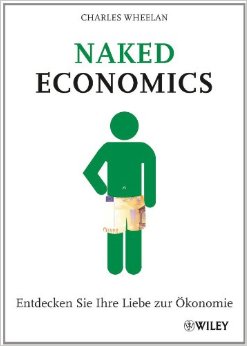
HBCU Money™ Business Book Feature – Naked Economics: Undressing the Dismal Science

naked

“Explains our global economy in a way that is (gasp!) actually entertaining.”—Book Magazine

Finally! A book about economics that won’t put you to sleep. In fact, you won’t be able to put this bestseller down. In our challenging economic climate, this perennial favorite of students and general readers is more than a good read, it’s a necessary investment—with a blessedly sure rate of return. Demystifying buzzwords, laying bare the truths behind oft-quoted numbers, and answering the questions you were always too embarrassed to ask, the breezy Naked Economics gives readers the tools they need to engage with pleasure and confidence in the deeply relevant, not so dismal science.

This revised and updated edition adds commentary on hot topics, including the current economic crisis, globalization, the economics of information, the intersection of economics and politics, and the history—and future—of the Federal Reserve.

16 Books HBCU Business School & Economics Students Should Read Before Graduating

read

“Resolve to edge in a little reading every day, if it is but a single sentence. If you gain fifteen minutes a day, it will make itself felt at the end of the year.” – Horace Mann

While classrooms, homework, professors, classmates, and internships will teach you a lot, sometimes it is an important book that can help shape the way you look at the information being delivered to you. These books will help wrap a culturally relevant point of view to the education you are receiving. It is important to not just understand supply, demand, labor, and capital, but to understand it from our perspective. Learn the history of African Americans as business owners, executives, and inventors so that maybe you create the next great business empire. Read the biographies to get the intimate trials, tribulations, and success of African American business pioneers before you. Ultimately, see how to build, create, develop, and pass on wealth to generations ahead of you.

If you read these books before walking across that stage we promise that you will be a powerful force in business to reckon with.

CAPITALISM AND SLAVERY

williams_capitalism

History of Black Business in America: Capitalism, Race, Entrepreneurship

12945355

In the Black: A History of African Americans on Wall Street

in-black-history-african-americans-on-wall-street-gregory-s-bell-hardcover-cover-art

Black Inventors, Crafting Over 200 Years of Success

51LsPuQqNmL._SL500_AA300_

On Her Own Ground: The Life and Times of Madam C.J. Walker

madamcj

Black Titan: A.G. Gaston and the Making of a Black American Millionaire

blacktitan

Why Should White Guys Have All the Fun?: How Reginald Lewis Created a Billion-Dollar Business Empire

Reginald_Lewis-1

Succeeding Against the Odds: The Autobiography of a Great American Businessman

succeeding-against-odds-john-h-johnson-hardcover-cover-art

The Hidden Cost Of Being African American – How Wealth Perpetuates Inequality

Hiddencost

The Color of the Land: Race, Nation, and the Politics of Landownership in Oklahoma, 1832-1929

9780807833650

Common Stocks and Uncommon Profits and Other Writings

Common-Stocks-And-Uncommon-Profits”-By-Phillip-Fisher

SECURITY ANALYSIS

securityanalysis

The Richest Man In Babylon

1052

Family Wealth: Keeping It in the Family–How Family Members and Their Advisers Preserve Human, Intellectual, and Financial Assets for Generations

family-wealth-keeping-it-in-the-family-james-e-hughes

Black Asset Poverty and the Enduring Racial Divide

41t1WQ7cm3L._SL500_SS500_

W. Arthur Lewis and the Birth of Development Economics

k8045

“Books worth reading once are worth reading twice; and what is most important of all, the masterpieces of literature are worth reading a thousand times.” – John Morley