Tag Archives: black love

Black (Fictional) Wealth: What If Martin & Gina Had Invested Their $4,000 Tax Refund In 1995?

Truth is so hard to tell, it sometimes needs fiction to make it plausible. – Francis Bacon

Heathcliff and Claire. George and Weezy. Carl and Harriette. Florida and James. Philip and Vivian. Martin and Gina. The African American fictional couples over the years who have exuded the importance of the African American family and Black love. From working class to high-income earners one thing has remained consistent. None seemingly were ever investors. The one African American fictional character that was a stockbroker was Living Single’s Kyle Barker and yet even in that show with Khadijah James (Queen Latifah) running what seemed to be a successful magazine and media company, the finances of the characters always seemed to come off as strained – save for Kyle and Maxine. The world of African American fictional characters reflects African America’s attitude towards money in real life. A central belief that the only way you make a lot of money is to have a high paying job. Money working for you through investments then and now is a concept that mightily struggles to take root among African American capital both individually and institutionally in our community. 

One thing that was or is rarely discussed in African American fictional shows is money and if it is discussed it is almost always discussed from a consumption and/or struggle vantage point – we all still have trauma from when Florida made James return that money. In real life, African America’s relationship with tax refunds has historically been used as an unrealized forced savings account. Many in African America not realizing that they are not getting money from the government, but are getting their money back from the government. Tax refunds are almost always a sign that an individual or household has paid too much in taxes throughout the year. Again, you are not getting money from the government, you are getting back your money that you overpaid to the government. This is why many refer to it as a forced savings account.

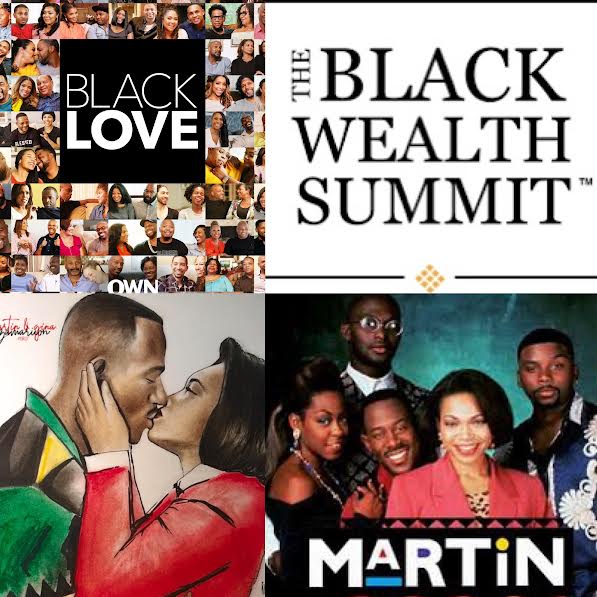
On April 6, 1995 aired Season 3 Episode 22 titled “C.R.E.A.M.” of Martin. It shows Martin and Gina as they are planning for their upcoming wedding. While paying their bills Martin sees a letter from the IRS and like any normal person begins to panic. Because seriously, who gets good news from the IRS? But instead of it being problematic, it turns out that an IRS error has allowed for Martin to receive a $4,000 tax refund. In the excitement, one would think that Martin and Gina just received a check of generational wealth as Martin exclaims, “We PAID! We PAID!” Immediately, Martin’s response is to find ways to spend the money noting that he should go out and buy them a satellite dish, a laser disc player, and himself a new wardrobe. Gina on the other hand actually reigns him in and suggest they actually invest the money. One thing that is glossed over in the exuberance was Gina’s earlier statement that they actually have all their bills paid this month suggesting that Martin and Gina’s finances are perhaps not on the most stable footing. It is likely that they were living check to check if not by some accounts living in the red.

To be clear, their refund was absolutely no small amount given that according to the U.S. Census, African American median household income in 1995 was $22,393. It would be equivalent to receiving almost $10,000 in 2023 terms where African American median household income is currently $46,400. African American homeownership rate during 1995 was the second lowest of any year over the past 30 years at 42.2 percent (see above). Whether or not Martin and Gina should have bought a home in 1995 is questionable given that they lived in Detroit, Michigan and the city 18 years later in 2013 would declare bankruptcy and by all accounts is still mightily struggling to recover for a myriad of reasons. 2013’s bankruptcy would also be in the shadows of the toxic dust from 2008’s Great Recession. According to NOVA AI, the median home price in Detroit in 1995 was $53,300, but by the end of 2022 median home values had only increased to $75,000 according to Realtor.com versus the rest of the country’s median home price in 1995 was $133,900 and at the end of 2022 home values were $479,500. A paltry 41 percent return over almost 30 years in Detroit versus 258 percent return for U.S. housing as a whole over the same period. This is only in nominal returns, but in real returns inflation has increased 92 percent over that same period according to OfficialData.org meaning real housing values in Detroit have actually been negative from 1995 to 2022. Martin and Gina would have needed to move into other asset classes that would be higher on the risk/return ladder (see below). In other words, they would need to either invest in stocks or start a business.

Just west of them headquartered in Seattle, Washington was the not quite a decade old tech company named Microsoft Company that went public in 1986. Had Martin and Gina invested their $4,000 in Microsoft that investment today would be worth approximately $306,000 or a return of 7,548.9 percent. Yes, you absolutely read that correctly. Instead, Martin and Gina invested in the most riskiest of endeavors and a cliche investment among African Americans – a restaurant. “The National Restaurant Association estimates a 20% success rate for all restaurants. About 60% of restaurants fail in their first year of operation, and 80% fail within 5 years of opening.” The comedic tragedy played out as expected according to Fandom.com, “Martin and Gina bite off more than they can chew when they invest all their money in a restaurant, (named Marty Mart’s Meatloaf & Waffles), that becomes more popular than they anticipated. The problem is that neither one of them knows how to run a restaurant or manage the finances, AND they take on Stan as a partner, which leads to lots of hilarious situations along the way.” Alternatively are stocks, owning a piece of a business without having to run a business and is definitely not as risky as starting your own business and especially if that business is a restaurant. Unfortunately, even as recently as 2020 only 34 percent of African American households owned stock versus over 60 percent of European American households. It is likely that it was even less in 1995 during Martin and Gina’s courtship. But it also begs the question, what are the expectations of African America’s fictional worlds? Should they do more to convey wealth building and investing that would help uplift our community?

Many would argue that A Different World (and The Cosby Show) had an immense impact on many African American children and families of the 80s and early 90s on attending HBCUs due to the fictional HBCU, Hillman College. There is a much higher hurdle to overcome as it relates to African Americans and money. Education is an accepted value deeply engrained in our community while investing not so much. However, many would also argue popular culture’s ability to influence behavior is a powerful tool and one worthy of strategic thought in community and institutional development. Fiction has a way of making us believe the impossible is possible. That we can travel the stars one day, be an African American doctor and lawyer couple, and so much more. It may also be the very thing necessary to ingratiate a different set of financial values into our community. Fiction allows us to change the paradigm of possibilities after all. Maybe, just maybe Tommy did not have a job – but he did have a portfolio of assets that provided him an income and the folks down at his “job” were fellow investors in an investment club.

“How To Start An Investment Club” by Better Investing click here.

Love & Financial Compatibility: 4 Questions You Should Ask BEFORE Becoming An HBCU Couple

“Whatever you into, your woman gotta be into, too, and vice versa… or the [thing] ain’t gonna work. lt ain’t gonna work. That’s right. lf you born-again, your woman gotta be born-again, too. lf you a crackhead, your woman gotta be a crackhead, too… or the [thing] won’t work. You can’t be like, ”l’m going to church, where you going?” ”Hit the pipe!” That relationship ain’t going nowhere, but two crackheads can stay together forever.” – Chris Rock

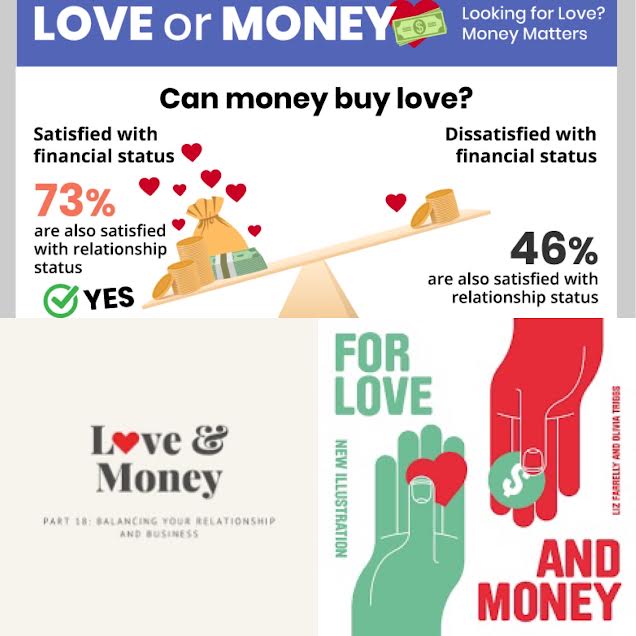
We all know the statistics. The number one cause of divorce is MONEY. And why it is money comes in all kinds of forms from a partner who does not help with the bills, disagreement about financial roles, spends too much, disinterested in their financial future, takes too much risk with the money they have earned (or too little), and the list goes on and on and on. For African Americans money is even more complicated when it comes to partnering. African Americans are dead last in median income, median wealth, and the only ethnic group where the women outnumber the men in employment. All of which leads to an already complicated issue of partnering with someone for the long-term even more so. Money brings about extremely strong emotions in people and African Americans are no exception. In fact, one could argue that because are financial situation is so dire that it adds even more stress and complexity than most. The majority of us are brought up with the stresses of money as the only conversations about money we have ever overheard – because we certainly were not allowed to participate in family conversations about money besides, “put that back, you know we can not afford that”. That along with a strong religious undertone of money being the root of all evil it is no wonder that the median net worth of African Americans has not moved in over four decades and is by some accounts trending downwards. So who you partner with and their attitudes towards money, as Chris Rock so eloquently put it, need to be aligned. We decided to put together four questions to help you determine whether the he, she, or they is right for you. A clarity you should try your best to establish before you even enter into a relationship.

If you had to pick a number, how much would you like to be financially worth? Do not let them be vague on this. They can not say rich, wealthy, or comfortable. There has to be a number. Rich, wealthy, or comfortable means very different things to different people. Two people can say they want to be rich, but one thinks that means being worth $5 million and the other may think that means $50 million. The further those numbers are apart or closer together will give you some valuable insight.

Why do you want to be worth that much? This is vital to give you insight on a person’s priorities. If they tell you they want to be able to buy whatever they want, acquire all the latest fashions, travel the world, they want to be able to send their children to the best schools, or they want to donate $25 million to their HBCU over their lifetime. This questions will all give you insight to their motivations and if those motivations align with yours.

Would you be willing to live with our parents, have roommates when we got married, or share a car for a few years? This is a question of sacrifice gauging a person’s sacrifice level. How badly do they want to get to that number to do that thing they said they want? The early years of financial sacrifice for a couple make all the difference in the world and while many say they want to achieve something, many are not willing to do the hard and uncomfortable things

What is your risk tolerance? Risk. Reward. They go hand in hand when it comes too investing and financial building. If one of you wants to start a business and the other just wants to save money in your savings account, then you are world’s apart when it comes to risk. There are obvious compromises to risk. Perhaps you agree to hit a certainly dollar amount in your savings account before pursuing business. Or perhaps you agree that owning a rental property portfolio is the middle ground. Whatever it is, your risk tolerance needs to be understand and agreed upon. This is particularly important because things can and often will go wrong, that is why it is called risk. When it does go wrong does it create a wedge between the two of you or does it cause you both to dig in and work together through it?

In the end, it is often hard for people to talk about money when they meet someone they like. It is even harder to realize that your financial views maybe so far apart that you simply do not make a good team and at the end of the day to be financially successful it requires teamwork. One of you can not be playing basketball and the other playing soccer. Financial goals being aligned will dictate so much of how you live your lives that to not have them aligned is a sure fire way to kill a relationship and yet many people do not think to discuss money until after they are together and sometimes not even then. They do not realize the detriment of differences until it rears its ugly head. In this new era of mental health, make sure you discuss what it will take to have financial health as well.

6 Financial Things HBCU Men Must Do Before Getting In A Serious Relationship

Teach self-denial and make its practice pleasure, and you can create for the world a destiny more sublime that ever issued from the brain of the wildest dreamer. – Sir Walter Scott

So you are a man now you say? You have graduated from your HBCU with degree in hand and maybe you have your dream job, maybe you are still looking, and maybe you are contemplating going to graduate school. Regardless of where you are in life, there is a strong chance that you have a desire to be in love. Before you give someone the world, make sure you have taken care of a few things before you embrace the responsibility that comes with a serious relationship.

Societal norms put the financial burden of courtship on men in heterosexual relationships. Historically, this makes sense because it has only been in very recent decades that women have earned the right to their own financial independence within many societies and in more than a few still have limited financial rights. However, this presents a bit complicated in the United States for African America where the women have surpassed men by leaps and bounds in almost every major category. It also does not help that African American men have the highest unemployment rate among all groups in the country, which creates a courtship complexity of sorts within the community. African American men who are 20-24 years old as of December 2018 had a 11.8 percent unemployment rate, while their European American men peers were at 5.9 percent and African American women peers were 7.5 percent. That being said, for African American men who are part of the LGBTQ community, the instability can be even more pronounced since both parties are part of the most vulnerable economic population and will be facing additional discrimination.

A relationship can be an expensive endeavor, according to a USA Today study the average date cost $102.32 and if you assume one date a week in a relationship that comes out to a total of $5,320.64 per year. This of course is not including special dates or holidays where the purchase of gifts, etc. can drive that cost even higher. The problem of course is that African American median income, last among all ethnic groups, is at $40,258 according to the 2017 Census. In other words, over 13 percent of African American income can be used up in dating, while no other groups even spend 10 percent.

To say the calculus is complicated would be an understatement. Do African Americans simply not date? This of course would be problematic since one of the fundamental ways of building wealth is through the scalability of marriage. Instead, get a strong financial foundation under you by adhering to these six principles and objectives:

BE HONEST. BE HONEST. BE HONEST.

This honestly could be the whole article, but it is certainly worth leaning into. Being honest about your finances up front with the person you are dating can take a lot of pressure off them and yourselves. This does not mean you have to tell them everything right away, but if you can not afford to do something tell them and do not feel ashamed of it. If you want to share with them that you have certain financial goals you want to meet, then do so and let them be part of what you are trying to accomplish not an adversary to it.

HAVE AN EMERGENCY FUND – NO, SERIOUSLY.

African American men are the most vulnerable population as it relates to employment as the numbers bear out. As such, if you are a recent graduate and happen to have employment you can not save fast enough. Most personal finance experts will say as a general rule 3-6 months of expenses is a healthy emergency fund, but for African American men 9-12 months is much more imperative. An emergency fund can take the edge off of dating because you know that you and your date are not spending your potential car note or rent payment. Do NOT touch it except for an emergency. Also, do not base your emergency fund off expenses, but instead use gross income. You want to have 9-12months of gross incomes saved. Saving based on  your income instead of expenses will allow you to maintain some semblance of a normal life should an emergency arise.

SET EXPECTATIONS AND A BUDGET.

Once you decide to send someone flowers every Monday, fine dining every Friday, and a trip every other month you have set an expectation. Now, this is not to say you can not do those things, but they need to be within the confines of your budget. You should have an amount that you are going to spend every month on dating activities. If you want to save for something a bit more costly, spend a bit less each month and set it aside until you can afford that moment. Should your finances change and you need to alter the budget and expectations, remember – be honest.

BE CREATIVE.

Contrary to popular belief, you do not have to spend a lot on someone to let them know you care about them. The internet is full of helpful resources that can help you create low to no cost dates. Feel free to also use your social media networks for ideas.

DO NOT CONFUSE INCOME WITH WEALTH.

Income is not wealth. Again, income is NOT wealth. Assets build wealth and you have to use your income to acquire assets. Beyond your emergency fund, you should be thinking about saving to invest in stocks, bonds, real estate, etc. Find a financial/investment adviser as soon as you have a job. You do not have to wait until you have “money” to start investing. The earlier you start, the greater chance you will have of creating wealth over the long-term. Passive income, money earned from not having to work, should be a central focus of what you use your income for. Do no squander away the opportunity to set up yourself and future family while you have the opportunity.

LEAVE THE MATERIALISM FOR SOMEONE ELSE.

We have all seen that friend or friends who gets a job after college and decides to go on a spending spree for the nice car, clothes, and showing off for Instagram. This is not the man you want to be. Becoming a slave to material possessions and forsaking your financial future while being part of a labor population that is the most vulnerable is not only not smart, but dangerous. Material things lose value and defer from your ability to invest among other things.

Ultimately, if you are a man and are not financially safe or stable, then you are not ready for a serious relationship with anyone. Do not confuse stable for rich. Most of the time financially stability can be achieved in a relatively short period with the proper sacrifices (like having a roommate or two or three) after graduating. Becoming financially literate is vital to helping remove the stresses of finances in African American relationships. A stress that is often noted as being the greatest area of conflict within relationships. After all, love does not cost a thing, but bad financial habits do.