“It is easier to build strong children than to repair broken men.” – Frederick Douglas
The statistics and data around Black boys/men is and has been alarming for decades. As African Americans in the post-Civil Rights era began to abandon our own institutions arguably nobody has suffered as a result more than Black boys. In almost every category of substance Black boys/men trail and trail significantly against the overall society and within our own community. The consequences of this is seen in the struggles of our communities, institutions, and families. Where are the Black men is a question that is asked so often in spaces that in many ways it has become redundant. Unfortunately, the answer is they were lost as Black boys never to be seen from again in many ways. To become substantive members of our community, families, and institutions requires education, training, mentorship, and so much more. The reality on the ground is that there is very little in the way of organizations or resources that provides enough of that. While Black women have taken upon themselves to create, support, and fund initiatives that support the development and growth of Black girls, Black men have not done the same for Black boys. Conversations between Black men about how they can help Black boys tends to seemingly 99 percent revolve around sports as an answer. Black boys and sports has become a catch all for all things that ail Black boys and yet the outcomes suggest that is a failed investment. The question now is what going forward can Black men do to holistically develop and improve the outcomes of Black boys. Take responsibility and accountability for them. The time for deflecting blame is a broken record in many instances and while there are external forces at work constantly against African American men and our boys, we would be remiss not to as men deal with the protection and providing for them within our control.
Pre-K-5 Investment Is Imperative. African American boys get lost and they get lost early. The majority of any investment made into African American boys needs to be made in early childhood development. This is where boys develop cultural identity, mental health fundamentals, educational confidence, and more. Any conversations that we have about Black boys needs to be heavily weighted on reaching them as early as possible and as often as possible. The foundation of anything being built will always be the most important part of that structure.
Donating To African American Organizations That Specifically Support Black Boys. The easiest thing any of us can do is make sure the organizations that are trying to help our boys have the resources they need to not only fulfill their mission, but to excel at their mission and to exceed their missions expectations. For African American organizations who receive less than 2 percent of all national funding into NPOs, this is a mountainous hurdle. African American men can simply make sure they are active donors if they can afford to be and anything is better than nothing as the old saying goes. African American men can do this individually, but the stronger pathway would be as a collective. Two friends or twenty friends of African American men giving together is powerful for accountability towards giving, conversations about giving, strategic pathways to giving, and of course more capital towards giving.
Create More Organizations That Support Black Boys. Simply put, there just are not many African American organizations that are targeted towards developing Black boys. Arguably, that is because African American men have not created them. This is where inevitably Black boys get funneled into sports and nothing else. Largely because that is what is available. Organizations that solely focus on and encourage Black boys to develop themselves educationally, mentally, artistically, and more are largely absent and in need of existence on the nonprofit landscape. African American men have to take the responsibility of identifying, cultivating, and developing areas where Black boys need development and creating organizations around them. To be clear, we are not talking about organizations where it is boys of color or side initiatives, but actual organizations being created where Black boys are the focus, period.
Subsidizing Black Boys Supplemental Education. Black boys throughout K-12 do not get nearly enough supplemental education. The basic nature of supplemental education is everything that happens outside of a child’s classroom that makes them stronger in the classroom at its essence. Providing Black boys and their families assistance with tutoring costs, trips to museums, art galleries, academic camps, therapy, etc.
Give Your TIME and Be PRESENT. This is free. For whatever reason, African American men are plain and simply absent in activities for Black boys beyond sports. From Boy Scouts, tutors, mentors, and civic engagement in general, African American men are just missing for reasons that are frustratingly hard to understand.
What are we up against? Here are just a few reasons African American men need to be at the forefront of the needs of African American boys.
The 2019 National Assessment of Education Progress data also highlighted that only 6% of 12th-grade Black males were reading at the proficient level and only 1% were reading at the advanced level.
In 2021, 76% of Black boys finished high school compared to 93% of Asian boys.
According to the National Center for Education Statistics, only 36% of Black male students completed a bachelor’s degree within six years (52% of Latino male students completed theirs within the same time. White males graduated at a rate of 63% in six years.)
U.S. Census reports African American boys 17 and under comprise over 40% of the African American males in poverty.
Of the 12.3 million African American men over the age of 25, almost 50% have only a high school diploma or less according to the U.S. Census.
There is a war going on against African American boys and African American men are leaving them to fight for themselves. Our boys are more than their physicality. They are thinkers, they are astronauts, teachers, gardeners, and so much more, but like a flower they too must be nourished and care for by us. African American men can not leave African American boys to experience the gauntlet of life too many of us have already lived.
“When you face a crisis, you know who your true friends are.” – Magic Johnson
Nobody ask African American institutions to do more with less than African Americans themselves. We ask Liberty Bank & Trust, the largest African American owned bank by assets, with just over $1 billion to be able to do the same things that J.P. Morgan can do with almost $3 trillion. We ask Howard University with an endowment of less than $1 billion to do the same thing Harvard can do with an endowment of over $50 billion. The perplexing insanity of expectation that we have for African American institutions while European American institutions who get virtually 100 percent of their community’s buying power and over 90 percent of African America’s buying power against African American institutions who get virtually 0 percent of non-African American buying power and less than 10 percent of our own community’s buying power is so often lost on us it is infuriating. We really do give little thought to how much of our educational value both economically and intellectually we pour into non-African American institutions. The intellectual value would require a study of its own, but the economic value we can actually measure rather quickly on the higher education level at least.
According to the Postsecondary National Policy Institute, “In 2020, 36% of the 18–24-year-old Black population were enrolled in college compared to 40% of the overall U.S. population. Since Fall 2010, Black student enrollment has declined from 3.04 million to 2.38 million, a 22% decrease: Undergraduate enrollment declined from 2.67 million to 1.99 million, a 25% decrease.” Next the Education Data Initiative’s reports, “The average cost of college* in the United States is $35,551 per student per year, including books, supplies, and daily living expenses.” Combine those two statistics together and you have a working “cost of college” revenue for African America that is approximately $84.6 billion annually. Unfortunately, HBCUs and their approximately 214,200 students would be valued at only $7.6 billion or less than 9 percent if HBCUs “cost of college” was comparable, but it is not. HBCUs “cost of college” lands around $28,064 annually meaning African Americans at HBCUs value is approximately $6 billion or 7 percent. Beyond building your own intellectual institutions that represent your intellectual interest to the world, just economically it makes more sense for African Americans to choose HBCUs. Unfortunately, the discount is not just based on African American families being economically poorer, but also because African America socially devalues African American institutions so much that they are forced to offer a discount to attract those who economics face the highest uphill battle. This would explain in large parts why HBCUs in general have such acutely high percentage of Pell Grant students. HBCUs may be on a race to extinction without increasing its percentage of African Americans choosing them for college or seeing parabolic growth in their endowments.
The economic model as it stands is simply not sustainable. An institution can not both fail to garner massive support from its community and be cheaper. Unfortunately, because African American households are economically poor and psychologically devalue African American institutions, then being more expensive than the norm is not an option. This harsh reality that HBCUs just to close the approximately $7,500 gap or $1.6 billion in cost would mean attaching an endowment of $150,000 per current HBCU student or $32.1 billion or increase African American students from 214,200 percent (9 percent African American HBCU students) of those attending HBCUs by approximately 57,000 to 271,200 (11 percent African American HBCU students) – an over 25 percent increase from current. The cost to obtain those 57,000 new students (infrastructure aside) according to Nova AI, “the National Association for College Admission Counseling, the average cost per student recruited by a four-year private college was around $2,433 in 2018-2019” would be $138 million. Many HBCU stakeholders would question whether or not most HBCU campuses could handle a 25 percent increase in their African American student bodies when the infrastructure (housing, faculty, etc.) is already a struggle. However the $32.1 billion options is worth noting since current HBCU combined endowments are just a little over $2.5 billion. There are also 23 European Americans with net worths more than $32 billion and 0 African Americans. If the path to survival seems like a gauntlet seems suicidal, then you would be correct.
Increase African American students by 25 percent (and all the infrastructure cost it would entail) or come up with $32 billion seems like being kind to call it between a rock and a hard place of a decision. A pipe dream solution would be that the top 100 PWI endowments valued at almost $600 billion would take 5 percent ($32 billion) and reallocate it to HBCUs with each PWI giving proportional to their endowments. But hell has a better chance of freezing over given our recent piece on “Tone Deaf: Harvard Launches A $100 Million Endowment To Itself To Study Its Ties To Slavery – An Amount Greater Than 99 Percent Of HBCU Endowments”. Trying to squeeze the Federal government for it seems just as foolish given African America’s lack of political power let alone HBCUs lack of political power. All of this without even considering the decline in African Americans going to college, which is likely a correlation with the African American high school graduation rate where African American boys are struggling to finish. There is also the real consideration that many African Americans are seeing less incentive to go to college given the student loan debt and lack of opportunity thereafter. It leaves the question how many HBCUs remaining can survive to the next generation.
Ultimately, the solution will likely and largely lie with HBCU alumni associations and their ability to become more than just social organizations, but truly engaged of the business of group economics. We have discussed previously the “12 Things Your HBCU Alumni Association/Chapter Needs To Do To Be Financially Successful” and the sentiment remains true and urgent. Making HBCU alumni associations financially stronger would also allow HBCUs to be far more competitive for African American students and work towards that increased enrollment while being able to build the infrastructure along side it. The question remains though, can HBCU alumni transform their alumni associations into financial powerhouses in a manner that would allow them to achieve such a goal? You never know until you try, but one thing is for sure you miss 100 percent of the shots you do not take and the consequences here are the institutional death of HBCUs as we know them.
“If you are an adult and — as a physician and a pathologist — I educate you on the dangers and risks of some activity, like smoking or playing football, and you make up your mind to play, I would be one of the first to stand by you to defend your right,” he says. “Even if you take a gun [and] place it on your head to shoot yourself, you have the right to do that. This is America. But as a modern society, I believe we are morally bound to protect the most vulnerable — our children —like we have done with smoking.” – Dr. Bennet Omalu
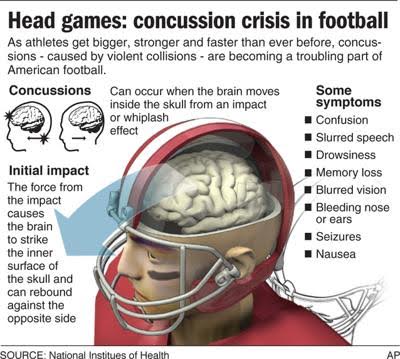
The NFL has arguably made more African American men millionaires than any other organization in America. Perhaps even more millionaires than even African America men have made themselves in all other non-entertainment industries, but that is a problem to discuss for another time. Football, may also be the leading cause of brain damage for African American boys and men. Let us say that again, football, where many African American boys start playing as early as parents believe they can, may also be the leading cause of brain damage for African American boys and playing a key role in their educational underachievement. America’s most popular sport grabs African American boys as early as five years old and begins the process of violently running them into each other and as they grow up the speed and viciousness of those collisions grows exponentially. This is of course well before the male brain becomes fully mature at the age of 25.
There is immense amounts of research that has been conducted on the post-playing career health issues that many former NFL players face. In an article by Mackie Shilstone for 4WWL he reports, “According to “Musculoskeletal Injury History Is Associated with Lower Physical and Mental Health in a Historic Cohort of Former National Football League players”, which appeared in the June 2021 issue of the Journal of Sports Rehabilitation, “as a collision sport, American football has a high risk of serious physical injury. Data from the National Football League (NFL) indicate that up to 68% of NFL players may be injured in a season.” The article cites a study by University of North Carolina, Chapel Hill, Duke Cancer Institute, Durham, NC, and Ohio University in Athens, Ohio, “among this historical cohort of former NFL players, over 90% reported sustaining at least one musculoskeletal injury during their professional careers. Respondents self-reported that many of these injuries required surgery, resulted in their professional playing careers prematurely ending, and still affected them. The additional findings highlight the large percentages of NFL players reporting surgery (60.7%), a premature end to their professional football career (40.3%), and still being affected by injury (74.8%), further augment the concern about the effects from musculoskeletal injuries on overall functioning across the lifespan,” commented the investigators.” The Washington Post in an internal survey of former NFL players in 2013 reported, “Nine in 10 said they’re happy they played the sport. But fewer than half would recommend children play it today. Nine in 10 former NFL players reported suffering concussions while playing, and nearly six in 10 reported three or more. Two in three who had concussions said they experience continuing symptoms from them.” The damage on these men’s health and brains playing football for most of them over 20 years of their life and during the formative years of their brains primary development is truly astounding. As it pertains to youth football’s damage specifically, “A CDC study published in Sports Health reports youth tackle football athletes ages 6 to 14 sustained 15 times more head impacts than flag football athletes during a practice or game and sustained 23 times more high-magnitude head impact (hard head impact). Youth tackle football athletes experienced a median of 378 head impacts per athlete during the season versus 8 in flag football.” That means an African American boy participating in youth football is experiencing 1.04 head impacts per day for an entire year if they were evenly spread out, but we know the season is not a year long which means the bulk of those impacts come in very short windows and in abundance. And yet, there is so much more we do not know.
We do not know what happens to brains that have played football from age five to twelve and how it impacted their long-term cognitive development. There have been millions of Black boys who never make it playing football beyond high school or college, but have just as likely suffered acute brain damage along the way for decades. African American boys have the lowest high school graduation rate and the highest participation rate in youth football K-12. Coincidence? Perhaps, but not likely and even the mere suggestion of it seems too upset many diehard African American football fans who see football as a path to American delusional meritocracy. Are there other factors at play impacting African American education? Certainly, but African American girls are experiencing much of those same systemic realities. One of the major differences though is football and arguably the brain damage that degrades African American boys minds collision after collision and concussion after concussion for as long as that boy plays, but the echoes and reverberation of the damage echoes for much longer. Potentially causing damage in the brain’s fragile state that may never be repaired. While we do know the health implications are grave and acute, we do not know to what extent. However, we do know that the social and economic costs have been and continue to be immense.
In every educational statistic, African American boys are either last or next to last (Latino/Hispanic boys being the only other option and that gap is starting to widen). Resources that could be and should be pouring into African American boys education from early childhood are instead poured into sports. Money being raised to participate in youth sports is money not being spent on education or education supplement. A few troubling statistics from a 2015 Education Week article showed, “Black boys are more likely than any other group to be placed in special education classes, with 80 percent of all special education students being Black or Hispanic males. A U.S. Department of Education report found that in schools with at least 50 percent Black students, only 48 percent were certified in the subject, compared with 65 percent in majority white schools. In English, the numbers were 59 and 68 percent, respectively and in science, they were 57 percent and 73 percent. In 2014, the Black Star Project published findings that just 10 percent of eighth-grade Black boys in the U.S. are considered “proficient” in reading. In urban areas like Chicago and Detroit, that number was even lower. By contrast, the 2013 National Assessment of Education Progress found that 46 percent of white students are adequate readers by eighth grade, and 17 percent of Black students as a whole are too. The achievement gap between the two races is startling, but the difference between the NAEP report on Black students as a whole and the Black Star findings of just Black boys is troubling too. It is not simply Black children in general who appear to be failing in the basics – like literacy; it is the boys. Black students make up just 18 percent of children in U.S. preschools, but make up half of those youngsters who are suspended. Black boys receive two-thirds of all school suspensions nationwide – all demographics and both genders considered. By 18 years of age, 30 percent of Black males have been arrested at least once, compared to just 22 percent of white males. Those numbers rise to 49 percent for Black men by the age of 23, and 38 percent of white males.” Between special education, illiteracy, and discipline, there are certainly arguments for systemic attacks on Black boys, but there is also internal community conversations about the allocation of resources we pour into our boys to counter those issues. Instead, we are pouring resources into a sport that is compounding the issues.
Then there is the damaging psychological impact on Black boys’ mental health. William Rhoden in his book $40 Million Dollar Slaves describes that impact in these terms, “Though integration was a major pivot in the history of the black athlete, it was not for the positive reasons we so often hear about. Integration fixed in place myriad problems: a destructive power dynamic between black talent and white ownership; a chronic psychological burden for black athletes, who constantly had to prove their worth; disconnection of the athlete from his or her community; and the emergence of the apolitical black athlete, who had to be careful what he or she said or stood for, so as not to offend white paymasters.” Black boys from as early as they show any modicum of athletic talent (and in a lot of cases even when they do not) are taught their bodies are all that matter. Football especially takes the approach that more instinct and less thinking is better. It encourages aggression, which of course are great on the football field, but not in classrooms, communities, and relationships. Unfortunately, Black boys are rarely given the chance to be well rounded with things that allow them to think and develop healthy expression so that they know when to turn on and off that aggression. Instead, they operate in life like a bull in a china shop and the African American community suffers the consequences. Unless of course they show exceptional talent that major college football and NFL teams can profit off of and then they are given a pass for their toxic behaviors further incentivizing African American boys to want to invest their time into the sport. And if everyone else is profiting off of it, then why should HBCUs be any different? If African America loved Black boys, then HBCUs would be different.
HBCUs in a lot of ways parrot what PWIs do. Our models at HBCUs are rarely African American centered. While the student body may be predominantly African American, the agenda and the mission objectives are rarely so focused on the empowerment of African America’s social, economic, and intellectual interests. Deion Sanders at Jackson State, to no fault of his own, has renewed a falsehood that many HBCU alumni believe – if the football talent that went to PWIs came “home” to HBCUs, then the financial windfall would be the answer to our prayers. HBCU alumni ignore all of the realities of things like boosters’ wealth, affluent and large alumni bases (Penn State University has approximately 700,000 living alumni) that attract multimillion dollar sponsorships, businesses owned by alumni who provide all types of indirect monies into these programs, and lastly the anti-Blackness that many PWI programs and their leadership operate with treating Black athletes as nothing more than a commodity to be used and thrown away like an orange for their Sunday morning breakfast. The SWAC/MEAC spent $213 million in expenses as of 2019-2020 on their athletic programs, while only generating $52 million in revenue (without counting student subsidies). It is safe to say that the bulk of that money goes to football – just like every other college and university. Perhaps we think that more players going to the NFL and getting drafted will result in more large donations to our institutions. Historically, athletes have never been the major donors to any college or university. The largest donors to colleges and universities have been, continue to be, and will be those who have founded, own, or have some sort of business wealth. Phil Knight, the owner of Nike, in 2021 was the second largest donor to a college and university (an anonymous donor was number one), donating $500 million to the University of Oregon. Knight and his wife have donated over $1 billion in total to the university over the years. An amount greater than any HBCU endowment. So instead of chasing a bridge to nowhere, what could HBCUs be doing with more of their athletic budgets?
HBCUs could be redeploying a consequential amount of that $200 million into programs that would significantly impact the K-12 pipeline for which many African American boys treacherously traverse as mentioned. It would even help to support the number of African American young men they have on their campus where there is also a major enrollment and graduation gender gap. Ensuring that increasing the graduation rate among existing HBCU men would be highly prudent. Many HBCUs have a significant case for starting and founding their own K-12 school system, which would increase the pipeline of African American students into their institutions and would especially allow for African American boys to be seen as something to be cultivated intellectually instead of just physically. The notion that we could do something more impactful for African America rather than give it more of something that we do not need and is ultimately detrimental to our community development seems to be a comfort zone that we are unwilling to breach or even have a rational conversation about. The brain damage to African American boys who then suffer from notable academic achievement has had acute consequences on family formation in our community because African American women are in mass unable to find intellectually and economically equitable partners in African American men who once the cold water of their pro athlete dream is doused wander in a proverbial desert. Along with a community that desperately needs more Black boys to become doctors, teachers, entrepreneurs, and ultimately men who are capable both physically and mentally available. All things it is arguably we are complicit in taking away from them. So if HBCUs are truly to be institutions for African America’s empowerment, then we must – absolutely must – do everything we can do to save African American boys, even from ourselves.





 HBCU Money