
Tag Archives: African American

Minority Illusion: The African America-Asian America Gap

By William A. Foster, IV

It is natural to man to indulge in the illusion of hope. We are apt to shut our eyes against a painful truth, till she transforms us into beasts. – Patrick Henry

There is a reality that European Americans seem to be aware of and African Americans seems virtually clueless to. America is fast shifting from an European Diaspora controlled country to an Asian Diaspora controlled country. The social and economic crisis in Europe has lowered European immigration and economic resources flowing to the US. This reality coupled with a rapidly declining birthrate of those of European descent in the US has left an opening for a new power to arise. Asia has seen the opening led by China and seems intent on completing a mission Japan attempted with Pearl Harbor. To not only retrench European aggression toward Asia but to have it aborted all together by creating a cold war fought primarily on US soil and limit another resource invasion of the Asian continent.  The term “minority”, an European American construct, which lumps all people who are of non-European descent into the same boat as if their social, economic, and political capital are the same is both dangerous and naive for African American strategy. Somehow it appears we have become so fixated on European Americans that we are completely missing the rise of Asian America. Let us examine a few of the statistics.

Life Expectancy: Asian America – 87.3 Years* l African America – 73.6 Years

% of 25 and older with degrees: Asian America – 50%* l African America – 18%

Median Income: Asian America – $68,780* l African America – $32,068

Median Net Worth: Asian America – $83, 500** l African America – $2,170

Unemployment Rate: Asian America – 4.8%* l African America – 13.4%

Participation Rate: Asian America – 63.7% l African America – 61.7%

*Leads all ancestral groups in U.S.

** Asian America’s median net worth was actually higher than European America’s prior to the 2008 recession.

The graph below, showing Asians as the fastest growing demographic in America not Latinos, coupled with the aforementioned social and economic numbers will have vital future political implications. It is no secret that the more educated and affluent a population is the more civic and politically engaged they are. The chart is showing that not only will they have the education and money but they will have the raw votes in the coming decades to become the new majority with unbridled power and reduce European Americans to the largest minority group in America. One has to assume while some European Americans feels some level of responsibility to African Americans historically speaking – Asians Americans have no such baggage. This leaves one to wonder as Asian Americans assume power where that will leave African America in the power vacuum.

Asian Nation, a journalism site that focuses on Asian America reviewed the top colleges and universities for Asian Americans also took some student interviews. One very interesting quote from an Asian student attending Pomona College in Claremont, CA was “The issue of ‘integration’ is a loaded one in that many white students and staff often accuse students of color, specifically Asian American students, of being anti-integrationist because we feel the need to be politicized and develop leadership within our own community.” Whereas African Americans are obsessed with integration and diversity this suggest Asians plan to secure their strength from inward first and foremost. Ironically, this was the strategy originally of African America coming out of slavery but would fall by the wayside as the civil rights generation would pursue a fruitless strategy of desegregation virtually wiping out all of African America’s institutional strength.

From a geostrategic point of view between the Asian and African Diasporas influence in America one only need to look at the ownership of U.S. debt held by foreign countries. The two largest holders are China and Japan while ten of the top thirty-seven largest foreign holders are Asian countries in the latest Treasury report. There is $5.430 trillion of U.S. debt held by foreign countries and of that 53.7 percent is held by Asian countries while only 0.2 percent is held by South Africa, the lone African country present in the top thirty-seven holders in the report. It becomes clearer and clearer who is establishing influence and control from within and from the outside in America.

African America too often falls into the lull that all “minority” groups are in the same position as we are or want to simply settle for inclusion as we seem to want. As Chinatowns and other Asian enclaves pop up, African Americans continue to abandon our own communities in droves for “better” communities which we tend to deem any community other than our own. When we examine most African American neighborhoods and communities it is Asians and Arabs finding their economic footing by owning the majority of small businesses within our borders while Europeans still control virtually all of the financial outlets via banks or payday loan businesses. It would seem that everyone recognizes the value in our community but us. We continue to search for allies everywhere but from within and have put all of our chips on the illusion of inclusion instead of the reality of control and competition for resources. We are the group with the least but willing to share the most. In the end this lack of awareness about the rise of Asian America will leave African America with the same reality (actually worse) we faced in the early twentieth century when we contemplated putting our loyalty behind Russia  to liberate ourselves from the oppression of America. As it turned out as famously quoted by Dr. John H. Clarke, “We were not in a battle between a liberator and oppressor but between two oppressors with different methods of oppression. In the end Russia no more wanted us to be free any more than U.S. but they wanted us under their control.” The lion must awake because the fire of the dragon appears to be just warming up.
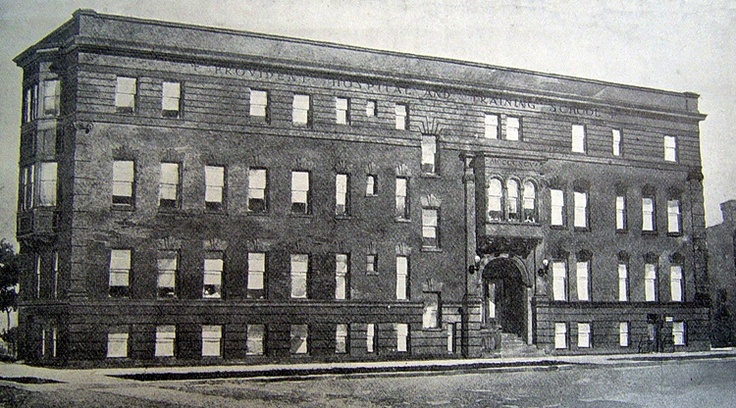
From 500 To 1: The Death Of The African-American Owned Hospital

By William A. Foster, IV

The health of nations is more important than the wealth of nations. – Will Durant

bohosp

Pictured Above: Provident Hospital and Training School, Chicago, Illinois, 1896. Provident Hospital, the first African American-owned and operated hospital in America, was established in Chicago in 1891 by Dr. Daniel Hale Williams, an African American surgeon.

The idea that someone else will care for you, your family, or your community better than you seems to be the purveying attitude of African America in almost every facet of our strategy today. This is of course assuming you believe we have an institutional strategy of our own to begin with. Instead of building and competing for power and control we seem content on waiting for others to share their spoils with us because it is the “right” thing to do only to be “shocked” when others idea of right and our idea of right do not acquiesce.

The history of African America and health has always been a precarious one. A people descended from the medical genius, Imhotep, known as the “father of medicine” who performed the earliest known surgery to the inspiring story of Dr. Ben Carson in present times. Healing sanctuaries and temples to the goddess Sekhmet are known to be the earliest “hospitals” to date. Fast forward a few thousand years to America and African Americans in Detroit alone owned and operated 18 hospitals of their own between 1917 to 1991. The confines within their own hospitals and medical ecosystem would seemingly be the only place where safety existed. From colonial times to present time, as noted in Medical Apartheid by Harriet Washington, when African Americans went outside of their own medical ecosystem we were and are subject to some of the most brutal medical experiments and abuses known in medical history. In an interview with Democracy Now, Ms. Washington is quoted giving examples of these abuses from past to present, “James Marion Sims was a very important surgeon from Alabama, and all of his medical experimentation took place with slaves. He took the skulls of young children, young black children — only black children — and he opened their heads and moved around the bones of the skull to see what would happen. He bought, or otherwise acquired, a group of black women who he housed in a laboratory, and over the period of five years and approximately forty surgeries on one slave alone, he sought to cure a devastating complication of childbirth called vesicovaginal fistula.” Ironically, as it were, Dr. Sims would go on to become president of the American Medical Association. Ms. Washington then goes on to present times stating “It’s black boys who have been singled out for these very dangerous experiments, such as a fenfluramine experiment that took place right here in New York City between 1992 and 1997. A lot of the abuse in African Americans has dissipated, but that kind of research is being conducted in Africa, where the people are in the same situation. They don’t have rights. They don’t have access to medical care otherwise, and Africa is being treated as a laboratory for the West by Western researchers.” Despite this obvious and consistent pattern of behavior we continue to seek to dismantle our own medical ecosystem.

It is no secret that the health of the African American community has always been in peril. Arguably today, more so than it has ever been in our history in this country. To some, the issues of medicine are a one size fits all prescription for any human anywhere. It is true we all have the same anatomy certainly but historical diet from our ancestry, environment, stress from the Middle Passage, slavery, and socioeconomic burdens that culminated after desegregation have taken its toll and many other factors create unique factors in the African American health dynamic. In fact, every group  based on their historical geography and diet has unique health features in their present health makeup. As such what is conducive to one group will not necessarily work for another. The variables at play do not provide for blanket medical solutions or care. Biological diversity exist in every species be it cats (lions, cheetahs, tigers) or humans. Yet, our desire to ignore these realities for the sake of creating a racial or ancestral Utopia has created a boom in our health risk with no seemingly end in sight. The numbers bear out a bleak picture of African American health today. African American life expectancy is 4.3 years less than the average American and 4.8 years less than European Americans. We currently have the highest age-adjusted death rate among all populations. The infant mortality rate in America for all is 6.8 per 1000 births yet for African America it is 13.2 per 1000 births. Approximately 20 percent of all African Americans are uninsured versus a national average of 15.9 percent. We are going extinct and do not even realize it.

Nathaniel Wesley Jr.’s book “Black Hospitals in America: History, Contributions and Demise” points out that at our apex there were 500 African American owned and controlled hospitals. Today, Howard University in Washington D.C. is the last one standing. In 1983 as Dillard University was selling its hospital Flint-Goodridge their president at the time, Dr. Samuel Dubois Cook stated that its demise was a result of “tragic mismanagement, social change that desegregated hospitals, financial irregularities, the fact that 90 percent of the patients were on Medicare or Medicaid and the loss of broad community support”. It would be hard not to assume that these were the underlying cause of the majority of most African American owned hospitals since as we know fervently believe that our proverbial ice could not possibly be as cold as the ice in other communities.

Rethinking the role of hospitals in general is needed given the rapid rise of healthcare cost but especially so in the African American community where the ability to afford private healthcare is almost impossible given our lack of wealth. While Asian and European America’s median net worth both approach $100,000 the African American median net worth is close to $2,000 and dropping according to the Economic Policy institute. Hospitals in our communities should be fashioned as health and wellness focused on preventive care, nutrition, and alternative medicines more unique to our biology. HBCUs themselves while not all needing to build hospitals should all be investing in community clinics that are connected regionally with an African American owned hospital. The pre-med and business programs should create more courses on the development of these facilities. Its impact on both wealth creation and health improvement would do wonders for African America as a whole.

It could be said that for all the benefits of the Affordable Healthcare Act proposed by President Obama, our longer term interest in building a medical ecosystem focused on the needs and issues that face the African American and African Diaspora community would go much farther in improving our health as a people. After all if health is wealth and wealth is created by ownership then we must once again build and own the ecosystem that is the DNA of our blood, sweat, and tears.

African America’s September Unemployment Report – 13.4%

Overall Unemployment: 7.8%

African America Unemployment: 13.4%

European America Unemployment: 7.0%

Asian America Unemployment: 4.8%

Analysis: Asian America had the largest decline in its unemployment rate dropping from 5.9% to 4.8% overall. African America had the next largest decline from 14.1% to 13.4% overall.

African American Male Unemployment: 14.2%

African American Female Unemployment: 10.9%

African American Teenage Unemployment: 36.7%

African American Male Participation: 67.0%

African American Female Participation: 62.0%

African American Teenage Participation: 29.0%

Analysis: All three subgroups saw declines in their unemployment rates in September. The men and women saw negligible declines as the teenage subgroup was the driving force behind the big decline in African America’s unemployment rate. As with the country as a whole part-time jobs make up the bulk of the reason for the decline in the unemployment rate carried primarily by the teenage subgroup. Participation rates for men and women both declined while the teenage subgroup saw a bounce back in participation to its July levels after a significant decline in August.

Conclusion: There is very little to get excited about looking at the numbers for African America. The unemployment rate is down but so is the participation rate for the men and women’s groups. The rebound of teenage participation, which is in constant crisis itself, for African America masked the participation drop of the adult declines. An unsettling thought when you realize they are also the lowest wage earners in an already vastly under earning African America.

Source: Department of Labor

Public Sector Dependency: African America’s Employment Problem

There can be no freedom of the individual, no democracy, without the capital system, the profit system, the private enterprise system. These are, in the end, inseparable. Those who would destroy freedom have only first to destroy the hope of gain, the profit of enterprise and risk-taking, the hope of accumulating capital, the hope to save something for one’s old age and for one’s children. For a community of men without property, and without the hope of getting it by honest effort, is a community of slaves of a despotic State.  — Russell Leffingwell

24-employee_2

It is no secret that the African American middle class (net worth between $50,000 and $499,000) was built primarily by the public sector after events like desegregation and Black Wall Street massacre virtually wiped out the African American private sector ownership and wealth. The apex of African American wealth still arguably coming in the 1920s and having been on a precipitous decline since the 1950s as the Civil Rights Movement gained traction. In the last recession African America lost 83 percent of its median net worth.

The public sector now accounts for more than 1 in 5 African American jobs which is 30 percent higher than any other ancestral group in the US. That 30 percent premium also is telling as to why the income gap is so pronounced between African Americans ($34,218), European Americans ($55,530), and Asian Americans ($65,637) given public sector jobs have always and will always be lower than those in the private sector. Couple that with public sector slashing jobs, benefits, and pay to deal with growing deficits and the income gap will only expand. It should say something that even with this dependency on the public sector our unemployment rate is 14.1 percent while the overall unemployment rate is 8.1 percent, European American unemployment rate is 7.2 percent, and Asian American unemployment is 5.9 percent. It should also be a warning to us that a country with $16 trillion in debt will be forced to eventually dramatically reduce the size of government. This will obviously disproportionately impact African America.

Here is a statistic one might need to consider. Of the 400 richest Americans 0 percent made their wealth via the public sector. Let me say again 0 percent of the richest Americans made their wealth via the public sector. In fact the only place in the known world where public sector employees make great sums of wealth are dictatorships where the country’s wealth and dictator’s wealth is intertwined. The pursuit of wealth is oft perceived as something “evil” in our community instead of a necessary tool to protect and develop our social, economic, and political interest.

There are 1.9 million registered African American owned businesses according to latest census numbers. Unfortunately, 1.8 million (95 percent) of those businesses have no paid employees and are considered nonemployer firms. The current employable labor force for African America is at approximately 30 million with only 18.3 million (61.3 percent) of it employed and participating in the labor force which is the lowest percentage among all groups. If each of those 1.8 million businesses hired just one person our participation rate would jump from 61.3 to 67 percent and give us far and away the highest participation rate as well drop our unemployment rate from 14.1 to 4.3 percent. Yes, just by them each hiring one person. It would be an understatement to again stress that as America’s economy overall adjust itself to emerging economic powerhouses around the world competing for the resources of the world both natural and capital that the public sector here will have no choice but to shrink to compensate. The strategy of public sector dependency has not served us well in any economic aspect. Maybe it is time we revisit the private sector independence strategy that our forebears used coming out of slavery that saw us at our most economically prosperous. I often wonder sometimes if it was not broke why did we break it.

HBCU Money™ Histronomics: H.R. 40 – Commission to Study Reparation Proposals for African Americans Act

The bill was written and introduced by Congressman John Conyers (D-MI) in January 1989. It was been met with resistance by both Democrats and Republicans.

A BILL

To acknowledge the fundamental injustice, cruelty, brutality, and inhumanity of slavery in the United States and the 13 American colonies between 1619 and 1865 and to establish a commission to examine the institution of slavery, subsequently de jure and de facto racial and economic discrimination against African-Americans, and the impact of these forces on living African-Americans, to make recommendations to the Congress on appropriate remedies, and for other purposes.

Be it enacted by the Senate and House of Representatives of the United States of America in Congress assembled,

SECTION 1. SHORT TITLE.

This Act may be cited as the ‘Commission to Study Reparation Proposals for African-Americans Act’.

SEC. 2. FINDINGS AND PURPOSE.

(a) Findings- The Congress finds that–

(1) approximately 4,000,000 Africans and their descendants were enslaved in the United States and colonies that became the United States from 1619 to 1865;

(2) the institution of slavery was constitutionally and statutorily sanctioned by the Government of the United States from 1789 through 1865;

(3) the slavery that flourished in the United States constituted an immoral and inhumane deprivation of Africans’ life, liberty, African citizenship rights, and cultural heritage, and denied them the fruits of their own labor; and

(4) sufficient inquiry has not been made into the effects of the institution of slavery on living African-Americans and society in the United States.

(b) Purpose- The purpose of this Act is to establish a commission to–

(1) examine the institution of slavery which existed from 1619 through 1865 within the United States and the colonies that became the United States, including the extent to which the Federal and State Governments constitutionally and statutorily supported the institution of slavery;

(2) examine de jure and de facto discrimination against freed slaves and their descendants from the end of the Civil War to the present, including economic, political, and social discrimination;

(3) examine the lingering negative effects of the institution of slavery and the discrimination described in paragraph (2) on living African-Americans and on society in the United States;

(4) recommend appropriate ways to educate the American public of the Commission’s findings;

(5) recommend appropriate remedies in consideration of the Commission’s findings on the matters described in paragraphs (1) and (2); and

(6) submit to the Congress the results of such examination, together with such recommendations.

SEC. 3. ESTABLISHMENT AND DUTIES.

(a) Establishment- There is established the Commission to Study Reparation Proposals for African-Americans (hereinafter in this Act referred to as the ‘Commission’).

(b) Duties- The Commission shall perform the following duties:

(1) Examine the institution of slavery which existed within the United States and the colonies that became the United States from 1619 through 1865. The Commission’s examination shall include an examination of–

(A) the capture and procurement of Africans;

(B) the transport of Africans to the United States and the colonies that became the United States for the purpose of enslavement, including their treatment during transport;

(C) the sale and acquisition of Africans as chattel property in interstate and instrastate commerce; and

(D) the treatment of African slaves in the colonies and the United States, including the deprivation of their freedom, exploitation of their labor, and destruction of their culture, language, religion, and families.

(2) Examine the extent to which the Federal and State governments of the United States supported the institution of slavery in constitutional and statutory provisions, including the extent to which such governments prevented, opposed, or restricted efforts of freed African slaves to repatriate to their homeland.

(3) Examine Federal and State laws that discriminated against freed African slaves and their descendants during the period between the end of the Civil War and the present.

(4) Examine other forms of discrimination in the public and private sectors against freed African slaves and their descendants during the period between the end of the Civil War and the present.

(5) Examine the lingering negative effects of the institution of slavery and the matters described in paragraphs (1), (2), (3), and (4) on living African-Americans and on society in the United States.

(6) Recommend appropriate ways to educate the American public of the Commission’s findings.

(7) Recommend appropriate remedies in consideration of the Commission’s findings on the matters described in paragraphs (1), (2), (3), and (4). In making such recommendations, the Commission shall address among other issues, the following questions:

(A) Whether the Government of the United States should offer a formal apology on behalf of the people of the United States for the perpetration of gross human rights violations on African slaves and their descendants.

(B) Whether African-Americans still suffer from the lingering effects of the matters described in paragraphs (1), (2), (3), and (4).

(C) Whether, in consideration of the Commission’s findings, any form of compensation to the descendants of African slaves is warranted.

(D) If the Commission finds that such compensation is warranted, what should be the amount of compensation, what form of compensation should be awarded, and who should be eligible for such compensation.

(c) Report to Congress- The Commission shall submit a written report of its findings and recommendations to the Congress not later than the date which is one year after the date of the first meeting of the Commission held pursuant to section 4(c).

SEC. 4. MEMBERSHIP.

(a) Number and Appointment- (1) The Commission shall be composed of 7 members, who shall be appointed, within 90 days after the date of enactment of this Act, as follows:

(A) Three members shall be appointed by the President.

(B) Three members shall be appointed by the Speaker of the House of Representatives.

(C) One member shall be appointed by the President pro tempore of the Senate.

(2) All members of the Commission shall be persons who are especially qualified to serve on the Commission by virtue of their education, training, or experience, particularly in the field of African-American studies.

(b) Terms- The term of office for members shall be for the life of the Commission. A vacancy in the Commission shall not affect the powers of the Commission, and shall be filled in the same manner in which the original appointment was made.

(c) First Meeting- The President shall call the first meeting of the Commission within 120 days after the date of the enactment of this Act, or within 30 days after the date on which legislation is enacted making appropriations to carry out this Act, whichever date is later.

(d) Quorum- Four members of the Commission shall constitute a quorum, but a lesser number may hold hearings.

(e) Chair and Vice Chair- The Commission shall elect a Chair and Vice Chair from among its members. The term of office of each shall be for the life of the Commission.

(f) Compensation- (1) Except as provided in paragraph (2), each member of the Commission shall receive compensation at the daily equivalent of the annual rate of basic pay payable for GS-18 of the General Schedule under section 5332 of title 5, United States Code, for each day, including travel time, during which he or she is engaged in the actual performance of duties vested in the Commission.

(2) A member of the Commission who is a full-time officer or employee of the United States or a Member of Congress shall receive no additional pay, allowances, or benefits by reason of his or her service to the Commission.

(3) All members of the Commission shall be reimbursed for travel, subsistence, and other necessary expenses incurred by them in the performance of their duties to the extent authorized by chapter 57 of title 5, United States Code.

SEC. 5. POWERS OF THE COMMISSION.

(a) Hearings and Sessions- The Commission may, for the purpose of carrying out the provisions of this Act, hold such hearings and sit and act at such times and at such places in the United States, and request the attendance and testimony of such witnesses and the production of such books, records, correspondence, memoranda, papers, and documents, as the Commission considers appropriate. The Commission may request the Attorney General to invoke the aid of an appropriate United States district court to require, by subpoena or otherwise, such attendance, testimony, or production.

(b) Powers of Subcommittees and Members- Any subcommittee or member of the Commission may, if authorized by the Commission, take any action which the Commission is authorized to take by this section.

(c) Obtaining Official Data- The Commission may acquire directly from the head of any department, agency, or instrumentality of the executive branch of the Government, available information which the Commission considers useful in the discharge of its duties. All departments, agencies, and instrumentalities of the executive branch of the Government shall cooperate with the Commission with respect to such information and shall furnish all information requested by the Commission to the extent permitted by law.

SEC. 6. ADMINISTRATIVE PROVISIONS.

(a) Staff- The Commission may, without regard to section 5311(b) of title 5, United States Code, appoint and fix the compensation of such personnel as the Commission considers appropriate.

(b) Applicability of Certain Civil Service Laws- The staff of the Commission may be appointed without regard to the provisions of title 5, United States Code, governing appointments in the competitive service, and without regard to the provisions of chapter 51 and subchapter III of chapter 53 of such title relating to classification and General Schedule pay rates, except that the compensation of any employee of the Commission may not exceed a rate equal to the annual rate of basic pay payable for GS-18 of the General Schedule under section 5332 of title 5, United States Code.

(c) Experts and Consultants- The Commission may procure the services of experts and consultants in accordance with the provisions of section 3109(b) of title 5, United States Code, but at rates for individuals not to exceed the daily equivalent of the highest rate payable under section 5332 of such title.

(d) Administrative Support Services- The Commission may enter into agreements with the Administrator of General Services for procurement of financial and administrative services necessary for the discharge of the duties of the Commission. Payment for such services shall be made by reimbursement from funds of the Commission in such amounts as may be agreed upon by the Chairman of the Commission and the Administrator.

(e) Contracts- The Commission may–

(1) procure supplies, services, and property by contract in accordance with applicable laws and regulations and to the extent or in such amounts as are provided in appropriations Acts; and

(2) enter into contracts with departments, agencies, and instrumentalities of the Federal Government, State agencies, and private firms, institutions, and agencies, for the conduct of research or surveys, the preparation of reports, and other activities necessary for the discharge of the duties of the Commission, to the extent or in such amounts as are provided in appropriations Acts.

SEC. 7. TERMINATION.

The Commission shall terminate 90 days after the date on which the Commission submits its report to the Congress under section 3(c).

SEC. 8. AUTHORIZATION OF APPROPRIATIONS.

To carry out the provisions of this Act, there are authorized to be appropriated $8,000,000.