Tag Archives: african american banks

The Debt That Could Bind Us: Why African American Banks Must Engage African Debt Markets to Strengthen Diaspora Sovereignty

“Control of credit is control of destiny. Until Our institutions decide where Our capital sleeps and wakes, Our freedom will remain on loan.” – William A. Foster, IV

The African diaspora’s greatest unrealized financial potential may lie not in Wall Street, but in the vast and growing debt markets of Africa. Across the continent, nations are negotiating, restructuring, and reimagining how they fund development. At the same time, African American banks and financial institutions, small but strategically positioned in the global Black economic architecture, stand largely on the sidelines. This disconnection is more than a missed investment opportunity; it is a failure of transnational financial imagination. If the descendants of Africa in America wish to secure true sovereignty, interconnectivity, and global influence, engaging African debt markets is not optional it is imperative.

Africa’s debt profile is as complex as it is misunderstood. Many Western narratives frame African debt in crisis terms, yet that view ignores the sophistication of African capital markets and the diversity of creditors. The continent’s public debt stood around $1.8 trillion by 2025, but much of this borrowing has gone toward infrastructure and industrial expansion. The key shift in recent years has been away from traditional multilateral lenders toward bilateral and market-based finance particularly through Chinese, Gulf, and private bond markets. Countries like Kenya, Ghana, Nigeria, and Ethiopia have issued Eurobonds in recent years, often at higher interest rates due to perceptions of risk rather than fundamental insolvency. Others, such as Zambia, have undergone restructuring efforts designed to rebalance repayment with growth. In each case, Africa’s economic story remains one of ambition constrained by external debt conditions, a pattern reminiscent of the post-Reconstruction era Black South, when capital starvation and dependency on non-Black lenders limited autonomy and intergenerational power. That parallel matters deeply for African Americans. The same global financial order that restricts African nations’ fiscal independence also limits the growth of African American financial institutions. The tools that could change both realities already exist within the diaspora: capital pools, credit analysis expertise, and shared strategic interest in sovereignty.

African American banks—roughly 18 federally insured institutions as of 2025—control an estimated $6.4 billion in combined assets. While that is a fraction of what one mid-sized regional white-owned bank manages, these institutions hold a symbolic and strategic power far greater than their balance sheets suggest. They remain the custodians of community trust, the anchors of small-business lending in historically neglected markets, and potential conduits for international financial collaboration. Historically, African American banks were created to fill a void left by exclusionary financial systems. But in the 21st century, their mission can evolve beyond domestic community lending toward global financial participation. The African debt market, currently dominated by Western institutions that extract value through high interest and credit rating manipulation, offers a natural arena for African American engagement. If Black banks can collectively participate through bond purchases, underwriting partnerships, or diaspora-focused sovereign funds they could help shift Africa’s dependence from Western and Asian creditors toward diaspora-based capital flows. This would not only stabilize African economies, but also create transnational linkages that reinforce both African and African American economic self-determination.

Consider the power of mutual indebtedness as a political tool. When nations or institutions lend to each other, they form durable relationships governed by trust, negotiation, and shared interest. For too long, the African diaspora’s relationship with Africa has been philanthropic or cultural rather than financial. That model, however well-intentioned, is structurally disempowering and it reinforces dependency rather than partnership. Debt, properly structured, reverses that dynamic. If African American financial institutions were to purchase or underwrite African sovereign and municipal debt, they would create financial obligations that tether African states to diaspora capital, not to exploit but to interdepend. This is the foundation of modern sovereignty: the ability to borrow and invest within your own cultural and political network rather than through intermediaries who extract value and dictate terms. Imagine, for instance, a syndicated loan or bond issuance where a consortium of African American banks, credit unions, and philanthropic financial arms partner with African development banks or ministries of finance. The terms could prioritize developmental outcomes like affordable housing, small business lending, renewable energy while generating steady returns. The instruments could even be marketed domestically as “Diaspora Sovereign Bonds,” accessible through digital platforms. The impact would be twofold: African American banks would diversify their portfolios and tap into emerging market yields, while African governments would gain access to capital free from neocolonial conditions.

Historically Black Colleges and Universities (HBCUs) stand at the crossroads of intellect, finance, and heritage. Their institutional capacity, academic talent, and alumni networks make them natural architects for a new financial relationship between the African diaspora and the African continent. Yet this potential comes with risk, particularly for public HBCUs, whose visibility and state dependency could make them targets of political and financial backlash. If a public HBCU were to openly participate in or advocate for engagement with African debt markets, it would likely face scrutiny from state legislatures, regulatory bodies, and entrenched financial interests. Such activity would be perceived by non–African American–owned banks and state-level policymakers as a challenge to existing capital hierarchies. The idea of Black public institutions developing transnational financial alliances outside traditional Western frameworks threatens not only market control but ideological narratives about where and how Black institutions should operate. To navigate this terrain, public HBCUs must be strategic, creative, and stealth in execution. Their participation in African financial engagement cannot be loud; it must be layered. They can do so through consortia, research collaborations, and investment partnerships that quietly build expertise and influence without triggering overt resistance. For example, an HBCU economics department could conduct African sovereign credit research under a global development initiative, while a business school could host “emerging market” investment programs that include African debt instruments without explicitly branding them as Pan-African.

Private HBCUs, freer from state oversight, can play a more overt role forming partnerships with African banks, hosting diaspora finance summits, and seeding funds dedicated to Africa-centered investments. But public institutions must operate with a subtler hand, leveraging think tanks, foundations, and alumni networks to pursue the same ends through indirect channels. Creativity will be their shield. Collaboration with African American–owned banks, credit unions, or diaspora investment funds can serve as intermediary structures allowing HBCUs to channel research, expertise, and even capital participation without placing the institutions themselves in direct political crossfire.

Both public and private HBCUs must also activate and empower their alumni associations as extensions of institutional sovereignty. Alumni associations exist in a different legal and political space and they are often registered as independent nonprofits, free from the direct control of state governments or university boards. This autonomy allows them to operate where the universities cannot. Through alumni associations, HBCUs can channel capital, intelligence, and partnerships in ways that stay outside the reach of regulators or political gatekeepers. Alumni bodies can create joint funds, invest in African debt instruments, or collaborate with African banks and diaspora enterprises. The understanding between HBCUs and their alumni networks must be clear and disciplined: the institution provides intellectual and structural guidance; the alumni associations execute the capital movement. This relationship becomes a discreet circulatory system of sovereignty with universities generating the vision and expertise, alumni executing the financial maneuvers that advance that vision.

HBCUs can further support this ecosystem by funneling institutional capital and intellectual property toward their alumni associations in strategic, deniable ways. Research centers can license data or consulting services to alumni-managed firms. Endowments can allocate small funds to “external collaborations” that, in practice, seed diaspora initiatives. Career and alumni offices can quietly match graduates in finance and development with African institutions seeking diaspora partners. These are small, legal, but potent acts of quiet nation-building. The success of this strategy depends on discipline, secrecy, and shared purpose. HBCUs, particularly the public ones, must move as institutions that understand the historical realities of Black advancement: every act of power must be both visionary and shielded. Alumni associations, meanwhile, must operate as the agile extensions of these universities, taking calculated risks on behalf of the larger mission. If executed carefully, this dual structure of HBCUs as the intellectual architects and alumni associations as the financial executors creates a protected channel for diaspora wealth creation. It allows public institutions to avoid political exposure while still advancing the collective objective: redirecting Black capital toward Africa and reestablishing a financial circuit of trust, obligation, and empowerment across the diaspora. In this model, the public HBCU becomes the hidden engineer, the private HBCU the visible vanguard, and the alumni network the financial hand. Together, they form an ecosystem of quiet innovation and a movement that builds transnational Black sovereignty not through protest or proclamation, but through precise and deliberate financial design.

Skeptics might argue that African American banks lack the scale or technical capacity to engage in sovereign lending. This concern, while not unfounded, can be addressed through collaboration. No single Black institution must go it alone. The path forward lies in consortium models of pooling resources, sharing risk, and leveraging collective bargaining power. Diaspora bond funds could be structured as partnerships between African American banks, HBCU endowments, and African development finance institutions such as the African Development Bank (AfDB) or Africa Export-Import Bank (Afreximbank). These organizations already have experience managing sovereign risk and would benefit from diaspora participation, which strengthens their political legitimacy. Furthermore, technology has lowered the cost of entry into complex financial markets. Digital banking, blockchain-based identity verification, and fintech partnerships can allow diaspora institutions to participate in cross-border finance with greater transparency and speed. The real obstacle, therefore, is not capacity it is vision. The diaspora’s capital remains trapped within Western financial systems that reward liquidity but punish sovereignty. Redirecting even a fraction of that capital toward Africa would shift the balance of global economic power in subtle but profound ways.

Sovereignty in the modern world is measured as much in capital access as in military or political power. Nations that cannot borrow on fair terms cannot build on fair terms. The same is true for communities. African Americans, long denied fair access to capital, should understand this truth intimately. The African debt question, then, is not a distant geopolitical matter it is a mirror. If African American banks and financial institutions continue to operate solely within the parameters of domestic credit markets, their growth will remain capped by a system designed to contain them. But if they extend their vision outward to the African continent, to Caribbean nations, to the global diaspora then they create new asset classes, new partnerships, and new pathways to power. Moreover, engagement with African debt markets enhances geopolitical influence. It positions African American institutions as interlocutors between Africa and global finance, enabling a collective voice on credit ratings, debt restructuring, and investment policy. That is the kind of influence that cannot be achieved through philanthropy or symbolism it is built through transactions, treaties, and trust.

Other diasporas have already proven this model works. Jewish, Indian, and Chinese global networks have long used financial interconnectivity as a tool of sovereignty. Israel’s government issues bonds directly to diaspora investors through the Development Corporation for Israel—a program that has raised over $46 billion since 1951. The Indian diaspora contributes billions annually in remittances and investments that underpin India’s foreign reserves. The African diaspora, by contrast, remains financially fragmented despite its vast size and income. With over 140 million people of African descent living outside Africa, the potential for coordinated capital deployment is immense. Even modest participation of say, $10 billion annually in diaspora-held African bonds would change the global conversation around African finance and diaspora economics. This scale of engagement requires trust, transparency, and accountability. African nations must commit to governance reforms and anti-corruption measures that assure diaspora investors of integrity. Likewise, African American institutions must build financial literacy and confidence around African markets, overcoming decades of Western media narratives portraying the continent as unstable or uninvestable.

The long-term vision is a self-sustaining ecosystem of diaspora credit: African American and Caribbean banks pool capital to buy or underwrite African debt; HBCUs model sovereign risk, publish credit analyses, and design diaspora finance curricula; African governments and regional banks issue diaspora-oriented financial instruments; fintech platforms connect diaspora investors directly to African projects; and cultural finance diplomacy transforms diaspora engagement into official national strategy. The ecosystem would allow wealth to circulate within the global African community rather than being siphoned outward through exploitative intermediaries. Over time, such networks could support not only debt financing but also equity investment, venture capital, and trade finance all under the umbrella of Black sovereignty economics.

At its core, this initiative is not merely about money. It is about the reconfiguration of power. The African diaspora cannot achieve full sovereignty while its economic lifeblood flows through institutions indifferent or hostile to its future. Engaging African debt markets transforms the diaspora from spectators of African development into its co-architects. It also transforms Africa from a borrower of last resort to a partner of first resort within its global family. For African American banks, this is the logical next chapter. The institutions that once shielded Black wealth from domestic exclusion now have the opportunity to project that wealth into international inclusion. It is a matter of strategic foresight aligning moral mission with financial opportunity. As the world edges toward a multipolar order where the U.S., China, and regional blocs vie for influence, the African diaspora must define its own sphere of power not through slogans but through balance sheets. A sovereign people must have sovereign finance.

Toward a Diaspora Credit Ecosystem

The long-term vision is a self-sustaining ecosystem of diaspora credit:

  1. Diaspora Banks & Funds: African American and Caribbean banks pool capital to buy or underwrite African debt.
  2. HBCU Research Hubs: HBCUs model sovereign risk, publish credit analyses, and design diaspora finance curricula.
  3. African Institutions: African governments and regional banks issue diaspora-oriented financial instruments.
  4. Fintech Platforms: Secure, regulated digital systems connect diaspora investors directly to African projects.
  5. Cultural Finance Diplomacy: Diaspora engagement becomes part of national policy—similar to how nations court foreign direct investment today.

The ecosystem would allow wealth to circulate within the global African community rather than being siphoned outward through exploitative intermediaries. Over time, such networks could support not only debt financing but also equity investment, venture capital, and trade finance all under the umbrella of Black sovereignty economics.

In 1900, at the First Pan-African Conference in London, W.E.B. Du Bois declared, “The problem of the twentieth century is the problem of the color line.” A century later, that color line has become a credit line. It is drawn not only across borders but across ledgers between who lends and who borrows, who owns and who owes. The African American bank and the African treasury are not distant cousins; they are parts of one economic body severed by history and waiting to be reconnected by will. Engaging African debt markets is not charity it is strategy. It is the financial expression of unity long preached but rarely practiced. The next stage of the African world’s freedom struggle will not be won merely in the streets or in the schools. It will be won in the boardrooms where capital chooses its direction. If African American finance chooses Africa, both sides of the Atlantic will rise together not as debtors and creditors, but as partners in sovereignty.

Disclaimer: This article was assisted by ChatGPT.

Pan-African Capital: HBCU Endowments, African American Banks, and Kenya’s Growth Story

“When HBCU endowments and African American banks act together, they stop being small players. They become a financial force that nations must reckon with.” – HBCU Money Editorial Board

In the next several decades, the fault lines of global growth will not run through New York or London but through Nairobi, Lagos, and Accra. Kenya, sitting at the intersection of East Africa’s financial corridor and global trade routes, has become a laboratory for innovation in fintech, agriculture, and infrastructure. Yet despite centuries of cultural, spiritual, and blood connections, African America remains structurally absent from this new frontier of opportunity. Our financial institutions and HBCU endowments are under-leveraged in international markets, particularly in Africa, even as Asian, European, and Middle Eastern investors carve out dominant positions. For African American financial institutions and HBCU endowments, Kenya represents more than just an emerging market. It is a strategic stage for institutional wealth-building, geopolitical leverage, and reconnecting the African Diaspora through shared prosperity. The opportunity lies not simply in making isolated investments but in creating transatlantic joint ventures that bring together capital, expertise, and institutional strategy.

Kenya is more than safari brochures and tourist postcards. Its economy has quietly matured into one of Africa’s most diversified. With a GDP of over $110 billion and growth rates consistently outperforming many global peers, Kenya is often referred to as East Africa’s economic anchor. Nairobi has developed into the region’s financial hub, hosting multinational headquarters, stock exchange operations, and a robust startup ecosystem. Agriculture remains central, with Kenya exporting coffee, tea, and horticultural products while seeking to expand into value-addition agribusiness. Technology is another frontier, with Nairobi’s “Silicon Savannah” serving as a magnet for fintech, led by the global success of M-Pesa. Rapid urbanization fuels infrastructure and real estate demand, while Kenya’s leadership in geothermal and renewable energy has made it a global model. For African American institutions, the attraction lies not only in the growth metrics but in the alignment of needs: Kenya seeks patient capital, educational partnerships, and trusted diaspora allies, while African American institutions seek diversification, higher yields, and independence from U.S.-centric markets.

Despite African America’s aggregate $1.8 trillion in consumer spending, the community’s institutional capital remains modest. Only a handful of Black-owned banks, credit unions, and venture firms exist, and most hold under $1 billion in assets. HBCU endowments combined are less than $4 billion—an amount dwarfed by single Ivy League endowments. Yet within these constraints lies enormous potential. African American financial institutions already possess the regulatory infrastructure to pool and allocate capital, while HBCU endowments, though smaller in scale, carry moral weight and symbolic capital that can unlock global partnerships. Together, these institutions can create vehicles for international deployment of African American wealth, something that has been absent throughout our history. Imagine a pooled investment fund where Howard University, Spelman College, and Florida A&M commit $25 million collectively, matched by $25 million from Black-owned banks. That $50 million fund could be deployed into Kenyan agritech ventures, renewable energy projects, or commercial real estate. The collaboration would be historic: an African Diaspora financial ecosystem investing directly in Africa’s future.

The reasons to prioritize such engagement are strategic. Diversification is one. U.S. capital markets are increasingly low-yield for small institutional investors, while African markets offer higher growth potential and uncorrelated returns. Another is first-mover advantage. Unlike European or Asian investors, African American institutions do not carry the baggage of colonial relationships, which makes trust-based partnerships more viable. Transnational investment also provides institutional leverage. Just as Jewish, Irish, and Italian communities have leveraged diaspora ties for economic and political power, African Americans can build similar networks of influence. Beyond finance, there is the educational pipeline. HBCUs can link faculty, students, and alumni into research, study abroad, and entrepreneurial ventures tied to investments in Kenya. And finally, there is legacy. These investments address the absence of transgenerational institutional wealth that has long defined the African American economic condition.

The structures to achieve this vision can be diverse. A Diaspora investment fund pooling capital from HBCU endowments, Black-owned banks, and other African American institutions could professionally manage investments in Kenya. Public-private partnerships could align capital with Kenya’s infrastructure push in transport, energy, and housing. Venture capital and startup accelerators in Nairobi could connect HBCU students with Africa’s entrepreneurial scene while generating equity returns. Real estate investment trusts, driven by Nairobi’s urbanization, could provide stable income streams. Even education-linked ventures in e-learning and vocational training could generate both profit and intellectual reciprocity.

The barriers are real but not insurmountable. Kenya requires foreign investors to comply with incorporation, licensing, and work permit laws, which demand careful navigation. Currency risk from fluctuations in the Kenyan shilling must be hedged. Information gaps are wide, with many African American institutions unfamiliar with African business environments, highlighting the need for trusted partnerships and research. The relatively small scale of HBCU endowments makes collaboration indispensable. Above all, transparent governance and professional management are critical to avoid reputational risk. Yet none of these barriers are unique. European, Asian, and African investors face them daily and manage to thrive.

This is not only an economic project but a political one. The creation of a formal African American–Kenya Investment Council, for example, could coordinate through the Four Points Chamber of Commerce, HBCUs, and Kenyan universities to advocate for favorable treaties, tax incentives, and research collaborations. African American institutions investing abroad alter the narrative at home: no longer just a constituency asking for inclusion, but a global economic player with interests that stretch across the Atlantic. Such evolution creates leverage in Washington, Wall Street, and international forums.

Take agritech as a concrete example. Kenya’s agricultural sector employs over 60 percent of its labor force, yet productivity remains limited by technology and infrastructure. African American banks could co-finance ventures in irrigation, cold storage, and logistics platforms. HBCUs such as Tuskegee and Prairie View A&M could supply expertise in agricultural science and training. The returns could be strong, while the ventures also address food security and climate resilience—issues central to Africa’s stability. This is an example of investment tied not only to financial return but to global relevance.

The deeper point is that these ventures embed African American institutions into Africa’s growth story. They create a new narrative where HBCU students intern at Nairobi startups, Kenyan entrepreneurs raise capital from African American banks, and families on both sides of the Atlantic see tangible proof that the Diaspora is not fragmented but interwoven. In a world where capital dictates influence, these ties are transformative. They represent not just diversification but restoration, an opportunity to re-knit the fabric of a dispersed people through shared prosperity.

The cost of inaction is steep. China has entrenched itself in Kenya and across Africa through the Belt and Road Initiative. Gulf states are investing heavily in energy and real estate. European firms continue to capture opportunities in agriculture and infrastructure. If African American institutions remain passive, they will again watch as others define Africa’s economic trajectory, forfeiting both profits and influence. Worse, they will remain locked in a domestic cycle of undercapitalization and marginalization, failing to establish the transatlantic presence that could transform their institutional standing.

For too long, African America has celebrated individual success while neglecting institutional power. The result has been wealth without leverage and influence without permanence. Kenya and the wider African continent present a chance to reverse this trajectory. African American financial institutions and HBCU endowments can seize the opportunity by building joint investment vehicles that are ambitious, strategic, and collaborative. To invest in Kenya is to invest not only in profitable ventures but in the future of a Diaspora united by shared capital, shared strategy, and shared destiny. The transatlantic bridge is waiting to be built. The question is whether African America will summon the courage, coordination, and vision to cross it.

Step-by-step practical framework that African American financial institutions and HBCU endowments could follow to launch their first $50 million joint Kenya investment fund:

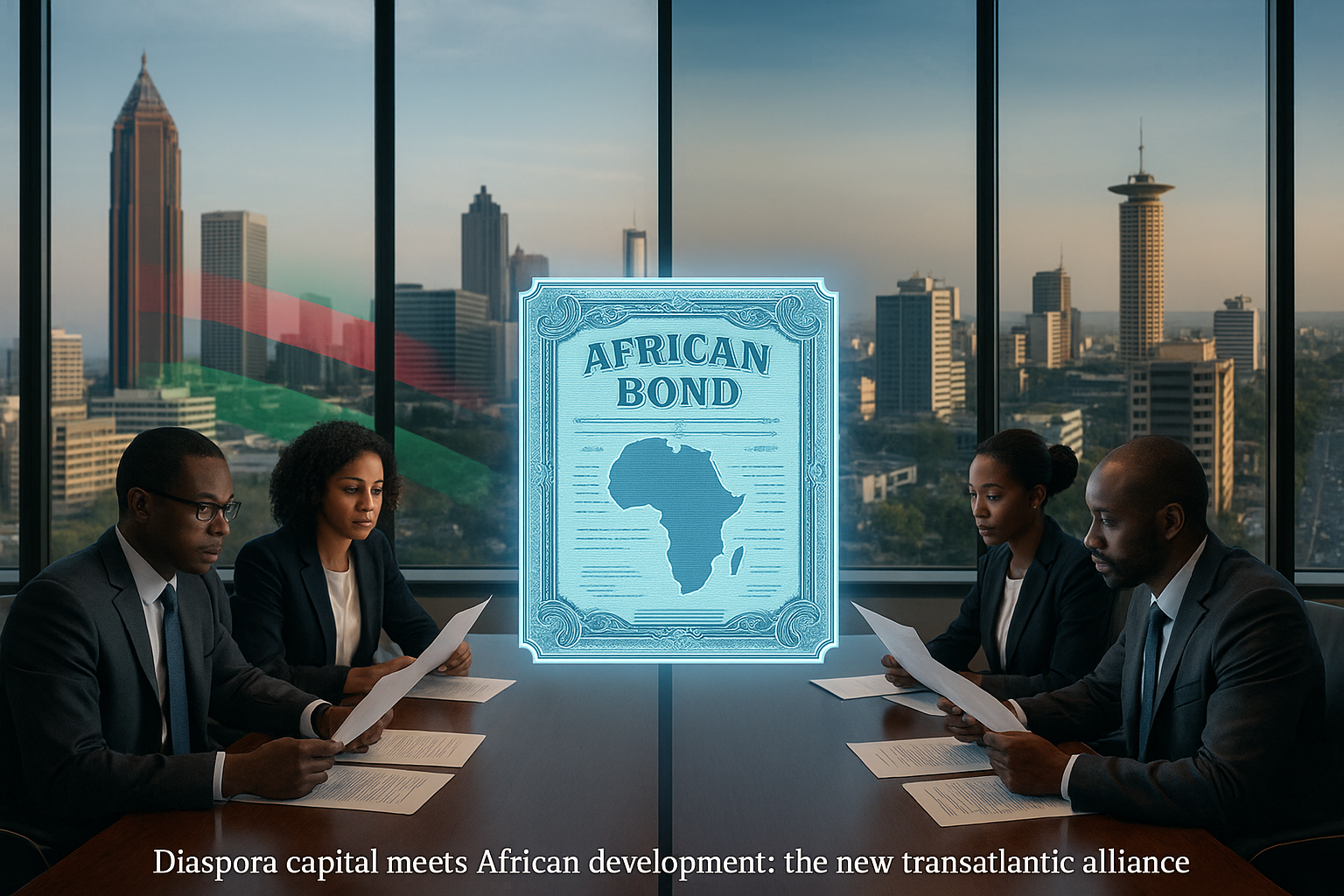
Imagine a handful of African American bank CEOs and HBCU endowment chiefs sitting together in a boardroom. The room is filled with cautious optimism. They know that together, they control billions in assets. What they don’t yet have is a proven model for working together to extend institutional power abroad. That meeting marks the first step: the coalition. A steering committee is formed, with voices from banking, academia, and outside advisors who know Kenya’s economic landscape. Their mandate is clear—launch a fund that delivers returns, but also anchors a new Pan-African economic relationship.

Step 1: Establish a Foundational Coalition

  • Identify core partners: Secure commitments from 3–5 African American banks and 5–7 HBCUs with at least $50M in combined investable capital.
  • Set up a steering committee: Include representatives from bank leadership, HBCU endowment managers, and external advisors with Africa market expertise.
  • Define purpose: Clearly state the dual mission: generating strong financial returns while building a bridge for institutional Pan-African economic partnerships.

The first order of business is to commission a feasibility study. Consultants with expertise in Kenya’s political economy, regulatory framework, and sector opportunities are hired. They map out the terrain: Kenya’s fast-growing fintech sector, renewable energy projects feeding off abundant solar and wind, agribusiness tied to both domestic and export markets, and logistics hubs serving East Africa’s gateway economy. Risks are weighed—currency volatility, regulatory hurdles, political cycles—but so are opportunities. The committee sees promise.

Step 2: Commission a Feasibility Study

  • Hire consultants with Kenya expertise: Legal, financial, and political economy experts based in both the U.S. and Kenya.
  • Sector focus analysis: Prioritize sectors Kenya is inviting foreign direct investment into—agriculture, fintech, renewable energy, real estate, and logistics.
  • Risk assessment: Evaluate currency volatility, repatriation policies, political stability, and regulatory compliance.

Next, the legal and financial scaffolding of the fund takes shape. They agree on a traditional GP/LP structure based in the U.S. for investor familiarity, with a Kenyan arm for local operations. Banks pledge their first tranches—perhaps $5M each. HBCUs, with smaller endowments but a deep sense of mission, contribute $2–3M apiece. Collectively, the first commitments reach $30M, enough to begin building credibility. The remaining capital will come from outside partners.

Step 3: Create the Legal & Financial Structure

  • Fund structure: Decide whether the vehicle will be a private equity fund, venture fund, or blended finance model.
  • Jurisdiction: Likely establish a U.S.-based LP/GP model for investor confidence, with a Kenyan subsidiary or partnership entity.
  • Capital commitments: Each bank and HBCU pledges proportional investments. Example: 3 banks commit $5M each, 7 HBCUs commit $2–3M each, plus matching funds from development finance institutions.

Those partners are cultivated carefully. Calls are made to the African Development Bank, IFC, and the U.S. International Development Finance Corporation. Each sees value in a diaspora-led fund connecting capital from the African American community to African markets. Meanwhile, Kenyan pension funds and cooperatives are invited to co-invest. Diaspora high-net-worth individuals are offered side-car vehicles. With these anchor and matching partners, the fund’s $50M target is within reach.

Step 4: Secure Anchor & Matching Partners

  • DFIs and multilaterals: Approach institutions like African Development Bank (AfDB), U.S. International Development Finance Corporation (DFC), and IFC for co-investments.
  • Kenyan institutions: Partner with local pension funds, cooperatives (SACCOs), or universities to establish local credibility and co-ownership.
  • Diaspora investors: Offer side-car investment vehicles for African American and African diaspora high-net-worth individuals.

Governance is another priority. The steering committee transforms into an investment committee, balanced between African American institutional leaders and Kenyan business experts. An advisory board is established with specialists in agriculture, energy, real estate, and fintech. Transparency is emphasized—annual impact reports will detail not only financial returns, but jobs created, student exchanges launched, and trade flows increased.

Step 5: Build Governance & Accountability Mechanisms

  • Investment committee: Balance between African American institutional reps and Kenyan business leaders.
  • Advisory board: Include sector specialists in agriculture, energy, fintech, etc.
  • Transparency: Publish annual reports and impact metrics, not just financial returns, but job creation and trade flows between HBCUs and Kenya.

Deal flow comes next. Nairobi-based investment professionals are hired to scout opportunities, vet local entrepreneurs, and structure partnerships. At the same time, HBCUs begin linking their own academic programs—business schools, agricultural research centers, and engineering departments—into the fund’s sector priorities. Student projects and faculty research now have real-world investment applications in Kenya.

Step 6: Develop Pipeline & Deal Flow

  • Partnership with Kenyan government: Leverage incentives offered to foreign investors, including tax breaks and special economic zones.
  • Local deal scouts: Hire Nairobi-based professionals to source deals in priority sectors.
  • HBCU connections: Link research and student projects to sectors targeted by the fund (e.g., agricultural science programs tied to Kenyan agribusiness investments).

With structure, governance, and deal flow in place, the fund launches its pilot tranche. $10M is deployed across two or three projects. A solar mini-grid company extending power to rural communities. A fintech platform simplifying mobile payments. A mid-sized agribusiness processing exports for global markets. These are not moonshots—they are solid, scalable enterprises that demonstrate both impact and return. The performance of this pilot will be watched closely. If successful, it will unlock the remainder of the $50M and set the stage for larger ambitions.

Step 7: Launch Pilot Investments ($10M tranche)

  • Start small within the $50M: Deploy $10M across 2–3 companies/projects.
  • Focus on scalable businesses: Renewable energy mini-grids, fintech payment platforms, or agri-processing facilities.
  • Monitor performance closely: Use pilot results to refine risk models, build confidence among stakeholders, and attract more investors.

Within 18 months, the pilot investments begin to show results. Jobs are created. Returns begin to flow. Confidence builds. The remaining capital is deployed, spreading across a diversified portfolio. HBCUs launch student and faculty exchanges with Kenyan institutions tied to the fund’s sectors. African American banks begin opening lines of credit to U.S. businesses interested in exporting to East Africa. The fund is no longer just an experiment—it is an institution in itself.

Step 8: Expand and Institutionalize

  • Scale to full $50M deployment: After 12–18 months of pilot success, release additional tranches.
  • Knowledge transfer: Create HBCU student and faculty exchange programs tied to investments.
  • Secondary fundraising: Use strong pilot performance to raise an additional $100M+ follow-on fund.

As momentum grows, the fund takes steps toward permanence. A Nairobi office is established, staffed by African American and Kenyan professionals alike. Training programs create a pipeline for HBCU students to intern in Kenya and Kenyan students to study at HBCUs. Over time, this exchange deepens the cultural and economic ties the fund was designed to spark.

Step 9: Create Long-Term Infrastructure

  • Permanent office in Nairobi: Establish a joint African American–Kenyan fund management company.
  • Training & pipeline development: Develop internship pipelines for HBCU students in Kenya, and Kenyan students at HBCUs.
  • Institutional trust: Turn the fund into a long-term institutional asset class for African American banks and HBCUs.

After five years, success is measured in multiple ways. Financially, the fund delivers returns in line with its targets—perhaps 12–15% IRR. Institutionally, it has created a precedent: HBCUs and African American banks can collaborate on global investments. Socially, it has created jobs in Kenya, exported knowledge and partnerships, and brought students and faculty into real-world economic diplomacy. Most importantly, it has built trust. Trust between African American institutions and African markets. Trust that this model can be scaled.

Step 10: Measure Success & Reinvest

  • Financial benchmarks: Target 12–15% IRR across diversified investments.
  • Social impact: Jobs created in Kenya, number of HBCU students/faculty involved, new African American businesses entering African markets.
  • Recycling capital: Reinvest returns into next-generation funds, building compounding institutional wealth.

With trust comes ambition. A second fund is planned—this time $100M, then $500M. The coalition envisions a Pan-African investment platform, deploying billions across sectors and countries. HBCUs, once thought of only as educational institutions, now sit at the table of international finance. African American banks, once dismissed as niche, now act as global intermediaries for diaspora capital.

The $50M Kenya fund was never just about money. It was about proving the power of joint institutionalism. It was about showing that African American capital, when organized and directed abroad, can generate wealth, influence, and opportunity for generations. And it was about establishing a roadmap that others can follow—a playbook for diaspora-led investment that starts in Kenya but could extend across the African continent.

Disclaimer: This article was assisted by ChatGPT.

HBCU Money’s 2020 African American Owned Bank Directory

For the most current African American Owned Bank Directory visit the 2022 link by clicking here.

All banks are listed by state. In order to be listed in our directory the bank must have at least 51 percent African American ownership. You can click on the bank name to go directly to their website.

OTHER KEY FINDINGS:

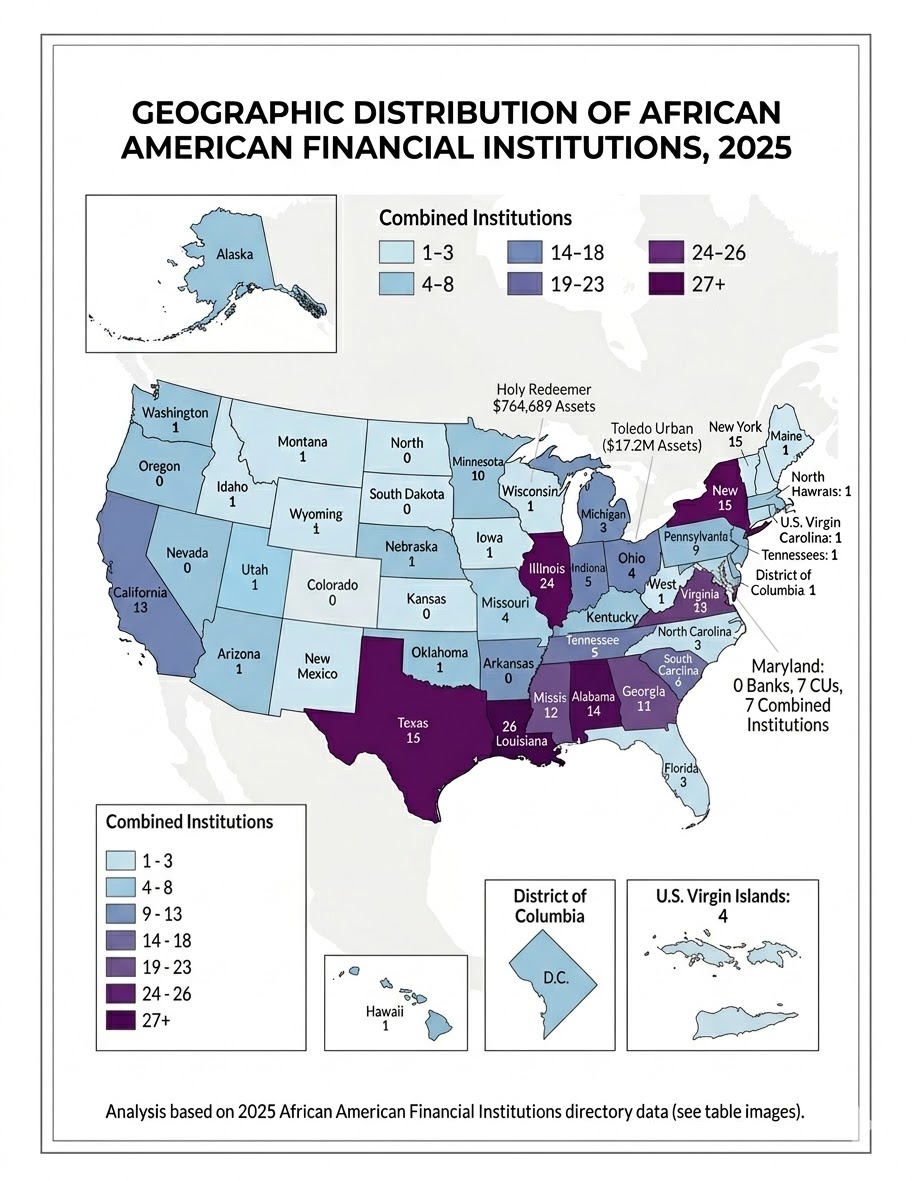
  • AAOBs are in 16 states and territories. Key states absent are Florida, Mississippi, New York, Ohio, and Virginia.
  • There has not been an AAOB started in 19 years.
  • Alabama, Georgia, and Tennessee, each have two AAOBs.
  • 14 of the AAOBs saw increases in assets from the previous year.
  • African American Owned Banks have approximately $4.3 billion of America’s $19.5 trillion bank assets or 0.02 percent.
  • AAOBs control 1.7 percent of FDIC designated Minority-Owned Bank Assets, which is down from 1.8 percent in 2019. A third straight year of declines.
  • 2020 Median AAOBs Aseets: $106,140,000 ($142,129,000)*
  • 2020 Average AAOBs Assets: $225,519,000 ($217,533,000)*
  • For comparison, Asian American Owned Banks have approximately $129.3 billion in assets spread over 73 institutions. Asian AOBs saw an increase of $9.9 billion increase (8.3 percent) in assets from 2019, while African American Owned Banks saw a 5.2 percent increase in assets.
  • TOTAL AFRICAN AMERICAN OWNED BANK ASSETS: $4,284,856,000

ALABAMA

ALAMERICA BANK

Location: Birmingham, Alabama

Founded: January 28, 2000

FDIC Region: Atlanta

Assets: $19,584,000

Asset Change (2019): DOWN 27.8%

COMMONWEALTH NATIONAL BANK

Location: Mobile, Alabama

Founded: February 19, 1976

FDIC Region: Atlanta

Assets: $49,791,000

Asset Change (2019): UP 6.5%

CALIFORNIA

BROADWAY FEDERAL BANK FSB

Location: Los Angeles, California

Founded: February 26, 1947

FDIC Region: San Francisco

Assets: $438,033,000

Asset Change (2019): UP 5.0%

DISTRICT OF COLUMBIA

INDUSTRIAL BANK

Location: Washington, DC

Founded: August 18, 1934

FDIC Region: New York

Assets: $530,840,000

Asset Change (2019): UP 26.1%

GEORGIA

CARVER STATE BANK

Location: Savannah, Georgia

Founded: January 1, 1927

FDIC Region: Atlanta

Assets: $42,345,000

Asset Change (2019): UP 6.7%

CITIZENS TRUST BANK

Location: Atlanta, Georgia

Founded: June 18, 1921

FDIC Region: Atlanta

Assets: $418,130,000

Asset Change (2019): UP 5.6%

ILLINOIS

GN BANK

Location: Chicago, Illinois

Founded: January 01, 1934

FDIC Region: Chicago

Assets: $137,351,000

Asset Change (2019): DOWN 3.4%

LOUISIANA

LIBERTY BANK & TRUST COMPANY

Location: New Orleans, Louisiana

Founded: November 16, 1972

FDIC Region: Dallas

Assets: $627,856,000

Asset Change (2019): UP 5.2%

MARYLAND

HARBOR BANK OF MARYLAND

Location: Baltimore, Maryland

Founded: September 13, 1982

FDIC Region: New York

Assets: $311,321,000

Asset Change (2019): UP 9.6%

MASSACHUSETTS

ONEUNITED BANK

Location: Boston, Massachusetts

Founded: August 02, 1982

FDIC Region: New York

Assets: $654,051,000

Asset Change (2019): UP 0.8%

MICHIGAN

FIRST INDEPENDENCE BANK

Location: Detroit, Michigan

Founded: May 14, 1970

FDIC Region: Chicago

Assets: $295,951,000

Asset Change (2019): UP 15.8%

NORTH CAROLINA

MECHANICS & FARMERS BANK

Location: Durham, North Carolina

Founded: March 01, 1908

FDIC Region: Atlanta

Assets: $265,273,000

Asset Change (2019): UP 1.2%

OKLAHOMA

FIRST SECURITY BANK & TRUST

Location: Oklahoma City, Oklahoma

Founded:

FDIC Region: Dallas

Assets: $55,713

Asset Change (2019): N/A

PENNSYLVANIA

UNITED BANK OF PHILADELPHIA

Location: Philadelphia, Pennsylvania

Founded: March 23, 1992

FDIC Region: New York

Assets: $49,442,000

Asset Change (2019): DOWN 8.5%

SOUTH CAROLINA

OPTUS BANK (FORMERLY SOUTH CAROLINA COMMUNITY)

Location: Columbia, South Carolina

Founded: March 26, 1999

FDIC Region: Atlanta

Assets: $78,131,000

Asset Change (2019): UP 30.7%

TENNESSEE

CITIZENS SAVINGS B&T COMPANY

Location: Nashville, Tennessee

Founded: January 4, 1904

FDIC Region: Dallas

Assets: $97,321,000

Asset Change (2019): DOWN 7.2%

TRI-STATE BANK OF MEMPHIS

Location: Memphis, Tennessee

Founded: December 16, 1946

FDIC Region: Dallas

Assets: $85,617,000

Asset Change (2019): UP 2.9%

TEXAS

UNITY NB OF HOUSTON

Location: Houston, Texas

Founded: August 01, 1985

FDIC Region: Dallas

Assets: $106,140,000

Asset Change (2019): UP 6.8%

WISCONSIN

COLUMBIA SAVINGS & LOAN ASSOCIATION 

Location: Milwaukee, Wisconsin

Founded: January 1, 1924

FDIC Region: Chicago

Assets: $23,586,000

Asset Change (2018): Down 1.6%

Industrial Bank Acquires City NB of New Jersey Strengthening One Black Bank And Closing Another

Industrial Bank, based in Washington D.C., becomes the undisputed third largest African American owned bank by assets after securing City NB of New Jersey, based in Newark, New Jersey, at the end of 2019 after City NB of New Jersey went under receivership by the FDIC as a failed bank. Previously, Industrial was competing with Broadway Bank in California and Citizens Trust Bank in Georgia for third position. However, with the acquisition of City’s $120 million in assets that spot is now comfortably secured. This makes what was going to be an otherwise paltry year for Industrial being able to increase their assets into a blowout one. Prior to the acquisition, Industrial was on pace to increase its assets by just over 1 percent in fiscal 2019, but this gives them a gain of 26.1 percent instead.

It also pushes the geographic reach of the D.C. based bank into multi-state territory. A claim that only three other African American banks, OneUnited, Liberty Bank & Trust, and Unity National Bank of Houston have. The first two being the largest two African American owned banks, respectively. New Jersey is home to almost 1.4 million African Americans, the 14th largest African American population in the United States so if Industrial can get right what City was getting wrong, there is immense opportunity there.

The FDIC Press Release: “City National Bank of New Jersey (“City National”) in Newark was closed today by the Office of the Comptroller of the Currency, which appointed the Federal Deposit Insurance Corporation (FDIC) as receiver. To protect depositors, the FDIC entered into a purchase and assumption agreement with Industrial Bank in Washington, D.C. to assume all of the deposits of City National.

The three branches of City National will reopen as branches of Industrial Bank during normal business hours. Depositors of City National will automatically become depositors of Industrial Bank.  Because deposits will continue to be insured by the FDIC up to applicable limits, customers do not need to change their banking relationship in order to retain their deposit insurance coverage.

Customers of City National should continue to use their existing branch until they receive notice from Industrial Bank that it has completed systems changes to allow other Industrial Bank branches to process their accounts as well.

This evening and over the weekend, depositors of City National can access their money by writing checks or using ATM or debit cards. Checks drawn on the bank will continue to be processed. Loan customers should continue to make their payments as usual.

As of September 30, 2019, City National had approximately $120.6 million in total assets and $111.2 million in total deposits. In addition to assuming all of the deposits of the failed bank, Industrial Bank agreed to purchase essentially all of its assets.”

Morehouse Alumnus Kevin Perry Investment Brings African American Owned Banking Back To Oklahoma

As one of the places with a storied African American economic history, Oklahoma holds a certain lore among African American economic historians. The home of Greendwood, Oklahoma, better known to many as Black Wall Street, its symbolic significance can never be overstated. It is also home to Langston University, a quiet but premier HBCU whose goat research is legendary in HBCU research circles and has considerable commercial value. However, Oklahoma has been without an African American owned bank for quite sometime but no more. Enter Kevin Perry, president and CEO of Perry Publishing & Broadcasting, a second-generation family owned company based in Oklahoma City, Oklahoma, and director at First Security Bank & Trust has helped usher in a new era of African American owned banking in Oklahoma.

According to S&P Global, “Kevin Perry, owner of 71,240 shares of FSB Bancshares Inc. stock, is proposing to acquire an additional 23,800 shares, according to a change in control notice filed in late March (2018). Perry already owns a 22.44% stake in the Oklahoma City-based company. The sale would increase his ownership in FSB to 29.948% — and in turn give him and other African American shareholders an aggregate 51% stake.”

The addition of First Security Bank & Trust to the African American Owned Banks banking landscape has stopped the proverbial bleeding the group has been experiencing over the past decade. Since 2010, African American Owned Banks have seen almost 50 percent of the institutions disappear. It is also worth noting that there have been no new AAOBs started in almost two decades and although First Security Bank & Trust is not new per se (founded in 1951), its acquisition by African American investors does make it new to our banking infrastructure and expands the financial geography of African American owned financial institutions. It is a vital addition and hopefully will build momentum for a new expansion that will help strengthen AAOBs in HBCU states and territories for the future.