HBCU Money™ Presents: 2016’s HBCU Alumni NFL Players’ & Salaries

hi-res-d3b54517b062b2a49cd8e84fbfbb896e_crop_north

In our 4th annual installment of tracking the highest paid HBCU alumni who are NFL players, Tennessee State University, Dominique Rodgers-Cromartie claims the top spot. This is the first year that the Indianapolis Colts have not had the highest paid HBCU player.

HBCU Money™ FACTS:

  • HBCU NFL players combine for $56.4 million, an almost 10 percent increase from 2015, when HBCU NFL players earned $51.44 million.
  • South Carolina State University leads the way with 5 NFL players.
  • 15 HBCUs are represented in the NFL. Up from 14 in 2015.
  • Average salary for HBCU NFL players is $2.08 million, an increase from $2 million in 2015.
  • Median salary for HBCU NFL players is $965 000, down 15 percent from 2015.

D. Rodgers-Cromartie – Tennessee State University

Cornerback / New York Giants / $8.0 million

William Hayes – Winston-Salem State University

Defensive End / St. Louis Rams / $7.0 million

Antoine Bethea – Howard University

Safety / San Francisco 49ers /$6.02 million

Marquette King – Fort Valley State University

Punter / Oakland Raiders / $5.05 million

Robert Mathis – Alabama A&M University

Outside Linebacker / Indianapolis Colts / $5.0 million

Chris Baker – Hampton University

Defensive End / Washington Redskins / $4.27 million

Kendall Langford – Hampton University

Defensive End / Indianapolis Colts / $4.25 million

Terron Armstead – University of Arkansas-Pine Bluff

Left Tackle / New Orleans Saints / $3.07 million

Larry Donnell – Grambling State University

Tight End / New York Giants / $1.67 million

Rafael Bush – South Carolina State University

Free Safety / Detroit Lions / $1.26 million

Anthony Levine – Tennessee State University

Free Safety / Baltimore Ravens / $1.2 million

Eric Weems – Bethune-Cookman University

Wide Receiver / Atlanta Falcons/ $1.1 million

Don Carey – Norfolk State University

Strong Safety / Detroit Lions / $1.0 million

Justin Durant – Hampton University

Inside Linebacker / Dallas Cowboys / $965,000

Greg Toler – Saint Paul’s College

Cornerback / Washington Redskins / $840,000

Ryan Davis – Bethune-Cookman University

Defensive End / Dallas Cowboys / $675,000

Rodney Gunter – Delaware State University

Defensive End / Arizona Cardinals / $652,479

Javon Hargrave – South Carolina State University

Defensive Tackle / Pittsburgh Steelers / $623,314

Demetrius Rhaney – Tennessee State University

Center / St. Louis Rams / $611,474

Isaiah Crowell – Alabama State University

Running Back / Cleveland Browns / $603,334

Ryan Smith – North Carolina Central University

Cornerback / Tampa Bay Buccaneers / $598,040

Joe Thomas – South Carolina State University

Outside Linebacker / Green Bay Packers / $525,000

Temarrick Hemingway – South Carolina State University

Tight End / St. Louis Rams / $489,896

Antonio Hamilton – South Carolina State University

Safety / Oakland Raiders / $450,000

Anthony Lanier – Alabama A&M University

Defensive End /Washington Redskins / $450,000

Chester Rogers – Grambling State University

Wide Receiver / Indianapolis Colts / $450,000

Zamir Charles – Stillman College

Defensive Tackle / San Diego Chargers / $333,000

The 2014-2015 SWAC/MEAC Athletic Financial Review

meac_swac-400x310

Two years later, students continue to bear a heavy burden for the pursuit of athletics. Our report is a follow up to the 2014 article where the SWAC and MEAC, without student subsidies were losing $130 million annually in athletics in 2013. It is unfortunate to report that the situation has not improved and has in fact gotten worse. HBCUs, especially the SWAC and MEAC, do not have the luxury of boosters like oil tycoon T. Boone Pickens, Nike’s owner Phil Knight, or even Under Armour’s owner Kevin Plank who give millions annually. In the case of Phil Knight, he and his wife have plowed over $300 million into the University of Oregon’s athletic program to bring it to national prominence. An amount that would cover the student fee contributions by SWAC and MEAC students – twice.

Each year the SWAC and MEAC meet for the SWAC/MEAC Challenge sponsored by Disney and this year will meet in the second annual Celebration Bowl, a post-season game to determine the HBCU “national” champion. Sports are an integral part of the college experience this can not be argued, but at what cost? HBCU students, despite HBCUs in general being cheaper than their PWI counterparts, graduate with higher student debt loads. This often delays and/or prevents all together them from becoming future donors back to their schools or boosters to athletics. The lack of African American wealth, both in households and institutions, no doubt plays a huge role. However, the question remains are we sacrificing too much today and forever burdening ourselves tomorrow?

REVENUES (in millions)

Total: $189.5 (up 7.1% from 2013)

Median: $10.2 (up 29.1% from 2013)

Average: $9.5  (up 18.8% from 2013)

Highest revenue: Norfolk State University  $16.1 million

Lowest revenue: Coppin State University  $3.4 million

EXPENSES (in millions)

Total: $194.1 (up 8.6% from 2013)

Median: $10.1 (up 27.8% from 2013)

Average: $9.7 (up 19.8% from 2013)

Highest expenses: Norfolk State University  $16.1 million

Lowest expenses: Coppin State University  $3.9 million

SUBSIDY

Total: $142.5 (up 12.3% from 2013)

Median: $7.9 (up 43.6% from 2013)

Average: $7.1 (up 22.4% from 2013)

Highest subsidy: Norfolk State University $13.5 million

Lowest subsidy: Mississippi Valley State University $2.3 million

PROFIT/LOSS (W/ SUBSIDY)

Total: $-4.6 million (down 142% from 2013)

Median: $-2 000 (in 2013 median was zero)

Average: $-230 071 (down 188% from 2013)

Highest profit/loss: Alabama A&M University  $215 207

Lowest profit/loss: Grambling State University  $-2 044 323

PROFIT/LOSS (W/O SUBSIDY)

Total: $-147.1 million (down 14.4% from 2013)

Median: $-7.8 million (down 34.5% from 2013)

Average: $-7.4 million (down 27.6% from 2013)

CONCLUSION: The SWAC and MEAC have a challenge, but its not on the fields or hardwoods. It is, however, on the income statements and balance sheets of their athletic departments. HBCU b-schools need to be desperately tasked with the assignment of scribing a new business model for HBCU athletics that takes into account alumni wealth (or lack thereof), minuscule payouts by corporations (Celebration Bowl provides roughly $87 000 to each school), and other factors unique to HBCU sports if they are going to lessen the burden on their students who are currently providing 75 percent of the revenues. At current student loan interest rates and traditional investment return rates, the debt burden for just these athletic fees is $1.1 billion over the next 30 years and an investment loss of $4.5 billion over the same period, respectively. These have long-term consequences to families, HBCU endowments, HBCU athletics, ultimately could become cancerous to the very survival of the institutions themselves.

Editor’s Note: Howard and Hampton are excluded in this report because they are private institutions and their athletic finances were not included in this report or the 2013 report. Chicago State, which was included in the 2013 report was excluded in this report.

The HBCU Money™ Weekly Market Watch

Our Money Matters /\ September 16, 2016

A weekly snapshot of African American owned public companies and HBCU Money™ tracked African stock exchanges.

NAME TICKER PRICE (GAIN/LOSS %)

African American Publicly Traded Companies

Citizens Bancshares Georgia (CZBS) $7.38 (0.00% UNCH)

M&F Bancorp (MFBP) $3.80 (8.57% UP)

Broadway Financial Corporation (BYFC) $1.55 (11.93% DN)

Radio One (ROIA) $3.13 (4.33% UP)

African ETFs

Global X MSCI Nigeria (NGE) $4.76 (0.21% DN)

Market Vectors Africa (AFK) $20.11 (0.47% DN)

African Stock Exchanges

Bourse Regionale des Valeurs Mobilieres (BRVM)  290.37 (1.08% DN)

Botswana Stock Exchange (BSE)  9 635.48 (0.05% UP)

Ghana Stock Exchange (GSE)  1 784.97 (10.52% DN)*

Nairobi Stock Exchange (NSE)  131.58 (N/A)

Johannesburg Stock Exchange (JSE) 51 8322.55 (0.65% DN)

International Stock Exchanges

New York Stock Exchange (NYSE) 10 533.13 (0.66% DN)

London Stock Exchange (LSE)  3 670.86 (0.11% DN)

Tokyo Stock Exchange (TOPIX)  1 311.50 (0.80% UP)

Commodities

agscreen-shot-2016-09-16-at-3-46-46-pm

screen-shot-2016-09-16-at-3-46-38-pm

metalsshot-2016-09-16-at-3-46-42-pm

Guy Kawasaki & Stanford Reminds African America Why HBCUs Are Needed Via Instagram

unnamed

After a crisis we tell ourselves we understand why it happened and maintain the illusion that the world is understandable. In fact, we should accept the world is incomprehensible much of the time. – Daniel Kahneman

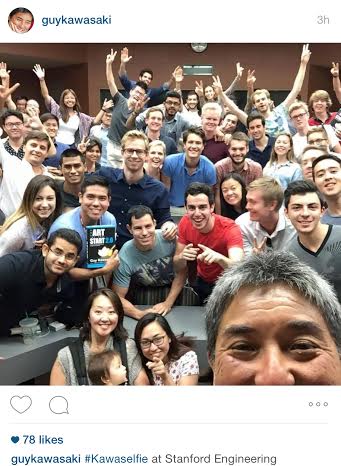
They say a picture is worth a thousand words. If so, then the aforementioned picture should be a thousand words about why HBCUs are African America’s best opportunity for access and opportunity. Unfortunately, the logic the past 60 plus years when a picture like this has surfaced is that African America must try harder or do better to gain access or that even presence of one or two of us is success.

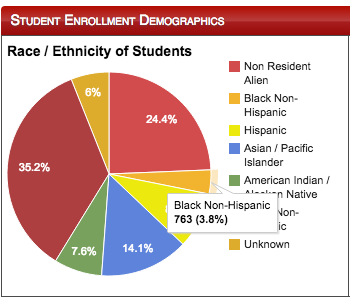
The picture itself shows Guy Kawasaki, one of Apple’s early employees who is now a Silicon Valley angel investor, and an engineering class at Stanford University. Stanford is without question one of America’s premier research universities ranking eleventh with almost $1 billion annually in research expenditures. It is the university that laid the ground work for Silicon Valley itself to come into existence as well as being the environment that produced Google. Sergey Brin and Larry Page, Google’s co-founders, met there while studying computer science doctorates. Stanford also has one of the country’s largest endowments  with $21.4 billion – an amount that is ten times all 100 plus HBCU endowments combined just for perspective. Yet, despite this treasure trove of resources the school’s demographics (see below) do not even come close to matching the African American population in the state of California (7.2 percent) or the country (13.2 percent) as a whole.

Screen Shot 2015-08-19 at 3.20.48 PM

African America does not seem to truly understand the value in investing in its own institutions as other groups seem to in their own. We often do what is best for America, while other groups do what is best for themselves. HBCUs still produce the majority of African American professionals in America. In the engineering field alone, HBCUs currently produce 40 percent of African American engineers (see below) while only constituting three percent of America’s colleges and universities. The value of these institutions is unquestionable, but that value is not marketed or conveyed consistently to African America so that the community truly understands the value and importance of the opportunities provided through the institutions existence, the opportunity they provide, and why they need more attendance and financial support from African America itself.

Screen Shot 2015-08-21 at 5.39.09 PM

HBCUs themselves must also continue to build their programs. There are new fields of engineering to explore. Fields like bioengineering, space engineering, and other emerging engineering disciplines must be offered. HBCUs must think beyond just the basics of chemical, electrical, and mechanical engineering. Premier HBCU engineering programs like North Carolina A&T State University (see below) truly are at the forefront of this expansion and other HBCU engineering programs must forge ahead. They must also continue to expand their research on the graduate level. Research among the top 20 HBCUs constitutes only $450 million in research expenditures, again while a university like Stanford does almost $1 billion alone. Much of the true innovation that happens in the US and around the world happens at the graduate level where the intellectual cream meets. There is no reason that the brightest minds from HBCU undergrads should have to leave the HBCU ecosystem or miss out on opportunities because our graduate schools are an after thought of leadership. We need our intellectual capital to circulate and remain within our ecosystem.

screen-shot-2016-09-08-at-12-03-33-am

The next Google, Facebook, or Microsoft lies within an HBCU engineering department. Perhaps it will be HBCU engineers that will help put the first African country on the moon, Mars, or beyond as they once did for NASA and America. HBCU engineering departments may come together and create our version of Silicon Valley. Whatever the future holds, as Dr. John H. Clarke said, “I am saying what ever the solution is, either we are in charge of our own destiny or we are not in charge.  On that point we got to be clear, you either free or you a slave.” A picture is worth a thousand words, but we only need to remember a few, the power to be free is in our own hands, hearts, and minds.

The HBCUpreneur Corner – Huston-Tillotson University’s Jasmine “Bobby” Oliver & VYRL Co. Design

12310087_805239602920162_3766548308586889462_o

Name: Jasmine “Bobby” Oliver

Alma Mater: Huston-Tillotson University, Class of 2015

Business Name & Description: VYRL Co. Design began from an honest place of desiring to have an opportunity to explore all that it means to be a creative entrepreneur, but also to showcase recent photography and web/graphic design projects that I have done. VYRLCoDesign.com became a space of passion, honesty, and inspiration where you can see a deeper side of a creative black-woman entrepreneur living, traveling, and pursuing a beautiful and fulfilling life that inspires others to do the same.

What year did you found your company? I first began as VYRL Media in 2010, then sometime in 2015 I started dabbling into design and the name evolved into VYRL Co. Design.

What has been the most exciting and/or fearful moment during your HBCUpreneur career? The most exciting and most fearful moments itself are when I realize that others are paying attention to my work and start asking me to do more challenging projects. Each and every project has allowed me to come out with a learning experience that I can take onto my next project.

What made you want to start your own company? Financial independence. Let’s be honest, this is probably the biggest reason people get into business from get-go. Which is a good thing! However we define ‘financial independence’ – retirement funds, unlimited cash potential or having the money to buy/do what you want….. entrepreneurship can allow you to achieve it. Another reason, I wanted to start my own company was because I had a hard time finding many places where myself, an African American creator/creative, could go to after graduation. So I figured that I would start small, build my own company and eventually hire other designers like myself.

Who was the most influential person/people for you during your time in college? Jeff Wilson and Clara Bensen. Jeff, the dean of our college, and Clara Bensen, local Austin writer.

13913888_1646418925686015_8302419014272430342_o

How do you handle complex problems? Creatives are wired uniquely. As such, I think we have to navigate the world in a slightly different manner than non-creatives. How I handle complex problems is by trying to slow down. This is one I’m still trying to work out. While i think that multitasking can be useful, sometimes it does more harm than good. This causes my creativity to plummet as well as my mood. So as a resolution I try to get a firm grip on my schedule. And I only take on what I can do. Next I prepare for disapproval. I don’t know about you, but for some reason, I’m always looking for validation. I suspect this has something to do with a lack of self-confidence. However, it’s important to recognize that some people ‘just don’t get it’. I am a Cancer sign which means I am a very emotional person. So I also try to keep my emotions in check. I have this habit of always dissecting my thoughts which tends to lead me to second-guessing myself. So, what seems like a good idea today, feels like a disaster later. Plus, I’m overcritical of myself. So I tend to try to remind myself that not every thought needs to be evaluated.

What is something you wish you had known prior to starting your company? I wish I had known how much entrepreneurship consumes your life. This has became something that has consumed my thoughts. You start with an idea then a hailstorm of ideas on how you could possibly execute the idea begins… and it never ends. You just keep thinking and doubting and thinking and execute.

Many African American companies and organizations suffer from a poor digital presence. Why do you believe there is not more investment in this by African American entrepreneurs and companies? I’m not particular sure about this. My guess is economics plays a part. It would be interesting to know how many of our businesses get e-commerce business. That certainly could play a role in how serious they take their web presence. If they are not getting much of their business from the web, then they may not think it is worth having much invested in it. However, these days the web is serving as the store front most customers encounter even before they get to your brick and mortar. A strong presence though is not cheap and as I stated, economics may play a major role in the lack of investment in this area. Do I as an entrepreneur invest more in my product or my web presence? It is a decision we are faced with more than other groups unfortunately.

Digital designers certainly get influence from a myriad of different places. What are some of the things that you believe influences your design personality? Things that influence my design personality kind of derives from my first experience as a photographer. I have always noticed that I was drawn to clean spaces and I’ve noticed that in my photography that I was always drawn to photographing in unison with landscape and architectures. I love clean lines.

What do you believe HBCUs can do to spur more innovation and entrepreneurship while their students are in school either as undergraduate or graduate students? I would love to see HBCUs encourage students to step out more and challenge them to find their passion, their why, and assist them in starting their own business even while in school. Not only should HBCUs provide the fundamentals, but provide them with hands-on tools and resources to develop action plans.

I’ve also noticed that many HBCU’s do not have many arts programs. I want to see more photography and design programs that are infused with business.I would be super geeked if I had seen a “Visual Identity and Creative Branding” course on my curriculum.

How do you deal with rejection? Bah! Rejection. It’s easy to say ‘don’t take it personally’ but it’s not so easy to do when you put your heart and soul into your work. I am still learning how to deal with rejection quite honestly so I don’t have an amazing answer but what I can tell you is that I try to respond to it by experimenting with new influences and making my work more unique.

When you have down time how do you like to spend it? I try to stay as far away from my desk and computer as possible. I love being outdoors so I may go on a quick trip to Conroe or Austin to visit friends for a day or two, go running with my dog, check out the museums downtown or simply do nothing. There are days well I feel mentally exhausted and I’ll opt to a movie on my iPad in bed and order a pizza and gather some snacks for easy access while in the bed. I’m keeping it simple these days.

What was your most memorable HBCU memory? Being apart of the student organization, Green is the New Black at my alma matter (HTU). GITNB is a organization that was created tin 2013 that tackled both environmental issues and race. We had events, raise funds and were advocates of environmental awareness in areas that weren’t particularly apart of the “sustainability conversation”.

The biggest moment was when I was even won first place prices for a $85,000 grant from Fort HBCU Challenge against much bigger named HBCU’s.

In leaving is there any advice you have for budding HBCUpreneurs?

Be focused. Very obsessively focused.