Whatever we succeed in doing is a transformation of something we have failed to do. Thus, when we fail, it is only because we have given up. – Paul Valery
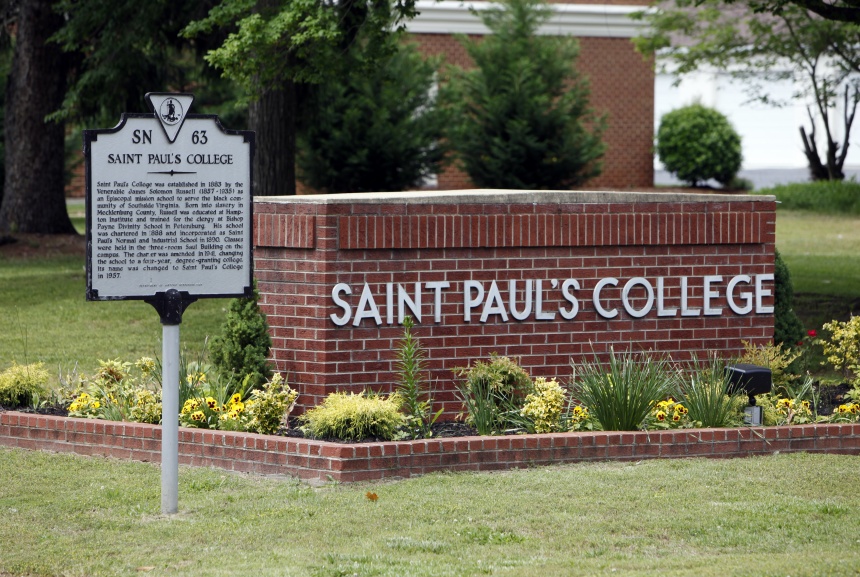
There are times I wonder what was going through Steve Jobs and Steve Wozniak head when they realized they could combine a telephone, camera, music player, and computer all in one device. They were reimagining what a telephone could be, what it could do, and how it could impact the world. The same must become true of institutions like Lewis College of Business, Morris Brown, and St. Paul’s. These institutions at their core must remain HBCUs, but their niche within the HBCU ecosystem must become something different. Their purpose must become something reimagined.
Two types of universities exist currently that HBCUs have no presence in and that African American sorely needs an established institutional presence in. They are institutes of technology and colleges of mines. A Wikipedia page describing institutes of technology is listed as “an institution of higher education and advanced engineering and scientific research or professional vocation education, specializing in science, engineering, and technology or different sorts of technical subjects.” The Colorado College of Mines (the school has a 1.2 percent African American student body) is described as a teaching and research institution devoted to engineering and applied science, with special expertise in the development and stewardship of the Earth’s natural resources by U.S. News. Currently, there are twenty institutes of technology throughout the United States, Massachusetts Institute of Technology and California Institute of Technology being by far the most prestigious. There are six independent college of mines and over a dozen of these type colleges located within universities.
As it stands now there are two truths. First, technologist are becoming the new barons. They are ushering in a new gilded age of wealth. Silicon Valley, a creation spun from Stanford University, is a flush with the best and brightest minds shaping the technology of tomorrow. A great many of them coming from places like the aforementioned MIT and CIT. The 2009 Kauffman report, showed that MIT-trained entrepreneurs produce over $2 trillion in revenues. Wade Roush of Xconomy also reported, “On average, MIT graduates form just under 1,000 companies every year, according to an executive summary of the report shared with the media before today’s announcement. Massachusetts is home to some 6,900 alumni-founded companies, while another 18,900 are scattered around the world, including 4,100 in California. MIT alumni-founded companies employ just under a million people in Massachusetts, 526,000 in California, 231,000 in New York, 184,000 in Texas, and 136,000 in Virginia.” If they were a nation, they would have the eleventh largest economy in the world based on GDP. In comparison, African American owned businesses sales do not generate even 0.5 percent of MIT-owned firms sales. An HBCU institution dedicated to technology could allow for innovations that help us close the technological gap in America and the business wealth gap.
Secondly, energy demand is frothing as emerging market demand intensifies and developing countries build up their economies. Four of America’s largest ten companies by revenue are in energy and six of the world’s largest ten companies by revenue are in energy. Africa has almost ten percent of the world’s oil reserves and eight percent of the world’s gas reserves, according to a BP statistical review. The US shale boom in North Dakota will make America in the coming decade one of the largest exporters of gas and oil to the rest of the world reversing a long standing trend of being energy dependent. In the graph below, US employment growth in the oil and gas industry is growing faster than total private sector employment. In Africa, where countries are even more dependent on oil and gas revenues, opportunities are even greater. Although I have focused on the oil and gas because of their prominence, a college of mines also includes extraction of coals and other fossil fuels. There is also the extraction of things like gold, diamonds, and other gems that are extracted. Given the expansion into space mining of asteroids that seems to be on the horizon by companies like Google and others, opportunities in mining are quite frankly out of this world.

To add a cherry on top about these two industries and the universities that produce them is the philanthropy to colleges and universities that accompanies the wealth. In the last decade, The Chronicle of Philanthropy shows that the top 10 donations from energy and technology have donated a combined $707 million and $965 million, respectively. Basically, over the past ten years these two fields alone have produced donations equivalent to all 100 plus HBCUs have accumulated over the past one hundred plus years. The largest donation ever to a college or university was from CIT alum and Intel, a semiconductor company with a market value of $121 billion and 108 000 employees, co-founder Gordon Moore donated $600 million to CIT in 2001. Thirty times the size of the largest donation ever given to an HBCU.

Instead of losing more HBCUs, schools like Lewis College of Business (MI) , Morris Brown (GA) , and St. Paul’s (VA) could be re-fit to enter areas where African America needs a stronger strategic presence both industrially and geographically. This gives an increased opportunity for research, specialization skills training, and entrepreneurial development. Three areas that HBCUs as a whole sorely need improvement. We must be bold and imaginative to save our beloved institutions – the phone of opportunity is ringing, but what kind of device will we be picking up?







![trower[1]](https://hbcumoney.com/wp-content/uploads/2014/02/trower1.jpg)


 HBCU Money