African America’s November Jobs Report – 11.1%

jobs_pic

Overall Unemployment: 5.8% (5.8%)

African America Unemployment: 11.1% (10.9%)

Latino America Unemployment: 6.6% (6.8%)

European America Unemployment: 4.9% (4.8%)

Asian America Unemployment: 4.8% (5.0%)

Previous month in parentheses.

Analysis: The overall unemployment rate went unchanged. Rising and falling unemployment was split between the four groups with African and European America both seeing blips upward and Latino and Asian America seeing blips downward. African America continues to be the only group with double digit unemployment.

African American Male Unemployment: 11.2% (10.7%)

African American Female Unemployment: 9.6% (9.4%)

African American Teenage Unemployment: 28.1% (32.6%)

African American Male Participation: 67.1% (67.7%)

African American Female Participation: 62.0% (61.4%)

African American Teenage Participation: 30.3% (29.0%)

Previous month in parentheses.

Analysis: African American males were hit with a double negative seeing their unemployment rate climb 50 basis points and their participation rate decline 60 basis points. African American females had their unemployment rate relatively unchanged with a slight uptick 20 basis points, but a healthy climb in participation rates of 60 basis points. African American teenagers achieved a double positive with their unemployment rate dropping an unprecedented 450 basis points and their participation rate increasing 130 basis points.

CONCLUSION: The overall economy added 321 000 jobs in November. This is the biggest gain of jobs in nearly three years and marks at least ten months of at least 200 000 job gains or more which has not happen in almost thirty years. African America added just 31 000 jobs in November; a rebound from its loss of 41 000 jobs the previous month. In the overall economy white-collar jobs led the way, but the same is not true for African America. African American teenagers led the way with a 56 000 jobs breaking through 500 000 plus employed for the first time this year. A much needed boost for a much maligned group. African American females also had a healthy gain of 86 000 jobs and reaching their second highest participation rate in the past five months. Unfortunately, with African American males in the decline African America now needs 222 000 jobs added to get its unemployment rate to the mythical 9.9 percent. An increase from last month’s 210 000 needed.

HBCU Money™ Business Book Feature – The Second Machine Age: Work, Progress, and Prosperity

2ma

A revolution is under way.

In recent years, Google’s autonomous cars have logged thousands of miles on American highways and IBM’s Watson trounced the best human Jeopardy! players. Digital technologies—with hardware, software, and networks at their core—will in the near future diagnose diseases more accurately than doctors can, apply enormous data sets to transform retailing, and accomplish many tasks once considered uniquely human.

In The Second Machine Age MIT’s Erik Brynjolfsson and Andrew McAfee—two thinkers at the forefront of their field—reveal the forces driving the reinvention of our lives and our economy. As the full impact of digital technologies is felt, we will realize immense bounty in the form of dazzling personal technology, advanced infrastructure, and near-boundless access to the cultural items that enrich our lives.

Amid this bounty will also be wrenching change. Professions of all kinds—from lawyers to truck drivers—will be forever upended. Companies will be forced to transform or die. Recent economic indicators reflect this shift: fewer people are working, and wages are falling even as productivity and profits soar.

Drawing on years of research and up-to-the-minute trends, Brynjolfsson and McAfee identify the best strategies for survival and offer a new path to prosperity. These include revamping education so that it prepares people for the next economy instead of the last one, designing new collaborations that pair brute processing power with human ingenuity, and embracing policies that make sense in a radically transformed landscape.

A fundamentally optimistic book, The Second Machine Age will alter how we think about issues of technological, societal, and economic progress.

HBCU Money™ Dozen 12/1 – 12/5

images

Did you miss HBCU Money™ Dozen via Twitter? No worry. We are now putting them on the site for you to visit at your leisure. We have made some changes here at HBCU Money™ Dozen. We are now solely focused on research and central bank articles from the previous week.

Research

Orion, NASA’s next-gen spacecraft, is no smarter than your cell phone. l Computerworld http://bit.ly/1ysyoFq

Eels use electric shocks to remote control prey movements l New Scientist http://ow.ly/FofyS

Melting of the West Antarctic ice sheet is happening faster than we thought l Network World http://ow.ly/FofW2

Why enterprises should make analytics invisible l Computerworld http://ow.ly/Fog0n

Silicon Valley’s H-1B Immigration Position Has Some Holes l CIOonline http://trib.al/mSVPbk6

Deadline for grant, where college student teams explore sustainability, due by 12/16 l EPA Research http://go.usa.gov/yAZx

Federal Reserve, Central Banks, & Financial Departments

Brooklyn is the country’s least affordable place to live l Housing Wire http://hwi.re/7kMtzm

Health care affordability gap has widened between the rich and the poor l St. Louis Fed http://bit.ly/1rnRN8z

How learning a language improves your brain l World Economic Forum http://wef.ch/1udN596

The most recent analysis of the economic effects of the Ebola on Sierra Leone l World Bank http://wrld.bg/FmjxK

Credit unions are skeptical about CFPB basing nationwide payday loan laws on Colorado model l CU Journal http://bit.ly/1Alf3VM

Fully 70% of homebuyers don’t know about down payment assistance l Housing Wire http://hwi.re/7kKq0r

Thank you as always for joining us on Saturday for HBCU Money™ Dozen. The 12 most important research and finance articles of the week.

The HBCU Money™ Weekly Market Watch

Our Money Matters /\ December 5, 2014

A weekly snapshot of African American owned public companies and HBCU Money™ tracked African stock exchanges.

NAME TICKER PRICE (GAIN/LOSS %)

African American Publicly Traded Companies

Citizens Bancshares Georgia (CZBS) $9.00 (0.00% UNCH)

M&F Bancorp (MFBP) $4.85 (4.90% DN)

Radio One (ROIA) $1.54 (3.14% DN)

African Stock Exchanges

Bourse Regionale des Valeurs Mobilieres (BRVM)  243.96 (0.22% DN)

Botswana Stock Exchange (BSE)  9 510.89 (0.03% DN)

Ghana Stock Exchange (GSE)  2 300.11 (7.22% UP)*

Nairobi Stock Exchange (NSE)  166.50 (N/A)

Johannesburg Stock Exchange (JSE) 49 506.59 (0.23% UP)

International Stock Exchanges

New York Stock Exchange (NYSE) 10 960.37 (0.07% UP)

London Stock Exchange (LSE)  3 607.25 (0.95% UP)

Tokyo Stock Exchange (TOPIX)  1 445.67 (0.35% UP)

Commodities

Screen Shot 2014-12-05 at 2.16.26 PM

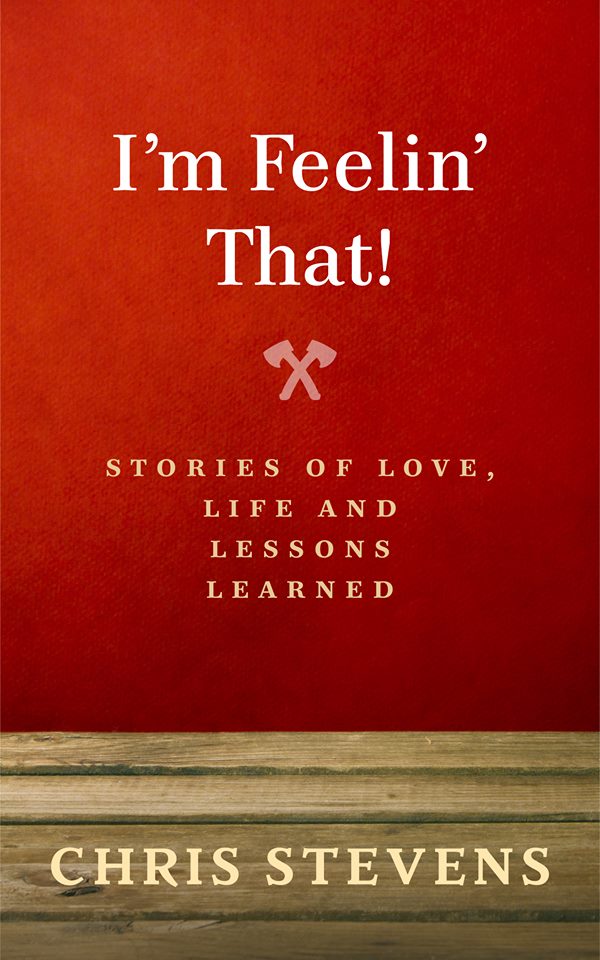
Chris Stevens Shows HBCUpreneurs Can Have Life Outside Of Work – Publishes First Book Of Fictional Stories

William A. Foster, IV

10437718_819345962767_3952133520151584134_n

It is no easy task for an entrepreneur or CEO of a startup, small business, or rapidly growing business to find time for themselves, let alone write a book. Yet, that is exactly what Delaware State University alum and Stevens Communications and Consulting founder managed to do. A compilation of fictional short stories show Stevens flexing his literary pen. Kip Diggs’ in his Amazon review says of Stevens’ book, “Chris’s freshman effort is a fine collection of short stories covering a wide variety of topics. He takes on mental illness, emotional abandonment, greed, lust and even workplace canoodling.”

Moments and interest away from your business are actually vital to building your business. The Guardian’s Mark Williams writes, “Small business owners can’t be good at everything, but many are particularly bad at taking time off. Research published by business software provider Sage suggests that more than 30% of UK small business owners didn’t have a summer holiday last year.” This lack of downtime impacts and often strains familial relationships, entrepreneur psychology, and health. All paramount to an entrepreneur’s capacity to remain primed to focus strategically and tacitly build their businesses.

HBCUpreneurs can definitely take a lesson of wisdom from Mr. Stevens and explore interest and time outside of their business. Jeff Weiner of the World Economic Forum says, “The solution, as simple as it sounds, is to periodically schedule nothing. Use that buffer time to think big, catch up on the latest industry news, get out from under that pile of unread emails, or just take a walk. What ever you do, just make sure you make that time for yourself — everyday and in a systematic way — and don’t leave unscheduled moments to chance. The buffer is the best investment you can make in yourself and the single most important productivity tool I use.” So find time to exercise, read, pursue a hobby, or write as in Mr. Stevens case. Whatever you do sometimes the best way to move forward with your business is to turn off for a moment.  We will be looking for the next installment of Mr. Stevens literary works even as he continues to build Stevens Communications and Consulting into a media consulting powerhouse.

377704_693905411637_1953668522_n

Click here to head over to Amazon and buy Chris Stevens’ “I’m Feelin That!: Stories Of Love, Life and Lessons Learned”