When Intel Leaves: Endowments, NCCU, and the $2.5 Billion NBA Paradox

“I know I got it made while the masses of black people are catchin’ hell, but as long as they ain’t free, I ain’t free.” – Muhammad Ali

The recent news that Intel will discontinue its $1 million annual funding of North Carolina Central University’s (NCCU) Technology Law and Policy Center is more than just a line item in the university’s budget. It is a sharp reminder of how precarious institutional development becomes when African American colleges and universities rely on the European American corporate cycle of generosity and withdrawal. Where is African American corporate philanthropy is a pertinent question, but an article for another day.

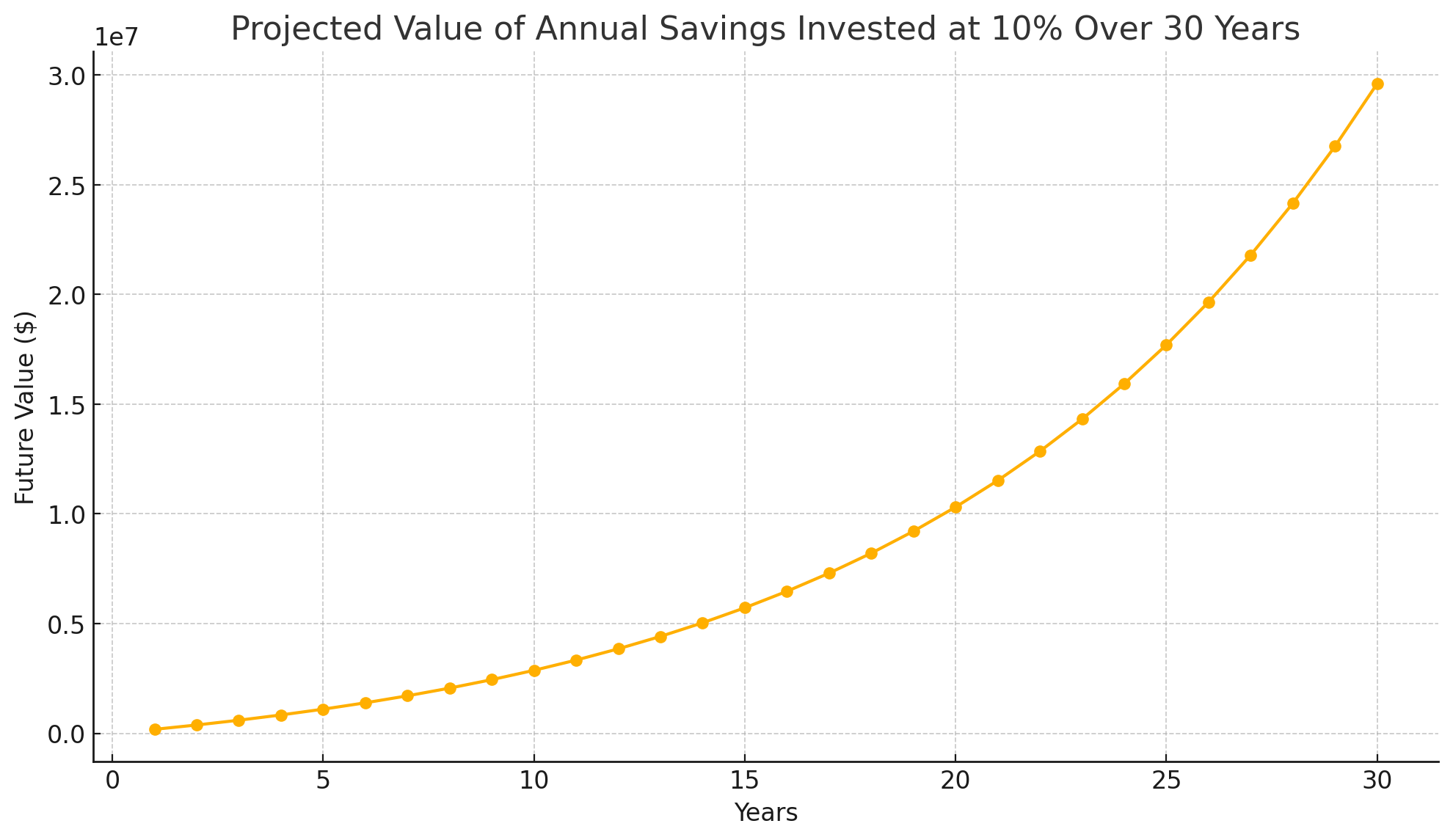
Intel’s departure leaves a gap that must now be filled through other means. But the mathematics of filling it points to a broader truth: without substantial, permanent endowments, HBCUs will remain vulnerable to the political and financial whims of European American corporations. To replace $1 million in annual program funding, NCCU would need to raise between $20 million and $25 million in endowment principal assuming a 4–5% annual spending rate, the standard in higher education finance.

The fact that an entire academic pipeline, designed to produce future African American lawyers and policymakers, can be destabilized by a single corporate decision underscores the fragility of HBCU institutional power. And it raises a haunting contrast: while 66 African American NBA players will together earn $2.5 billion in salaries this upcoming season, not a single African American university controls an endowment robust enough to insulate it from the kind of disruption Intel’s withdrawal has now caused.

The mechanics are straightforward. Endowments work by pooling donated capital, investing it, and spending a sustainable portion of annual returns—usually 4–5%. To replace Intel’s $1 million annual gift, NCCU must therefore build an endowment of $20–25 million. This is not extraordinary by university standards. At most predominantly white institutions (PWIs), a $25 million endowment is considered modest. At Harvard, Yale, or Stanford, it would not even make the footnotes. Yet for NCCU, an institution with an endowment of $89 million as of December 2024, the sudden need for another $20–25 million underscores the gap between HBCUs and their white peers.

The underlying truth is that corporate funding is inherently unstable. It ebbs and flows with market cycles, political administrations, and corporate priorities. Endowments, however, endure across generations. The very act of raising such capital is itself an exercise in institutional power: it demonstrates to the world that the university and its community can stand on their own financial feet.

Intel did not single out NCCU maliciously. The company is undergoing a profound transformation, not least because the U.S. government has become its largest shareholder after a multi-billion-dollar deal with the Trump administration. Like other firms facing political scrutiny, Intel is quietly shedding high-profile DEI commitments. For NCCU, however, the effect is real. The Technology Law and Policy Center was designed to provide African American law students with training in emerging technology and policy—a space historically closed to Black lawyers. It also featured internships at Intel, summer placements, and the now-defunct “Intel Rule,” which required outside law firms to staff diverse teams if they wanted Intel’s business. Now, without a replacement funding mechanism, the Center risks contraction. Students will still enroll. Faculty will still teach. But the acceleration that Intel’s money provided—the ability to recruit nationally, to build cutting-edge programming, to give students exposure to high-tech legal practice—will slow.

Enter the paradox of the NBA’s 66 Black players earning $25 million or more in the upcoming season. Collectively, those 66 players will earn $2.5 billion in salary during the 2025–2026 season. Each of these players individually makes at least what NCCU would need to permanently replace Intel’s $1 million annual commitment through endowment. The collective sum is staggering: $2.5 billion in one season—enough to seed $25 million endowments at 100 HBCUs.

It is not about individual responsibility. No one player can be expected to save an institution. But collectively, the paradox points to the imbalance between African American individual wealth and African American institutional poverty. Even if just 10% of that wealth—$250 million—were organized and directed into HBCU endowments, the result could replace Intel’s contribution not only at NCCU but across multiple campuses. Yet there is no mechanism, no institutional strategy, no coordinated pipeline that directs such flows into African American universities. This is not new. For decades, African American excellence has been harvested at the level of the individual, while African American institutions have remained underfunded. The NBA is simply the latest, most visible example.

The Intel withdrawal reminds us of a hard truth: reliance on outside benevolence is not a strategy for power. It is, at best, a strategy for survival. Corporate giving is always the first budget item to shrink when recession looms or political winds shift. For HBCUs, this means programs rise and fall on decisions made in Silicon Valley or Wall Street boardrooms—far removed from Durham, Tallahassee, Baton Rouge, or Montgomery. The vulnerability is compounded when African American communities assume that the generosity of corporations will substitute for building our own endowments. The danger is not simply financial but cultural: it conditions us to believe that power comes from outside, not from within.

Intel’s $1 million a year was not charity—it was investment. It bought Intel goodwill, a trained pipeline of diverse lawyers, and reputational capital in the DEI era. Now that DEI is politically unpopular, the investment is deemed expendable. This is why endowments matter. They are not subject to the quarterly report or the election cycle. They anchor institutions in the long term.

Let’s be clear about the scale of the challenge. The combined endowments of all HBCUs hover around $4 billion, compared to more than $800 billion at PWIs. Harvard alone has an endowment of nearly $52 billion. NCCU’s endowment stands at $89 million. To raise an additional $20–25 million to replace Intel’s support would represent a 22–28% increase in its current endowment base. Such a leap is achievable—but it requires strategy. It means cultivating alumni giving systematically. It means leveraging African American wealth beyond alumni, drawing in professional athletes, entertainers, and entrepreneurs. It means creating vehicles—donor-advised funds, pooled endowments, institutional investment cooperatives—that make giving both efficient and impactful. Most of all, it means shifting mindset. We must stop thinking of endowments as luxuries reserved for Ivy League institutions. They are necessities. They are the only way to secure institutional independence.

The Intel decision can serve as a turning point, if we are willing to see it clearly. Corporations are not institutional guardians. They may play a role, but they will not underwrite our survival. Their goals are their own. When interests diverge, as they now have, funding vanishes. Individual wealth must be institutionalized. The contrast between NBA salaries and HBCU endowment poverty is not about shaming athletes. It is about building structures that make institutional giving the default, not the exception. Endowments are the only safety net. No government program, no corporate sponsorship, no philanthropic fad can substitute. Only endowments give institutions perpetual capacity to fund themselves.

What would it take, concretely, for NCCU to raise the $25 million needed? A handful of major gifts in the $2–5 million range from alumni, athletes, or African American business leaders could jump-start the campaign. NBA, NFL, and WNBA players could be recruited to create a pooled fund. Instead of individual gifts, imagine a collective “Athletes for HBCU Endowments” initiative. African American foundations and community funds could direct grants toward seed capital, matched by alumni. If every NCCU law graduate gave $1,000 a year for ten years, the cumulative effect would approach the tens of millions. NCCU could also partner with African American-owned banks and investment firms to maximize returns and circulate dollars within the community. The strategy would not only replace Intel but set a precedent: when outside money leaves, we do not shrink. We build.

The broader question is not whether NCCU will survive the loss of Intel’s support. It will. The real question is whether African American institutions will continue to live in the shadow of dependency—or whether we will use moments like this to chart a new course. The paradox of $2.5 billion in NBA salaries versus the need for a $25 million endowment is not just a rhetorical flourish. It is a mirror held up to African America. It asks whether we will continue to celebrate individual wealth while neglecting collective survival.

Every dollar of Intel’s withdrawal can be replaced. But only if African American wealth is organized. Only if alumni, athletes, and entrepreneurs see endowments not as gifts but as obligations. Only if we remember that the true measure of power is not what any one of us earns, but what we can build together.

Intel has reminded us of an uncomfortable truth: corporate giving is temporary. Endowments are permanent. To replace $1 million a year, NCCU needs $25 million in endowment. That number is not insurmountable. It is the equivalent of one NBA salary in a single season. There are 66 African American players earning at least that much this year alone, with combined salaries of $2.5 billion. The juxtaposition is stark: individuals flourish while institutions starve. The future of HBCUs—and the broader African American ecosystem—depends on closing that gap. Until African America learns to institutionalize its wealth, every Intel withdrawal will feel like a crisis. But the day we build our endowments, such exits will be footnotes. And our institutions will finally stand on the firm ground they have always deserved.

Disclaimer: This article was assisted by ChatGPT.
Revisiting Red Summer: Bloodshed, Black Land, and the Battle for America’s Soil

“I had crossed the line. I was free; but there was no one to welcome me to the land of freedom. I was a stranger in a strange land.” – Harriet Tubman

Race riots or rural reckoning? The answer lies beneath the surface—and often beneath the soil itself.

In the blistering summer of 1919, the United States erupted in racial violence unlike anything the country had witnessed since Reconstruction. From Washington, D.C. to Chicago, from Norfolk to Omaha, from Knoxville to the cotton fields of Arkansas, more than three dozen cities and rural towns became sites of bloodshed as white mobs attacked African American communities with a ferocity that was, in many instances, organized, deliberate, and unrelenting. Historians dubbed it the Red Summer, invoking both the color of blood and the communist anxieties of the era. For more than a century, the dominant explanation has centered on racial tensions stoked by the Great Migration, post-war competition for jobs, and white anxiety over African American assertiveness. But a deeper, more unsettling question lingers beneath those textbook explanations: was Red Summer not merely about urban unrest or racial animosity, but about land?

That question has returned with renewed urgency in recent years, amid a widening reexamination of Black land ownership and its deliberate erosion over the past century. As calls for reparations grow louder and more specific, so too does the need to reassess the forces that helped decimate Black wealth and autonomy in America. And when Red Summer is placed in that context, it begins to look less like a spontaneous explosion of racial rage and more like the bloodiest chapter in a longer, quieter war — a war fought not only over race but over soil.

The idea that African Americans were only victims of economic exclusion in early 20th-century America is a distortion that history has been slow to correct. By 1910, African Americans owned more than 15 million acres of land, largely concentrated in the South. Black farmers — most of them formerly enslaved or their direct descendants — had managed to accumulate land against crushing odds, frequently purchasing it collectively, through church cooperatives, fraternal organizations, or from white landowners seeking to offload marginal plots. These holdings were not merely symbolic achievements. They were strategic infrastructure.

Land ownership among Black Americans was more than a pathway to individual wealth; it was a bulwark against white supremacy. Land meant food security, political leverage, and a degree of independence in a nation otherwise constructed around Black dependency and racial domination. In some areas of the South, land ownership translated into Black-majority townships and counties, Black-controlled local economies, and the fragile but real possibility of a parallel civic sovereignty. Black landowners could vote with greater difficulty for whites to suppress. They could withhold labor. They could resist eviction. They could educate their children. They were, in a word, ungovernable in ways that landless sharecroppers were not.

African Americans were not simply asking for equality; in some places, they were building it. And that may have been the greatest threat of all.

Virginia-born coachman Thomas A. Dillon and his wife, Margaret, a domestic servant and native of Newton, Massachusetts, pose in the parlor of their home at 4 Dewey Street with children Thomas, Margaret, and Mary in 1904.

Nowhere is the link between land and lethal violence more clearly illustrated than in the massacre at Elaine, Arkansas — one of the deadliest and least discussed events of the entire Red Summer. On the night of September 30, 1919, African American sharecroppers gathered in a church in Phillips County to organize a union, the Progressive Farmers and Household Union of America. Their goals were modest by any democratic standard: they wanted transparent accounting from the plantation owners who controlled the cotton market, an end to the rigged ledger systems that kept sharecroppers in perpetual debt, and the ability to sell their crops independently on the open market. It was a meeting about fair contracts, not rebellion. What descended upon them was a massacre.

White mobs, augmented by federal troops dispatched from Little Rock, swept through the area for days. An estimated 100 to 200 Black men, women, and children were killed, though the official tallies — sanitized for public consumption — counted only a handful of white deaths and labeled the episode a Black insurrection. The real insurrection was economic. The plantation economy of the Delta had been built on the enforced ignorance and powerlessness of its Black labor force. If Black sharecroppers could collectively organize, access fair markets, and demand accurate accounting, some of them might eventually become landowners themselves. That possibility — not armed revolt — was what the white establishment could not tolerate.

The Elaine massacre exposed a hidden economic architecture underlying Southern racial terror. Violence was not just an expression of hatred; it was a tool of market control. When the ledger failed to keep Black workers in debt, the mob stepped in. When the law was too slow, the rifle arrived first.

Though most of the events of Red Summer are framed through an urban lens — riots in Chicago, Washington, and Knoxville dominating the historical imagination — the violence cannot be disentangled from broader efforts to contain and reverse Black economic advancement. Indeed, many of the African Americans who had migrated to Northern cities were themselves displaced farmers or sharecroppers whose rural land ownership efforts had been stymied, swindled, or literally burned to the ground. The Great Migration was not only a story of aspiration; it was also a story of flight.

In Chicago, where violence erupted in late July after a Black teenager named Eugene Williams drowned after being struck by stones thrown by white men when he accidentally drifted past an informal racial boundary in Lake Michigan, the precipitating incident masked deeper structural conflicts. African Americans had begun purchasing homes and moving into previously all-white neighborhoods. Black entrepreneurs were opening businesses. The color line in Chicago was not just social — it was economic, and it was being crossed. What followed Williams’s death was a week of brutal violence that left 38 people dead and more than 500 injured. The riot was sparked by a beach dispute, but what it expressed was white terror at the prospect of Black economic mobility in the urban North.

Property rights were at the center of the Chicago conflict in ways that have only grown clearer with time. Redlining would not be formalized by the federal government until the 1930s, but the ideology animating it — that Black habitation diminished property values, that Black ownership was a form of invasion — was already operating through mob violence in 1919. White homeowners’ associations, some of which had explicitly bombed Black homes in the years leading up to the riot, continued their campaigns of intimidation with renewed license after the summer’s bloodshed. The message was consistent whether it came from the Delta or the Midwest: African Americans had no rightful claim to the land, whether in field or neighborhood.

What made Red Summer different from previous episodes of racial terror, and what made it so culturally resonant, was that it came at a moment when African American self-determination was not just a dream but a demonstrable reality. The years surrounding World War I had seen an extraordinary flowering of Black institutional life: newspapers like the Chicago Defender and the NAACP’s Crisis magazine reached hundreds of thousands of readers; the Universal Negro Improvement Association under Marcus Garvey was drawing mass followings with its message of African sovereignty; and Black veterans returning from the battlefields of France, having fought for democracy abroad, were unwilling to accept its absence at home. Many of these veterans would become central figures in the armed resistance that communities mounted against white mobs in 1919. They met violence with violence, and the White establishment found the combination of Black assertiveness, Black organization, and Black land deeply alarming.

The economic threat extended well beyond individual plots of farmland. In Tulsa, Oklahoma — whose 1921 Greenwood massacre falls just outside the official boundaries of Red Summer but belongs to the same continuum of violence — an entire district of Black economic life was leveled. Greenwood, known as Black Wall Street, was home to hundreds of Black-owned businesses, banks, law offices, and hotels. It was the product of deliberate community investment and collective self-determination. When white mobs descended in May 1921, aided by the Tulsa Police Department and private aircraft that reportedly dropped incendiary materials on the district, they did not merely kill people. They destroyed an economic ecosystem that had taken a generation to build. The land was seized. The insurance claims were denied. The neighborhood was never fully restored.

The pattern repeated itself, with local variations, across decades. What Red Summer initiated, the legal and bureaucratic infrastructure of mid-20th century America codified. Heirs’ property laws — in which land passed down without a formal will became jointly owned by all descendants — rendered Black landholdings acutely vulnerable to partition sales. A developer or speculator who purchased a single heir’s fractional share could force the sale of the entire property, often at below-market prices, with no recourse for the remaining family members. These laws, ostensibly race-neutral, operated with devastating specificity against Black families whose distrust of white legal institutions, forged over generations of documented fraud and violence, led them to avoid formal probate processes.

The federal government was often a direct participant in dispossession. The United States Department of Agriculture systematically denied Black farmers access to loans and subsidies that were extended routinely to their white counterparts. From the New Deal agricultural programs of the 1930s through the farm credit crisis of the 1980s, Black farmers were excluded, underfunded, and allowed to fail at rates far exceeding their white peers. In 1999, the Pigford v. Glickman class action settlement acknowledged decades of discriminatory lending by the USDA and resulted in payouts to tens of thousands of Black farmers — but by then, most of the land was already gone.

Numbers are beyond staggering in their finality. African Americans owned approximately 15 to 19 million acres of land at the peak of Black land ownership around 1910. By 1997, that figure had collapsed to fewer than 2 million acres — a loss of nearly 90 percent over the course of a single century. The USDA itself acknowledged that this loss was not driven solely by economic forces. Discrimination, fraud, violence, and legal manipulation played decisive roles in transferring land from Black families to white institutions and individuals.

The state of Black land ownership in America today reflects the accumulated weight of that century of dispossession. African Americans currently own less than 1 percent of rural land in the United States, despite constituting approximately 14 percent of the national population. In the South, where Black land ownership once represented a genuine counter-economy, the erasure is especially pronounced. In Mississippi, Alabama, and Georgia — states where Black farmers built substantial holdings after Emancipation — Black land ownership has been reduced to a thin remnant. Entire family lineages have been severed from the soil their ancestors purchased with freedom wages, war bonuses, and borrowed hope.

Consequences extend far beyond sentiment. Land is the primary vehicle through which intergenerational wealth is transferred in the United States. Home equity and real property account for the majority of household net worth for most American families. The racial wealth gap — the persistent, yawning disparity between Black and white household wealth, which current estimates place at a ratio of roughly 1 to 8 — cannot be understood without accounting for the systematic denial of land and property rights to African Americans. Every generation of a Black family that was driven from its land, or swindled out of it, or watched it seized through partition sale or eminent domain, is a generation that could not pass on the compounding advantages of ownership. The wealth gap is not an accident of markets. It is the arithmetic of dispossession.

Contemporary efforts to address this reality operate at the margins of what is needed. Organizations like the Federation of Southern Cooperatives, founded in 1967, have worked for decades to help Black farmers retain land through legal assistance and cooperative economics. The Land Loss Prevention Project in North Carolina has challenged fraudulent partition sales and helped heirs navigate probate processes designed for a legal culture that was never built with them in mind. The Black Farmers Fund and similar initiatives provide capital and technical assistance to a dwindling population of Black agriculturalists. In 2021, Congress included provisions in the American Rescue Plan Act to provide debt relief to socially disadvantaged farmers — provisions that were subsequently challenged in federal court by white farmers who argued that race-conscious relief violated the Equal Protection Clause, a stunning inversion of the history that made such relief necessary.ve increasingly focused on this disparity. But to properly assess the scale of restitution, history must be rewritten to acknowledge not just the loss of life, but the loss of land. If Red Summer is reframed as a land war not only a race war, then it demands a different response.

Programs such as the Black Farmers Fund, the Federation of Southern Cooperatives, and the work of legal nonprofits like the Land Loss Prevention Project have begun to claw back some ground. Yet without a federal reckoning one that links racial violence to economic theft the narrative remains incomplete.

Reparations proposals have increasingly focused on land as the foundational unit of redress. Scholars like Thomas Mitchell, who pioneered the Uniform Partition of Heirs Property Act — now adopted in more than a dozen states — have worked to close the legal loopholes that enabled generations of Black land theft. Others have proposed direct federal land grants or land trusts as a more durable form of repair than cash payments alone. The argument is both pragmatic and historical: if land was what was taken, land is what must be restored.

But to make that argument with the force it deserves requires an honest reckoning with Red Summer as something more than a riot. It requires understanding 1919 not as an aberration but as an acceleration — the moment when informal systems of racial violence were enlisted on a national scale to reverse Black economic progress. The targets were not random. They were selected. Churches where sharecroppers organized were burned. Prosperous Black neighborhoods were razed. Landowners were murdered and their deeds contested in their absence. The land did not transfer by accident. It was taken by design, and the taking was protected, in county courthouses and federal offices alike, for decades afterward.

Malcolm X once observed that land is the basis of all independence. He was not speaking metaphorically. He was speaking from a tradition of Black political thought that understood, from Reconstruction onward, that the promises of American citizenship were hollow without the material foundation that land provides. The freedpeople who demanded forty acres understood this. The sharecroppers of Elaine who organized for fair prices understood it. The Greenwood entrepreneurs who built Black Wall Street understood it. And the white mobs, the plantation owners, the local sheriffs, the federal troops, and the discriminatory bureaucracies that systematically dismantled what Black Americans built — they understood it too.

Red Summer was not simply a spasm of postwar bigotry, nor an understandable if deplorable expression of racial anxiety. It was a calculated and coordinated assertion of dominance over a people who were, against every structural obstacle, building something that looked like sovereignty. The violence of 1919 did not emerge from nowhere, and it did not end with the cooling of summer temperatures. It opened a door that the legal and economic machinery of the 20th century walked through for decades, quietly completing the dispossession that the mobs had begun.

In the end, Red Summer may be remembered not only for its flames but for the fertile ground those flames sought permanently to char. It was not only a summer of blood. It was a war over soil — and the aftershocks of that war continue to shape the contours of American inequality today, in the wealth gaps, the landlessness, the severed inheritances, and the unanswered demands for repair that echo across every serious conversation about racial justice in this country.

📅 Visual Timeline: The Red Summer of 1919

April 13, 1919 – Jenkins County, Georgia

A violent confrontation erupts in Millen, Georgia, resulting in the deaths of six individuals and the destruction of African American churches and lodges.

May 10, 1919 – Charleston, South Carolina

White sailors initiate a riot, leading to the deaths of three African Americans and injuries to numerous others. Martial law is declared in response.

July 19–24, 1919 – Washington, D.C.

Racial violence breaks out as white mobs attack Black neighborhoods. African American residents organize self-defense efforts.

July 27–August 3, 1919 – Chicago, Illinois

The Chicago Race Riot begins after a Black teenager is killed for swimming in a “whites-only” area. The violence results in 38 deaths and over 500 injuries.

September 30–October 1, 1919 – Elaine, Arkansas

African American sharecroppers meeting to discuss fair compensation are attacked, leading to a massacre where estimates of Black fatalities range from 100 to 800.

October 4, 1919 – Gary, Indiana

Racial tensions escalate amid a steel strike, resulting in clashes between Black and white workers.

November 2, 1919 – Macon, Georgia

A Black man is lynched, highlighting the ongoing racial terror during this period.

Disclaimer: This article was assisted by ClaudeAI.

The “Real World” Myth: How Sending African American Children to PWIs Undermines African American Institutional Power

“When you control a man’s thinking you do not have to worry about his actions. He will find his ‘proper place’ and will stay in it. You do not need to send him to the back door. He will go without being told; in fact, if there is no back door, he will cut one for his special benefit.”
Carter G. Woodson, The Mis-Education of the Negro

For generations, African American families have been told a myth that has become so pervasive it often passes without challenge: the idea that sending their children to predominantly white institutions (PWIs) of higher education better prepares them for the “real world.” On its surface, the reasoning sounds practical. Parents believe that if their child learns how to navigate white spaces, acquires the habits and codes of those spaces, and builds networks with white peers, they will be more successful in corporate America and society at large. It is a calculation born of centuries of survival in a society structured against African Americans.

But this calculation, when examined deeply, does not hold up to scrutiny. Instead of preparing African American students for the “real world,” the widespread preference for PWIs undermines the institutional power of African Americans and deprives HBCUs of the very human and financial capital they need to thrive.

The “real world” itself is not a fixed entity. It is not a monolith that African Americans must prepare to join on white terms. The real world is what a group of people make it. White Americans have defined their world and fortified it through their institutions such as universities, banks, hospitals, corporations, and foundations. Asian Americans, Jewish Americans, and other groups have done similarly, leveraging their educational and economic institutions to shape their reality. Yet, African America, too often, has internalized the belief that its institutions are insufficient, opting instead to send its brightest students and most valuable tuition dollars into the coffers of PWIs.

This is not simply a matter of personal choice. It is a collective decision with collective consequences. The more African American families buy into the “real world” myth, the weaker HBCUs become, and the less capable African America is of shaping its own real world.

The PWI Path and Its Assumptions

African American parents who choose PWIs for their children often do so with good intentions. They want their children to access elite resources, prestigious networks, and the perceived stamp of approval that comes with a degree from a PWI. They assume that because the U.S. labor market is majority white, exposure to that environment early on is critical to future success.

But these assumptions reveal several contradictions. White students do not consider attending an HBCU to balance their cultural experiences. They do not think, “I’ve had too much whiteness; I need a more balanced education.” Instead, they progress from a PWI undergraduate degree to a PWI graduate school, then into PWI-dominated corporate and institutional spaces. Their cultural immersion is never questioned, because their institutions define normalcy.

Meanwhile, African Americans alone have been conditioned to believe that too much African American immersion is dangerous, insular, or unrepresentative of the “real world.” The irony is sharp: a student may attend an HBCU, which is itself a diverse universe of African American culture, class, geography, and ideology, and still be told they have not had enough “exposure.” Yet a white student who grows up in an all-white town, attends an all-white PWI, and joins all-white firms is never told they lack “diversity of experience.”

This asymmetry is not accidental. It is a reflection of who controls institutional narratives in America. African Americans who absorb the “real world” myth are effectively outsourcing their children’s futures to white institutions, all while their own institutions wither from neglect.

The Diversity Within HBCUs

Another overlooked dimension of this myth is the assumption that HBCUs are homogeneous, insular spaces. This could not be further from the truth. The African American experience itself is vast. It includes children of Caribbean immigrants, descendants of enslaved Africans, first-generation college students from rural Mississippi, affluent families from Washington, D.C., African students from Nigeria and Ghana, Afro-Latinx students from Puerto Rico and the Dominican Republic, and more.

To attend an HBCU is not to encounter “less” diversity; it is to engage with the broad spectrum of the African Diaspora in concentrated form. These institutions are living laboratories of cultural exchange, intellectual competition, and class interaction.

By contrast, a PWI often provides African American students with only a sliver of diversity: they are frequently tokenized, expected to represent their entire race, and shuffled into diversity programming that centers their marginalization. Their peers may never learn about African American life beyond stereotypes, because the institution itself was never designed to illuminate African American experiences.

Thus, the African American student at an HBCU receives not just an education, but an immersion in African American pluralism is a preparation for engaging the world on African American terms. The PWI student, meanwhile, often internalizes the idea that their presence is conditional, exceptional, or peripheral.

Institutional Power and the Capital Flight from HBCUs

Every African American student who chooses a PWI over an HBCU represents more than an individual choice. It is the redirection of tuition dollars, alumni loyalty, and future endowment contributions away from African American institutions.

Imagine if even half of the African American students currently enrolled at PWIs redirected themselves to HBCUs. The financial impact would be transformative. Endowments would grow, faculty recruitment would expand, research capacity would increase, and the prestige of HBCUs would rise proportionally. These gains would compound over decades, creating a feedback loop of institutional strength.

Instead, what we have is a leakage of capital and talent into institutions that do not prioritize African American empowerment. PWIs benefit from African American enrollment statistics, which they parade as evidence of diversity, while offering little in terms of institutional reciprocity. They gain the reputational boost, while HBCUs lose the enrollment and financial stability they desperately need.

The result is predictable: HBCUs remain underfunded, under-endowed, and under-appreciated, not because they lack quality, but because too many African American families believe the myth that their children will be better off elsewhere.

The Real World Is What We Make It

The central flaw in the “real world” argument is the assumption that African Americans must adapt to a world built by others rather than shape their own. The real world is not an objective standard but it is the result of group will, institutional building, and cultural reinforcement.

White Americans shaped their “real world” through the sustained investment in Harvard, Yale, Princeton, and thousands of other institutions that center their history, culture, and power. Jewish Americans created their “real world” through a network of universities, foundations, and cultural centers that prioritize their collective survival. Asian Americans are building their own “real world” through business networks, educational pipelines, and capital flows that stretch across the Pacific.

If African Americans accept the premise that their children must be trained in white institutions to succeed, they have already conceded that they cannot or will not shape their own real world. They have abandoned the project of institutional power in favor of individual adaptation. This is not preparation; it is surrender.

Psychological Implications: Internalizing Inferiority

Beyond the economic impact, the myth has deep psychological consequences. African American students raised on the belief that HBCUs are not “the real world” internalize a subtle but corrosive idea: that their own culture is insufficient. They may carry degrees from elite PWIs, but the cost is often an alienation from African American institutional life.

The psychological message is clear—white spaces are the pinnacle of preparation, while African American spaces are something to escape. This creates a generational feedback loop where each successive cohort of African American parents pushes harder for PWIs, believing they are giving their children an advantage, while in reality they are weakening the very institutions that could make African America self-sufficient.

It also distorts identity. An African American child who grows up believing they must leave their community to succeed will often view their success as individual rather than collective. They may become comfortable being the “only one in the room,” rather than building the rooms where African Americans are not tokens but owners.

The Comparative Case: No Other Group Thinks This Way

No other racial or ethnic group in America sends its children away from its own institutions to gain “real world” experience. White families do not think Harvard students lack preparation because they have spent too much time around other white students. Jewish families do not believe their children need to avoid Jewish institutions to be competitive. Chinese Americans do not view Chinese language schools or cultural institutions as a liability to their children’s preparation.

It is only African Americans who accept this self-defeating logic. This uniqueness underscores the lingering effects of centuries of racial conditioning. From slavery to Jim Crow to modern structural racism, African Americans have been taught that their own institutions are inferior. The “real world” myth is simply the modernized version of this lesson.

By contrast, when other groups send their children to institutions, they do so with the understanding that these institutions will strengthen their cultural identity while equipping them to engage broader society on their own terms. For African Americans, the task must be the same: build HBCUs into the kind of institutions that define, rather than defer to, the real world.

Rethinking the “Preparation” Narrative

If the goal of higher education is preparation, then the question is: preparation for what? For African Americans, preparation should not simply mean being employable in someone else’s institution. It should mean being capable of building, leading, and sustaining African American institutions.

An HBCU graduate is not less prepared for corporate America than a PWI graduate; in many cases, they are more resilient, more culturally grounded, and more aware of systemic barriers. The difference is that the HBCU graduate, if supported by their community, is positioned to reinvest in African American institutional life.

The narrative that PWIs uniquely prepare African Americans for the “real world” ignores the fact that many HBCU alumni have gone on to excel in every imaginable field from politics, science, business, culture while also strengthening the institutions of African America. The preparation HBCUs offer is not narrow; it is holistic, rooted in both academic rigor and cultural affirmation.

A Call to Reclaim Institutional Power

For African Americans to continue believing in the “real world” myth is to ensure that the next century looks much like the last: individual success stories amid collective institutional weakness. To break this cycle, African American families must reorient their thinking.

Sending a child to an HBCU is not a limitation; it is an investment in collective power. It is a statement that African Americans will not only participate in the real world but will define it. It is a recognition that every tuition dollar, every alumni donation, and every student enrollment strengthens the institutional backbone of African America.

The time has come to retire the myth once and for all. The real world is not something African Americans must be prepared for by others. It is something African Americans must build for themselves, through the strengthening of HBCUs and the rejection of narratives that undermine them.

Until that shift happens, African America will remain trapped in a paradox: sending its children to PWIs in search of preparation, only to find that the institutions that could truly empower them are being starved of the very resources they need.

The “real world” is not out there waiting. It is in our hands to create.

 Disclaimer: This article was assisted by ChatGPT.

While Howard Is Chasing Harvard, What Public HBCUs Are Chasing UTIMCO?

“I make no apology for the love of competition.” – John Harbaugh

In the world of higher education finance, few numbers turn heads quite like endowment size. It is the ultimate scoreboard for institutional power—a metric that signals not only a university’s wealth but also its capacity to shape research, drive innovation, support students, and influence national policy. In this rarefied air, Howard University has made history, becoming the first Historically Black College or University (HBCU) to surpass the $1 billion endowment mark. According to HBCU Money’s 2024 rankings, Howard’s endowment now stands at $1.03 billion.

Spelman College, long regarded as Howard’s fiercest private competitor, received a record-setting $100 million donation in 2023. Yet even with that windfall, its endowment reached $506.7 million—leaving it more than $500 million behind Howard. Nevertheless, Spelman’s donor base remains one of the strongest in Black higher education, and it may still overtake Howard in the race to $2 billion. But the $1 billion baton has already been passed.

If Howard is chasing Harvard, and Spelman is setting its sights on Yale, then who among public HBCUs dares to chase the Goliath of public university endowments—UTIMCO?

The Silent Behemoth in Texas

UTIMCO—the University of Texas/Texas A&M Investment Management Company—is not just large; it is colossal. As of 2024, UTIMCO manages a staggering $64.3 billion in assets across the University of Texas and Texas A&M university systems. That figure is nearly $15 billion more than Harvard’s own endowment and more than three times the size of the second-largest public university endowment at the University of Michigan.

This financial empire is largely invisible to the public eye. Few outside of elite Texas financial and political circles are even aware of UTIMCO’s existence, let alone its scale. It quietly funds a wide spectrum of research, real estate development, and private equity plays that influence state and national agendas.

If an HBCU—or group of HBCUs—is ever to rival that level of public endowment control, it will not happen by accident. It must be built. And it will most likely be built collectively.

HBCUs and the Endowment Gap

The endowment disparity between HBCUs and Predominantly White Institutions (PWIs) has been well-documented. HBCUs represent around 3% of America’s colleges, yet account for less than 1% of total U.S. endowment wealth. According to a McKinsey report, HBCUs would need $12.5 billion in incremental funding to achieve endowment parity with similarly sized PWIs.

While private HBCUs like Howard and Spelman appear to be making some headway, public HBCUs remain largely behind. Most of them are tethered to state systems that have historically underfunded them and which rarely—if ever—extend the full benefits of their system-wide endowment strategies.

Consider the University of North Carolina System. It includes North Carolina A&T, the largest HBCU by enrollment, and North Carolina Central University. Yet both institutions have endowments under $200 million. Meanwhile, UNC Chapel Hill boasts an endowment exceeding $5.4 billion. Similarly, Florida A&M University has an endowment of less than $200 million, while the University of Florida’s soars above $2 billion.

The Case for a Public HBCU Endowment Challenger

In identifying a public HBCU capable of mounting a challenge to UTIMCO’s financial supremacy, the most promising strategy does not lie in the strength of one institution—but in the collective power of several. States that are home to multiple public HBCUs present the most viable path to establishing a unified, independently managed investment entity that can leverage scale, pooled capital, and institutional collaboration.

Virginia, Alabama, Georgia, North Carolina, South Carolina, and Mississippi all house two or more public HBCUs, each with proud legacies and strategic regional influence. A coordinated financial framework across these schools could form the foundation of a “Black UTIMCO”—a professionally managed, state-based consortium endowment capable of rivaling small PWI systems in both return and influence.

The most likely candidates must share a few key characteristics:

  1. State-Level Endowment Consortium Model – States with two or more public HBCUs, such as Virginia (Virginia State, Norfolk State), Georgia (Albany State, Fort Valley State, Savannah State), or Alabama (Alabama A&M, Alabama State), are uniquely positioned to pioneer a collective endowment strategy. Rather than relying on marginal support from broader university systems, these HBCUs could form a joint investment vehicle modeled on UTIMCO—pooling their endowments under a professionally managed, independent investment company. Such a fund would enable economies of scale, competitive asset management, and unified long-term planning, boosting their ability to generate investment alpha and philanthropic leverage.
  2. Flagship Status Among HBCUs – Institutions with strong alumni networks, national reputations, and federal research capabilities are better positioned to attract major philanthropy.
  3. Strategic Location – HBCUs located in fast-growing economic zones can leverage regional corporate ties for private partnerships.

However, creating such a financial architecture is not purely a technical endeavor. It is inherently political—and often fraught with social resistance.

The Political Geography of Resistance

Many of the states that host multiple public HBCUs are governed by conservative legislatures and state boards of regents that have long resisted equitable funding for Black institutions. Despite proclamations about diversity, equity, and inclusion, these power structures often withhold support from Black-led entities that could challenge traditional hierarchies.

  • Alabama, with Alabama State and Alabama A&M, underfunded its HBCUs by over $527 million between 1987 and 2020, according to the U.S. Department of Education.
  • Georgia’s consolidation of HBCUs like Albany State into broader system structures has often diluted their financial and governance autonomy.
  • Mississippi has repeatedly neglected basic infrastructure and funding needs at its three public HBCUs—Jackson State, Alcorn State, and Mississippi Valley State—despite allocating surpluses elsewhere. It is also no secret that Mississippi has purposely constructed a singular board of trustees for all of its public higher education institutions across the state with Ole Miss and Mississippi State unabashedly dominating the board.

Even in Virginia, perceived as more moderate, a move by Virginia State University and Norfolk State to pool their endowments might be seen as too bold a play in a state that still subtly resists Black institutional consolidation.

Social Impediments and Institutional Fragmentation

Beyond politics, there are intra-HBCU dynamics that complicate collaboration. These institutions have historically been forced to compete for scraps, which can breed a zero-sum mentality. Trustees, alumni, and administrations often prefer complete local control over modest assets rather than shared governance over substantial ones.

Convincing institutions to pool their endowments requires cultural alignment and a long-term vision of shared prosperity. Donors, too, may resist giving to multi-institutional funds, preferring the emotional appeal of a singular alma mater.

Nonetheless, this mindset must change. The math is clear: five public HBCUs each contributing $100 million can produce a $500 million investment base. That scale opens doors to private equity, hedge funds, and other vehicles that outperform the conservative allocations typically used by smaller institutional portfolios.

Institutions Poised for Leadership

  • North Carolina A&T State University, with an endowment of $201.9 million, remains the largest public HBCU endowment. With deep ties to tech and defense industries, it has both alumni momentum and industry leverage.
  • Florida A&M University, despite setbacks surrounding its pledged $237 million donation, has an official endowment of $124.1 million and stands to benefit immensely from partnership with institutions like Bethune-Cookman or Edward Waters.
  • Virginia State University and Norfolk State University, with $96.5 million and $88.2 million respectively, could combine to form the financial cornerstone of a Virginia HBCU Investment Company—managing nearly $185 million in assets at inception.

The Need for a “Black UTIMCO”

Rather than wait for state systems to share the wealth equitably, some in the HBCU policy space are advocating for the creation of a consortium endowment fund — a kind of “Black UTIMCO.” This collective endowment manager would pool assets from willing HBCUs, allowing them to negotiate better investment terms, lower fees, and generate alpha through scale.

Such an initiative would require governance innovation, donor transparency, and trust between institutions that are often underfunded and overburdened. But it may be the only viable path forward for public HBCUs to compete against mega-managers like UTIMCO, MITIMCo, or the Yale Investments Office.

A $5 billion consortium fund, even divided across 25 HBCUs, would be transformational. It could fund scholarships, capital improvements, faculty chairs, and technology upgrades, while giving HBCUs the financial leverage to attract major federal research grants.

A New Competitive Mindset

In American higher education, the metaphorical arms race is very real. Endowments are the stockpiles. Harvard and Yale are the gold standard in the private arena. UTIMCO is the titan in the public sector. And HBCUs, despite their contributions to Black excellence, continue to be locked out of the upper tier.

John Harbaugh’s quote about competition resonates because it points to a deeper truth: love of competition does not require parity at the outset, only the will to chase. Howard is in the final lap toward $1 billion, setting a new bar for Black institutional capital. Spelman may outdistance them on the next lap to $2 billion. But in the public sphere, the silence is deafening.

Where is the public HBCU that dares to dream of beating Michigan, surpassing UNC, or even challenging UTIMCO?

The Race Begins with Vision

Howard is chasing Harvard. Spelman is perhaps chasing Yale.

But no single public HBCU can chase UTIMCO. The scale is too vast, the machinery too entrenched, and the rules too uneven.

What public HBCUs can do, however, is combine. They can look across their borders, past their rivals, and toward a shared future. They can imagine a world where collective African American endowment power reshapes not just education, but the broader economy and policy landscape.

It is not a failure of ambition that no public HBCU has reached $1 billion. It is a failure of coordination and imagination.

The first African American UTIMCO will not be built by a single school. It will be built by a desire for compeition. A desire to win.

Dr. King’s Dream is Dead: African America Must Focus On Its Own Institutional Sovereignty and Survival

“I fear I may have integrated my people into a burning house.” – Dr. Martin Luther King, Jr.

By William A. Foster, IV

For my parents and grandparents not many years ago, it was the White Citizens Council, Ku Klux Klan, Bull Connor, George Wallace, and more. Today, it is MAGA, ICE, Donald Trump, Charlie Kirk, and more. African America long held out hope that we would be in someway accepted into America’s fabric. We contributed centries of free labor capital, centuries of cultural capital, and did it all under an umbrella of racial terrorism. This hope was held without so much as an apology or reparation. The Civil Rights Movement of which much of my family was a part of from my mother’s letter to Dr. King himself that now sits in the archives of Boston College to part of our family that was forced to relocate to Jamaica by the US government, likely Hoover’s FBI. They fought for equal protections and equal opportunities, but it was and has always been a fool’s errand. A group in power will never voluntarily relinquish that power and European Americans are no exception to that rule. The problem is and has always been that only African America was fighting for reconciliation. It has been a dance between two dance partners where one is constantly stomping on the feet of the other, stealing money out of our pockets as they swirl us around, and smiling at us while putting a knife nine inches in our back and pulling it out six inches while calling it progress.

As a child, my sister and I had the privilege of attending Wee Care, an African American primary school in Prairie View, Texas in the town where our family’s illustrious HBCU, Prairie View A&M University is located and where my mother has taught students, developed faculty, and served in leadership for almost five decades. Unfortunately for us, the school only went up to the first grade at which time my mother was forced to choose her “best” option. My mother’s best option was an overwhelmingly European American Catholic school in the heart of Tomball, Texas, at the time a fairly known small Texas town – with all of the small town Texas dynamics when it came to race. Only my second and fifth grade teachers were nice to me. One was really young and the other a hippy. In sixth and seventh grade at another predominantly European American Catholic school I would experience the first time being called the N word by a fellow classmate. Even in the resulting aftermath of the fight I was blamed by the principal for being violent. Imagine that. The African American private schools were limited and given the distance from where we lived almost impossible for my mother to change us to an African American school where we would be culturally safe. That though was not the whole story. You see my classmates through elementary in particular were thought to be lifetime friends, but in my later years I would learn a valuable lesson from a graduate program I would attend in Boston at a Jewish institution. Do not confuse friendship and loyalty. I am thankful to this day for the lessons from that institution because it opened my eyes to so much in the world of navigating power dynamics. It was in those lessons that I realized that many of my so called friends from elementary were also loyal to causes that would see me and my family back on a plantation if the winds blew in the right direction and they saw no moral or ideological conflict.

From that point on, I realized that what I must lean into is the institutional development of my own people. From African America to the African Diaspora and that the connectivity of our institutions would be our strength and saving grace. But alas, many of us still yearned for acceptance into PWIs, European American corporations even though we do not think of them as such that is exactly who they are owned by when you examine their ownership, and predominantly European American neighborhoods. To access whiteness is seen as progress and success. In every place we lived, I largely remember us always being the only African American family in the neighborhood. Something I know that none of my childhood “friends” ever thought about or crossed their mind. Their families would never move into an African American community and be the only one. They saw our spaces as hostile even though we have always been overly welcoming even to our detriment, but as I said being the only African American family in a predominantly European American community was often seen as “progress” for many in our community. It was a mistake, a violent psychological mistake that still harms many of us to this day. The same way Ruby Bridges, a six-year old child, had to be escorted by Federal agents into a school because we assumed the fight for desegregation was making America true to its values. We were wrong then and we have been wrong about what Ameria’s values actually are.

Dr. King said in his famous speech, “I have a dream that one day this nation will rise up and live out the true meaning of its creed. We hold these truths to be self-evident that all men are created equal. I have a dream that one day out in the red hills of Georgia the sons of former slaves and the sons of former slaveowners will be able to sit down together at the table of brotherhood. I have a dream that one day even the state of Mississippi, a state sweltering with the heat of oppression, will be transformed into an oasis of freedom and justice. I have a dream that my four little children will one day live in a nation where they will not be judged by the color of their skin but by their character. I have a dream today. I have a dream that one day down in Alabama, with its vicious racists, with its governor having his lips dripping with the words of interposition and nullification; that one day right down in Alabama little black boys and black girls will be able to join hands with little white boys and white girls as sisters and brothers. I have a dream today.”

The dream is dead. It was a dream that required two parties to reconcile their past with only one willing to do so while suffering the brutality that has persisted since 1619. Dr. King’s speech was given on August 28, 1963 and two weeks later on September 15, 1963, the KKK bombed 16th Street Baptist Church and killed four African American girls: Addie Mae Collins (age 14, born April 18, 1949), Carol Denise McNair (age 11, born November 17, 1951), Carole Rosamond Robertson (age 14, born April 24, 1949), and Cynthia Dionne Wesley (age 14, born April 30, 1949). My mother was born in 1949. It could have easily been her. There are countless African American deaths at the hands of racial terrorism that we will never know about. The Red Summer of 1919 when the most African Americans (on record) were lynched. An entire Civil War just decades prior was waged over whether or not the United States should or should continue to be a country rooted in the slave economy. The complexity by which the North and South were guilty of profiting from – looking at you Harvard and others and have never rectified. The bloodshed, terror, and violence has been endless and it has not receded.

“I wouldn’t give it no more thought than wringing a cat’s neck! And there ain’t a court in Mississippi that’d convict me for it.” Frank Bailey’s, a character in Mississippi Burning, quote in regards to killing African Americans. This is and has been America’s attitude towards African America in its entirety. Not just individuals, but our institutions and communities as well. The underfunding of HBCUs or the burning of countless towns from Rosewood to Tulsa, our death and demise is sport and entertainment. African America has constantly believed that we could appeal to the morality of fellow Americans and “Christians”. We could work hard enough and show them our humanity. Imagine us thinking we need to prove to them we were hard working, civil, or human. It is both comical and insulting. But like many centuries ago, we have since the end of the Civil Rights Movement returns to working hard for everyone but ourselves and our institutions. That time needs to be over and we need to return to the principles and efforts that built towns like Rosewood, Greenwood, 100 HBCUs, 100 African American boarding schools, and over 500 African American owned hospitals. It is time to abandon any hope that peace can be achieved. Our sovereignty and survival is all that matters going forward. There are no more olive branches to be had. Not even from those that call themselves moderates or liberals because far too often we have seen them fall silent or pushed us to assimilate into spaces that did not empower us, did not provide institutional ownership to us, and often were spaces that were paternalistic and just as hostile to us as their conservative cousins. No, there are no more olive branches to be had because our survival depends on it.

Dr. John Henrik Clarke, a noted Pan-African historian, and someone who I consider an unofficial mentor said that any African American who is looking to devise a plan must look at our communities as nation-states and therefore must consider these fundamental pillars:

How will my people be housed?

How will my people be educated?

How will my people be fed?

How will my people be defended?

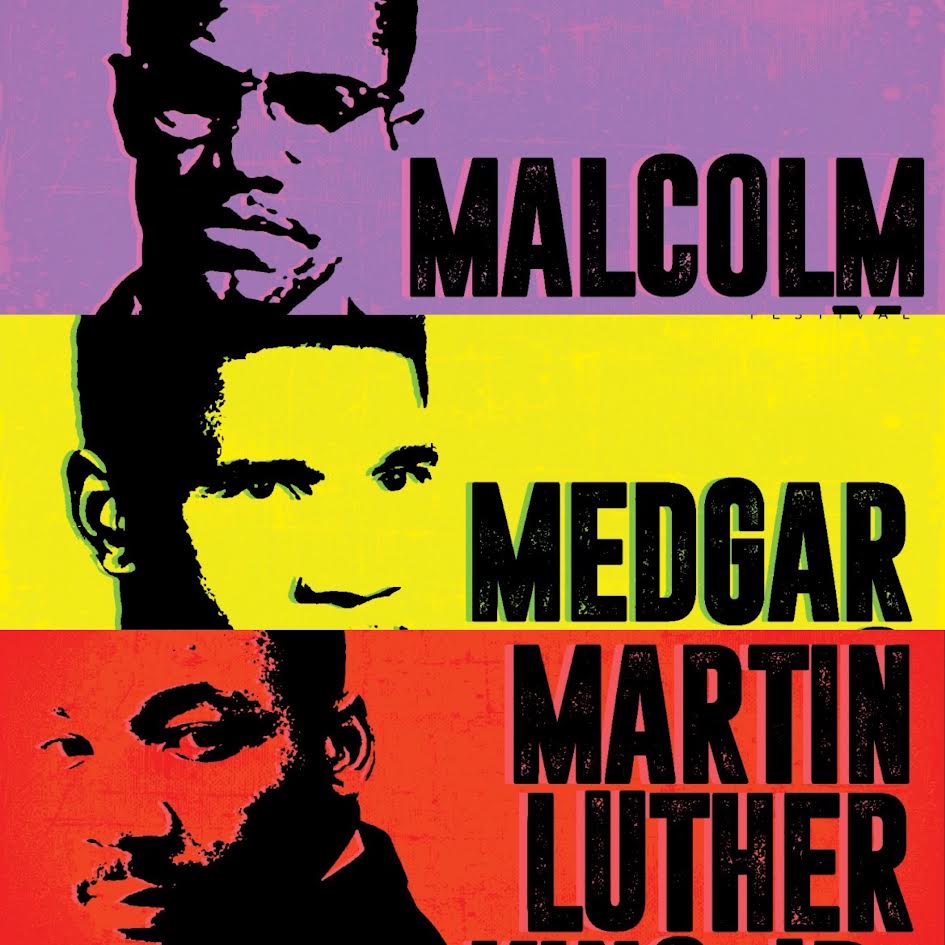
The answers to these questions can no longer be grassroots, they have to be institutional and they have to be thought about in a way that recognizes that our sovereign nation-state is adjacent to an adversary who has and will invade us. It is not a question of if they will, but when will they because they have so many times before. Unfortuantely, we cannot ask Dr. King what his thoughts about his “Dream” for America would be today because at the age of 39 he was assassinated. He was assassinated three years after his contemporary Malcolm X was assasinated and five years after Medgar Evers was assassinated in his driveway. Medgar Evers just two months before the “I Have A Dream” speech would take place. He was not blind to what America was for African America and he was certainly not blind to how our adversaries saw us or the lengths they were willing to go to in order to silence us. For the last 50 plus years since Dr. King’s passing African America has tried to make a peace that we should now see is not possible. It is time for the Dream Redefined and that dream should start and stop with actions that provide for the institutional sovereignty and survial of African America period.