Nairobi Stock Exchange Launches Investment Challenge For Youth

Screen Shot 2015-02-21 at 6.35.19 PM

One of Africa’s premier stock exchanges is looking to get its youth involved in savings and investing early. It has announced an investment challenge that will start in May and conclude at the end of July. Exercises like this will go a long way to building a pipeline for the country’s financial industry in the future, liquidity to its markets, and financially stable households for a strong middle class in the future. Teams can be one to four members. Below are the details and link to register.

Registration period: Is ongoing.

Competition Period: 1st May 2015 – 31st July 2015

The NSE Investment Challenge 2015 is an online simulation of live trading at the Nairobi Stock Exchange. Each participant will get “Kshs 2 million” virtual startup capital to invest using the NSE real time information for a period of 3 months. The winner will be the team with the highest portfolio value. Prizes are cash prizes,internships at the NSE and certificates.

OBJECTIVES:

  • To encourage the culture of thrift or saving amongst the youth.
  • To assist in investing this savings in productive enterprises e.g through the NSE
  • To teach the risks and gains involved while trading at the Nairobi Stock Exchange.
  • To popularize stock trading at the Nairobi Stock Exchange with the Kenyan youth.
  • To enhance financial management and entrepreneurial skills among the Kenyan youth.

To register click here.

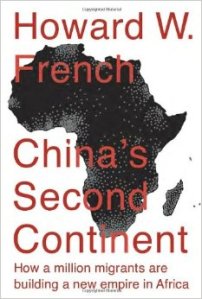
HBCU Money™ Business Book Feature – China’s Second Continent: Building a New Empire in Africa

china

An exciting, hugely revealing account of China’s burgeoning presence in Africa—a developing empire already shaping, and reshaping, the future of millions of people.

A prizewinning foreign correspondent and former New York Times bureau chief in Shanghai and in West and Central Africa, Howard French is uniquely positioned to tell the story of China in Africa. Through meticulous on-the-ground reporting—conducted in Mandarin, French, and Portuguese, among other languages—French crafts a layered investigation of astonishing depth and breadth as he engages not only with policy-shaping moguls and diplomats, but also with the  ordinary men and women navigating the street-level realities of cooperation, prejudice, corruption, and opportunity forged by this seismic geopolitical development. With incisiveness and empathy, French reveals the human face of China’s economic, political, and human presence across the African continent—and in doing so reveals what is at stake for everyone involved.

We meet a broad spectrum of China’s dogged emigrant population, from those singlehandedly reshaping African infrastructure, commerce, and even environment (a self-made tycoon who harnessed Zambia’s now-booming copper trade; a timber entrepreneur determined to harvest the entirety of Liberia’s old-growth redwoods), to those just barely scraping by (a sibling pair running small businesses despite total illiteracy; a karaoke bar owner–cum–brothel madam), still convinced that Africa affords them better opportunities than their homeland. And we encounter an equally panoramic array of African responses: a citizens’ backlash in Senegal against a “Trojan horse” Chinese construction project (a tower complex to be built over a beloved soccer field, which locals thought would lead to overbearing Chinese pressure on their economy); a Zambian political candidate who, having protested China’s intrusiveness during the previous election and lost, now turns accommodating; the ascendant middle class of an industrial boomtown; African mine workers bitterly condemning their foreign employers, citing inadequate safety precautions and wages a fraction of their immigrant counterparts’.

French’s nuanced portraits reveal the paradigms forming around this new world order, from the all-too-familiar echoes of colonial ambition—exploitation of resources and labor; cut-rate infrastructure projects; dubious treaties—to new frontiers of cultural and economic exchange, where dichotomies of suspicion and trust, assimilation and isolation, idealism and disillusionment are in dynamic flux.

Part intrepid travelogue, part cultural census, part industrial and political exposé, French’s keenly observed account ultimately offers a fresh perspective on the most pressing unknowns of modern Sino-African relations: why China is making the incursions it is, just how extensive its cultural and economic inroads are, what Africa’s role in the equation is, and just what the ramifications for both parties—and the watching world—will be in the foreseeable future.


HBCU Money™ Dozen 2/16 – 2/20

high-noon

Did you miss HBCU Money™ Dozen via Twitter? No worry. We are now putting them on the site for you to visit at your leisure. We have made some changes here at HBCU Money™ Dozen. We are now solely focused on research and central bank articles from the previous week.

Research

The On-Demand Economy: Entrepreneurship or Exploitation? l CIOonline http://trib.al/7url4LE

New research suggests new rules for nanosized ensemble behavior l Argonne http://1.usa.gov/1MygGXJ

Just 70,000 years ago this star buzzed right past our solar system l New Scientist http://ow.ly/JmdLu

Citizen scientists dive into particle physics and astrophysics research l Symmetry http://ow.ly/Jmelr

Spy agencies hacked SIM card maker’s encryption l Computerworld http://ow.ly/Jmew0

How a university’s data center overhaul makes a green impact l Network World http://bit.ly/1Dv2fAV

Federal Reserve, Central Banks, & Financial Departments

Can Tunisia become a hub for entrepreneurs? l World Bank http://wrld.bg/Jl1EL

Which are the top cities for real estate investment? l World Economic Forum http://wef.ch/1ydCOfk

What size firm has created most jobs in the recovery? l St. Louis Fed http://bit.ly/1DwJwFa

5 lessons on microfinance from women in Latin America l World Economic Forum http://wef.ch/1A8RTEh

What causes changes in consumer sentiment, or “animal spirits,” that drive the business cycle? l SF Fed http://bit.ly/1ySuj9R

Since 1990, the share of household budgets going to education hasn’t risen much, if at all l St. Louis Fed http://bit.ly/1zE8ta3

Thank you as always for joining us on Saturday for HBCU Money™ Dozen. The 12 most important research and finance articles of the week.

The HBCU Money™ Weekly Market Watch

Our Money Matters /\ February 20, 2015

A weekly snapshot of African American owned public companies and HBCU Money™ tracked African stock exchanges.

NAME TICKER PRICE (GAIN/LOSS %)

African American Publicly Traded Companies

Citizens Bancshares Georgia (CZBS) $8.75 (0.00% UNCH)

M&F Bancorp (MFBP) $4.54 (0.00% UNCH)

Radio One (ROIA) $3.02 (1.95% DN)

African Stock Exchanges

Bourse Regionale des Valeurs Mobilieres (BRVM)  257.80 (0.58% UP)

Botswana Stock Exchange (BSE)  9 600.20 (0.05% UP)

Ghana Stock Exchange (GSE)  2 158.40 (4.54% DN)*

Nairobi Stock Exchange (NSE)  175.65 (N/A)

Johannesburg Stock Exchange (JSE) 53 035.26 (0.38% UP)

International Stock Exchanges

New York Stock Exchange (NYSE) 11 068.77 (0.28% UP)

London Stock Exchange (LSE)  3 724.45 (0.38% UP)

Tokyo Stock Exchange (TOPIX)  1 500.33 (0.36% UNCH)

Commodities

Screen Shot 2015-02-20 at 12.40.28 PM

Two African American Banks Fail To Begin 2015

Screen Shot 2015-02-18 at 2.54.39 PM

The African American banking system suffers major setbacks to begin the year. Highland Community Bank (press release below) which had assets of approximately $73.4 million 2013. The bank was founded November 09, 1970 in Chicago, Illinois. Over the past two years it witnessed double digit asset declines on its books.

Screen Shot 2015-02-18 at 2.53.30 PM

Also seeing its doors close is Capital City Bank & Trust Company in Atlanta, Georgia. Capitol City, was the ninth largest African American owned bank, with $291 million in assets or 5.7 percent of African American bank owned assets. The bank was only 20 years old, meaning it had seen explosive growth in its short time.

These two closures reduce the number of African American owned banks down to 23 ahead of the HBCU Money’s 2015 African American Bank Owned Directory release, and a combined loss of 7.2 percent of African American bank owned assets. For perspective in 1994, there were 54 African American owned banks.

For the FDIC’s Failed Bank List click here.