
Category Archives: Lists

HBCU Money™ Business Book Feature – The Index Card: Why Personal Finance Doesn’t Have to Be Complicated

TV analysts and money managers would have you believe your finances are enormously complicated, and if you don’t follow their guidance, you’ll end up in the poorhouse.

They’re wrong.

When University of Chicago professor Harold Pollack interviewed Helaine Olen, an award-winning financial journalist and the author of the bestselling Pound Foolish, he made an off­hand suggestion: everything you need to know about managing your money could fit on an index card. To prove his point, he grabbed a 4″ x 6″ card, scribbled down a list of rules, and posted a picture of the card online. The post went viral.

Now, Pollack teams up with Olen to explain why the ten simple rules of the index card outperform more complicated financial strategies. Inside is an easy-to-follow action plan that works in good times and bad, giving you the tools, knowledge, and confidence to seize control of your financial life.
HBCU Money™ Business Book Feature – Building Wealth One House at a Time

Make your first million and earn a steady income with this updated, essential guide to real estate investing

The collapse in real estate prices from 2007 through 2012 was the most significant event in the real estate industry since the Great Depression. But today, with the real estate market rebounding, a new generation of investors is entering the field, eager to make their fortune.

Building Wealth One House at a Time, 2nd Edition provides you with a practical way to create wealth through an ethical approach of buying, financing, and managing property. Renowned real estate expert John W. Schaub takes you through his 9-step program and explains how to accumulate one million dollars’ worth of houses debt free in any market, while earning a steady cash flow.

This invaluable guide presents fresh strategies for buying and financing property, reflected in six new chapters on topics such as real estate cycles, financing real estate purchases, negotiation techniques, and retirement investing.

You’ll learn how to:

• Finance real estate purchases without going to a bank
• Recognize and capitalize on real estate cycles
• Improve your negotiation skills in any situation
• Avoid common and costly mistakes
• Create cash flow that lasts forever, and much more

Building Wealth One House at a Time, 2nd Edition reveals how virtually anyone can accumulate houses debt free and earn an income for life.

Image

HBCU Money™ Business Book Feature – Makers and Takers: The Rise of Finance and the Fall of American Business

Eight years on from the biggest market meltdown since the Great Depression, the key lessons of the crisis of 2008 still remain unlearned—and our financial system is just as vulnerable as ever. Many of us know that our government failed to fix the banking system after the subprime mortgage crisis. But what few of us realize is how the misguided financial practices and philosophies that nearly toppled the global financial system have come to infiltrate ALL American businesses,  putting us on a collision course for another cataclysmic meltdown.

Drawing on in-depth reporting and exclusive interviews at the highest rungs of Wall Street and Washington, Time assistant managing editor and economic columnist Rana Foroohar shows how the “financialization of America” – the trend by which finance and its way of thinking have come to reign supreme – is perpetuating Wall Street’s reign over Main Street, widening the gap between rich and poor, and threatening the future of the American Dream.
Policy makers get caught up in the details of regulating “Too Big To Fail” banks, but the problems in our market system go much broader and deeper than that. Consider that:

· Thanks to 40 years of policy changes and bad decisions, only about 15 % of all the money in our market system actually ends up in the real economy – the rest stays within the closed loop of finance itself.
· The financial sector takes a quarter of all corporate profits in this country while creating only 4 % of American jobs.
· The tax code continues to favor debt over equity, making it easier for companies to hoard cash overseas rather than reinvest it on our shores.
· Our biggest and most profitable corporations are investing more money in stock buybacks than in research and innovation.
· And, still, the majority of the financial regulations promised after the 2008 meltdown have yet come to pass, thanks to cozy relationship between our lawmakers and the country’s wealthiest financiers.

Exploring these forces, which have have led American businesses to favor balancing-sheet engineering over the actual kind and the pursuit of short-term corporate profits over job creation, Foroohar shows how financialization has so gravely harmed our society, and why reversing this trend is of grave importance to us all. Through colorful stories of both “Takers” and “Makers,” she’ll reveal how we change the system for a better and more sustainable shared economic future.

— Financial Times – Best Books of 2016: Economics
— Bloomberg Businessweek- Best Books of the Year

HBCU Money™ Business Book Feature – A Paperboy’s Fable: The 11 Principles of Success

A young man learns that there is more to being successful than the bottom line.
A Paperboy’s Fable is a concise, entertaining fable that makes revolutionary points using age old principles. Whether someone is opening a lemonade stand or leading a startup software company, the11 Principles of Success make A Paperboy’s Fable a timeless tale that is as fresh as it is universal.

A Paperboy’s Fable also features interviews with many professors, entrepreneurs, CEO’s and General David Petraeus.

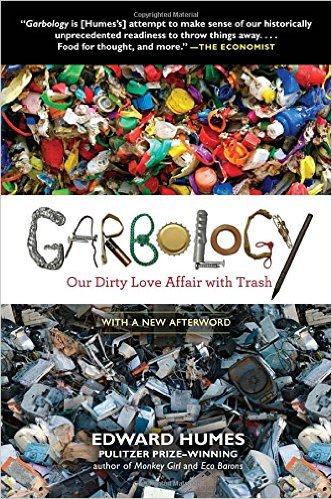
HBCU Money™ Business Book Feature – Garbology: Our Dirty Love Affair with Trash

A Pulitzer Prize–winning journalist takes readers on a surprising tour of the world of garbage.

Take a journey inside the secret world of our biggest export, our most prodigious product, and our greatest legacy: our trash. It’s the biggest thing we make: The average American is on track to produce a whopping 102 tons of garbage across a lifetime, $50 billion in squandered riches rolled to the curb each year, more than that produced by any other people in the world. But that trash doesn’t just magically disappear; our bins are merely the starting point for a strange, impressive, mysterious, and costly journey that may also represent the greatest untapped opportunity of the century.

In Garbology, Pulitzer Prize–winning author Edward Humes investigates the trail of that 102 tons of trash—what’s in it; how much we pay for it; how we manage to create so much of it; and how some families, communities, and even nations are finding a way back from waste to discover a new kind of prosperity. Along the way , he introduces a collection of garbage denizens unlike anyone you’ve ever met: the trash-tracking detectives of MIT, the bulldozer-driving sanitation workers building Los Angeles’ immense Garbage Mountain landfill, the artists in residence at San Francisco’s dump, and the family whose annual trash output fills not a dumpster or a trash can, but a single mason jar.

Garbology
digs through our epic piles of trash to reveal not just what we throw away, but who we are and where our society is headed. Are we destined to remain the country whose number-one export is scrap—America as China’s trash compactor—or will the country that invented the disposable economy pioneer a new and less wasteful path? The real secret at the heart of Garbology may well be the potential for a happy ending buried in our landfill. Waste, Humes writes, is the one environmental and economic harm that ordinary working Americans have the power to change—and prosper in the process.