Category Archives: Lists

HBCU Money™ Business Book Feature – Language, Economy & Society: The Changing Fortunes of the Welsh Language

512RYMA5X4L._SX258_BO1,204,203,200_

In this new edition the authors present new sets of language data both for individuals and for households in Wales and examine the impact of migration on the language, the relationship between social class and ability to speak Welsh, and the bases for the reproduction and maintenance of the language within the context of the family. The final chapter considers the prospects for the language in the light of new political and institutional developments (including the National Assembly for Wales), recent planning issues (most notably housing) and developments in the critically important field of education.

This book is an essential reference source for those concerned with the changing status and vitality of the Welsh language and of other minority languages in Europe. It provides a framework and a factual context in which to set such issues as language planning and policy formulation at local and national levels.

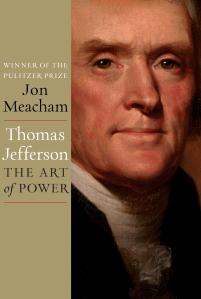
HBCU Money™ Business Book Feature – Thomas Jefferson: The Art of Power

THOMASJEFFERSONcover_asof5-22

NAMED ONE OF THE BEST BOOKS OF THE YEAR BY
The New York Times Book Review • The Washington Post • Entertainment Weekly • The Seattle Times • St. Louis Post-Dispatch • Bloomberg Businessweek

In this magnificent biography, the Pulitzer Prize–winning author of American Lion and Franklin and Winston brings vividly to life an extraordinary man and his remarkable times. Thomas Jefferson: The Art of Power gives us Jefferson the politician and president, a great and complex human being forever engaged in the wars of his era. Philosophers think; politicians maneuver. Jefferson’s genius was that he was both and could do both, often simultaneously. Such is the art of power.

Thomas Jefferson hated confrontation, and yet his understanding of power and of human nature enabled him to move men and to marshal ideas, to learn from his mistakes, and to prevail. Passionate about many things—women, his family, books, science, architecture, gardens, friends, Monticello, and Paris—Jefferson loved America most, and he strove over and over again, despite fierce opposition, to realize his vision: the creation, survival, and success of popular government in America. Jon Meacham lets us see Jefferson’s world as Jefferson himself saw it, and to appreciate how Jefferson found the means to endure and win in the face of rife partisan division, economic uncertainty, and external threat. Drawing on archives in the United States, England, and France, as well as unpublished Jefferson presidential papers, Meacham presents Jefferson as the most successful political leader of the early republic, and perhaps in all of American history.

The father of the ideal of individual liberty, of the Louisiana Purchase, of the Lewis and Clark expedition, and of the settling of the West, Jefferson recognized that the genius of humanity—and the genius of the new nation—lay in the possibility of progress, of discovering the undiscovered and seeking the unknown. From the writing of the Declaration of Independence to elegant dinners in Paris and in the President’s House; from political maneuverings in the boardinghouses and legislative halls of Philadelphia and New York to the infant capital on the Potomac; from his complicated life at Monticello, his breathtaking house and plantation in Virginia, to the creation of the University of Virginia, Jefferson was central to the age. Here too is the personal Jefferson, a man of appetite, sensuality, and passion.

The Jefferson story resonates today not least because he led his nation through ferocious partisanship and cultural warfare amid economic change and external threats, and also because he embodies an eternal drama, the struggle of the leadership of a nation to achieve greatness in a difficult and confounding world.

Praise for Thomas Jefferson: The Art of Power
 
“This is probably the best single-volume biography of Jefferson ever written.”—Gordon S. Wood
 
“A big, grand, absorbing exploration of not just Jefferson and his role in history but also Jefferson the man, humanized as never before.”Entertainment Weekly

“[Meacham] captures who Jefferson was, not just as a statesman but as a man. . . . By the end of the book . . . the reader is likely to feel as if he is losing a dear friend. . . . [An] absorbing tale.”—The Christian Science Monitor

“This terrific book allows us to see the political genius of Thomas Jefferson better than we have ever seen it before. In these endlessly fascinating pages, Jefferson emerges with such vitality that it seems as if he might still be alive today.”—Doris Kearns Goodwin

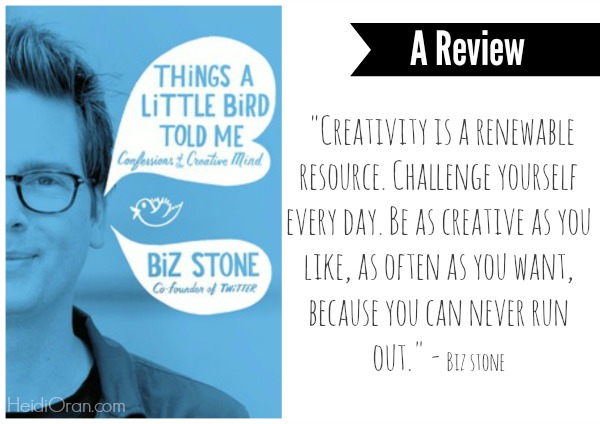
HBCU Money™ Business Book Feature – Things a Little Bird Told Me: Confessions of the Creative Mind

-1

Biz Stone, the co-founder of Twitter, discusses the power of creativity and how to harness it, through stories from his remarkable life and career.

THINGS A LITTLE BIRD TOLD ME

From GQ‘s “Nerd of the Year” to one of Time‘s most influential people in the world, Biz Stone represents different things to different people. But he is known to all as the creative, effervescent, funny, charmingly positive and remarkably savvy co-founder of Twitter-the social media platform that singlehandedly changed the way the world works. Now, Biz tells fascinating, pivotal, and personal stories from his early life and his careers at Google and Twitter, sharing his knowledge about the nature and importance of ingenuity today. In Biz’s world:

-Opportunity can be manufactured
-Great work comes from abandoning a linear way of thinking
-Creativity never runs out
-Asking questions is free
-Empathy is core to personal and global success

In this book, Biz also addresses failure, the value of vulnerability, ambition, and corporate culture. Whether seeking behind-the-scenes stories, advice, or wisdom and principles from one of the most successful businessmen of the new century, THINGS A LITTLE BIRD TOLD ME will satisfy every reader.

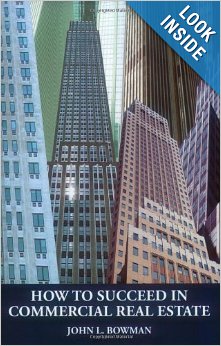
HBCU Money™ Business Book Feature – How To Succeed In Commercial Real Estate

51i8k7iawdL._SY344_PJlook-inside-v2,TopRight,1,0_SH20_BO1,204,203,200_

How to Succeed in Commercial Real Estate is a comprehensive, practical book for those considering entering the field of commercial real estate, those just beginning in the business, as well as experienced brokers and sales managers who want to evaluate and strengthen their current strategies—especially those related to listings, negotiations, contracts, and sales.

The author provides a straightforward overview of the business of selling commercial property, including coverage of the four main specialty areas –retail, office, industrial, and investment—as well as crossovers and emerging specialties. Rather than pumping a “get rich quick” approach to selling, the author shows brokers that they don’t have to sacrifice integrity and ethics to remain competitive and deal oriented. The book includes detailed coverage of

• Choosing a company and a specialty that’s a good fit for you.
• Sales strategies and sales points specific to commercial real estate, including practical suggestions for countering other brokers.
• The importance of focusing on exclusive listings, how to find and get the best prospects, and the most effective strategies for marketing the property.
• Standard parts and points of negotiation for contracts and forms, including earnest money agreements, leases, options, listings, counter offers, and fee schedules.
• Rent and how it is calculated and quoted, including triple net, modified net, gross, and full service leases.
• Technical knowledge including agency, law, appraisal, taxation, zoning, surveys, environmental investigations, investment analysis, risk comparison, exchanges, financing, and property management.
•The pros and cons of going independent and how to decide if it’s the right move for you.

Written in an engaging, straight-talk style, the author shares a wealth of other practical knowledge reaped from 30 years in the business.

This Land Is Our Land: 6 HBCUs Among Top 100 College Landowners

Revolution is based on land. Land is the basis of all independence. Land is the basis of freedom, justice, and equality. – Malcolm X

doc4dc1b290c6bf6428523698

At the most fundamental level, virtually every economic system man has ever created relies on one undeniable truth – whoever controls the land, controls the system. It is in large part why African American institutional and individual wealth has deteriorated over the past 100 years as land ownership has seen a rapid and steady decline. In 1999, a report by the Federation of Southern Cooperatives Land Assistance Fund noted African Americans own, “less than 1% of all privately owned rural land in the United States”.  As the human population continues to grow and resources are even more strained, control of land will only increase from the macro level of countries down to the micro level of communities.

Among colleges, land is a very important strategic tool. For rural and urban colleges alike the ability to control the land around itself and within its region can be vital to its success and survival. It can also be used for investment and research for the institutions. Harvard University owns a piece of land in New Hampshire and has been studying its recovery from a hurricane since 1938. Quite a few colleges actually own land in other countries and many colleges own land in their endowments for investments in timber and other alternative investments. In the recession, timber was the only asset class to not decline. As one institutional investor said at the 2009 Timberland Investment World Summit I attended in New York, “As long as the sun is shining trees will grow and your timber’s value will increase.”

The HBCUs below are all land-grant institutions. Tuskegee has unique status being the only private HBCU in the country with land-grant status. A status only two other private universities in the United States (Cornell & M.I.T.) can claim. National ranking in parentheses.

  1. Tuskegee University  – 5 000 Acres (12)
  2. Alabama A&M University – 2 300 Acres (28)
  3. Alcorn State University – 1 756 Acres (42)
  4. Prairie View A&M University – 1 502 (48)
  5. Kentucky State University – 915 Acres (92)
  6. Southern University – 884 Acres (96)

Other Notes:

  • The 6 HBCUs combined control 12 357 acres.
  • The 10 largest college landowners control 100 913 acres.
  • The 100 largest college landowners control 342 497 acres
  • Median acreage among top 100 college landowners – 1 375 acres
  • Average acreage among top 100 college landowners – 2 299 acres