Category Archives: Lists

HBCU Money™ Business Book Feature – Coined: The Rich Life of Money and How Its History Has Shaped Us

coined

The importance of money in our lives is readily apparent to everyone–rich, poor, and in between. However grudgingly, most of us accept the expression “Money makes the world go round” as a universal truth. We are all aware of the power of money–how it influences our moods, compels us to take risks, and serves as the yardstick of success in societies around the world. Yet because we take the daily reality of money so completely for granted, we seldom question how and why it has come to play such a central role in our lives.

In Coined: The Rich Life of Money And How Its History Has Shaped Us, author Kabir Sehgal casts aside our workaday assumptions about money and takes the reader on a global quest to uncover a deeper understanding of the relationship between money and humankind. More than a mere history of its subject, Coined probes the conceptual origins and evolution of money by examining it through the multiple lenses of disciplines as varied as biology, psychology, anthropology, and theology. Coined is not only a profoundly informative discussion of the concept of money, but it is also an endlessly fascinating and entertaining take on the nature of humanity and the inner workings of the mind.

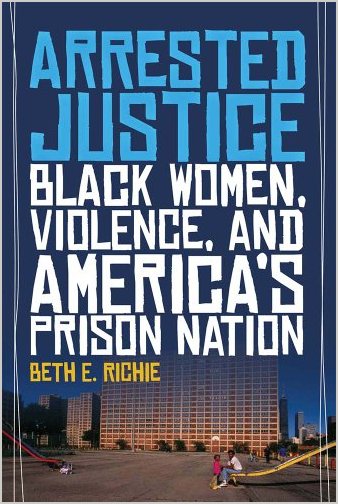
HBCU Money™ Business Book Feature – Arrested Justice: Black Women, Violence, and America’s Prison Nation

51B7d-2pL7L._BO2,204,203,200

Black women in marginalized communities are uniquely at risk of battering, rape, sexual harassment, stalking and incest. Through the compelling stories of Black women who have been most affected by racism, persistent poverty, class inequality, limited access to support resources or institutions, Beth E. Richie shows that the threat of violence to Black women has never been more serious, demonstrating how conservative legal, social, political and economic policies have impacted activism in the US-based movement to end violence against women. Richie argues that Black women face particular peril because of the ways that race and culture have not figured centrally enough in the analysis of the causes and consequences of gender violence. As a result, the extent of physical, sexual and other forms of violence in the lives of Black women, the various forms it takes, and the contexts within which it occurs are minimized at best and frequently ignored. Arrested Justice brings issues of sexuality, class, age, and criminalization into focus right alongside of questions of public policy and gender violence, resulting in a compelling critique, a passionate re-framing of stories, and a call to action for change.

The HBCU Money™ Weekly Market Watch

Our Money Matters /\ September 18, 2015

A weekly snapshot of African American owned public companies and HBCU Money™ tracked African stock exchanges.

NAME TICKER PRICE (GAIN/LOSS %)

African American Publicly Traded Companies

Citizens Bancshares Georgia (CZBS) $9.21 (0.11% UP)

M&F Bancorp (MFBP) $3.83 (1.79% DN)

Radio One (ROIA) $2.35 (8.20% DN)

African Stock Exchanges

Bourse Regionale des Valeurs Mobilieres (BRVM)  293.97 (0.02% DN)

Botswana Stock Exchange (BSE)  10 789.52 (0.00% UNCH)

Ghana Stock Exchange (GSE)  2 049.18 (9.37% DN)*

Nairobi Stock Exchange (NSE)  147.19 (N/A)

Johannesburg Stock Exchange (JSE) 51 044.58 (1.03% DN)

International Stock Exchanges

New York Stock Exchange (NYSE) 10 031.60 (1.80% DN)

London Stock Exchange (LSE)  3 365.68 (1.17% DN)

Tokyo Stock Exchange (TOPIX)  1 462.38 (1.98% DN)

Commodities

Screen Shot 2015-09-18 at 3.40.34 PM

Webometrics’ 2015 Top 20 African Diaspora Colleges & Universities

HBCU Money™ presents the 3rd annual top 20 ranked African Diaspora colleges and universities. The rankings are based on the world rankings from Webometrics, an initiative of the Cybermetrics Lab, a research group belonging to the Consejo Superior de Investigaciones Científicas (CSIC), the largest public research body in Spain.

HIGHLIGHTS:

  • 11 of the 20 colleges and universities come from South Africa. An increase from 10 in 2014.
  • There are 4 new schools in the top 20 this year. A decline from 6 schools the previous year.
  • African American colleges & universities (HBCUs) increased their presence back to 4 of the 20 colleges and universities present on the list after having only 2 in 2014. Howard University makes the leap into the top ten moving from 16 to 7 on the list.
  • The top ranked African Diaspora college/university in 2015 is up 18 places from top ranked African Diaspora college/university in 2014.
  • No African Diaspora colleges or universities are present in the top 100 in Webometrics’ world rankings.

image description

Below are the objective and methodology per the Webometrics website:

Objective: The original aim of the Ranking was to promote Web publication. Supporting Open Access initiatives, electronic access to scientific publications and to other academic material are our primary targets. However web indicators are very useful for ranking purposes too as they are not based on number of visits or page design but on the global performance and visibility of the universities.

Methodology: The Webometrics is the largest academic ranking of Higher Education Institutions. Since 2004 and every six months an independent, objective, free, open scientific exercise is performed by the Cybermetrics Lab (Spanish National Research Council, CSIC) for the providing reliable, multidimensional, updated and useful information about the performance of universities from all over the world based on their web presence and impact.

INSTITUTION – WORLD RANK (2014 RANKING) – COUNTRY

  1. University of Cape Town332 (350) – South Africa
  2. Stellenbosch University475 (439) – South Africa
  3. University of the Witwatersrand524 (580) – South Africa
  4. University of Pretoria541 (444) – South Africa
  5. Cairo University574 (358) – Egypt
  6. University of Kwazulu Natal – 710 (752) – South Africa
  7. Howard University – 868 (1231) – United States
  8. University of the Western Cape – 1011 (789) – South Africa
  9. Mansoura University1070 (911) – Egypt
  10. University of Johannesburg1136 (1204) – South Africa
  11. Makerere University1215 (1134) – Uganda
  12. Rhodes University1218 (968) – South Africa
  13. North West University – 1229 (1430) – South Africa
  14. University of South Africa1254 (1058) – South Africa
  15. Alexandria University – 1268 (1223) – Egypt
  16. Hampton University1565 (N/A) – United States
  17. Florida A&M University1632 (1632) – United States
  18. Assiut University1660 (N/A) – Egypt
  19. University of the Free State1679 (N/A) – South Africa
  20. Jackson State University1679 (N/A) – United States

HBCU Money™ Business Book Feature – Black Man in a White Coat: A Doctor’s Reflections on Race and Medicine

damontweedy-blackmaninawhitecoat

One doctor’s passionate and profound memoir of his experience grappling with race, bias, and the unique health problems of black Americans

When Damon Tweedy begins medical school,he envisions a bright future where his segregated, working-class background will become largely irrelevant. Instead, he finds that he has joined a new world where race is front and center. The recipient of a scholarship designed to increase black student enrollment, Tweedy soon meets a professor who bluntly questions whether he belongs in medical school, a moment that crystallizes the challenges he will face throughout his career. Making matters worse, in lecture after lecture the common refrain for numerous diseases resounds, “More common in blacks than whites.”
Black Man in a White Coat examines the complex ways in which both black doctors and patients must navigate the difficult and often contradictory terrain of race and medicine. As Tweedy transforms from student to practicing physician, he discovers how often race influences his encounters with patients. Through their stories, he illustrates the complex social, cultural, and economic factors at the root of most health problems in the black community. These issues take on greater meaning when Tweedy is himself diagnosed with a chronic disease far more common among black people. In this powerful, moving, and deeply empathic book, Tweedy explores the challenges confronting black doctors, and the disproportionate health burdens faced by black patients, ultimately seeking a way forward to better treatment and more compassionate care.