Category Archives: Lists

HBCU Money™ Business Book Feature – Misbehaving: The Making of Behavioral Economics

Misbehaving9780393080940

Shortlisted for the Financial Times & McKinsey Business Book of the Year Award.

Get ready to change the way you think about economics.

Richard H. Thaler has spent his career studying the radical notion that the central agents in the economy are humans―predictable, error-prone individuals. Misbehaving is his arresting, frequently hilarious account of the struggle to bring an academic discipline back down to earth―and change the way we think about economics, ourselves, and our world.

Traditional economics assumes rational actors. Early in his research, Thaler realized these Spock-like automatons were nothing like real people. Whether buying a clock radio, selling basketball tickets, or applying for a mortgage, we all succumb to biases and make decisions that deviate from the standards of rationality assumed by economists. In other words, we misbehave. More importantly, our misbehavior has serious consequences. Dismissed at first by economists as an amusing sideshow, the study of human miscalculations and their effects on markets now drives efforts to make better decisions in our lives, our businesses, and our governments.

Coupling recent discoveries in human psychology with a practical understanding of incentives and market behavior, Thaler enlightens readers about how to make smarter decisions in an increasingly mystifying world. He reveals how behavioral economic analysis opens up new ways to look at everything from household finance to assigning faculty offices in a new building, to TV game shows, the NFL draft, and businesses like Uber.

Laced with antic stories of Thaler’s spirited battles with the bastions of traditional economic thinking,Misbehaving is a singular look into profound human foibles. When economics meets psychology, the implications for individuals, managers, and policy makers are both profound and entertaining.

HBCU Money’s 2015 Top 10 HBCU Endowments


17581463-Illustration-of-a-Piggy-Bank-with-coin-Stock-Illustration-cartoon-pig-money

The keyword for  2015’s HBCU endowments – concerning. Two bellwether HBCU endowments, Spelman College and Hampton University, saw negative declines in their endowment’s market value. Outside of Howard University storming ahead at 11.7 percent, no other HBCU endowment saw double digit gains with North Carolina A&T State University missing the mark by 10 basis points. This is a far cry from 2014’s list when 9 out of 10 reported double digit gains. If there is any solace in the numbers and there is not much, it is that the top ten endowments of our HWCU counterparts had no endowments return double digit gains and also saw 2 out of their 10 with declines in market value.

Although there are some notable absences** from our top ten list, it certainly would not change the reality that still only three HBCUs have endowments above the $200 million mark and none have reached the $1 billion plateau, although Howard University, despite its noted financial issues seems to be headed there unabated and without much competition from Spelman College or Hampton University, the only real challengers. John Wilson, president at Morehouse College, in an interview with Harvard Magazine in 2013 noted, “is the need to build endowments; less than $200 million makes you, by definition, unhealthy.” This still remains the case and as a baseline means that 97 percent of all HBCUs are financially unhealthy. Even more concerning is that there seems to be no real plan in place to address this. A canary in the coal mine though is that donations of $1 million or more to HBCUs jumped from one in 2013 to nine in 2014, but donations of the eight and nine figure variety, also known as transformative donations, are still absent at HBCUs.

As always if you do not see your HBCU in the top 10 – DONATE!**

Endowment in millions $000 (Change in Market Value*)

1. Howard University – $659 639 (11.7%)

2. Spelman College – $362 986 (-1.1%)

3. Hampton University – $263 237 (-8.7%)

4. Meharry Medical College – $139 054 (1.5%)

5. Tennessee State University – $51 416 (1.8%)

6. Texas Southern University – $48 684 (4.5%)

7. Virginia State University – $47 432 (4.9%)

8. North Carolina A&T State University – $48 100 (9.9%)

9. Winston-Salem State University – $37 219 (8.5%)

10. University of the Virgin Islands – $34 274 (-9.0%)

Take a look at how an endowment works. Not only scholarships to reduce the student debt burden but research, recruiting talented faculty & students, faculty salaries, and a host of other things can be paid for through a strong endowment. It ultimately is the lifeblood of a college or university to ensure its success generation after generation.

endowment-works-1

*Note: The change in market value does NOT represent the rate of return for the institution’s investments. Rather, the change in the market value of an endowment from FY2013 to FY2014 reflects the net impact of: 1) withdrawals to fund institutional operations and capital expenses; 2) the payment of endowment management and investment fees; 3) additions from donor gifts and other contributions; and 4) investment gains or losses.

** Notable exclusions to the list that HBCU Money believes would otherwise make the top ten are Morehouse College, Tuskegee University, Dillard University, and Florida A&M University. Morehouse College, Tuskegee University, and Dillard University have never reported their endowment to NACUBO in the time HBCU Money has been recording its annual top ten endowments. Florida A&M University who was number five last year did not appear in this year’s list from NACUBO.

Additional Notes:
NACUBO Average Endowment – $648 074 (1.7%)
NACUBO Median Endowment – $115 828 (-0.9%)
Top 10 HWCU Endowments combined – $185.4 billion
Source: National Association of College & University Business Officers

HBCU Money™ Business Book Feature – Panic on Wall Street: A History of America’s Financial Disasters

51G0K827ZVL._SX299_BO1,204,203,200_

From the Publisher

Here is a book dealing with a subject endemic to many Eastern and Western countries — financial panic. Covering 12 of the most harrowing moments in American financial history from 1792 to 1962, it demonstrates that Wall Street and the public are at once the heroes, villains, and victims of past panics.

From the Inside Flap

… The episodes depicted were dramatic, had an impact on Americans of the time, and have generally been neglected by other financial historians. Some of the most notable are the Western Blizzard of 1857, the Great Crash of 1929, and the Kennedy Slide of 1962. Not all were catalysts for depressions, but they illustrate the complexity of such events and that the causes are varied: political, military, economic, and even psychological. This book is fascinating reading for anyone who fears that we could suffer through another financial panic.

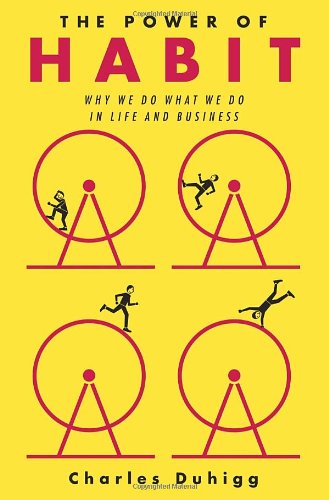
HBCU Money™ Business Book Feature – The Power of Habit: Why We Do What We Do in Life and Business

51oqw8x58FL

In The Power of Habit, Pulitzer Prize–winning business reporter Charles Duhigg takes us to the thrilling edge of scientific discoveries that explain why habits exist and how they can be changed. Distilling vast amounts of information into engrossing narratives that take us from the boardrooms of Procter & Gamble to sidelines of the NFL to the front lines of the civil rights movement, Duhigg presents a whole new understanding of human nature and its potential. At its core, The Power of Habit contains an exhilarating argument: The key to exercising regularly, losing weight, being more productive, and achieving success is understanding how habits work. As Duhigg shows, by harnessing this new science, we can transform our businesses, our communities, and our lives.

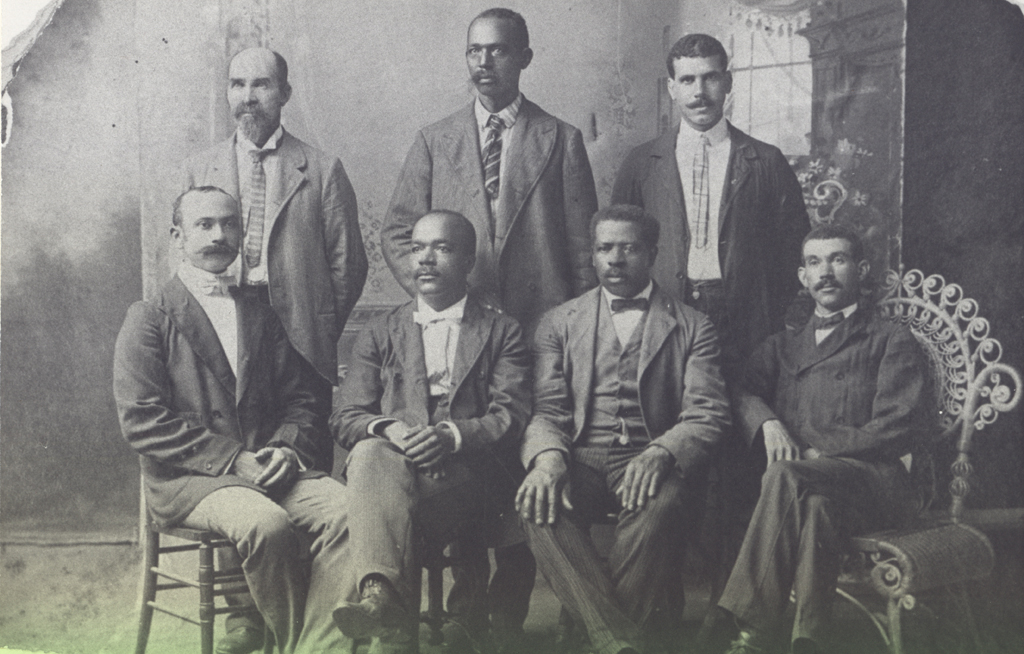
HBCU Money™ Business Book Feature – The Autobiography of an African American Lawyer in Early Oklahoma

51NKBF57M9L._SX317_BO1,204,203,200_

From Library Journal

Historian Franklin (chair of Bill Clinton’s Initiative of Race and Reconciliation advisory board and a recipient of the Presidential Medal of Freedom) has edited and assembled the autobiography of his late father, Buck Colbert Franklin (1879-1960), who “represented many layers of the human experience?freedman and Native American, farmer and rancher, rural educator and urban professional.” The elder Franklin meticulously reports the daily observances from his youth in the Indian Territory to his practice of law in Tulsa, Oklahoma. The kaleidoscope of approaches and life experiences reflect the many changes, cultural and political, that the indomitable Franklin witnessed throughout his lifetime. Buck Franklin’s ability to understand the complex and appreciate the simple aspects of existence mesmerizes the reader and brings the realities of slavery, poverty, and racial tensions to us in a firsthand account. The anecdotal details in another’s hand might become tiresome, but Franklin’s account holds one’s attention and strongly communicates the honor and stalwartness of his family. For public and academic libraries.?Kay Meredith Dusheck, Animosa, Iowa
Copyright 1998 Reed Business Information, Inc.

About the Author

John Hope Franklin is the fourth child of Buck and Mollie Parker Franklin. The recipient of over one hundred honorary degrees, he is the author of From Slavery to Freedom: A History of African Americans and Race and History: Selected Essays, 1938–1988, among other works. Franklin is James B. Duke Professor of History Emeritus at Duke University.

John Whittington Franklin is the son of John Hope Franklin. He is a program manager for the Center for Folklife and Cultural Heritage at the Smithsonian Institution.