Category Archives: Books

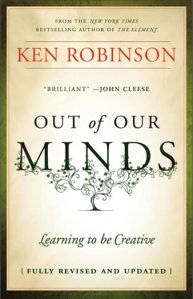
HBCU Money™ Business Book Feature – Out of Our Minds: Learning to be Creative

Ken_Robinson-Out_of_Our_minds

In this extensively revised and updated version of his bestselling classic, Out of Our Minds, Ken Robinson offers a groundbreaking approach to understanding creativity in education and in business. He argues that people and organizations everywhere are dealing with problems that originate in schools and universities and that many people leave education with no idea at all of their real creative abilities. Out of Our Minds is a passionate and powerful call for radically different approaches to leadership, teaching and professional development to help us all to meet the extraordinary challenges of living and working in the 21st century.

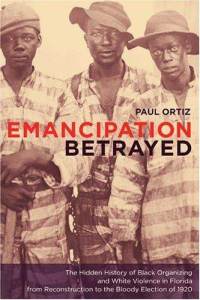
HBCU Money™ Business Book Feature – Emancipation Betrayed: The Hidden History of Black Organizing and White Violence in Florida from Reconstruction to the Bloody Election of 1920

emancipation-betrayed-hidden-history-black-organizing-white-violence-paul-ortiz-hardcover-cover-art

In this penetrating examination of African American politics and culture, Paul Ortiz throws a powerful light on the struggle of black Floridians to create the first statewide civil rights movement against Jim Crow. Concentrating on the period between the end of slavery and the election of 1920, Emancipation Betrayed vividly demonstrates that the decades leading up to the historic voter registration drive of 1919-20 were marked by intense battles during which African Americans struck for higher wages, took up arms to prevent lynching, forged independent political alliances, boycotted segregated streetcars, and created a democratic historical memory of the Civil War and Reconstruction. Contrary to previous claims that African Americans made few strides toward building an effective civil rights movement during this period, Ortiz documents how black Floridians formed mutual aid organizations–secret societies, women’s clubs, labor unions, and churches–to bolster dignity and survival in the harsh climate of Florida, which had the highest lynching rate of any state in the union. African Americans called on these institutions to build a statewide movement to regain the right to vote after World War I. African American women played a decisive role in the campaign as they mobilized in the months leading up to the passage of the Nineteenth Amendment. The 1920 contest culminated in the bloodiest Election Day in modern American history, when white supremacists and the Ku Klux Klan violently, and with state sanction, prevented African Americans from voting. Ortiz’s eloquent interpretation of the many ways that black Floridians fought to expand the meaning of freedom beyond formal equality and his broader consideration of how people resist oppression and create new social movements illuminate a strategic era of United States history and reveal how the legacy of legal segregation continues to play itself out to this day.

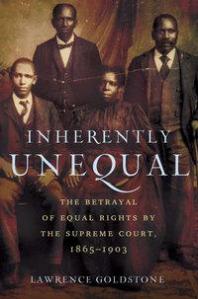
HBCU Money™ Business Book Feature – Inherently Unequal: The Betrayal of Equal Rights by the Supreme Court, 1865-1903

unequal

A potent and original examination of how the Supreme Court subverted justice and empowered the Jim Crow era.

In the years following the Civil War, the 13th Amendment abolished slavery; the 14th conferred citizenship and equal protection under the law to white and black; and the 15th gave black American males the right to vote. In 1875, the most comprehensive civil rights legislation in the nation’s history granted all Americans “the full and equal enjoyment” of public accommodations. Just eight years later, the Supreme Court, by an 8-1 vote, overturned the Civil Rights Act as unconstitutional and, in the process, disemboweled the equal protection provisions of the 14th Amendment. Using court records and accounts of the period, Lawrence Goldstone chronicles how “by the dawn of the 20th century the U.S. had become the nation of Jim Crow laws, quasi-slavery, and precisely the same two-tiered system of justice that had existed in the slave era.”

The very human story of how and why this happened make Inherently Unequal as important as it is provocative. Examining both celebrated decisions like Plessy v. Ferguson and those often overlooked, Goldstone demonstrates how the Supreme Court turned a blind eye to the obvious reality of racism, defending instead the business establishment and status quo–thereby legalizing the brutal prejudice that came to define the Jim Crow era.

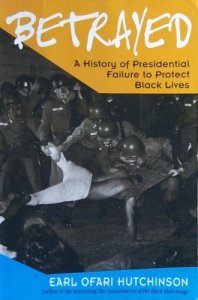
HBCU Money™ Business Book Feature – Betrayed: A History Of Presidential Failure To Protect Black Lives

betrayed

In this timely and eye-opening book, noted political analyst and media commentator Earl Ofari Hutchinson traces the root cause of the White House’s failure to protect the rights of African Americans. Drawing extensively from public and private presidential papers, private correspondence, personal interviews, and national archive documents, Hutchinson gives a rich historical account of the racial philosophy, policies, and practices of successive presidents from Warren G. Harding to Bill Clinton.Franklin D. Roosevelt is one example. The popular view is that Roosevelt was a friend to blacks because of his enactment of New Deal programs. But he was also a prisoner of the biased racial thinking of his times. He refused to actively support anti-lynching legislation and repeatedly curried political favor with racist southern Democrats.Lyndon B. Johnson is yet another example. He is known as a champion of civil rights, but Hutchinson details two crucial moments when Johnson shrank from using the full force of executive power to push Congress to enact new and tougher federal criminal civil rights statutes to punish racist violence.In this book, Hutchinson reveals that no American president has ever signed into law a federal antilynching bill despite a fifty-year campaign by the NAACP for presidential and congressional action. He documents how Nixon, Reagan, and Bush rolled back civil rights and affirmative action, failed to fully enforce equal protection provisions of the Fourteenth Amendment against police abuse and racial violence, encouraged conservative legal obstructionism, and fueled the rise of a repressive domestic security state. These actions in turn have reinforced institutionalized racism and continued the historical pattern of devaluing black lives in law and public policy.Finally, Hutchinson warns that the century-old failure by the White House to enforce federal law to protect black lives still has dangerous consequences for American society.

HBCU Money™ Business Book Feature – Breakpoint and Beyond: Mastering the Future Today

breakpoint

The founders of Leadership 2000, an international leadership development corporation whose clients include DuPont, IBM, 3M, and Sony, show how business professionals and organizations can adopt a new design for living in a dynamically changing world through new ways of creative thinking. 19 graphics.