
Category Archives: Editorial

The Miscelebration of African-American “First” 2012

By William A. Foster, IV

The mere imparting of information is not education. – Dr. Carter G. Woodson

Are we American or not? Are we African or not? Over 100 years after W.E.B. DuBois first brought the theory of “double consciousness” to our minds, it is an answer that in our celebration of achievements we clearly still struggle with. We continue to celebrate our firsts into historically white institutions and give little credence to our accomplishments within our historically black institutions, subconsciously continuing to view our own institutions as second class. I continue to firmly believe a people are a reflection of its institutions. These institutions include the family, businesses, schools, and etc…

Every year we watch as Major League Baseball celebrates Jackie Robinson’s breaking of the color line of baseball and we as African-Americans cheer right along in joy. Yet, looking through the owners’ box of the three major American sports (football, basketball, and baseball) there is only one African-American owner 60 plus years later. Sorry, the Los Angeles Dodgers recent purchase by the Magic Johnson “Group” for $2 billion appears to have Magic Johnson as no more than the face of the group not the actual money, decision maker, or principal owner. He appears to be no more than a minority owner similar to that of Jay-Z with the New Jersey Nets and LeBron James with Liverpool FC. Magic as it were appears to be a convenient double irony if you will as the face of  the group buying the team that broke a mythical labor color barrier in Major League Baseball. A “color” barrier I will touch on later had nothing to do with race. The real money and principal financier behind the purchase of the Dodgers is the Guggenheim Partners, a financial services company with $125 billion in assets under management. The operations of the team appear to be in the hands of Stan Kasten, a baseball executive although there is uncertainty whether he too has an ownership stake. Ironically, the man we love to hate Michael Jordan is still the only African American principal owner of a North American sports team.

The Negro Leagues who have been long since forgotten provided ownership as well managers and a more talented league of baseball from its inception, and yet over 60 years later we see little celebration of Rube Foster the Father of Negro League Baseball for what he did for the African American community economically, socially, and culturally. Meanwhile, Branch Rickey is praised for his “courage” of breaking the color line. The real color line that Jackie impacted for Branch was the “green” color line as the Dodgers with Jackie would break attendance records for the league at both home and away games making Branch Rickey an even wealthier man as Jackie was “paraded” before all-white crowds amazed by the “super negro”. We will hail the accomplishment of Ernie Davis being the first African-American to win the Heisman at Syracuse, forgetting it only cemented the expedition of talent from our HBCUs both athletically and academically, and crippling them financially. Academically, we’d rather celebrate Ruth Simmons becoming the first to become president of an Ivy League college instead of celebrating Daniel Payne who was our first college president at Wilberforce. Our neighbor state to the east Arkansas, we celebrate the Little Rock Nine who desegregated the all-white school there but in the process, serving to cripple black controlled education. No teachers came with them, nor principals, administrators, nor ability to control or influence curriculum, and in the decades to follow the Arkansas public school system as it pertained to masses of African-Americans would be a microcosm of its former strength in producing quality and quantity of brilliant black minds. This year, I watched as many African American friends and associates cheered on different HWCUs in March Madness, schools who routinely have less than 5% African American populations, typically no more than one African American on the board of trustees if any, and African American donors (where the real power lies) typically are so insignificant the African American and African diaspora population at these HWCUs is at the mercy of whatever leftovers are seen fit for them. Yet, the majority of African American population has no problem throwing their social and economic support behind these schools no matter how marginalized we are within them in terms of institutional power. Meanwhile, Shaw University women’s basketball team won the division II national championship and received very little press (even from our own) or fanfare about this amazing accomplishment. It was HBCU Nation’s 1st national championship in basketball since 2005 when the the Virginia Union men won and the first since 1988 for an HBCU women’s program when Hampton won.

We are in the process of indeed celebrating our demise and forever imbedding in our subconscious that we and more importantly our institutions are, and always will be, second class in this country’s mind. Carter G. Woodson says simply “If a race has no history, if it has no worthwhile tradition, it becomes a negligible factor in the thought of the world, and it stands in danger of being exterminated.” To take Dr. Woodson’s quote a step further, we must do more than celebrate our history, but we must celebrate the history that moved us to a self-sufficient, self-governed, and most important a race that loves itself. Right and wrong can be argued and become a grey topic but I simply ask this continuous of cause and effect, that is to say, do the first we celebrate contribute to a positive impact on the African Diaspora going forward or are we celebrating a perceived subconscious step closer to being accepted as “white” that will destroy our culture and its history?  This editorial is not an attack on those above but seeks to raise a conversation of are we properly examining the history we celebrate. Are we simply trying to celebrate that still ever elusive ghost of “whiteness”? I dare say we would not celebrate the first African-American to have been allowed to serve in the Ku Klux Klan or would we? Malcolm X many times believed that America was just as guilty as Nazi Germany for her atrocities against African-Americans. Yet, we continue to celebrate the entrance of a few into the very institutions that even in 2012 commit social atrocities against us from industrial prisons to under funded schools from elementary to college level as if this is some accomplishment that is helping us solve the ails of restoring our community pride and ability to succeed. Instead of seeing it for what it is and that is a drain of our leadership and excellence from our community into theirs while the masses of us as African-Americans are still struggling to get out of the proverbial and literal gutter. Because we all know that acceptance into their institutions so many times means turning your back on your own if you want to remain “accepted” and the losing of institutional power. It is not enough to celebrate history but to celebrate that history which uplifted and moved along the hopes and dreams for all of us and not that which highlights the divide and conquer of us over time.

To read the 1st Miscelebration of African-American “First” published click here.

Mr. Foster is the Interim Executive Director of HBCU Endowment Foundation, sits on the board of directors at the Center for HBCU Media Advocacy, & President of AK, Inc. A former banker & financial analyst who earned his bachelor’s degree in Economics & Finance from Virginia State University as well his master’s degree in Community Development & Urban Planning from Prairie View A&M University. Publishing research on the agriculture economics of food waste as well as writing articles for other African American media outlets.
Land Ownership: African America’s 40 Acres Crisis

By William A. Foster, IV

“He felt his poverty; without a cent, without a home, without land, tools, or savings, he had entered into a competition with rich, landed, skilled neighbors. To be a poor man is hard, but to be a poor race in a land of dollars is the very bottom of hardships.” – W.E.B. DuBois (Souls of Black Folks)

The United States as a whole is comprised of 2.3 billion acres of land.  As the Civil War came to a close in 1865 it was General Sherman who issued Special Field Order No. 15 that would establish the 40 acres & a mule so that former slaves could establish family farms. With 4 million African Americans who were now free this would equate to approximately 160 million acres (or 7% of America’s land) in African American control. Unfortunately, with the assassination of Abraham Lincoln this order would find no support by new president, Andrew Johnson. The 10,000 African American former slaves who had received 400,000 acres would see this land stripped and returned to its former European American owners courtesy of the Johnson administration. This would have profound social, economic, and political (SEP) implications for African America going forward for generations to come, and be as close to reparations as African America would ever see from the U.S. Government.

In the early part of the 20th century as African America looked to establish itself,  the reality was and is that African America like all groups in America and in the world are in a competition for resources for the survival of its very existence and it is of no incentive for another group to make this competition easier for its opponent. In other words why would McDonald’s ever give Burger King a prime property rather than use it for its own development? Or America give Canada control over valuable resources it controls? This applies to ethnic Diasporas (African, Arabic, Asian, European, & Latino) as well. Control of land is the foundation of SEP development. In capitalism that equates to land ownership. As African American continues to lose wealth, the primary cause could be argued that this is in large part because of the depletion of our land ownership.

Land is at the base for everything. It develops neighborhoods and communities. Neighborhoods are designed with great detail, such as who will live in it, and not just haphazardly put together as many assume.  A land developer already has done multiple SEP studies before they dig the first piece of dirt from the Earth. Who they want to attract to the development can be something as simple as making sure there is a specific religious building in the development or pricing the housing at a high-end average like $5 million per home or $1 million per lot, or placing certain commercial developments in proximity such as a Whole Foods or Wal-Mart. You certainly know that will narrow you down to a certain demographic of people who most likely share similar values and the vice versa is true as well. On the lower income end when one builds government funded housing, which is typically owned by someone wealthy, they receive subsidized payments from the government for use of said property to house low-income tenants which brings a completely different demographic, but again all well studied and placed depending on land values. Low-income developments tend to get the brunt of locations near undesirable locations in a town or city while more affluent will have access to city services more abundant per capita.

In any economic development you need land. Even a web-based business like Amazon has a facility or economic interest in land somewhere for production of its Kindle and other products. When a store chooses where to build a new business it searches for enough land that a lot of times they lease (which provides its owner long term cash flow) for its business’s building capacity to be met. It also seeks land around a demographic that it caters too. This is why luxury brands are located on Rodeo Drive and not in South Central. The location is catering to a certain demographic and hoping to discourage other demographics. My former professor happened to be in possession of a piece of property that a certain do-it-yourself orange box company wanted to build a store on. They leased land on a multi-decade lease and once the lease is up if they leave – he keeps the land, the building, and all the cash generated by the lease along the way. Its more likely they will continue to lease the property from him and he will pass the land and its cash flow onto his heirs.

Land also allows a group to control the political makeup of a community in terms of how political lines are drawn for voting districts and how schools are zoned in terms of funding. This is why there is often an uproar when lines are being redrawn and such because by moving certain lines -be it schools or voting-it can ensure certain economic development will come your way in the future, be it through the development of neighborhoods or commercial. As a land developer you know you can get people to pay a premium if you build a neighborhood in a higher rated school district.

Historically control of land provided African America after reconstruction the opportunity to create and control the SEP of their communities as it was with European Americans when they first came to America, and all other cultural groups who followed in immigrating to the U.S. and built communities united by similar cultural values. Buying land they were able to build communities like Black Wall St. in Tulsa, OK and Rosewood in Florida. In these communities the strong social fabric of families, control of the curriculum in the schools, and faculty who could relate to the students helped provide a social setting that led to a strong economic development. This included a number of African American owned banks, grocery stores, doctors, and the only African American founded and owned automobile manufacturing company in Greenfield, OH named C.R. Patterson Automobile Company. These communities because they were controlled and owned by us (as with any group) hired predominantly people from its community and therefore it kept employment rates high and crime rates virtually non-existent. Unfortunately these communities had not been given enough time to develop proper political capital that would allow them to defend themselves and many communities would find themselves burned to the ground with the complicit relationship that neighboring European American communities had with the mixing culture of the police and Klansmen (which is why the police distrust in large part continues today). With no way to protect themselves and in many cases all out massacres would take place and these communities would be left with no way to rebuild as they appealed to governing bodies made of the very neighbors who burned them. Today, we lose our land through gentrification of our neighborhoods (see Harlem), poor estate planning (social), unpaid taxes or rising taxes on the elderly on fixed incomes who can’t afford to keep up with them as developers use their political capital to muscle into an area, and simply just selling land to those outside of our community instead of circulating it.

So what is the state of our land ownership today? According to Federation of Southern Cooperatives Land Report the early 20thcentury was our zenith in terms of land ownership at almost 20 million acres –  a far cry from the 160 million acres we would have had if Special Field Order No 15 had been honored. However, today that number is even more tragic at roughly 7.7 million acres (or 0.33% of America’s land) spread across the ownership of 68,000 African American landowners. To put this in perspective Land Report Magazine who tracks the top 100 landowners in the United States who are all European American – their top 5 landowners own 7.8 million acres combined. Ted Turner owning 2 million acres by himself or roughly 25% of African America’s total land holdings.

Another tidbit to note comes from my visit to Timberland Investment World Summit in 2009. I was the only African American present at this 3-day conference in which some of the heaviest hitters in terms of financial institutions were present along with timber companies looking to invest in land for the use of timber. It just so happened that during the recession timber was the only asset class that did not decline. Why? Because as one presenter said “As long as the sun is shining trees will grow and so will their value.” The minimum investment amount a family or business had to invest to have an institution manage their timber investment – $50 million (which was down from its $100 million minimum thanks to the recession and banks need for cash).

More importantly the question has to be what now? There is no recourse for our 40 acres and African American farmers continue to fight today for past discrimination with no resolve even under the Obama administration. But the fight is costly and many of the older farmers are dying out. I dare say the U.S. Government is simply waiting them out. My belief is with $800 billion (said to reach $1.1 Trillion by 2012) in buying power the largest amount by far of any minority group in America we must begin take this fight in our own hands with our own dollars as Native Americans have begun to do as featured in “Tired of Waiting, Native Americans Buy Back Their Old Land”. But it must become a priority and a conscious effort. Our HBCUs, primarily the Agriculture HBCUs and African American financial institutions must begin to hold more seminars that help us understand the process of the importance of buying land and the obstacles that go along with it which are much different than buying a home.

I didn’t even begin to mention land as the very base of agriculture (or this would end up being a doctoral thesis) which supplies the quality foods a community eats, the ethanol that is the new rage in alternative fuel, and the land which has valued minerals beneath it and water running through it which just happens to be the very base of life and existence. Land. Yes, it is kind of a big deal or as my grandmother always told me “They’re not making any more of it so you better hold what you have and try to get more of it.” A wise woman she indeed is.

HBCU Credit Union – Why It Needs To Be A Reality

“Find a need and fill it. Successful businesses are founded on the needs of people.” – A.G. Gaston

By William A. Foster, IV

Imagine a financial institution whose branches span from coast to coast and in every major city in the United States that has a large African American population. A full service financial institution that provides affordable mortgages, insurance, student loans, small business loans, commercial loans, investments, lines of credit, manages over 100 institutional endowments, provides financial literacy, employment for thousands, and even conducts financial research as a de facto Federal Reserve. Now imagine that it is controlled by, operated by, and serves African America. That financial institution would be the HBCU Credit Union and its scope, reach, and impact for African America and even the African Diaspora if the vision is aggressive would be unrivaled in the world of finance.

A credit union is a cooperative financial institution that is owned and managed by its members, and is regulated by National Credit Union Administration. Typically, a credit union is formed around a shared interest. Some examples are teacher’s credit unions, firefighters, and in the case of the Navy Federal Credit Union any member, family member, or employee of the entire Department of Defense. Currently, there are a number of credit unions that are located in HBCU towns, like Prairie View A&M University Credit Union and Virginia State University Credit Union just to name a few. Usually, each has a single branch and provides very limited products and services to students, faculty, and the respected HBCU that bears its name.

We’ve all heard the numbers. African America has over $1 trillion in buying power annually and yet less than 1% of that money sits in financial institutions owned or controlled by us. HBCUs and many African American organizations, like UNCF and Thurgood Marshall Fund, bank with European American owned banks. In fact, the only HBCU, albeit a non-traditional HBCU, that I know of that had an African American banking presence on its campus was Medgar Evers College in New York who had Carver Bank, one of African America’s top 3 largest banks, with a presence on its campus. Controversy would follow at MEC when the administration decided to replace Carver’s ATMs with ones from a European American owned bank. It is actions like this that are an enormous strategic failure on our part. You’re giving all of your economic and financial power to other communities who do not have your same economic interest. These types of actions are also cutting off our ability to circulate the dollar which, if a financial institution is operating properly is its real purpose. Financial institutions also protect the economic and financial interest of the community or group of people that owns it. Unfortunately, we give up that institutional control (see desegregation) and then we are surprised when our neighborhoods are gentrified because we can’t get access to capital to build them up, we are burdened with absorbent fees, our HBCUs can’t find funding for renovations or buildings, students can’t get financing for school, or we’re given an abnormal amount of subprime toxic mortgage loans even if we qualify for traditional ones. At some point we need to take control of our own financial destiny.

Moving to an economy of scale with any of our business industries has plagued African America’s economic growth time and time again particularly because we have too many generals and not enough soldiers. As mentioned, we have a number of singular credit unions with reach typically not beyond their locale. They are not full service institutions and the desire to use them becomes more and more limited as students or faculty members financial needs mature. In some cases they are even lacking basic products like debit cards and services like online banking. These credit unions are of virtually no use to the HBCUs themselves who have far more complex financial needs than simple checking and savings. The lack of size and capital of a singular unit simply does not provide the depth of scale that is needed.

From the very outset the HBCU Credit Union would have access to 180,000 full and part-time employees, approximately 400,000 current students, well over a million alumni, national accounts of the Divine 9, city and town accounts of which the HBCU is located, HBCU endowments worth over $1.5 billion, $400 million in HBCU research expenditures, $10 billion in short term economic impact annually, countless number of HBCU owned businesses, and a pipeline of the brightest African American business minds in the country to run it.

All HBCUs would move their financial assets into the HBCU Credit Union as well as the UNCF and Thurgood Marshall Fund. Non-traditional HBCUs like Chicago State, Medgar Evers in New York, Roxbury Community College in Boston, and Charles Drew Medical University in Los Angeles and others would all be invited to form the credit union. This would give the credit union a truly national reach as alumni graduate and move to different areas of the country. If they are feeling really bold (and I’d pray that they were) they would include the University of West Indies and some strategic alliances with colleges and universities in Africa that would give the HBCU Credit Union a global reach.

There is something to be said for a quote by Albert Einstein who once famously said “Imagination is more important than knowledge.” It is the knowledge of what we know that helps us look at our situation critically but it is the imagination that with ideas, such as the HBCU Credit Union that will give us the keys to control and build our destiny.

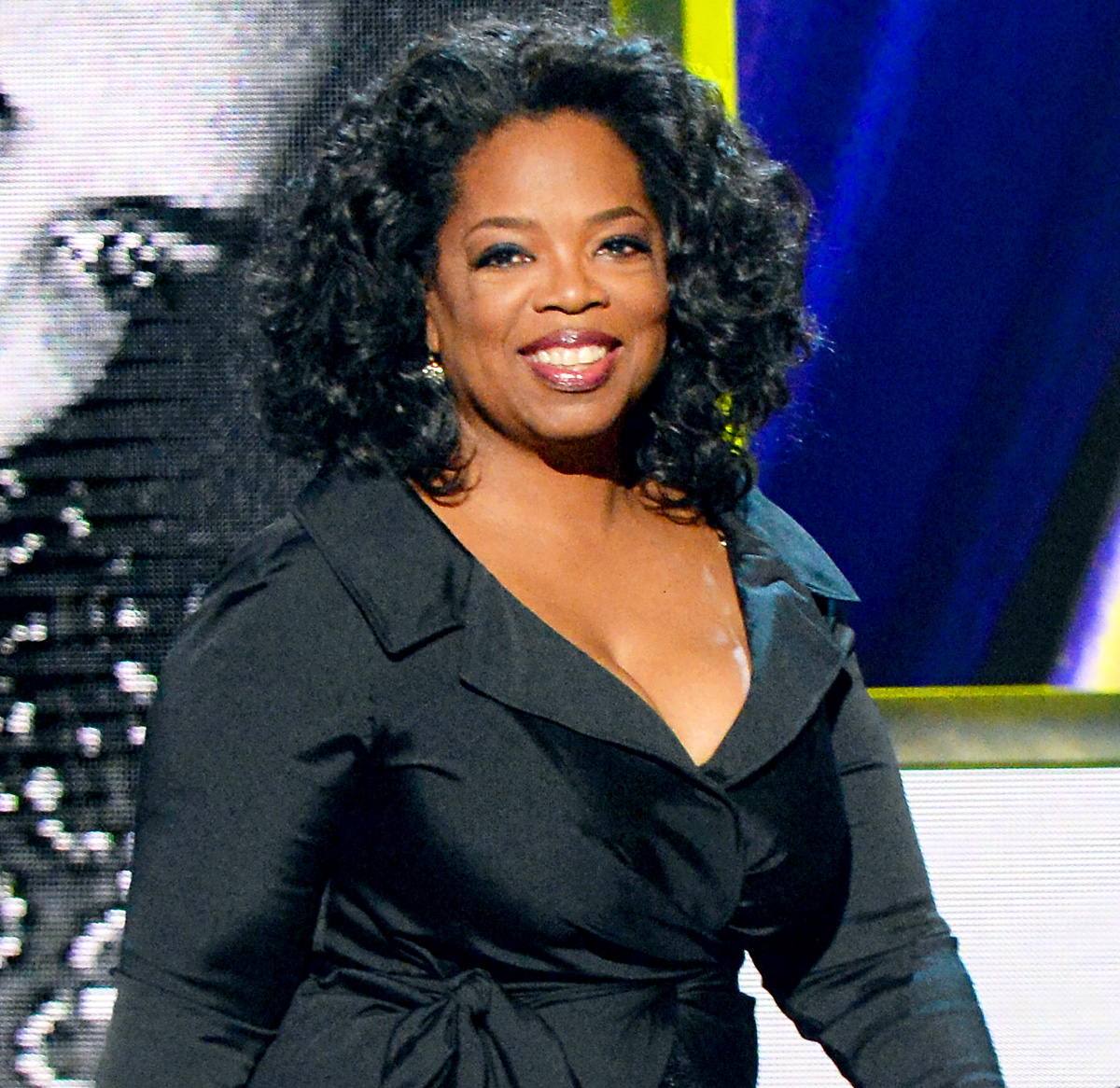
Oprah Winfrey’s New Gig: NFL Owner

By William A. Foster, IV

“If we command our wealth, we shall be rich and free; if our wealth commands us, we are poor indeed.” – Edmund Burke

1374769076_166949325_oprah-winfrey-zoom


Roger Goodell and the NFL seem pretty intent on putting a team back in Los Angeles (if not two). Now for the life of me I have no idea why they insist on a city where they’ve failed in just my lifetime more times than I’m even going to try and remember for the sake of my sanity. Of course they’ve even tossed around the horrible idea of putting a team in London as well. All of the ideas to some degree make my head hurt. The NFL is not a global sport. It’s a U.S. one. Learning and accepting one’s limitations are a great key to long-term success in life and business. The only two global team sports with a ball in my opinion for a myriad of reasons are basketball and futbol. The latter which has yet to take hold here in the U.S. but was one of only three sports to see a rise in youth sports participation, the other two being football which is no surprise and hockey – go figure, over the past decade with youth participation being a strong trend indicator of changing attitudes and demographics. To note soccer has more youth participants than hockey and football combined, with soccer having 13.6 million versus 12 million for football and hockey. So in the long-term it appears soccer is taking hold and in the short-term football is still king as noted by the almost 20% rise in youth participation in football versus only a 5.3% in soccer. Just for good measure to check the financial health of the NFL it should also be noted that the two team expansion will net each of the current 32 owners a check of about $67 million each.

This all leads me to the point of my article. If the NFL is going to expand with two new teams it is more than time for it to have its first African American majority owner and maybe its first two. There is some large irony that 65 years after Branch Rickey killed the Negro Leagues, with our help I might add, by bringing Jackie Robinson over to the Dodgers and essentially watching European American owners drain Negro League owners, the majority of whom were African Americans, of the better talent between the two leagues and yet no ownership was extended or merger was ever suggested that we have but one majority owner between the ninety-two major sports teams in the United States. It was in 2005 the last time the NFL almost had its first African American majority owner when Arizona businessman Reggie Fowler was going to attempt to buy the Minnesota Viking from Red McCombs. The deal would fall through though because as Red McCombs himself is quoted as saying “he had plenty of net worth, but there was not enough liquidity”. This is one of the many difficulties as African Americans build their net worth we tend to acquire hard assets which over the long-term will have strong appreciation but tend to have to leverage up at the expense of our soft assets like cash and cash equivalents in the short-term. Most of us can’t even imagine having the kind of the liquid cash in our everyday bank account that the very wealthy have but if you need to see an example just take a look at hedge fund manager David Tepper’s ATM receipt that was found where the balance in his savings account was almost $100 million. Yes, I said his savings account. You know the “rainy” day account or the emergency fund. Ironically it’s possibly not even that amount of liquidity would suffice for the NFL. In my own business experience most business franchises require a 25-30% cash position of the project. At the current estimates the new NFL teams will sale for around $1 billion, the prospective owner will need to have in the neighborhood of $300 million liquid. A look at the landscape there seems to be only one African American who would fit the criteria. Oprah.

The NFL office should pick up the phone and solicit Ms. Oprah Winfrey’s interest in owning a team. Yes, you heard me right. Actually I gave it away in the title but that’s not the point. Oprah Winfrey, the only African-American billionaire currently, has a net worth of $2.7 billion according to Forbes. Now, on the safe side assuming she has only a basic recommended 10% liquidity position in her portfolio, which in these current economic times would be rather foolish, she would have $270 million in liquidity more than giving her qualifying capability to purchase a NFL team. Let’s also face it the Oprah Effect is real as noted by CNBC. She has the Midas touch and her presence in the NFL would be no different. Another point to be noted is also the NFL fan base is dare I say now run by women – 60 million of them. There is also no denying that with shifting demographics in who is controlling the family purse strings is actually the person with well the purse and not the wallet into today’s changing landscape of who is making family purchasing decisions. Yes, the female consumer is to be reckoned with. Oprah, who even if some women don’t like, almost all respect for her story, journey, and tenacity as a businesswoman. Did I mention Oprah has her OWN network? The possibilities here are endless and I do mean endless.

It is not time for an African American owner. It is beyond time. For major sports like basketball and football whose labor pool is made up of over 70% African Americans it is shameful that the ownership pool has a mere 1 out of 62 (1.6%) owners that are African American. Do the right thing NFL and call Oprah. I’ll look for my consultant check in the mail.

Mr. Foster is the Interim Executive Director of HBCU Endowment Foundation, sits on the board of directors at the Center for HBCU Media Advocacy, & President of AK Companies, Inc. A former banker & financial analyst who earned his bachelor’s degree in Economics & Finance from Virginia State University as well his master’s degree in Community Development & Urban Planning from Prairie View A&M University. Publishing research on the agriculture economics of food waste as well as writing articles for other African American media outlets.

The Who, What, Why, and How of HBCU Reparations

“A reform is a correction of abuses, a revolution is a transfer of power.” – Edward Bulwer-Lytton

The top 100 endowments in America have approximately $250 billion. The HBCU Endowment Foundation’s 105 HBCUs combined have approximately $1.5 to $2 billion. That’s over 125 times more. I am calling for education reparations. To keep it as simple as possible I’m asking for the equivalent of African America’s population. That is approximately 15% and would equal to $37.5 billion that would be equally divided amongst African America’s HBCU institutions. Each HWCU would contribute based on their percentage of the $250 billion pie so that schools with larger endowments are putting in more than those with smaller endowments. The even distribution among HBCUs would allow for schools that have been historically underfunded through a myriad of practices by state and social constraints to achieve some level of parity. This money would be used to build much needed economic and physical infrastructure at HBCUs. From buildings, expanding internationally, improved technology, social training, expanded recruitment, research, and most importantly scholarships that would allow HBCUs to compete for talented African American students who on large choose HWCUs based on financial accommodations.

While HBCUs continue to produce over 25% of African America’s college educated population (while being only 3% of all American higher education institutions) the rising cost of education and lack of financial resources is creating a new wealth divide among future generations even more so than before. America as a whole in 2012 will touch the $1 trillion in student loan debt. Couple this with African America losing 83% of its wealth in the Great Recession which now stands at approximately $2,200 median net worth, according to Economic Policy Institute. This in comparison with European America who has approximately $98,000 by EPI statistics and Asian America has approximately $80,000 according to the Pew Research Center. This recipe is destined to have an African America that is educated but so indebted they can never reap any benefits of their education.

We still have not captured the all important emphasis of circulation of social, economic, and political assets. As I stated in “The University of Power & Wealth” there is no greater institution in America perhaps the world that touches on all three of those developmental factors than colleges and universities. The research alone that creates businesses which in turn creates jobs is something African America sorely needs in spades. The social development of a people’s cultural value owned and controlled by them not given to them by opposing forces. Unfortunately, even in my own mind it is hard to sell such an idea when African Americans themselves still in mass seek to gain entrance into institutions that are not in their control and don’t understand the value of it. Stuck in a laborious mindset as opposed to an ownership mindset will continue to impede African America’s development. Something as simple as sending their child there (tuition revenue), donating (alumni), and a host of other self-defeating actions hamper our best opportunity to grow our way out of the cellar.

Instead we’ll continue to try and kick down the door of colleges and universities where we are the minority instead of the majority, maybe control one trustees seat (which still leaves you outnumbered), are not the major donors to the school which leaves you with little say in the direction, and then cry that we are not receiving fair treatment.

In part I believe these reparations are imperative to the institutional survival of HBCUs who continue to be in need of a massive cash infusion. Something we have been unable to achieve since our founding and seemingly have no help from the present government who has actually cut HBCU funding then restored it to a measly $85 million for 105 schools. Of course I also believe that no group in power would ever do anything or has ever done anything to voluntarily relinquish that power so that another group could rise and challenge them which is exactly what an act like this would generate. However, I believe the reparations conversation is still a poignant one worth having.

In the same way that Wal-Mart, Target, Kroger’s, and other major retail businesses act as an anchor store that brings in other stores to retain the dollar in a geographic area the college and universities of America are the same. I pointed out once that in Texas there is no more valuable real estate to be had at the moment other than in College Station and Austin homes of the state’s two major HWCUs. Now imagine if African America had that kind of demand for its own real estate as opposed to the demand many African Americans currently create for European American schools, neighborhoods, and businesses in our desire to be “accepted”.

The major thing that would have to exist in order for me for this to be a reality is that every HBCU would have to have a plan of purpose for using the money. They would also have to agree to keep the money at an African American bank as this too is one of the vital missteps of African America. Not controlling its banking system and then wondering why it receives and abnormal percentage of sub-prime debt but that is another article for another time.

Stop fighting for fairness and justice. These are relative terms and vary greatly depending on what side of the coin you are on. Instead fight for power to determine your own destiny and in order to do this African America must build its institutional power.