Monthly Archives: October 2025

Central State’s Water Resources Program: An HBCU Answer to Kabwe’s Lead Poisoning Crisis

“What good are our institutions or our programs if they are not meant for the survival and empowerment of our people? We must be more than job seekers, we must be fighters for the Diaspora. These tools we learn have to be for a greater purpose.” – William A. Foster, IV

In Kabwe, Zambia, a seven-year-old girl named Winfrida sits in a classroom where learning feels like trying to climb a mountain barefoot. Once the site of one of the world’s largest lead mines, Kabwe is now infamous as perhaps the most lead-polluted place on earth. The town’s legacy of extraction has left behind poisoned soil, contaminated water, and a generation of children robbed of potential. At the same time, in Wilberforce, Ohio, a historically Black institution has been quietly developing an expertise that could one day prove critical to Kabwe’s recovery. Central State University, the nation’s only HBCU with a dedicated Water Resources Management program, is uniquely positioned to contribute to addressing this environmental catastrophe. The program’s interdisciplinary curriculum, rooted in both science and community engagement, is precisely the kind of training and research engine needed to tackle a challenge as complex as Kabwe’s. This moment offers a powerful illustration of how HBCUs too often overlooked in global problem-solving can step forward as leaders on the world stage. Central State’s water expertise is not only about classrooms and degrees. It could become an institutional bridge between African America and Africa, uniting technical skill with a shared historical experience of exploitation and resilience.

Kabwe’s crisis is the long shadow of a century of mining. The Broken Hill mine, opened in 1906 under British colonial rule, produced massive quantities of lead and zinc for global markets until it was shuttered in 1994. But its closure did not end the danger. Vast piles of lead-laden tailings remain exposed to the elements. Winds scatter toxic dust into homes, schools, and roads. During the rainy season, contaminated runoff seeps into rivers and groundwater. Decades later, blood-lead levels in Kabwe’s children remain among the highest recorded anywhere in the world. Symptoms range from learning disabilities and behavioral problems to stunted growth and organ damage. Entire generations risk being locked into cycles of poor health and diminished human capital. Remediation efforts have been fragmented. A World Bank-funded project cleaned some homes and public areas, but failed to address the core problem: the giant waste dumps that continue to spread contamination. Meanwhile, informal re-mining of tailings by small operators has created new pathways for lead exposure. Government plans for inter-ministerial action have stalled. The crisis persists.

Central State’s Water Resources Management program, housed in the C.J. McLin International Center for Water Resources Management, stands as a rare jewel in American higher education. Launched in 1987, it remains the only HBCU-based program of its kind, and one of the few nationally that integrates the full spectrum of water and environmental challenges. The program offers both a B.S. degree and a minor, blending coursework in hydrology, environmental law, geology, pollution control, waste management, policy, and economics. Students learn not only how water flows through ecosystems but how laws, institutions, and communities interact with those systems. Its graduates have gone on to positions at the USDA, EPA, and Department of Defense, demonstrating its credibility in shaping professionals who can influence policy and practice. Under the leadership of Dr. Ramanitharan Kandiah, the department has expanded its reach and visibility. His recognition as a Diplomate of the American Water Resources Engineers and as a fellow of the ASCE Environmental & Water Resources Institute affirms the program’s high standing. His research portfolio supported by the NSF, USDA, DoD, and others ranges from groundwater quality and evapotranspiration modeling to water equity and resilience in the face of climate extremes. In short, Central State has the expertise to contribute meaningfully to environmental crises far beyond Ohio. The Kabwe disaster could be the kind of global challenge where an HBCU asserts its value not only to African America but to the African continent.

One of CSU’s greatest strengths is its grounding in interdisciplinary, community-engaged research. Kabwe’s crisis is not just about chemistry and soil samples it is about public health, poverty, governance, and trust. CSU students and faculty could partner with Zambian universities and NGOs to design research that combines hard science with social impact. They could map the spread of lead contamination through GIS and remote sensing, conduct water and soil testing to identify high-risk zones, and collaborate with public health teams to link contamination data to health outcomes in children. Kabwe also requires not only outside expertise but the development of local technical capacity. CSU could establish exchange programs that bring Zambian students and environmental professionals to Wilberforce for intensive training in water resources management, while sending CSU students and faculty to Zambia for fieldwork. Over time, this would build a corps of professionals embedded in Kabwe itself, capable of sustaining remediation and monitoring efforts.

The crisis is as much political as technical. Regulatory failure has allowed unsafe re-mining and inadequate cleanup to persist. CSU’s curriculum in environmental law and policy could help train Zambian regulators, civil servants, and community leaders. Workshops or certificate programs led jointly with Zambian institutions could help build governance capacity around environmental enforcement, licensing, and long-term remediation planning. Central State’s new Research and Demonstration Complex, opening in 2025 with advanced soil and water testing labs, could serve as a hub for innovation in remediation technologies. Pilot projects tested in Ohio could then be adapted to Zambia’s conditions. Techniques such as phytoremediation using plants to extract toxins from soil or low-cost water filtration systems could be developed and deployed. Because CSU is an HBCU, its involvement would carry symbolic weight. African American institutions engaging with African crises offers a model of diaspora solidarity. CSU could partner not only with Zambian universities but also with African American financial institutions, philanthropies, and think tanks to mobilize resources. This would expand the pool of actors beyond the typical World Bank or European NGO model.

The role of HBCUs in international development is rarely discussed. Yet they represent a set of institutions with technical expertise in fields like agriculture, health, and environmental science, a cultural and historical connection to Africa that mainstream U.S. universities lack, and community-based models of engagement rooted in serving marginalized populations. When Kabwe is framed purely as a “developing world” problem to be solved by Western aid agencies, the solutions often miss the nuances of community empowerment and self-determination. When an HBCU steps in, it reframes the issue: this is not charity, it is solidarity. It is institutions of African descent collaborating across the Atlantic to repair the legacies of extraction and neglect.

What might it look like in practice for Central State to become part of the solution in Kabwe? It could mean signing a memorandum of understanding with a Zambian partner university, such as the University of Zambia, focusing on water resources, public health, and environmental law. It could involve joint research grants targeting international funders to support Kabwe remediation studies. It could build a student exchange pipeline bringing Zambian students into CSU’s WRM program, funded by scholarships from African American philanthropic foundations. It could convene technical workshops in Kabwe led by CSU faculty, introducing low-cost soil testing and community monitoring methods. And it could establish an annual Diaspora Conference on Water and Environmental Justice, hosted alternately in Wilberforce and Zambia, convening experts, policymakers, and community activists. Such initiatives would institutionalize the partnership, ensuring it is not a one-off but a long-term bridge.

Of course, such an ambitious agenda faces challenges. CSU itself is a relatively small university with an endowment dwarfed by predominantly White institutions. International partnerships require funding, travel infrastructure, and political will. Zambia’s regulatory environment has historically been weak, and vested interests in re-mining waste piles may resist intervention. Yet these obstacles underscore the importance of approaching the issue institutionally rather than individually. For CSU to engage Kabwe meaningfully, it must do so as part of a larger HBCU and African American institutional ecosystem. This could mean drawing on African American-owned banks and credit unions to structure financing, HBCU consortia to pool faculty expertise, and diaspora philanthropic vehicles, like donor-advised funds, to direct giving toward global environmental justice.

Why should an HBCU in Ohio devote resources to a crisis in Zambia? Because doing so not only aids Kabwe but strengthens HBCUs themselves. By engaging globally, CSU elevates its reputation, attracts research funding, and demonstrates the relevance of HBCU scholarship in solving world problems. Students who participate in such projects gain transformative experiences that prepare them for leadership at home and abroad. Moreover, the symbolism matters. Just as the mine in Kabwe exported lead to the world, the environmental devastation it left behind is a global responsibility. HBCUs, born from a legacy of exclusion and survival, understand better than most what it means to inherit poisoned ground and still create knowledge and opportunity from it. Their engagement reframes Kabwe not as a distant tragedy, but as part of a shared struggle for dignity, health, and justice.

The children of Kabwe cannot wait. Each year of inaction locks in more damage to developing minds and bodies. The town’s soil and water remain a slow-moving disaster. Yet hope lies in partnerships that transcend borders. Central State University’s Water Resources program is not a silver bullet. But it embodies the kind of holistic, interdisciplinary, and justice-oriented approach that Kabwe desperately needs. An HBCU stepping into the breach would demonstrate that solutions to global crises can come not only from the usual centers of power, but from institutions born in the struggle of African America. In Wilberforce and Kabwe alike, the message would be clear: water is life, and the institutions of African people must be at the forefront of protecting it.

Disclaimer: This article was assisted by ChatGPT.

Mobilizing HBCU Strength in the Wake of Hurricane Melissa

Support Jamaica – Official Disaster Relief & Recovery Portal

“The building of the bridge of the Diaspora is prioritizing each other, being there for each other, and knowing we will be there for each other.” – William A. Foster, IV

Hurricane Melissa has carved a path of devastation across the Caribbean, making landfall in Jamaica as one of the most powerful storms ever recorded in the region. With winds exceeding 185 miles per hour, rain measured in feet rather than inches, and storm surges that swallowed entire communities, the destruction is overwhelming. Roads have vanished under mudslides, homes are washed away, and entire regions remain without power or communication. As the world watches, the human cost mounts and with it, the need for coordinated, long-term recovery efforts that go beyond the headlines and hashtags.

This is precisely the kind of moment that calls for the leadership, creativity, and moral authority of America’s historically Black colleges and universities (HBCUs) and their alumni associations. Few institutional communities possess such a powerful combination of service tradition, intellectual capital, and global Diaspora reach. For nearly two centuries, HBCUs have served as centers of self-help and social infrastructure for African America and beyond educating generations to serve, rebuild, and lead. The aftermath of Hurricane Melissa offers a new test of that legacy, one that extends far beyond U.S. borders.

HBCUs have a deep connection to the Caribbean through students, faculty, and alumni whose roots reach into Jamaica, Haiti, the Bahamas, and other island nations. That Diaspora connection creates a moral and practical bridge for mobilization. Alumni associations in particular can move faster than the institutions themselves, deploying funding, volunteers, and networks within days, while universities align longer-term commitments around research, innovation, and academic exchange. This dual structure, the institution and the alumni, makes HBCUs uniquely suited to play both first responder and long-term architect in disaster recovery.

In the immediate term, alumni associations can serve as rapid-response centers. Even as the storm continues, alumni chapters across the United States should already be coordinating with established relief through the Support Jamaica from the Government of Jamaica. The goal should not be to duplicate existing efforts but to amplify them by channeling alumni donations, collecting verified supply lists, and matching HBCU expertise to specific needs on the ground. An engineering professor can offer structural assessments remotely. A nursing department can send medical students on rotation to assist clinics in Jamaica or the Caymans. A business school can help small entrepreneurs rebuild supply chains once ports reopen. HBCU students are not bystanders to crisis they are trained to serve.

Beyond the initial relief period, HBCUs can deploy their research and applied-learning capabilities to support the complex rebuilding process that will follow. Public-health schools can collect data on water contamination, agricultural programs can study soil and crop recovery, and construction-management students can join design labs that focus on modular, hurricane-resistant housing. These engagements would not only meet immediate needs but also serve as living classrooms and turning recovery into an educational mission. When coordinated through alumni networks and Caribbean universities, such projects could lay the foundation for a sustained partnership that lasts long after the disaster fades from public view.

In the longer arc of rebuilding, HBCUs have an opportunity to link disaster recovery to economic and institutional power. This means using their foundations and alumni associations as development engines by building endowment-style disaster funds, supporting Caribbean student scholarships, and creating revolving loan funds for small business recovery. These are not acts of charity; they are investments in diasporic resilience and self-reliance. Each project funded, each student supported, and each home rebuilt becomes a demonstration of how African-descended institutions can act globally in solidarity with one another.

Such engagement also strengthens the HBCUs themselves. It raises institutional visibility, attracts research partnerships, and generates new funding streams from government, philanthropic, and private-sector actors who increasingly view climate resilience as one of the century’s defining challenges. HBCUs that position themselves as centers of innovation for the global South studying, designing, and implementing community-based adaptation strategies can expand their mission without abandoning their core. As the climate crisis accelerates, the world will need institutions that not only understand the technical side of disasters but the human and cultural dimensions of recovery. HBCUs are built on exactly that intersection.

Alumni associations have an equally vital role to play as connectors and funders. Their members sit in corporations, government agencies, and nonprofits that have the capacity to provide logistical and financial support. They can organize micro-campaigns like “HBCUs for Jamaica,” “Panthers for the Caribbean,” “Aggies for Melissa Relief” that use institutional pride to drive real impact. Alumni-owned businesses in logistics, energy, or construction can be contracted to support the rebuild, keeping dollars circulating within African-descended enterprise networks. In doing so, these associations reaffirm the idea that solidarity among African Americans and the wider African Diaspora is not a sentiment, it is an economic system waiting to be mobilized.

This storm also calls for humility and partnership. Local Caribbean organizations must remain at the center of planning and execution. HBCUs and their alumni can amplify those efforts, but not override them. Genuine cooperation requires listening to local leaders, integrating their priorities, and avoiding the paternalistic model that often defines international relief work. The goal is not to arrive as saviors but to stand as equals offering capacity, knowledge, and connection while respecting local sovereignty.

HBCU presidents should begin by issuing joint statements of solidarity, coordinating through existing networks such as the Thurgood Marshall College Fund, UNCF, and the 1890 Universities Foundation. Together, they can create a unified HBCU Hurricane Melissa Relief Fund with transparent governance and regular public reporting. At the same time, they can encourage their student governments and alumni bodies to organize locally: donation drives, digital campaigns, and academic forums on climate justice and resilience. Even modest efforts can have exponential effects when multiplied across more than one hundred campuses and hundreds of thousands of alumni.

The larger opportunity lies in transforming response into strategy. The Caribbean sits on the frontlines of the climate crisis. Hurricanes like Melissa will not be rare; they will be recurring. HBCUs can help shape the next generation of professionals such as engineers, urban planners, policymakers who understand that climate adaptation is not only a technical challenge but a social one. They can develop academic exchanges with Caribbean universities, establish resilience research centers, and convene annual symposia on diasporic disaster recovery. The intellectual capital of the HBCU system should not remain confined to domestic boundaries.

This is also a call for new kinds of philanthropy. African American institutions cannot rely on federal agencies or large international NGOs to prioritize the needs of predominantly Black regions. Our own institutions must cultivate endowments and funds capable of responding independently. Alumni foundations could dedicate a percentage of annual giving to a “Diaspora Relief Reserve,” allowing immediate deployment of resources when crises arise. Partnerships with African and Caribbean banks could provide low-interest credit to affected small businesses. Technology departments could create open-source digital platforms connecting donors to verified local projects. Each initiative strengthens both the giver and the receiver, building an economic loop within the diaspora.

To many, these storms seem like acts of nature. To those of us who understand history, they are also acts of policy from decades of neglect, inequality, and extractive development have left Caribbean nations exposed. HBCUs have always existed to correct structural inequities through education, cooperation, and leadership. Extending that mission across borders is not charity; it is continuation. The same spirit that built schools out of Freedmen’s churches after the Civil War can now help rebuild villages along Jamaica’s coast.

For generations, HBCUs have asked their students to “enter to learn, depart to serve.” Service now means something larger: serving not only one’s neighborhood or state but one’s global kinship. The aftermath of Hurricane Melissa offers a moment to operationalize that ideal to move from inspiration to institution, from sentiment to structure.

Five-Point Plan for HBCU and Alumni Action After Hurricane Melissa

  1. Create the HBCU Hurricane Melissa Relief Fund. A coordinated fund governed by representatives from multiple HBCUs and alumni associations, dedicated to immediate aid and long-term rebuilding.
  2. Deploy Expertise and Volunteers. Mobilize faculty, students, and alumni in engineering, health sciences, business, and agriculture to assist recovery efforts both on-site and virtually.
  3. Establish a Caribbean Resilience Fellowship. Provide scholarships and research opportunities for students from affected regions to study at HBCUs, focusing on climate adaptation and sustainable development.
  4. Develop Long-Term Economic Partnerships. Use alumni business networks to invest in reconstruction, renewable energy, and small-enterprise recovery in the Caribbean, ensuring diaspora capital builds diaspora resilience.
  5. Institutionalize Climate and Disaster Studies. Embed disaster-resilience curricula and global-south research collaborations across HBCUs, positioning them as leaders in climate-justice education and innovation.

HBCUs were born out of catastrophe, out of the wreckage of enslavement and the broken promises of Reconstruction. Their survival and success have always depended on collective strength and the willingness to build when others turned away. Now, as Hurricane Melissa devastates our brothers and sisters in the Caribbean, those same instincts are needed again. If HBCUs and their alumni act with urgency, strategy, and unity, they can transform this tragedy into a living testament to what diasporic institutions can achieve when they take responsibility for one another’s future.

Disclaimer: This article was assisted by ChatGPT.
Leave The Bands At Home: HBCU Football Should Leave Their Bands Behind For Road Games

“Pragmatism is good prevention for problems.” – Amit Kalantri

The unspeakable may be the fiscally responsible

It seems almost unthinkable. An HBCU football game without BOTH bands at halftime. It has happened before, though only in exceptional cases: an emergency back home, a suspended band, or budgetary chaos. But to purposely and preemptively not take one’s band on the road? In HBCU culture, it feels akin to breaking the thirteenth commandment—Thou Shall Not Not Make ‘Em Dance—or committing some kind of cultural apostasy. Yet, for all its sacredness, perhaps it is time to break the spell.

At the core of this radical idea lies a rather mundane but pressing question: money. Football remains a major cost centre for most HBCUs. Marching bands, while sources of school pride and cultural magnetism, are not cheap to move. Between buses, meals, lodging, uniforms, and instrument logistics, taking a full band of 150+ members on the road can easily cost upwards of $50,000 per trip—especially if the destination is cross-country or involves air travel. Multiply that over several away games and a program could be looking at a mid-six-figure expenditure for the season. For many financially struggling HBCUs, this is no longer tenable.

The Holy Trifecta: Football, Bands, and Black Culture

At HBCUs, the band is often a co-headliner alongside the football team. In fact, at many institutions, the halftime show garners more social media views than the football game itself. The human formations, the drumline cadences, the high-stepping majorettes—it is part performance art, part cultural ritual. This makes the suggestion to leave bands behind feel almost blasphemous. It would strip the game of a vital sensory component, some argue, and deflate the inter-institutional competition that thrives on the duality of football and music.

Yet, it is precisely because of the power and prestige of the band that its role should be more strategically deployed. Bands are brand equity, not just background music. And that equity can be preserved—even enhanced—by rationing its presence and reallocating its costs.

Opportunity Cost and the Marching Million

Take the example of a mid-tier HBCU football program with four away games and a 160-member band. Transporting that band to all four games (via coach buses and lodging in modest hotels) might cost around $45,000 per game, or $180,000 total. Now imagine what else $180,000 could fund:

  • A student internship fund supporting 60 summer internships with $3,000 stipends;
  • A marketing campaign aimed at boosting out-of-state recruitment;
  • Repairs to the music department’s aging instruments and facilities;
  • A reserve fund for the band itself, to increase scholarships or buy newer uniforms.

The fact that this trade-off rarely enters the conversation reflects how entrenched the band has become as a required amenity for HBCU athletics. But institutions facing increasing competition for enrollment, state budget cuts, and inflationary pressure must start examining what truly maximizes impact—and what has become tradition for tradition’s sake.

Enter the Bandlight Policy

A “Bandlight” policy—where the band does not travel to away games unless deemed a high-profile or high-impact matchup (such as classics or homecoming of an opposing school)—could preserve institutional pride while enabling budget reprioritization. To soften the cultural blow, this policy could be paired with livestreamed pregame performances from home, aired during halftime of away games, or partnerships with local high schools or community colleges to fill the halftime slot. In effect, HBCUs would still “show up” culturally—just not logistically.

Moreover, rival institutions could enter into alternating-year agreements where only one band travels per year to the same matchup, thereby cutting costs in half while preserving some tradition. Or the entire conference could collectively implement policies to standardize expectations.

Revenue Substitutes: Making Absence Profitable

There is also the question of replacement: if the band is not traveling, what can be put in its place—socially and economically?

  1. High School Recruitment Fairs: Away games, especially those in recruiting hotbeds like Atlanta, Dallas, or Memphis, could feature pre-game recruitment fairs or pop-up university expos that target prospective students. Hosted in the parking lots or auxiliary spaces near stadiums, these expos would draw interest beyond the usual alumni tailgating crowds and create a broader community impact.
  2. Alumni Investment Summits: Rather than just tailgates and chants, HBCUs could host micro-investment forums or alumni networking mixers tied to away games. These could feature information on planned giving, institutional capital needs, and legacy endowments. Such events reinforce the university’s brand as an enduring institution—not just a weekend pastime.
  3. Cultural Diplomacy Exchange: At many PWIs (Predominantly White Institutions), the visiting HBCU band often provides the primary Black cultural presence on campus. By not sending the band, HBCUs could instead host curated cultural experiences: pop-up film screenings of Black directors, panel discussions on African American history, or mini art exhibitions. These events would still showcase the university’s heritage—just in a different form.
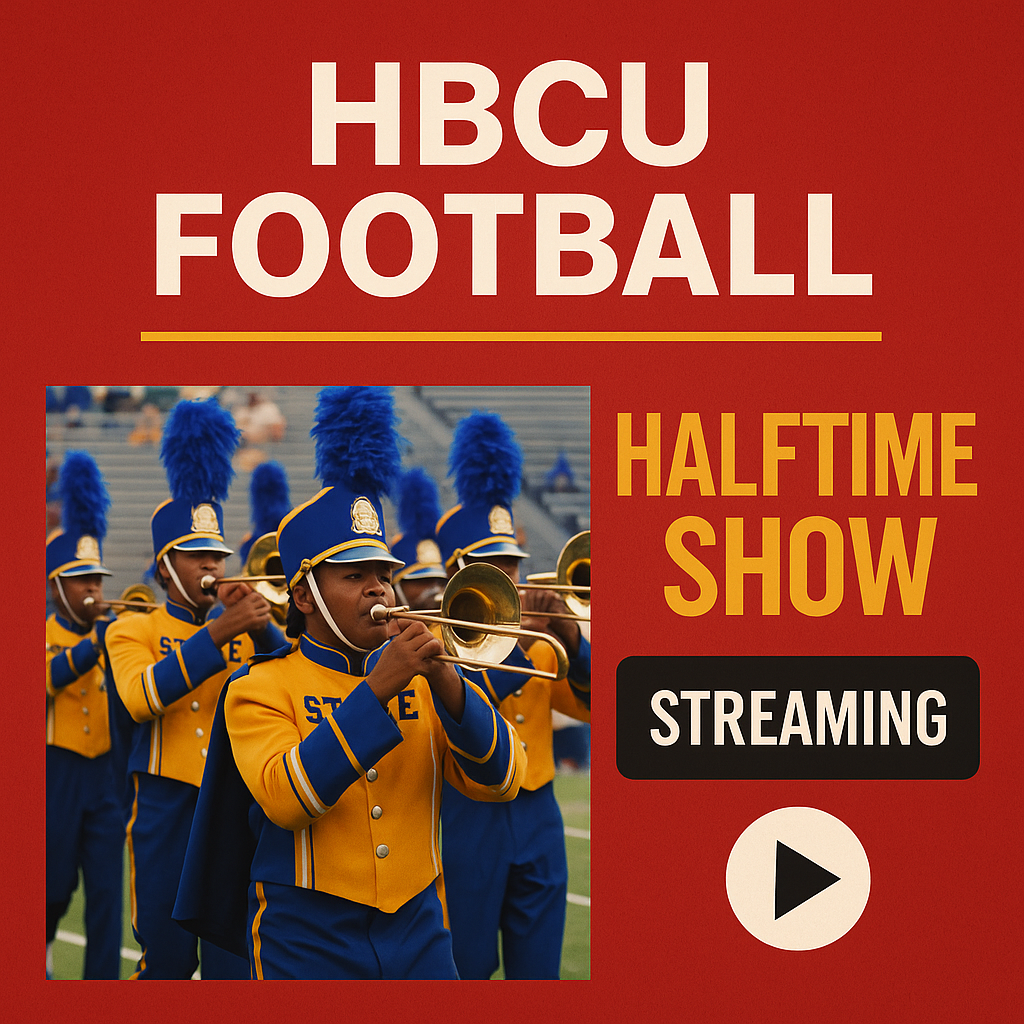
  4. Digital Monetization: Finally, there is room for digital alternatives. Bands could record exclusive halftime content back on campus for broadcast during away game livestreams. With the right sponsorship and media packaging, this could even generate revenue—especially if made accessible to the broader HBCU diaspora via streaming platforms or partnerships with outlets like HBCU Go or KweliTV.

Making Room for Exceptions: The Classics, Championships, and Cultural Diplomacy

No policy should be absolute, and the “Bandlight” approach must leave room for strategic exceptions. Certain games carry weight not just in terms of school pride, but institutional visibility, alumni engagement, and revenue generation. These events—such as the Bayou Classic, Magic City Classic, Florida Classic, or Celebration Bowl—should remain exempt from the policy due to their national reach and cultural cachet.

In these cases, the financial and branding benefits of both bands being present far outweigh the costs. These events are often broadcast on national television, command six- or seven-figure sponsorships, and serve as major alumni gathering points. Not showing up in full force—band and all—would send the wrong message about the value of HBCU pageantry.

Similarly, championship games or playoffs should remain occasions where bands accompany the team, reinforcing institutional pride at the highest level of competition.

Lastly, special exceptions could be granted for “Cultural Diplomacy Games,” where HBCUs play PWIs in regions with limited exposure to African American cultural institutions. These matchups offer an opportunity to expand HBCU brand identity and cultural influence—missions that justify a larger financial investment.

By clearly defining such exceptions, institutions can retain flexibility without undermining the integrity of a more fiscally responsible standard for regular-season games.

From Brass to Bank: Strengthening Endowments Through Smart Savings

Perhaps the most compelling reason to consider limiting band travel is the long-term impact it could have on strengthening HBCU endowments—a chronic weakness in the financial armor of most historically Black colleges and universities. Endowments are not merely rainy-day funds; they are the bedrock of institutional independence, providing reliable income streams for scholarships, faculty retention, infrastructure improvements, and strategic initiatives. Yet, the vast majority of HBCUs remain dangerously undercapitalized.

As of 2024, only one HBCU—Howard University—has an endowment exceeding $1 billion. By comparison, over 50 predominantly white institutions boast endowments larger than $1 billion, and the average Ivy League endowment surpasses $10 billion. The gap in financial flexibility means that most HBCUs remain reliant on tuition, federal grants, and unpredictable philanthropic cycles. Closing this endowment divide must be a generational project—and rethinking every cost center, including football and band logistics, is a prudent step.

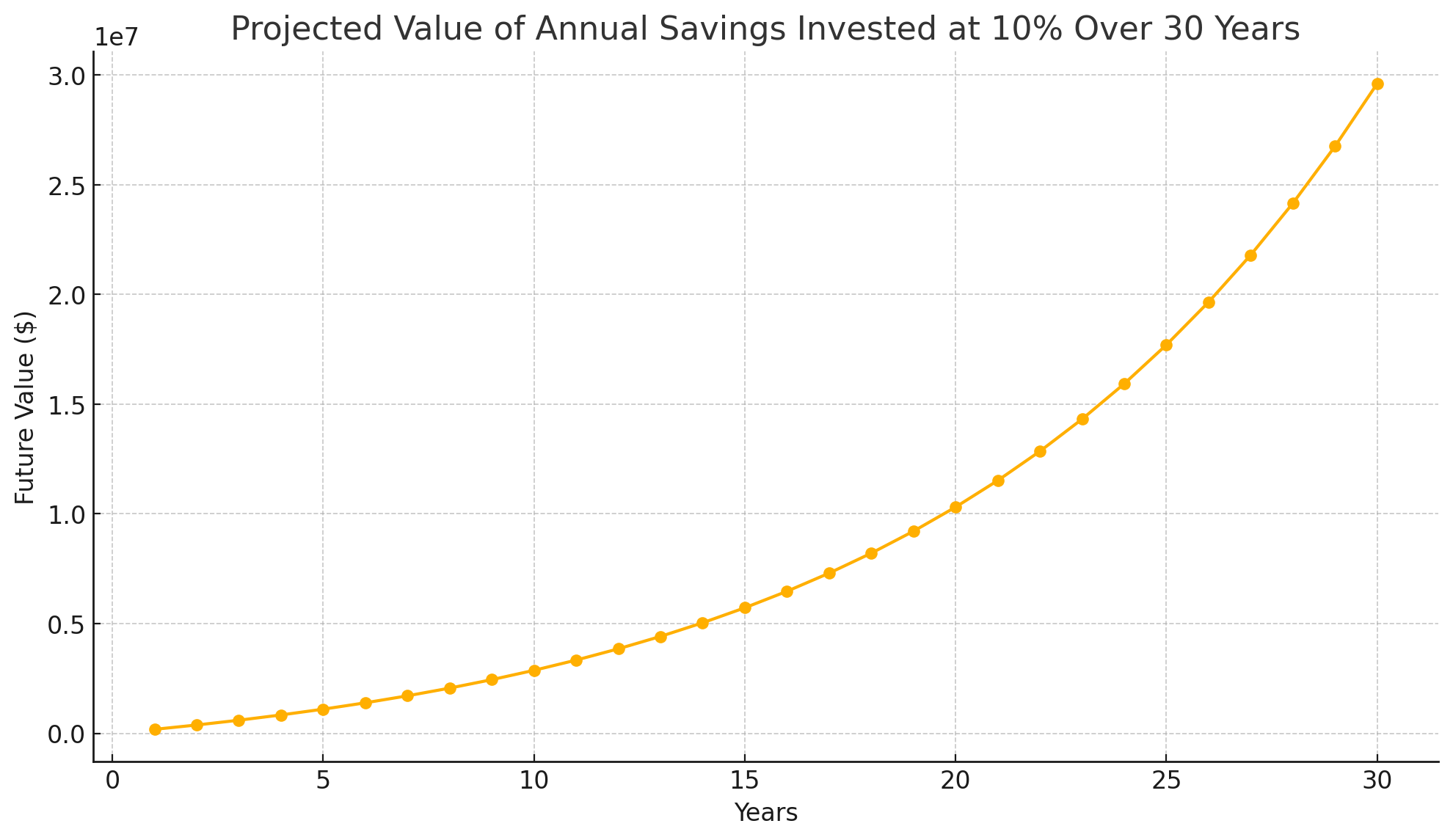
Let us revisit the travel cost scenario: an HBCU saves $180,000 annually by not sending its marching band to four away games. If that amount were instead directed into an endowment or investment fund yielding a 10% annual return, compounded over 30 years, the return on the first year’s investment alone would grow to approximately $3.1 million. But in practice, this contribution would not be a one-time deposit—it would be made every year for 30 years.

Each $180,000 annual deposit would compound over a different span of time—from 30 years down to 1 year for the final contribution. When we sum the compounded growth of all 30 annual contributions, the total value by year 30 is not merely $3.1 million, but a remarkable $32.6 million.

This is the true power of consistent, disciplined investing. What might seem like a relatively small annual sacrifice—foregoing band travel to four away games—can, when reinvested wisely, build a financial pillar for an HBCU that could support hundreds of scholarships, faculty lines, or capital improvements. Across multiple institutions, such strategy would not just close the endowment gap—it could transform it into a long-term competitive advantage. Using the future value formula:

FV = P × [(1 + r)^t – 1] / r
FV = $180,000 × [(1.10)^30 – 1] / 0.10
FV ≈ $3.1 million

Now imagine 40 HBCUs adopting this policy. If each institution redirected $180,000 annually into an endowment with a 10% annual return, the combined value of those contributions over 30 years would grow to an extraordinary $1.3 billion.

This isn’t speculative—it is mathematical certainty backed by compounding returns. What begins as a quiet cost-saving measure becomes a billion-dollar transformation of Black institutional capital. It is the kind of long-term vision HBCUs need to build financial independence and power. Leaving the bands at home, selectively and strategically, could finance a future where they never again play second fiddle to structural underfunding.

Such funds could be reserved for band scholarships, new instruments, music department endowments, or general institutional advancement. Equally important, this shift demonstrates fiscal maturity to large philanthropic donors who seek assurance of sustainability and capital stewardship. In this light, the silence of a band on one Saturday becomes a long crescendo toward institutional resilience.

Band Camp Economics and Reallocation Potential

Consider also the economic pressures on the bands themselves. Marching bands at HBCUs are often underfunded even as they serve as ambassadors and talent pipelines. Travel budgets could be redirected internally:

  • Higher stipends for band scholarships, which could attract more top talent;
  • Expanded outreach to middle and high school band programs to sustain the pipeline;
  • Better faculty-to-student ratios for music education;
  • New instrument purchases, particularly for percussion and brass sections, which endure high wear and tear.

An internal reallocation of $150,000–$250,000 annually per school could mean the difference between merely surviving and thriving for a band program.

The Cultural Blowback—and Counterarguments

Naturally, such a policy will meet resistance—not only from fans but from within. Band members may feel shortchanged on travel experiences. Alumni may bristle at what they see as a cultural dilution. Game promoters may worry about reduced ticket sales if the bands are not both present.

But it is precisely because bands matter so much that they should be protected from burnout and underinvestment. If leaving them home three or four times per year increases their overall budget, performance level, and recruitment reach, is that not a worthy trade?

Besides, culture evolves. Just as HBCUs have moved from AM radio to YouTube, from pamphlets to TikTok, so too can band culture adapt to a new hybrid reality—where physical presence is not the only measure of visibility or power.

A Conference-Wide Model: The SWAC and MEAC Could Lead

If this is to be implemented, it would ideally not be school by school, but as a conference-wide reform. Both the Southwestern Athletic Conference (SWAC) and the Mid-Eastern Athletic Conference (MEAC) could establish guidelines that limit band travel to key games while preserving equity among member institutions.

Such a policy might include:

  • A rotating system where each team brings its band to only half of its away games;
  • Revenue-sharing from livestreamed halftime performances;
  • Incentives for home teams to offer cultural hospitality to offset the absence of the visiting band.

It would also open new possibilities for sponsorship. Corporate partners who understand the influence of HBCU bands could be enlisted to underwrite digital halftime content or band scholarships—an easier pitch if funds are not being spent on transport and logistics.

March Differently, Spend Smarter

Culture is not weakened by strategy. In fact, when deployed wisely, it is made more resilient. Leaving the bands at home for select away games is not a betrayal of HBCU tradition—it is a restructuring of it to survive and thrive in a new era.

In a time when HBCUs are asked to do more with less, the question is not whether the bands should still matter. Of course they do. The question is whether they should have to march themselves into financial depletion to prove it.

Better to let them rest, regroup—and when they do appear, make it unforgettable.

Disclaimer: This article was assisted by ChatGPT.
Investment Income as the True Measure of Nonprofit Power

“Philanthropy reflects not just generosity, but power. When African American foundations hold millions while their counterparts hold billions, the capacity to shape society is written in the balance sheets.” – HBCU Money Editorial Board

In the nonprofit and philanthropic world, financial statements tell a story much deeper than annual fundraising drives or program headlines. For African American institutions in particular, the real question of institutional power is not how much money comes in each year, but how much money is working on their behalf every day through investment income. The gap between African American legacy institutions and the nation’s major philanthropic foundations makes this truth impossible to ignore.

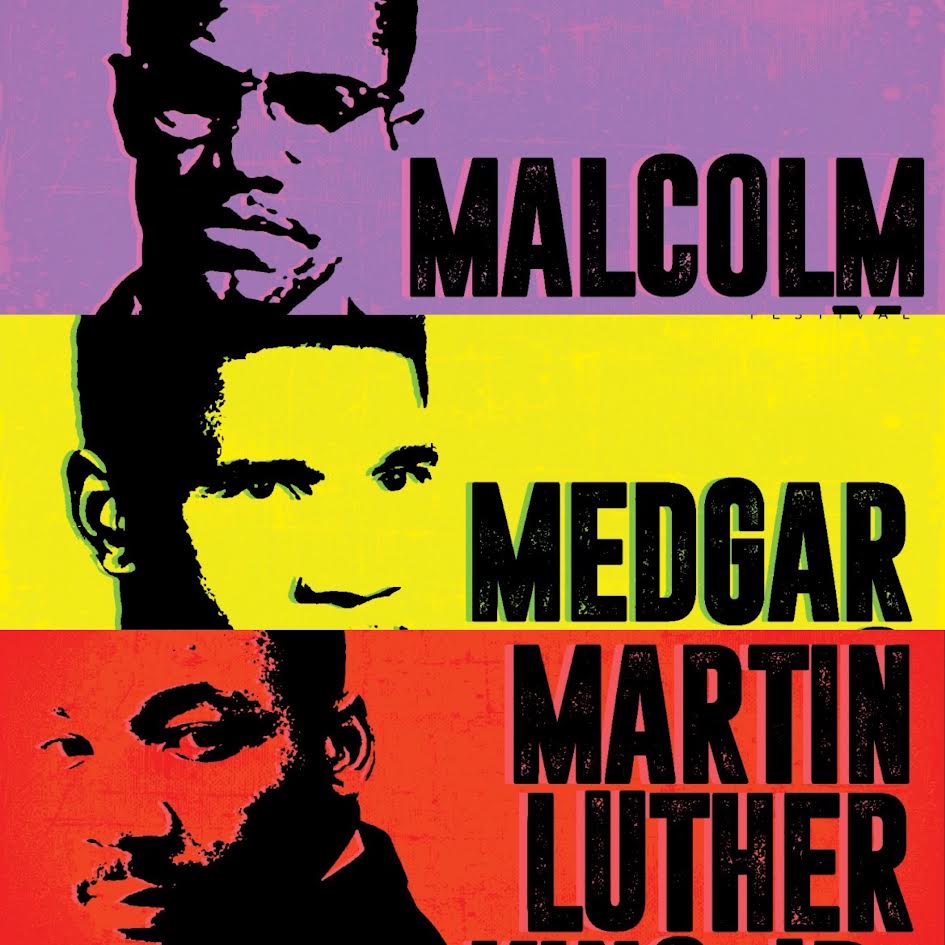
When most people evaluate nonprofits, they look at annual revenue: how much an institution raised in donations, how much it earned from programs, how much it reported on the IRS Form 990. By this metric, many organizations appear healthy. The King Center in Atlanta, for instance, reported $9.1 million in revenue in 2022, and the Malcolm X & Dr. Betty Shabazz Center reported $1.4 million in the same year. Even the Medgar & Myrlie Evers Institute, operating at a much smaller scale, posted $107,000 in revenue in 2023. Yet revenue alone is a deceptive indicator. It measures activity, not stability. Donations can be fickle. Program revenue can evaporate in downturns. Grants can dry up with shifts in political winds. A true measure of institutional health is whether an organization can generate its own independent cash flow — investment income.

The numbers reveal just how stark the divide is. The King Center, the strongest among African American legacy nonprofits, earned $788,000 in investment income in 2022. That represented nearly 9 percent of its total revenue, cushioning its operations with reliable, asset-driven support. By contrast, the Shabazz Center earned just $1,500 in investment income, and the Evers Institute earned nothing at all. Both remain almost entirely dependent on yearly contributions and program dollars. When compared to America’s powerhouse philanthropic institutions, the difference borders on staggering. The Ford Foundation generated $1.2 billion in investment income in 2022 — over 1,500 times what the King Center earned. The Rockefeller Foundation earned $120 million. The Walton Family Foundation, tied to the heirs of Walmart, brought in $240 million. The Bloomberg Family Foundation, anchored by the billionaire media mogul, generated $344 million. In this world, investment income is not supplemental; it is the engine. It underwrites operations, absorbs shocks, and ensures that missions continue even in the absence of donor enthusiasm. Investment portfolios are endowments of power, spinning off influence year after year.

This also clarifies why net income, the difference between revenue and expenses, is often misunderstood as a sign of strength. The King Center ran a $1.28 million surplus in 2022, while the Ford Foundation ran a $520 million deficit. Which institution is stronger? The answer is obvious: Ford. It can afford to run half a billion dollars in the red precisely because it has tens of billions in assets generating massive returns. Its deficit is a choice, not a crisis. By contrast, the Medgar Evers Institute’s deficit of just $25,000 in 2023 threatens its very survival because it has no investment base to fall back on. Net income measures short-term breathing room; investment income measures long-term power.

The contrast becomes sharper when examining the Steward Family Foundation, tied to David Steward, the wealthiest African American man. In 2023, the foundation reported $12.5 million in revenue and $857,000 in surplus, but just $29,000 in investment income. It holds only $22,000 in assets. Despite extraordinary personal wealth, the foundation is structured as a pass-through, distributing annual gifts rather than building a permanent, income-generating endowment. The Steward paradox highlights a broader challenge: African American wealth, even when achieved at extraordinary levels, has not consistently been institutionalized into enduring investment vehicles capable of generating influence across generations.

The implications of this reality are profound. Institutions without investment income are vulnerable to political tides, donor fatigue, and economic downturns. Their missions — whether preserving the legacy of Martin Luther King Jr., Malcolm X, or Medgar Evers — rest precariously on year-to-year survival. By contrast, the Ford or Rockefeller foundations can guarantee their voices in the public square for centuries. This imbalance in institutional financing means African American causes remain at the mercy of others’ benevolence while rival institutions are powered by their own wealth.

If investment income is the true measure of power, then African American institutions must pursue one clear priority: endowments. Not just annual fundraising, not just program grants, but the deliberate accumulation of assets whose returns will underwrite their missions indefinitely. Imagine if the King Center’s $788,000 in annual investment income could be multiplied tenfold or a hundredfold. Imagine if the Shabazz Center or the Medgar Evers Institute could fund their programming entirely from endowment returns. Imagine if the Steward Family Foundation transformed from a pass-through into a billion-dollar perpetual institution. This is the difference between surviving and shaping the future.

Investment income is the institutional equivalent of compound interest in personal finance. It rewards patience, discipline, and foresight. It separates organizations that merely exist from those that endure. For African American institutions, the lesson is clear: to secure legacies, to project influence, and to build power, they must shift their focus from short-term fundraising to long-term asset building. Only then can African American institutions stand as peers to Ford, Rockefeller, Walton, and Bloomberg — not just in name, but in financial reality.

Disclaimer: This article was assisted by ChatGPT.
What If Bronny James Were A Doctor?

“Our children can’t be what they can’t see.” — Marian Wright Edelman

In August 2015, HBCU Money asked a provocative question: What if LeBron James were a doctor? It was more than a hypothetical. It was a cultural critique of how African American communities disproportionately invest their most visible male potential into athletics rather than professions like medicine, law, or academia. The premise was simple: what if the best of us were guided toward healing rather than hoops?

At that time, Bronny James was only 10 years old. He was already receiving national media coverage and projected to follow in the footsteps of his famous father. Ten years later, we know how the story unfolded: Bronny James is now 20 years old, an NBA player for the Los Angeles Lakers, having been selected 55th overall in the 2024 NBA Draft. He and LeBron have made history as the NBA’s first active father–son duo. But as we revisit that original question, we offer a new one for this moment:

What if Bronny James were a doctor?

The Pipeline That Still Leaks

In the decade since the original article, the numbers have moved very little. Black men remain just 2.9% of medical school applicants in the United States. While the total percentage of Black physicians has risen slightly to 5.2%, Black male doctors remain critically underrepresented in the field. The pipeline is still broken—too narrow, too leaky, and too unprotected.

Meanwhile, sports pipelines are expanding. Black male participation in college athletics remains high: 44% in NCAA Division I basketball and 40% in football. Yet only a fraction make it to the pros, and even fewer achieve career longevity. While Bronny James may earn an estimated $33 million over five years in the NBA, that sum when spread over a lifetime equates to about $750,000 annually pro-rated from age 21 to 65. By contrast, a primary care physician earning $280,000 annually over a 35-year career will earn nearly $10 million, with the added benefits of job security, community impact, and longevity.

Imagining Dr. Bronny James

What if Bronny James had chosen to study medicine instead of basketball?

He would now be entering his second year of medical school, perhaps at Morehouse, Howard, or Meharry. He would be poring over medical textbooks, studying cardiovascular anatomy, shadowing trauma surgeons, and preparing for his USMLE Step 1 exam. Instead of prepping for NBA Summer League, he’d be interning at the Cleveland Clinic or doing a rural health rotation through an HBCU pipeline program.

Bronny would not trend on Twitter. He would not have endorsement deals. But one day, he would help save lives. He might build a medical clinic in Akron, establish scholarships for Black boys in pre-med tracks, or serve as a thought leader in health equity. His white coat would carry power every bit as influential as his jersey and perhaps more transformative.

Investing in the Wrong Dream?

The culture of African American investment in financial, emotional, and institutional remains lopsided. Parents spend thousands each year on club sports, trainers, uniforms, and travel tournaments. The AAU circuit is a multi-billion-dollar enterprise. But few parents are encouraged or supported to invest similarly in chess clubs, science fairs, or summer medical programs. The problem isn’t sports. The problem is singularity. We teach Black boys to put all their ambition into the least likely path to success. That is not empowerment it is misallocation.

Sports should be one of the dreams. Not the dream.

And cultural influencers like celebrities, churches, schools, and even HBCUs must widen the lens of what is considered aspirational. Because when African American boys only see themselves celebrated on the court or field, they are conditioned to believe that’s the only route to greatness.

The Hospital That Could Change Everything

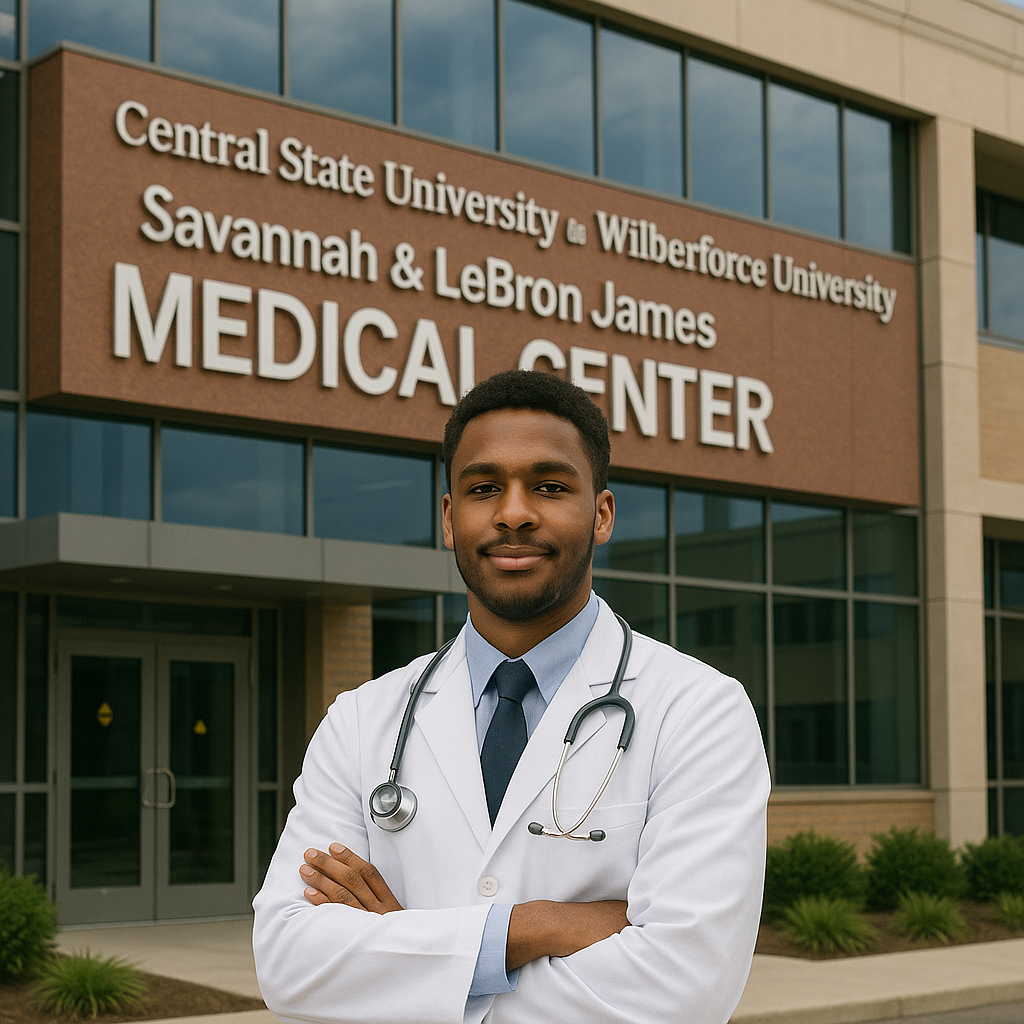
Now imagine a future where LeBron and Savannah James decide to reshape the health destiny of Black Ohio not just through education, but through medicine. In partnership with Central State University and Wilberforce University, the James family announces the creation of the Savannah & LeBron James Medical Center, a state-of-the-art teaching and research hospital in Dayton, Ohio. The hospital would be co-owned by the two HBCUs, offering an unprecedented model of HBCU institutional control and healthcare delivery.

At its helm? Dr. Bronny James, a board-certified trauma surgeon and hospital executive, returned from medical training with a mission not just to serve, but to system-build. Through a strategic pipeline, students from the I PROMISE School in Akron, established by the James family, would be funneled into dual-admissions programs at Wilberforce and Central State, beginning in middle school. African American students interested in health sciences would receive mentorship, MCAT preparation, research internships, and full scholarships in exchange for a five-year service commitment at the hospital.

The hospital would:

  • Serve as a Level 1 trauma center for the Midwest Black Belt.
  • Anchor a Black-owned HMO focused on preventive care and wellness.
  • House medical research departments focused on sickle cell, hypertension, and diabetes, disproportionately affecting Black populations.
  • Be staffed by a growing cadre of Black doctors, nurses, and technicians, trained from within the HBCU system.

It would be the first modern, Black-owned academic medical center in America in over a century.

Not just a facility but a movement.

HBCUs as Healthcare Engines

This is the next evolution for HBCUs. No longer content to only educate they must now employ, own, and lead. Currently, Meharry, Howard, and Morehouse are the most visible HBCU medical institutions, but they are not sufficient to serve a national population. HBCUs like Central State and Wilberforce can and should partner with philanthropists to enter the healthcare delivery space. Hospitals, urgent care clinics, dental schools, nursing programs—these are all industries HBCUs can lead, if given the capital and political will.

The Savannah & LeBron James Medical Center would become a model for how celebrity philanthropy can shift from access to ownership. The James family has built schools. Now they can build systems. Systems that outlast careers. Systems that create intergenerational empowerment. And Dr. Bronny James? He would not just be a doctor. He would be a symbol of new possibilities.

Culture, Media, and The Battle for Imagination

The Bronny we know exists because the culture invested in him—from trainers to scouts to sports media coverage. But imagine if that same investment were redirected into medicine.

What if:

  • ESPN tracked the top Black high school biology students?
  • SpringHill Company aired a documentary series on Black med students at HBCUs?
  • Nike sponsored lab coats instead of just sneakers?

Culture tells children what to value. The question is whether we value Black intellect enough to mass-produce it.

Father–Son Legacy: A New Kind of First

LeBron and Bronny made history as the NBA’s first active father-son duo. But what if they made history again this time as a father-son pair who reshaped African American health care? Imagine LeBron standing beside Bronny at the ribbon-cutting of the James Medical Center. One created legacy through sport. The other, through healing. That is a legacy few families could rival. That is the kind of dynasty African America needs now.

Final Thoughts: From Possibility to Policy

“What if Bronny James were a doctor?” is no longer a question about a single person. It is a challenge to families, schools, HBCUs, and philanthropists. It is a policy challenge: to build educational pipelines, mentorship structures, and HBCU-led medical institutions that keep Black talent from slipping through the cracks. It is a cultural challenge: to celebrate and invest in intellect and professionalism with the same intensity we invest in athletics. It is a power challenge: to shift from participation to ownership in one of the most critical sectors of our economy health care. The original article asked the question. Now, let us answer it—with vision, capital, and courage. Because if Bronny James were a doctor—and led a Black-owned hospital rooted in HBCU strength we would not just be saving lives.

We would be saving futures.