Tag Archives: renewable energy

Public Transportation & Infrastructure: Apple Should Help Kill The Car Not Invest In It

In 2024, Apple quietly killed its electric vehicle project. After nearly a decade of speculation, leaked prototypes, and engineering talent poached from Detroit and Stuttgart, the announcement arrived with a shrug. Markets barely moved. What looked like a retreat was, on closer inspection, something more interesting — a door left open to a far more consequential ambition.

Apple was never going to win by building another car. The automotive market is brutally competitive, capital-intensive, and increasingly commoditised at the electric end. Tesla, BYD, and Rivian are fighting that war. The smarter bet — and the one Apple is uniquely positioned to make — is building the platform that makes car ownership less necessary in the first place.

This is not a utopian argument. It is a business one.

The global infrastructure gap is estimated at $94 trillion by 2040, according to the World Bank. American water systems lose roughly 6 billion gallons of treated water daily through deteriorating pipes. The U.S. electrical grid, designed for a centralised fossil fuel economy, is structurally ill-suited for the distributed renewable future that both climate policy and energy economics now demand. Passenger rail — a basic connective tissue across Europe and Asia — remains an afterthought across vast stretches of the United States. Traffic congestion drains an estimated $179 billion from the American economy annually in lost time and fuel. Vehicle emissions contribute to more than 60,000 premature deaths each year in the U.S. alone.

These are not niche concerns. They are the failing arteries of modern life. And very few companies on earth are better positioned than Apple to redesign them.
Apple already integrates hardware, software, and services with a precision that no competitor has matched at scale. Its chip design produces some of the most energy-efficient processors ever built. Its cloud infrastructure, sensor technology, and payment systems span billions of devices across every continent. Its supply chain discipline and design sensibility are, by any measure, world-class. The question is not whether Apple has the capability to enter the infrastructure space. The question is whether it has the strategic imagination to try.

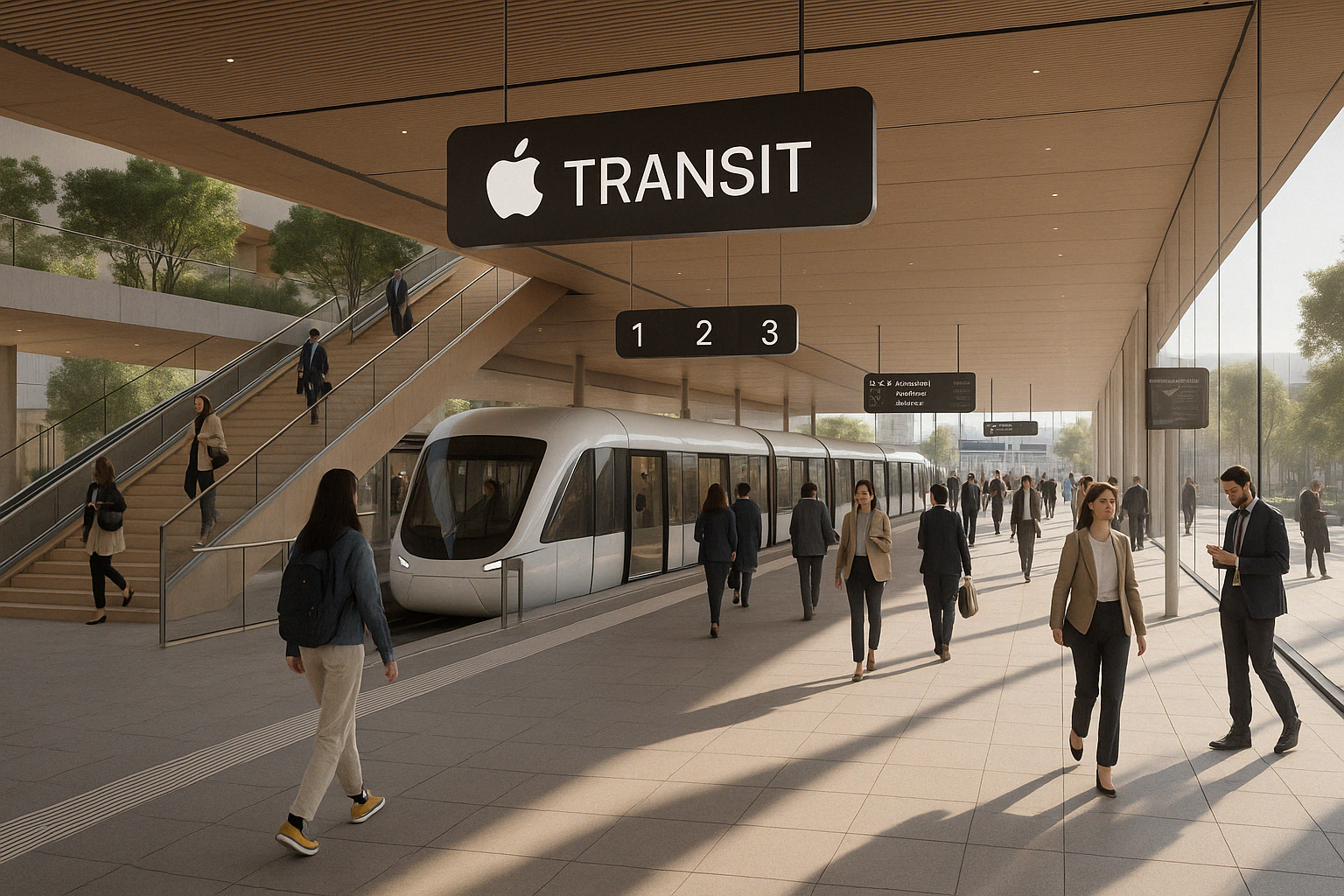
Consider transit. Apple would not need to lay track, operate buses, or run a single vehicle. What it could build is the operating layer — AI-optimised routing drawing on Apple Maps data, seamless ticketing through Apple Wallet, personalised journey planning through Siri, real-time crowd flow management at interchange hubs, and demand-responsive electric shuttles for lower-density districts. The iPhone would become, in effect, a passport to a life less dependent on car ownership — and all the financial and environmental costs that car ownership imposes.

The economics of this argument are well established, even if they remain politically underappreciated. Every dollar invested in public transit generates roughly five dollars in broader economic returns, according to the American Public Transportation Association. Transit-oriented development raises property values, expands tax bases, and improves labour market access for workers priced out of car ownership. Cities that invest in dense, multimodal systems reduce emissions, reclaim public space, and generate measurable public health gains. The infrastructure of movement is not a social expenditure. It is a productive one.

The opportunity extends beyond transit. Apple’s energy-efficient chip architecture translates naturally to smart grid management, where modular, predictive systems are precisely what is needed to integrate distributed solar, battery storage, and dynamic demand response. Apple sensors and cloud infrastructure already exist at the scale required to monitor water systems in real time — detecting pipe failures, tracking quality, and optimising pressure through smart valves. Apple Pay processes billions of transactions. The components for an Apple Water platform or an Apple Grid service layer are, in many respects, already assembled. What is missing is the strategic decision to point them at a larger problem.

The water case is particularly stark. The U.S. Environmental Protection Agency estimates that $472 billion in maintenance investment is required over the next twenty years simply to sustain existing water infrastructure — before a single mile of new pipe is laid. Globally, nearly one in three people lacks reliable access to safe drinking water. The market for intelligent water management — leak detection, quality monitoring, pressure optimisation — is enormous and structurally underserved. Apple’s skill in miniaturising technology, combining sensors with privacy-grade cloud processing, and delivering consumer-grade interfaces for complex data makes it an unusually credible entrant.

For Apple, the strategic logic is also a defensive one. iPhone sales have plateaued. Its Services division faces antitrust scrutiny across multiple jurisdictions. Its cash reserves — exceeding $160 billion — are an asset in search of a return that consumer electronics can no longer reliably provide. Infrastructure, by contrast, offers recurring revenue through service agreements and municipal contracts, structural diversification away from device cycles, and long-term relevance at a civilisational rather than product level. The infrastructure market is not glamorous. But it is enormous, it is durable, and it is ripe for the kind of systemic redesign that Apple has historically done better than anyone.
The risks are genuine and should not be minimised. Apple is famously secretive, consumer-oriented, and averse to the slow-moving regulatory complexity that infrastructure demands. City contracts are messier than product launches. Margins are narrower. Failures are public and politically costly. But Apple has navigated hostile regulatory environments before — in financial services, in healthcare, in China. Its high public trust and strong ESG record are genuine assets in a domain where government partnerships require demonstrated credibility over time. And crucially, Apple would not need to own pipes, track, or transmission lines. It would build the intelligent systems layered atop them — and license those systems to governments, utilities, and citizens at scale.

The model already exists in adjacent industries. Schneider Electric and Siemens have built large, profitable businesses selling digital operating layers to physical infrastructure owners. Veolia manages water and energy systems for municipalities across the developed and developing world. These are not Apple-scale companies in terms of design capability or brand trust. Apple entering this space would not be a departure from what it does. It would be an extension of it — at a higher level of ambition.

What would this look like in practice? In dense cities, an Apple Transit platform could reduce car usage, lower emissions, and return public space to pedestrians and parks. In smaller cities and rural regions — places too dispersed for high-frequency bus networks but underserved by the on-demand platforms that have flourished in major metros — demand-responsive electric shuttles dynamically routed through Apple Maps could reconnect communities that car dependence has quietly strangled. In energy markets, an Apple Grid service could allow households to manage solar and storage through iOS, enable peer-to-peer energy trading between neighbours, and give grid operators the real-time visibility they need to prevent blackouts in a renewables-heavy system. In water, an Apple Water platform could give cities the predictive maintenance tools they currently lack, and give households transparent, real-time visibility into their consumption and the health of their local system.

None of this requires Apple to become a utility or a transport operator. It requires Apple to become what it has always been at its best: the company that builds the operating system everyone else runs on.

Steve Jobs once described the computer as a bicycle for the mind — a tool that amplifies human capability far beyond what either could achieve alone. The infrastructure of the coming century needs exactly that kind of amplification. Roads that manage themselves. Grids that think. Water systems that speak before they fail. Transit that fits around people’s lives rather than demanding they organise their lives around it.

The real disruption in mobility is not a better electric vehicle. It is a better alternative to vehicles altogether — and the broader infrastructure intelligence that makes modern life function without the waste, the inequity, and the environmental cost that the 20th century model baked in.

Apple has the cash, the capability, and the moment. The question is whether it has the ambition to match.

Disclaimer: This article was assisted by ClaudeAI.

Which HBCU/PBI State Is Winning At Renewable Energy Production?

It is no secret that the world is moving towards a stronger reliance on renewable energy*, but there is a swath of the country that is moving extremely slow to embrace it. That swath is dominated by HBCU/PBI states who still dominantly prefer a traditional energy mix. The move towards renewable energy though is inevitable. This is both for environmental and economic reasons. To the latter, there is a massive investment and entrepreneurship opportunity available to HBCUpreneurs who want to help grow and cultivate the space in their respective states. American Association of Blacks In Energy (AABE) President Ralph Cleveland shared the following thoughts, “We will not meet the demands of energy transformation and climate change without Black institutions. This partnership reinforces the critical role HBCUs play in shaping the face of energy talent, development, and design. Not only do we need to create pathways to the C-Suite but we also need to activate our rich networks for a more inclusive energy ecosystem.” While we agree HBCUs need to create pathways to the C-Suite, we also believe the easiest and most economically empowering path there is to have HBCUs and HBCUpreneurs be the vanguard in creating renewable energy startups as highlighted in The Green Program’s ”19 Black Leaders on the Forefront of Clean Energy’ article. The power in energy like everything else is ultimately in the ownership.

HBCU Money took data from Yale Climate Connections and drilled down to the states that have HBCUs and PBIs located in them to see how the states where African America and its institutions are and will be impacted by the current energy mix in their state and also to highlight the opportunities that lay ahead as well. “Important note: The map shows electricity production within each state’s borders. Many states and utility companies exchange electricity with other states. So this data may not reflect the energy that is actually consumed — as opposed to generated — within each state.”

Why is nuclear not considered a renewable? National Grid states, “Nuclear fuels, such as the element uranium, are not considered renewable as they are a finite material mined from the ground and can only be found in certain locations.”

HIGHLIGHTS:

  • The average HBCU/PBI state has renewable energy of 12% average and 9% median, respectively.
  • Wind supplies the highest average renewable energy at 5% overall and hydropower supplies the highest median energy at 3% overall.
  • Oklahoma, the overall leader, is also the leader in wind energy with 41% of its energy coming from wind.
  • New York is the hydropower leader among HBCU/PBI states with 23% of its energy mix coming from water.
  • California is the solar power leader among HBCU/PBI states with 19% of its energy mix coming from the sun.
  • Only 6 of the 23 states have a double digit renewable energy source in their energy mix. Oklahoma, California, New York, Texas, Tennessee, Illinois.

OKLAHOMA

Renewable Electricity Generation: 44%

Renewable Rank Among All 50 States: 10th

Coal: 14%

Fossil Gas: 42%

Nuclear: 0%

Hydro: 3%

Wind: 41%

Solar: 0%

CALIFORNIA

Renewable Electricity Generation: 36%

Renewable Rank Among All 50 States: 13th

Coal: 0%

Fossil Gas: 47%

Nuclear: 9%

Hydro: 8%

Wind: 8%

Solar: 19%

NEW YORK

Renewable Electricity Generation: 28%

Renewable Rank Among All 50 States 16TH

Coal: 0%

Fossil Gas: 45%

Nuclear: 25%

Hydro: 23%

Wind: 3%

Solar: 1%

TEXAS

Renewable Electricity Generation: 26%

Renewable Rank Among All 50 States: 18th

Coal: 20%

Fossil Gas: 44%

Nuclear: 9%

Hydro: 0%

Wind: 23%

Solar: 3%

MASSACHUSETTS

Renewable Electricity Generation: 15%

Renewable Rank Among All 50 States: 22ND

Coal: 0%

Fossil Gas: 76%

Nuclear: 0%

Hydro: 6%

Wind: 1%

Solar: 8%

TENNESSEE

Renewable Electricity Generation: 15%

Renewable Rank Among All 50 States: 23RD

Coal: 23%

Fossil Gas: 16%

Nuclear: 46%

Hydro: 14%

Wind: 0%

Solar: 0%

NORTH CAROLINA

Renewable Electricity Generation: 13%

Renewable Rank Among All 50 States: 26th

Coal: 16%

Fossil Gas: 37%

Nuclear: 34%

Hydro: 5%

Wind: 0%

Solar: 8%

ILLINOIS

Renewable Electricity Generation: 11%

Renewable Rank Among All 50 States: 28TH

Coal: 23%

Fossil Gas: 11%

Nuclear: 54%

Hydro: 0%

Wind: 11%

Solar: 0%

INDIANA

Renewable Electricity Generation: 10%

Renewable Rank Among All 50 States: 30TH

Coal: 61%

Fossil Gas: 29%

Nuclear: 0%

Hydro: 0%

Wind: 9%

Solar: 1%

ALABAMA

Renewable Electricity Generation: 9%

Renewable Rank Among All 50 States: 32ND   

Coal: 20%

Fossil Gas: 38%

Nuclear: 33%

Hydro: 8%

Wind: 0%

Solar: 0%

MARYLAND

Renewable Electricity Generation: 9%

Renewable Rank Among All 50 States: 33RD  

Coal: 14%

Fossil Gas: 36%

Nuclear: 40%

Hydro: 6%

Wind: 1%

Solar: 2%

MICHIGAN

Renewable Electricity Generation: 8%

Renewable Rank Among All 50 States: 34TH  

Coal: 33%

Fossil Gas: 26%

Nuclear: 30%

Hydro: 1%

Wind: 7%

Solar: 0%

ARKANSAS

Renewable Electricity Generation: 7%

Renewable Rank Among All 50 States: 35TH  

Coal: 36%

Fossil Gas: 34%

Nuclear: 23%

Hydro: 7%

Wind: 0%

Solar: 1%

GEORGIA

Renewable Electricity Generation: 7%

Renewable Rank Among All 50 States: 36TH  

Coal: 16%

Fossil Gas: 47%

Nuclear: 29%

Hydro: 3%

Wind: 0%

Solar: 0%

KENTUCKY

Renewable Electricity Generation: 7%

Renewable Rank Among All 50 States: 37th  

Coal: 72%

Fossil Gas: 21%

Nuclear: 0%

Hydro: 7%

Wind: 0%

Solar: 0%

VIRGINIA

Renewable Electricity Generation: 5%

Renewable Rank Among All 50 States: 39TH  

Coal: 3%

Fossil Gas: 58%

Nuclear: 31%

Hydro: 1%

Wind: 0%

Solar: 4%

SOUTH CAROLINA

Renewable Electricity Generation: 5%

Renewable Rank Among All 50 States: 40th  

Coal: 16%

Fossil Gas: 24%

Nuclear: 56%

Hydro: 3%

Wind: 0%

Solar: 2%

FLORIDA

Renewable Electricity Generation: 4%

Renewable Rank Among All 50 States: 43RD   

Coal: 8%

Fossil Gas: 75%

Nuclear: 12%

Hydro: 0%

Wind: 0%

Solar: 4%

LOUISIANA

Renewable Electricity Generation: 2%

Renewable Rank Among All 50 States: 47TH   

Coal: 11%

Fossil Gas: 57%

Nuclear: 24%

Hydro: 2%

Wind: 0%

Solar: 0%

DELAWARE

Renewable Electricity Generation: 2%

Renewable Rank Among All 50 States: 49TH   

Coal: 8%

Fossil Gas: 88%

Nuclear: 0%

Hydro: 0%

Wind: 0%

Solar: 2%

MISSISSIPPI

Renewable Electricity Generation: 1%

Renewable Rank Among All 50 States: 50TH   

Coal: 8%

Fossil Gas: 73%

Nuclear: 18%

Hydro: 0%

Wind: 0%

Solar: 1%

The Finance & Tech Week In Review – 2/18/17

zu3yfgjbqpaifw5vkjxp

Every Saturday the HBCU Money staff picks ten articles they were intrigued by and think you will enjoy for some weekend reading impacting finance and tech.

Nearly half of current jobs could be automated by 2055, according to a new report / WEF wef.ch/2k6MGrw

Individuals tend to invest in assets that have recently done well. What about institutions? / St. Louis Fed bit.ly/2lnjyAT

Coping with the loss of a spouse? Avoid these mistakes & manage your money through your grief. / FINRA ow.ly/CKeu3094YD3

Want to give your brain a boost? Running may be the answer / WEF wef.ch/2lnje5Z

Here’s why we’re happier as we get older / WEF wef.ch/2kREFv8

Massachusetts Lawmakers Propose Goal of 100 Percent Renewable Energy by 2050 / Renewable Cities buff.ly/2lYSHrZ

Here’s how the US government can bolster cybersecurity / CIOonline ow.ly/9KfO3097BUg

Once, up to 60 million buffalo roamed US. Yellowstone now holds 5000 – and some say it’s too many / New Scientist bit.ly/2kGqrsW

Microsoft app helps people with ALS speak using just their eyes / New Scientist bit.ly/2kHICOS

70% Of Trump Voters Want Clean Energy To Make America Great Again / Clean Technica ow.ly/Fnf33097BzC

The Finance & Tech Week In Review – 2/11/17

zu3yfgjbqpaifw5vkjxp

Every Saturday the HBCU Money staff picks ten articles they were intrigued by and think you will enjoy for some weekend reading impacting finance and tech.

Explore the legacy of Freedman’s Bank, est. 1865 for former slaves & African-American soldiers / NY Fed nyfed.org/2kPT4pf

These major cities are starting to go car-free / WEF wef.ch/2kciqM2

The fiscal cost of #studentdebt relief programs varies widely by repayment plan, income, and debt / KC Fed ow.ly/Ffrm308SXzM

Is this the end of the West? / WEF wef.ch/2kQxZKQ

30% of adults live near their parents; parental proximity & earnings consequences / Cleveland Fed ow.ly/Vutz308QGvB

India May Have Revived Plans For 7.5 Gigawatts Of Solar Projects / Clean Technica ow.ly/5GU8308Tbo0

Learn how to conserve coral reef #ecosystems / NOAA Research go.usa.gov/x9e2H

Stinky armpits? Bacteria from a less smelly person can fix them / New Scientist ow.ly/kGKC308Sshq

Renewables missing from Trump’s energy plan / CIOonline ow.ly/Q2gi308TaqX

There’s a new player in the Hyperloop game / New Atlas newatl.as/2kXlMqQ

The Finance & Tech Week In Review – 1/21/17

zu3yfgjbqpaifw5vkjxp

Every Saturday the HBCU Money staff picks ten articles they were intrigued by and think you will enjoy for some weekend reading impacting finance and tech.

Public investment in K-12 schools has declined dramatically in a number of states over the last decade. / CBPP ow.ly/aasE308d4WH

Industry reacts: Is HUD’s FHA mortgage insurance premium suspension good or bad? / Housing Wirebit.ly/2k9DByz

The rise of American ingenuity: innovation and inventors of the golden age / NBER bit.ly/2j2Gjse

92% of us are breathing unsafe air. This map shows just how bad the problem is / WEF wef.ch/2iRWlli

Best of Davos: ASEAN is 50, and it’s come a long way. Here’s why you should care / WEF wef.ch/2jcFwCq

Robot reporter gets first article published in China / Computerworld ow.ly/jkDC308aMOF

“Sweden sets 100% renewable energy production target” / Renewable Cities buff.ly/2iKKrNk
Slip a robotic sleeve over a weak heart, and it keeps on pumping / Science News ow.ly/nm6H308aMHX
China reminds Trump that supercomputing is a race / Computerworld ow.ly/kLuI308aMDJ
A-to-Z Review Finds California’s Clean Cars Program Is Working / Clean Technica ow.ly/lknI308aMya