
Tag Archives: philanthropy

559 Donations To Colleges Over $1 Million in 2013 – Only 1 To An HBCU

Screen Shot 2014-08-06 at 2.25.58 PM

Pictured above: Jesse F. Brown, the sole HBCU donor to give a donation of $1M or above in 2013. Courtesy of Morgan Magazine.

By William A. Foster, IV

The highest use of capital is not to make more money, but to make money do more for the betterment of life.— Henry Ford 

Wealth is an arms race. The more you have the more you can control others. The less you have the more dependent you are on others. This adage is as true as anywhere in higher education institutions who can end up being beholden socially, economically, and political to major donors and their agendas if they do not have endowments that allow for autonomy. How much is enough? Well, if you use Godfather (the movie) logic, there is never enough and the moment you slow down others are catching up. Otherwise, how do you explain Harvard’s $6.5 billion capital campaign it launched last year. This from a university that already has the world’s – yes the world’s – largest higher education institutional endowment of over $30 billion. An amount fifteen times the size of all 100 HBCU endowments combined. More importantly, what does it say about HBCU development offices that they can not land high-quality and transformative donors? Instead, some HBCU development offices lean on students and faculty to pick up the slack. The very people who are suppose to benefit from strong development work.

HBCU capital campaigns are quite frankly bland, boring, and leave little in the way for young or old alumni to feel compelled to give assuming they are even asked. More times than not a mimic of their HWCU counterparts and not culturally designed to an African American philanthropy point of view. Most students and alumni of HBCUs I talk to rarely know what an endowment is let alone what their school’s is – assuming it has one. Six years ago pre-recession while doing some research on HBCU endowments there were 20 percent of HBCUs who I could not verify or account for having an endowment, period. Wait, Harvard is trying to raise $6.5 billion and we have schools with no endowment?  Maybe HBCU development offices need to take a page from John F. Kennedy’s speech where he gallantly said, “before this decade is out, of landing a man on the moon and returning him safely to the earth.” That is how HBCU development offices need to think. I would love for an HBCU to come out and say “WE WILL BE THE FIRST BILLION DOLLAR HBCU ENDOWMENT” and communicate to alumni their role of how and why it will happen. How bold would that be? People would start finding pennies in their seat cushion to give because HBCU alumni are competitive if they are nothing else. Something to consider is also HBCU conferences taking a more active role in development. HBCUs could consolidate their development resources under one banner and possibly could leverage more marketing and outreach to high-quality and transformative donors.

In light of the recent donation to Paul Quinn, an HBCU located in Dallas, donations of $1 million plus to HBCUs are as rare as lightning striking someone. When HBCUs do get donations that are $1 million plus they tend to be from an alum’s estate meaning the person might have waited an entire lifetime to make one grand donation. An indication of just how long it is taking for HBCU graduates to accumulate wealth, which can be attributed to a number of different issues, but at the forefront tend to be weak financial literacy and lack of entrepreneurship or asset ownership. Demographics are also constantly pushing against HBCUs. Despite a recent study by Boston Consulting Group that reports there are now 7.1 million American households that are millionaires  and almost 4 800 households worth more than $100 million, the development of wealth has not taken root in African America. Only 1 of the 400 richest Americans are African American or the equivalent of 0.25 percent. It is hard not to suspect the aforementioned numbers are vastly better. 

The Chronicle of Philanthropy tracks a database of annual giving to different causes that exceed $1 million. In 2013, 559 donations  went to colleges and universities with only 1 going to an HBCU or an equivalent of 0.18 percent. This despite HBCUs constituting 3 percent of all American colleges and universities. Fourteen of the donations exceeded $100 million or more with Phil Knight, owner of Nike, and his wife giving $500 million to the University of Oregon’s hospital topping the list. Not much of a problem for a man who has $5.4 billion of his wealth in cash alone. Yes, Phil Knight has almost twice as much in cash as Oprah Winfrey has in total wealth. The lone HBCU donation exceeding $1 million was to Morgan State University from alum Jesse F. Brown who bequested $1.2 million for their medical technology program.

So why are more HBCUs not receiving transformative and high-quality donations? There are after all a number of millionaires scattered throughout the African Diaspora. My belief is that as many HBCUs have moved away from being considered African American colleges to just wanting to be recognized as  American colleges creating a psychological disconnect that would prompt those of African descent here in America and elsewhere to have any reason to support them. Carl and Ruth Shapiro never attended Brandeis University, but have been noted on record for their giving to the school because they want it to be a good representation of the Jewish community and therefore gets their support. HBCU development offices have refused seemingly to blow that same horn to African American and Diaspora non-alumni potential donors. There is also the mixed relationship between actually asking and being image conscious about who is giving. Wilberforce and Central State University in Ohio should be at LeBron James front door trying to build a relationship with him. Morris Brown and the AUC schools should be at T.I.’s front door trying to build a relationship with him. I could go on and on, but the reality is USC was not afraid to develop a relationship with Dr. Dre because of his image in gangster rap. HBCUs also have to look abroad for donors, which is part of why recruiting donations as a conference may be more cost effective. Aliko Dangote, Mike Adenuga, Isabel dos Santos, and Patrice Motsepe have a combined net worth of $31.5 billion. They may be down for the cause, but if you do not want to be a part of the cause, then why should they choose you over schools more widely recognized globally. Connecting the African American and African Diaspora experience could go a long way into an exchange that helps all parties.

What does it say to African America that the only money we can raise is from everyone, but our own community? The most recent major donations to HBCUs have come from the Koch brothers to UNCF and from Trammel Crow to Paul Quinn. As usual, it will not be until others tell us that our institutions are worthy that we will think so ourselves. I dare say we still continue to be the only group who has to be convinced that having institutions that represent our social, economic, and political interest are important, but vital to community success. This is where courting the likes of the aforementioned young African American millionaires and African billionaires can have an impact. They can not only bring major donations, but the press they bring can create a domino effect from other African Americans and Diasporans to consider giving to our institutions. What do you have to lose? After all, when you shoot for the moon, even if you miss you will land amongst the stars.

HBCU Money’s 12 Month HBCU Alumni Giving Challenge

Endowment_Plant

To give away money is an easy matter, and in any man’s power. But to decide to whom to give it, and how large and when, and for what purpose and how, is neither in every man’s power-nor an easy matter. Hence it is that such excellence is rare, praiseworthy and noble. – Aristotle

The HBCU Money™ 12 Month Challenge is an effort to help HBCUs and HBCU support organization increase their charitable donations. We are offering this challenge sheet to HBCU alumni, alumni associations, and friends of HBCUs. You can challenge yourself, a fellow alum, or anyone who is interested in giving to the HBCU Diaspora. Share your progress on social media to inspire others. Keep a hard copy on your refrigerator. Whatever it takes to keep ourselves accountable to empowering our institutions for tomorrow.

HBCU or HBCU Organization:

Your Name:

Your Challenger:

Giving Purpose:

  • Month 1 – $1

  • Month 2 – $2

  • Month 3 – $4

  • Month 4 – $8

  • Month 5 – $16

  • Month 6 – $32

  • Month 7 – $64

  • Month 8 – $128

  • Month 9 – $256

  • Month 10 – $512

  • Month 11 – $1024

  • Month 12 – $2048

America’s 2013 Top 10 College Donations

michaeljordan

In the world of philanthropy there are two types of donors that development offices love. High-quality donors who give consistently and over their lifetime will probably give six to seven figures of donations. Often these donors leave the bulk of their donation through their estate. The second are transformative donors who can change the paradigm of an entire institution with one donation. These donors are masters of their universe with the wealth and power they wield and often the barons of their particular industry. Donations from transformative donors range from eight to nine figures.

The top 10 donors of 2013 to colleges and universities  were definitely transformative. Led by Phil and Penelope Knight, owners of Nike, gave $500 million to Phil’s alma mater. An amount greater than the school’s entire endowment and with the condition that the school match his donation within two years. WOW.

ABOUT THE DONATIONS:

Total Giving Combined – $2.5 Billion

Median Donation – $110 Million

Average Donation -$168 Million

The combined donations are 25 percent greater than all HBCU endowments combined.

ABOUT THE DONORS:

Total Net Worth Combined – $113.9 Billion

Median Net Worth – $6.2 Billion

Average Net Worth – $8.1 Billion

12 of the 15 donors reside in either California or New York.

12 of the 15 donors made their wealth in either finance, investments, or real estate.

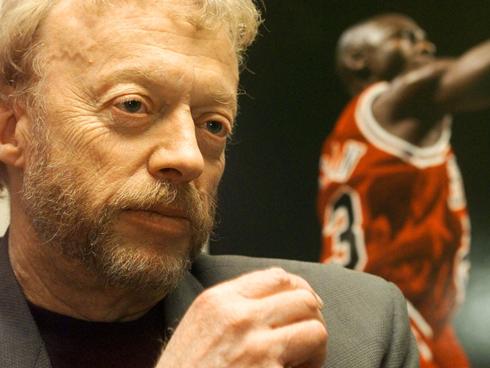
1. Philip (pictured above) & Penelope Knight – $500 Million

Recipient: Oregon Health & Science University

Source of Wealth: Manfacturing

Net Worth: $18.4 Billion

2. Michael R. Bloomberg – $350 Million

Recipient: The John Hopkins University

Source of Wealth: Media & Entertainment

Net Worth: $33 Billion

3. Charles B. Johnson – $250 Million

Recipient: Yale University

Source of Wealth: Finance

Net Worth: $7.5 Billion

4. Stephen M. Ross – $200 Million

Recipient: University of Michigan at Ann Arbor

Source of Wealth: Real Estate

Net Worth: $5.4 Billion

5. Muriel Block – $160 Million

Recipient: Yeshiva University, Albert Einstein College of Medicine

Source of Wealth: Real Estate

Net Worth: Deceased

6. John Arrillaga – $151 Million

Recipient: Stanford University

Source of Wealth: Real Estate

Net Worth: $1.9 Billion

7. Irwin M. & Joan K. Jacobs – $133 Million

Recipient: Cornell Tech

Source of Wealth: Telecommunications

Net Worth: $1.8 Billion

8. Charles T. Munger – $ 110 Million

Recipient: University of Michigan at Ann Arbor

Source of Wealth: Investments

Net Worth: $1.1 Billion

9T. Eli & Edythe Broad – $100 Million

Recipient: Harvard University, Broad Institute

Source of Wealth: Finance & Real Estate

Net Worth: $6.9 Billion

9T. T. Denny Sanford – $100 Million

Recipient: University of California at San Diego

Source of Wealth: Finance

Net Worth: $900 Million

9T. Frank H. McCourt – $100 Million

Recipient: Georgetown University

Source of Wealth: Finance & Real Estate

Net Worth: $1.7 Billion

9T. Sanford & Joan Weill – $100 Million

Recipient: Weill Medical College of Cornell University

Source of Wealth: Finance

Net Worth: N/A

9T. Ronald Perelman – $100 Million

Recipient: Columbia Business School

Source of Wealth: Finance & Investments

Net Worth: $14 Billion

9T. Stephen Schwarzman – $100 Million

Recipient: Tsinghua University (China)

Source of Wealth: Investments

Net Worth: $10 Billion

10. David Tepper – $67 Million

Recipient: Carnegie Mellon University

Source of Wealth: Finance & Investments

Net Worth: $10 Billion

Hip-Hop, Philanthropy, & HBCUs – An Interview With Mississippi’s Own Young Malice & CHMA’s Jarrett Carter

It is often talked about the close relationship of HBCUs and hip-hop in the past. During the late 80s and 90s it was not uncommon to see hip-hop artist sporting HBCU gear. However, that time period seems like a distant memory and with the donation by Dr. Dre to the University of Southern California coupled with an editorial response by Dr. Walter Kimbrough of Dillard University essentially pointing out that if the $35 million he donated had been evenly spread across all 100 plus HBCUs it would have made a prodigious institutional impact. So what is the relationship of HBCUs and African American hip-hop artist today? Can a relationship be forged to raise much-needed funds and awareness? We sat down with two influential minds of hip-hop and philanthropy to get their thoughts on creating a more mutually beneficial relationship for HBCUs: Young Malice, a Jackson, Mississippi native, hip-hop artist, entrepreneur, and avid HBCU supporter. Jarrett Carter, executive director of the Center for HBCU Media Advocacy and owner of Carter Media Enterprises. We probed their thoughts on where we go from here.

We are sure both of you in some way or another heard, read, or talked about the Dr. Dre donation to the University of Southern California, which many in the HBCU community were not happy with it. What were your thoughts on the donation?

Young Malice: I heard about the donation and I think that a man’s earnings and what he chooses to do with them are HIS/HER business. He obviously had a reason, whatever that reason maybe and why he chose to give such a large amount to an institute, which is already one of the wealthier in the nation. There’s more to it than what meets the eye though, I can guarantee THAT. Headphone sales must be going well for Dre huh?! *laughs*

Jarrett Carter: It was disappointing, but not because he gave the money to a predominantly white college near where he grew up and lives; but disappointing in that we thought Dr. Dre somehow betrayed the HBCU community. I don’t know how many development officers have reached out to Dr. Dre or other rappers, athletes or actors, but the truth is that we have to reach out to young wealthy African Americans as our first and best targets for financial support. Many of these individuals have some connection to an HBCU – a relative or a friend, chances are, have been at or graduated from an HBCU. Being black is no longer a qualifier for attending or supporting an HBCU, and we would be wise to recognize this reality, expeditiously.

Do you believe there is disconnect between African American hip-hop artist and HBCUs? If there is disconnect, what could be done to fix it? If not, what could be done to strengthen the relationship? 

Young Malice: Well, there’s definitely a disconnect but like most problems in life we encounter it can be FIXED. As an artist, I’m forced to be capable of placing myself in another’s shoes and seeing ALL angles and not just my own view on things. With this being the case, I can understand why this “disconnect” between HBCUs and hip hop artists exists. I think that the HBCUs within our nation have worked so hard to shed this negative image, which has plagued us as black people for SO LONG that when anything or anyone does not conform to the standards that have been implemented they tend to be shunned. It’s deeply rooted and it will take a lot of work to understand and meet at a “common ground”.

Jarrett Carter: Absolutely. I think somewhere between controversial lyrics and the typical Ivory Tower arrogance mixed with the cultural obligation to “show others how to do better,” we totally ignored and ostracized hip-hop from HBCU culture. Which is particularly weird, since we have no problem inviting some of the more profane and controversial artists to campus to help sell homecoming concert tickets. The quickest way to build relationships with hip-hop is by genuinely drawing upon their skills and interests within the campus environment. How do you standout from others in the effort to be signed? (Career development) How do you market a product to vastly different audiences? (Personal branding) How do you stay grounded while financing so many people to manage your career? (Community empowerment) There are so many lessons to be learned from young sisters and brothers in the hip-hop community, if only we didn’t see ourselves as better or more enlightened then they are.

Some believe that hip-hop artist love HBCUs from a distance because the majority of the fans that buy the music are not African American and therefore do not want to alienate them. Do you believe this to be the case? Or misunderstanding?

Young Malice: Maybe some artists feel like they won’t be accepted by HBCUs and then again, maybe some desire no acceptance at all. I can recall many instances that shows that were booked at predominantly black colleges were canceled at the last minute mysteriously. It’s because certain artists represent EVERYTHING that the HBCUs are AGAINST…and that’s just the truth of the matter…period. It’s deeper than records sales and fans. End of the day, you just ARE who you ARE. I love my HBCUs from up close, never at a distance…but the relationships need work.

As someone who grew up in Mississippi you have a ground view of the history between HBCUs and TWIs in the state. The discrepancy between Alcorn State, Jackson State, and Mississippi Valley State (combined endowments of $23 million) versus Mississippi State, Ole Miss, and Southern Mississippi (combined endowments of $876 million) is overwhelming. It is hard to imagine institutional reparations being given by the Mississippi legislature but do you believe it is worth pursuing to even the field? Or do you see other ways HBCUs could even the resource playing field allowing them to effectively compete?

Young Malice: There won’t be any reparations. I have no complaints about growing up in Mississippi, because this place taught me so much. People will do whatever you LET them do and that’s my view on it. The HBCUs here have withstood the test of time, kept their dignity and class…even in the midst of blatant underfunding and being overlooked time and time again. Each one of those historically black colleges you named previously has something VERY special about them! I’ve visited them all and each has it’s own unique feel. You can feel the LOVE…and that’s something that money CAN’T buy. We know why the bigger colleges get the bigger funding. It’s not a hidden injustice, especially in Mississippi. The agenda is CLEAR and in your face. Time to come together – HBCUs and the hip-hop community…it’s bigger than US!

There are some who would say that because some of the negativity in the mainstream media about the images of hip-hop at times as violent and misogynistic that HBCU leaderships tend to prefer to not view these artist as potential donors or partners despite the potential impact it could have institutionally. Would you say that is an accurate statement?

Jarrett Carter: I think that is accurate, but if it is accurate, have HBCUs as the hubs of academic and cultural development reached out to these artists to give them new perspective on their artistry? Have we given them opportunities to travel, exposure to scholarly works and cultural information that helps them to grow?

Aside from the obvious financial support what are some ways that you believe hip-hop artist and the genre could best serve HBCUs philanthropically?

Jarrett Carter: I believe that before money, hip-hop artists could be some of our greatest and most influential brand ambassadors. By just wearing hats and t-shirts, or namedropping campuses in their songs, or consistently promoting their time spent on HBCU campuses, we could engage a totally new generation of HBCU enthusiasts across racial and economic lines.

What advice would you give to hip-hop donors new to the world of philanthropy?

Jarrett Carter: I would encourage hip-hop artists and executives to be open to hearing from HBCUs about opportunities for visiting lecture, specific opportunities to fund programmatic projects and initiatives, and to avail themselves to students working to enter fields of study in the performing arts – theater, opera, jazz, etc – thereby making themselves benefactors of historic and culturally important Black art forms.

In 2012, Forbes reported the top 20 earners in hip-hop pulled in an estimated $415 million in earnings and possibly hundreds of millions more by artist who choose to keep their earnings more private. All 100 plus HBCU endowments combined have combined endowments of only an estimated $2 billion with some HBCUs having no endowment at all. What do you envision being a win-win relationship between hip-hop and HBCUs that could see some of these earnings finding their way to HBCUs?

 Young Malice: I would say EMBRACE the hip-hop community or just try to embrace the elements of the culture that you are most comfortable with. Some artists tend to be a bit more extreme than others but then again so are some actors. If you wouldn’t turn Denzel Washington or Samuel L. Jackson away from your doors, then try to understand that most artists are just attempting to paint a picture…just so happens to be that it’s through your stereo. If the MONEY is good enough to be embraced, then the individual should be also. In my opinion – EMBRACE the hip-hop community with open arms – don’t be so quick to “judge”.

Jarrett Carter: In my mind, a mutually beneficial opportunity for HBCUs and hip-hop is if rappers are recording and publishing music from HBCU campuses with shared publishing and distribution rights. That students are involved in every step of a produced project – from A&R, to production, to marketing, to distribution. This ensures that the artist can build individual wealth, and that the schools can build endowments and scholarship opportunities.

In closing, both of you grew up as the rise of hip-hop was taking place. What was your favorite hip-hop memory as it related to an HBCU?

Young Malice: My favorite moments will be when I rock the HBCU crowds around the nation!

Jarrett Carter: The legend of Jay Z being scheduled to perform at Morgan’s homecoming concert in 1996, showing up late, and upon arriving, saying into the microphone, “I’m not coming out until ya’ll pay me my f*cking money.”

Thank you to Mr. Young Malice and Mr. Jarrett Carter for participating in this interview. 

20 Years Later: Bill and Camille Cosby’s Great HBCU Gift – But Is Hope Lost?

By William A. Foster, IV

“We must claim and therefore support those institutions at the heart of our peoplehood.” – Dr. Johnetta B. Cole; Former President of Spelman

"Fat Albert" Block Party

If one takes a walk on the campus of Brandeis University, a secular European Jewish institution, in Waltham, MA right outside of Boston they will notice a name that appears numerous times on buildings throughout the campus. That name is Carl & Ruth Shapiro. It is almost comical to ask someone to tell you where the Carl & Ruth Shapiro building is without getting a response of “which one?”. A student was once noted as asking Mr. Shapiro why he gave so much to Brandeis, a school he nor his wife ever attended, and it is said he simply replied that he was Jewish, the school is Jewish, and he wanted it to be the best representation of himself and the Jewish community. When I first was told about this exchange it sent a tingle down my spine. Primarily, I wished African Americans as a whole had the same love and tenacity of supporting our own institutions regardless of whether they had attended an HBCU or not because whether they like it or not what they produce reflects and is a reflection of us all.

It would be twenty years ago last month that Bill and Camille Cosby would be the example of just what that love and tenacity could look like. Their donation to Spelman College would catapult it into the pantheon of HBCU endowments and put it on path to become what is now the second largest HBCU endowment behind Howard University. Their $20 million donation in 1988, equivalent to roughly $40 million adjusted for inflation in today’s dollars, still stands as the largest donation by African Americans to a college or university. An amazing feat for Spelman College who at the time only had a $42 million endowment and is now in a viable position to become the first African American college to reach the billion dollar endowment mark. That neither Bill nor Camille Cosby had attended an HBCU, although her father attended Southern and Fisk while her mother attended Howard, speaks much to their understanding of building African America’s institutional power not just individuals. At the time the Cosbys’ made it clear that they were not only supporting Spelman College but that they were throwing down the gauntlet to other African Americans in a challenge to truly support African American colleges and universities and give them the resources they had been long deprived of by state and federal governments as well as the abandonment by the African American private community since the late 1960s. The African American community’s support waned as desegregation took root and the Civil Rights Movement leaders convinced African America that equality meant not access to equal funding to build up our institutions but abandoning our institutions to build up European American institutions. A failed strategy still prevalent in almost every sector of African American life even to this day.

Sadly, it is twenty years later and while Spelman College is in the hunt to become the first African American college or university with a billion dollar endowment the challenge presented by the Cosbys’ to African America was largely never answered. The numbers suggest that there should be multiple HBCUs with billion dollar endowments amongst the ranks now, but as it stands just being in the $100 million endowment club is the air of HBCU endowment glory of which we only have 5 while an estimated twenty percent have no endowment at all according to AK Research. Of the 100 plus HBCUs that are left in existence, they share an estimated $2 billion in combined endowment value with the top ten HBCU endowments holding a disproportional $1.5 billion of that value. It also appears that of the HBCUs in contention to become the first to reach the billion dollar mark, none are less than a decade from achieving the mark. Truly a problematic notion with the rising cost of higher education and a far cry from something that could have been achieved over a decade ago had the challenge been answered.

The wealth disparity between African Americans and other groups is so pronounced (and widening) it limits our ability to give in larger amounts. African America lost eighty three percent of its wealth in the Great Recession making a complicated situation even more so. That five percent of gifts account for eighty percent of endowment giving, large donors play an enormously important role in building a college’s endowment. However, there is only one African American who has the known net worth to match Gordon and Betty Moore’s $600 million donation to California Institute of Technology in 2001, which is the largest donation ever given to an American institution of higher learning. That person being Ms. Oprah Winfrey, who has been an avid supporter of HBCUs and especially of African American male achievement being a primary donor to Morehouse College. As a percentage of America’s wealth elite, African Americans comprise one-fourth of one percent of the Forbes 400 wealthiest Americans. In fact in order for every HBCU to receive just a $10 million infusion would be well over $1 billion. The 20 richest African Americans have a combined net worth of approximately $9 billion while the 5 richest European Americans have approximately $235 billion. Yes, the disparity is that great.

Bill and Camille Cosby’s gift twenty years ago brought a hope and optimism that a donation by arguably the most popular African American in America at the time would have spurred six, seven, and eight figure investments in our institutions of higher education by more of our well to do African Americans seems all but lost today. Simply put we have arguably reached a point that without the buy in of African Americans (and African Diaspora) who never attended HBCUs as donors we just simply do not have the number of alumni or individual wealth to usher in a new age of HBCU growth without losing control of the institutions themselves to others.

Where and who are today’s Bill and Camille Cosby? It is honestly hard to say. Their education obviously ensured that their value toward formalized education would always be a central value in their lives and philanthropy. Is it Shawn and Beyonce Carter? They have the economic means and social standing in African America that a donation from them would be impactful way beyond the financial impact but hard to say it would generate any more of a ripple than the Cosby donation a generation ago. In fact in this post-racial era, high profile African Americans stand a grave career risk attaching themselves to anything perceived as “too” Pan-African or empowering of the African Diaspora. However, when easily over ninety-five percent of African Americans at HBCUs are dependent on financial aid and HBCUs are still the predominant producer of degrees for African America sitting idle is not an option for those that can.

Since the Cosby donation there has been only 1 eight figure donation to HBCUs. It would come from Reverend Solomon Jackson, Jr. who gave $10 million to Morris College after winning the Powerball lottery. Unfortunately, if we plan on waiting for lottery winners we are truly in a lot of trouble. While it is true that we need alums to pick up the giving pace we can not be unrealistic that African Americans have wealth 50 times less than our counterparts. Like President Obama calling for tax increases on the rich, we too must call on those African Americans who can afford to shoulder a little more load to ensure future generational wealth is more evenly spread amongst us to sacrifice and do so. It is still truly amazing that the Cosby gift transformed the lives of so many African American women, families, and communities and given at a time when the Cosby family themselves had not reached anywhere near the zenith of their wealth. They realized it was an imperative that could not wait. Their gift was a fire from a match now flickering and almost out but with still enough flame left – what we need now is a wildfire.