
“When I was a child, I spoke as a child, I understood as a child, I thought as a child; but when I became a man, I put away childish things.” — 1 Corinthians 13:11
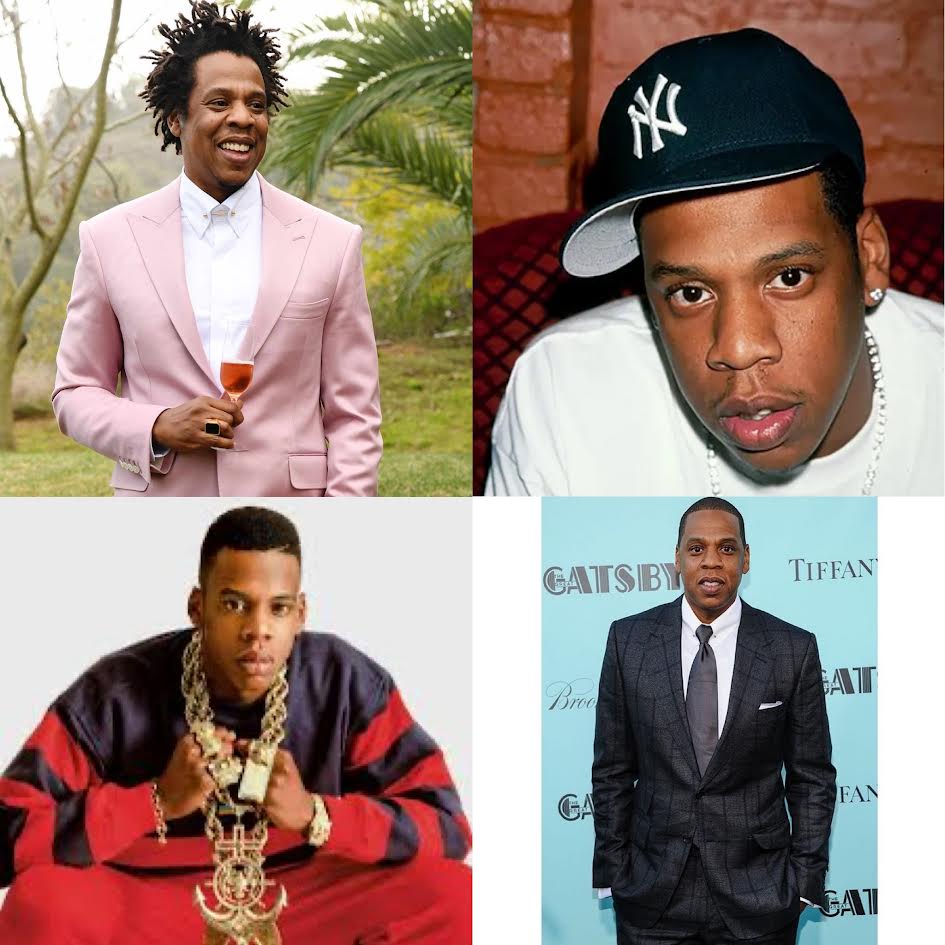
Jay-Z’s departure from Roc-A-Fella was not a betrayal. It was a passage and Memphis Bleek understood it better than most. For African American men, the path from performer to institution-builder begins with the willingness to put down the version of yourself the crowd still expects.
There is a moment in every man’s life when the role he has been playing begins to feel too small for the person he is becoming. The costume still fits. The crowd still cheers. But something interior has shifted, and he knows even if he cannot yet name it that the next chapter requires him to walk out of the theater entirely. Memphis Bleek described this moment, in someone else’s life, with more clarity than most people manage about their own. Sitting across from the hosts of The Breakfast Club, Bleek spoke about watching Shawn Carter evolve out of Roc-A-Fella Records, the label that had made Jay-Z a household name, the street mythology that had made him a god, and into something the culture had no ready category for. “I knew he had to,” Bleek said, with the ease of a man who had long since made peace with the shape of things. “He was going corporate… Roc-A-Fella had a different aura, a different presence.” What Bleek was describing, without using the language of developmental psychology or scripture, was the act of putting away childish things, not in shame, not in apology, but as a deliberate passage into a fuller version of manhood.
The verse from 1 Corinthians 13 is often quoted at graduations and funerals, deployed as a gentle nudge toward seriousness. But read in full context, the charge is more radical than it first appears. Paul is not merely asking his readers to grow up. He is arguing that the vision available to a child — sincere, earnest, but necessarily incomplete — must be surrendered before a larger sight becomes possible. “For now we see through a glass, darkly; but then face to face.” The childish things are not simply bad habits or juvenile pleasures. They are entire frameworks for understanding the world, entire identities organized around a reality that has since been outgrown. Putting them away is not the work of an afternoon. It is the work of a life.
Jay-Z’s departure from Roc-A-Fella was, on its surface, a business decision. He and Damon Dash had built something extraordinary together, a label that captured the particular genius of late-nineties New York, that dressed ambition in Timberlands and Cristal and made the streets feel like boardrooms before Black men were welcome in actual ones. But the identity that made Roc-A-Fella irreplaceable was also the identity that would have made Jay-Z permanent. The brand had an aura, as Bleek said. And auras, however intoxicating, are also cages. Jay-Z understood, and this is the part that separates him from the many artists who simply aged without maturing, that the institutions he needed to build next required a different kind of man to build them. Roc Nation, the ventures in streaming and spirits and sports management, the quiet equity stakes and the louder philanthropic commitments: none of these were available to the version of himself that Roc-A-Fella needed him to be. He had to let go of one identity to grow into another.
This is a story the culture does not tell African American men often enough, or clearly enough. The dominant narratives available to Black men in this country are built almost entirely around acquisition and performance through the come-up, the flex, the status signal broadcast at maximum volume. These narratives are not without their own intelligence. They emerged from real conditions: from communities that were systematically denied access to the levers of legitimate wealth-building, from generations of men who understood that visibility was sometimes the only form of power available to them. To perform confidence when the system was designed to strip it from you is not childish. It is survival. But survival strategies, when they outlive the conditions that made them necessary, become prisons. The man who learned to announce himself loudly in rooms that would not otherwise see him must eventually learn a different kind of presence, the quiet authority of someone who no longer needs the room’s permission to take up space.

“The man who learned to announce himself loudly in rooms that would not otherwise see him must eventually learn a different kind of presence — the quiet authority of someone who no longer needs the room’s permission to take up space.”
The cultural machinery surrounding Black men in America has a vested interest in keeping this transition from happening. The entertainment industry, the sports complex, the social media economy, all of them profit most handsomely from Black men performing youth. The reckless energy, the conspicuous consumption, the bravado organized around individualism rather than institution-building: these are commercially legible, endlessly marketable, and ultimately extractive. They convert Black male vitality into content while leaving no equity behind. The men who escape this machine and who move, as Jay-Z moved, from being the product to owning the means of production do so against active commercial resistance, not with the industry’s blessing.
Memphis Bleek, notably, did not resent the distance. He honored it. And this is its own form of maturity, quieter but no less significant. The man who can watch someone he loves evolve beyond the shared context of their early years and choose respect over grievance, understanding over bitterness — that man has also done the work. Not every African American man is positioned to become a platform-builder at Jay-Z’s scale. But every man is positioned to make the choice that Bleek made: to understand that another person’s expansion is not a diminishment of his own. This is the emotional intelligence that peer culture most aggressively undermines, the capacity to hold space for someone else’s becoming without interpreting it as a verdict on your own.
Financial maturity and emotional maturity are not separate projects. They are expressions of the same underlying shift from a framework organized around the immediate to one organized around the durable. Jay-Z’s pivot from artist to investor, from performer to institution-builder, was only possible because he had already done the interior work. He had to stop needing the crowd’s immediate validation before he could think in the timescales that equity requires. He had to stop organizing his identity around a single role before he could occupy the multiple, sometimes contradictory roles that serious institution-building demands. The financial strategy followed the psychological one. It always does.
The 4:44 album, released in 2017 when Jay-Z was 47, is in many ways the most instructive document of this transition. Here was a man who had spent his career mastering the art of armor; linguistic cleverness as deflection, bravado as preemptive defense, and who had chosen, at the height of his institutional power, to take the armor off. He talked about his infidelities, his father’s abandonment, his own failures as a partner and as a son. He talked about wealth not as performance but as inheritance strategy, about acquiring art not for status but for his children’s futures. He talked about therapy. The album was received with the kind of discomfort that genuine vulnerability always produces in a culture organized around performed toughness but it resonated, deeply and across generations, because it modeled something the culture is desperately hungry for: a Black man reckoning publicly with the gap between who he had been and who he wanted to become.
That reckoning is the work. Not the achievement that follows it, but the reckoning itself. The willingness to look honestly at the childish things; the ego investments, the comfort in performance, the arrangements that served you when you were smaller than you are now, and to set them down. Not because they were shameful. Because you have grown past them, and pretending otherwise would cost you the future you are capable of building.
For African American men navigating this passage in 2026, the context is both more complicated and more urgent than it has ever been. The institutional ecosystem that should support this kind of maturity; the HBCUs, the Black-owned financial institutions, the fraternal organizations with genuine civic reach exists, but it exists under continuous pressure, structurally underfunded and culturally undervalued by the very communities that most need it. Growing into institutional manhood requires institutions worth growing into. Building those institutions requires men who have already done the interior work and who have moved beyond the performance of power into its actual exercise. The two projects are not sequential. They are simultaneous, each one making the other possible.
What Bleek understood, watching Jay-Z from close range, is that the departure from Roc-A-Fella was not an ending. It was an expansion. The man who could build Roc Nation had to first become someone Roc-A-Fella could not contain. That becoming that is uncomfortable, disorienting, and finally liberating is available to every African American man willing to take inventory of what he is still carrying that no longer belongs to who he is. The childish things are not always dramatic. Sometimes they are simply the stories we tell about ourselves that stopped being true a long time ago, the versions of ourselves we keep performing because the audience still expects them. Putting them away is not a loss. It is the prerequisite for everything worth building next.
Disclaimer: This article was assisted by Claude AI.

