Tag Archives: entrepreneurship

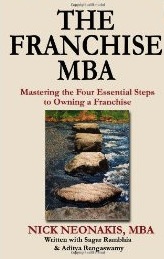
HBCU Money™ Business Book Feature – The Franchise MBA

51sgbAW5jNL._SL500_PIsitb-sticker-arrow-big,TopRight,35,-73_OU01_AA300_

This comprehensively researched and deftly written franchise guide brings together experience and fact to give you the tools you need to understand which franchise is right for you. With insights from respected franchise leaders and a thorough understand of franchising, this book will help you understand and master the 4 Critical Steps to finding the Ideal Franchise:
1. The Introspective Self
2. The Franchisor
3. The Franchisees
4. The Legal and Financial

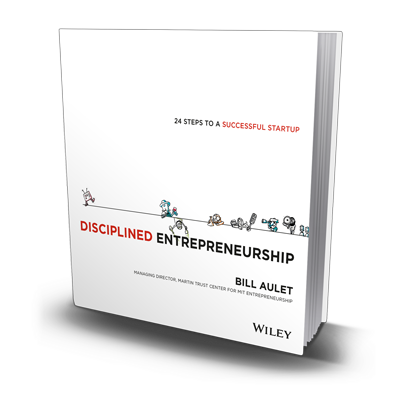
HBCU Money™ Business Book Feature – Disciplined Entrepreneurship: 24 Steps to a Successful Startup

book-clear-300

24 Steps to Success!

Disciplined Entrepreneurship will change the way you think about starting a company. Many believe that entrepreneurship cannot be taught, but great entrepreneurs aren’t born with something special – they simply make great products. This book will show you how to create a successful startup through developing an innovative product. It breaks down the necessary processes into an integrated, comprehensive, and proven 24-step framework that any industrious person can learn and apply.

You will learn:

  • Why the “F” word – focus – is crucial to a startup’s success
  • Common obstacles that entrepreneurs face – and how to overcome them
  • How to use innovation to stand out in the crowd – it’s not just about technology

Whether you’re a first-time or repeat entrepreneur, Disciplined Entrepreneurship gives you the tools you need to improve your odds of making a product people want.

Author Bill Aulet is the managing director of the Martin Trust Center for MIT Entrepreneurship as well as a senior lecturer at the MIT Sloan School of Management.

Can HBCUs Produce Billionaires?

By Jarrett Carter, Sr.

Ideas can be life-changing. Sometimes all you need to open the door is just one more good idea. – Jim Rohn

forbes-400-22099215jpg

Oprah Winfrey (pictured above) – The only African American billionaire & HBCU alum. Her most recent Forbes’ net worth is $2.9 billion. Who will be the next HBCU alumni to join her?

Colleges With The Most Billionaire Alum & Combined Wealth: (Updated December 2024)

  • Harvard University – 29; combined wealth of $205 billion
  • University of Pennsylvania – 28; combined wealth of $285 billion
  • Stanford University. – 28; combined wealth of $124 billion
  • University of Michigan – 10; combined wealth of $181 billion
  • Columbia University – 11; combined wealth of $41 billion
  • M.I.T. – 14; combined wealth of $104 billion
  • Cornell University – 18; combined wealth of $65 billion
  • University Southern California – 15; combined wealth of $59 billion
  • Yale Univ. – 21; combined wealth of $141 billion
  • Princeton University – 11; combined wealth of $288 billion
  • Dartmouth College – 11; combined wealth of $49 billion
  • University of California, Berkeley – 10; combined wealth of $30 billion

Last year, Dillard University President Walter Kimbrough asked newly minted (allegedly) billionaire Dr. Dre about the missing love for historically Black colleges and universities following a sizable gift he made to the University of Southern California. The question was legitimate from most cultural angles – how does a Black man who made money making Black music for Black audiences boost the endowment of a predominantly white university?

But the question also demands a broader perspective on Black wealth and how it is created. Dr. Kimbrough’s argument was for the sake of Black wealth remaining in Black ecosystems of wealth creation. The center of those ecosystems, of course, is the Black college. But can the Black college serve as an economic engine powerful enough to create the next billionaire, or handful of billionaires?

On its surface, the answer would appear to be a resounding ‘no’. The HBCU was borne out of a white elitist obligation to make of former slaves and their descendants the teachers, preachers, and farmers that would serve as a generational of professional midwives to a humble, quiet existence amid the burgeoning industrial revolution. Along the way, HBCUs evolved into institutions where African-Americans would train to become physicians, engineers, combat heroes, scientists, lawyers, and pastors – all of the makings of a generation of emerging wealth for Black communities.

But as that generation was coming of age in industrial and financial independence, the nation again divided on the common problem of race, requiring the whole of its brain trust to dedicate mind and money to the cause of equity for all. At the end of the battle, desegregation was won. But the casualty of the battle was the cultural allegiances that birthed innovation and productivity for Black communities, and took the precious, dwindling commodity of racial pride out into predominantly white companies, neighborhoods, and values.

Today, the HBCU attracts but a portion of the best and the brightest from Black America; the rest remain lured by the false promises of diversity, equal opportunity, and post-racial societal ease. The training, nurturing, and programmatic development of the HBCUs falls on only a small segment of Black America’s collective and emerging intellectual capital. The youth are fractured, their networks are frayed and the genius that is unbridled innovation is capped by the promise of a six-figure job at a firm or company that, in rare cases, is owned by an African-American. To the last point, there are 5.7 million American firms with paid employees, but African Americans only own 1.9 percent of them.

The question is not if an HBCU can create a billionaire, but rather, can an HBCU create the network that helps to spawn billionaire potential? Facebook was founded, in part, by a group of friends at Harvard. Apple was founded by a group of college students. In fact, Silicon Valley was founded by Stanford University and originally known as Stanford Research Park. Other notable companies that have come out of colleges Google, Microsoft, Dell, and FedEx. Sam Walton and Jeff Bezos, titans of retail, were able to begin their careers thanks to sizable loans from family. The latter founded Amazon with a $300 000 loan from his parents.

Do HBCU students, families, and communities have the kind of commitment to pooling human and financial resources to cultivating substantial wealth? The answer is yes; but have HBCUs been built and marketed to serve as the incubators for this kind of thinking and development? Based upon current teaching, social and cultural structures on the Black college campus, the answer is no.

And that is something even Dr. Dre can’t cure.

HBCU Money™ Dozen 1/20 – 1/24

numbers12

Did you miss HBCU Money™ Dozen via Twitter? No worry. We are now putting them on the site for you to visit at your leisure. We have made some changes here at HBCU Money™ Dozen. We are now solely focused on research and central bank articles from the previous week.

Research

Why yes, your laptop is watching you. What you need to know to protect yourself l CSOonline http://ow.ly/sW0Qy

Gmail Goes Down, Google Investigating the Cause l CIOonline http://trib.al/IPvck6J

Microsoft lawyer: Let customers decide country where cloud data is stored l NetworkWorld http://ow.ly/sW1kl

Research hints that nanotech could protect against heat in electronics, boosting computing power l Sandia Labs http://bit.ly/1htdnQR

Paradigm whiplash, anyone? “Stephen Hawking: ‘There are no black holes'” l Nature News http://bit.ly/1g9HgJj

Tech and telecom vendors spend millions on lobbying in DC l Computerworld http://ow.ly/sW1NP

Federal Reserve, Central Banks, & Financial Departments

Small towns’ survival may require borrowing a few ideas from the big city l St. Louis Fed http://bit.ly/KVnjHR

Chart shows number of jobs created by sector in Texas in 2013 l Dallas Fed http://bit.ly/1aTbngs

Video: How are students dealing with the growing burden of student loans? l St. Louis Fed http://bit.ly/19namMS

Fed continues to worry about banks that could crash the system l Housing Wire http://hwi.re/4mp6Ww

Why getting accurate data on global hunger poses a challenge l World Bank http://wrld.bg/sTjgc

How do we encourage entrepreneurship? We surveyed more than 1,000 entrepreneurs l World Economic Forum http://wef.ch/i3CXS

Thank you as always for joining us on Saturday for HBCU Money™ Dozen. The 12 most important research and finance articles of the week.

The HBCUpreneur Corner – Virginia State University’s Koren Underdue & KU Real Estate

KU Real Estate Logo

Name: Koren Underdue

Alma Mater: Virginia State University

Business Name & Description: KU Real Estate, specializing in selling residential real estate in the Triangle Area of North Carolina

What year did you found your company? 2011

What was the most exciting and/or fearful moment during your HBCUpreneur career? Taking the first step of starting my own business was both exciting and fearful at the same time. It was like having a baby. You are excited because you know what you just created is a blessing; however, you also know that you are the most vital player in its success. You must feed it, nurture it, and help it grow with leadership, integrity, and humility.

What made you want to start your own company? Prior to starting my own business I was managing for one of the largest banks in America and worked in their subprime market. With the failing economy, I soon realized that I needed to find something fast due to the uncertainty of our department and its future. Instead of looking for another job, I took the opportunity to begin real estate investing which lead to me starting my own brokerage company, KU Real Estate.

prof headshot 2012

Who was the most influential person/people for you during your time in college? My peers, it was incredible to be around “like minded” individuals who all brought something different to the table. Not only did we share ideas, goals, and aspirations, but we also challenged each other for greatness and encouraged each other to pursue our dreams.

How do you handle complex problems? That’s easy, simplify them. In general, problems are only as complex as we make them. I am learning through my experiences not to focus on the problem, yet focus on the solution.

What is something you wish you had known prior to starting your company? Honestly, I just wish that I was instilled with the “principals of success” at an early age. As a mother of three now, it is essential that I instill habits of success and leadership. I want them to know that they can aspire to do whatever their hearts desire; however, they must not be afraid of hard-work and dedication. As an entrepreneur, I strive to help them understand free enterprise and how it can provide more control of their financial future as they live their American Dream.

What do you believe HBCUs can do to spur more innovation and entrepreneurship while their students are in school either as undergraduate or graduate students? I would love to see HBCUs encourage students to step out more and challenge them to find their passion, their why, and assist them in starting their own business even while in school. Not only should HBCUs provide the fundamentals, but provide them with hands-on tools and resources to develop action plans. It would be great to see more business mentorships and also develop mastermind groups within the student body. Bill Gates was 20 when he started Microsoft, and Mark Zuckerberg launched Facebook from his dormitory of Harvard University also at the age of 20. I bring this up to state they were both young individuals with bright ideas and took a chance. Why can’t our young HBCU students do the same? They can and I can’t wait see the new movement of our HBCU community!

How do you deal with rejection? I accept rejection, and it does not discourage me, it motivates me. In business you will find many times someone telling you no or an opportunity you were hoping for fails. The great thing is it’s not the end of the world. I learned to accept it for what it is and embrace it. I never take it personally, but I do however examine the rejection. What was the reason why I was rejected? Is this something I can overcome? If so, I am developing my plan of action immediately to do so. What can I learn from this experience? Please note: Every rejection is an opportunity for a learning experience which will benefit the growth of your business no matter the outcome.

When you have down time how do you like to spend it? I love to spend time with my family, relax, and travel the world.

What was your most memorable HBCU memory? My most memorable HBCU memory was my graduation. That day represented accomplishment from years of hard work and dedication. It was a day to reflect on friendship, leadership, and how I was truly proud to be a VSU Trojan Alumni.

In leaving is there any advice you have for budding HBCUpreneurs? Just do it and don’t quit. Most businesses fail because they quit. Fail forward and never let go of your dream!