
Tag Archives: early childhood education

$30 Billion: The Endowment Needed To Close The Annual Associate’s Degree Gap Between African American Men-Women

By William A. Foster, IV

“Dear Young Black Males… Always remember to hold your head up high, and NEVER doubt who you are. Believe in yourself SO much that other people’s negative words, opinions, and energy won’t discourage or hinder you.” – Stephanie Lahart
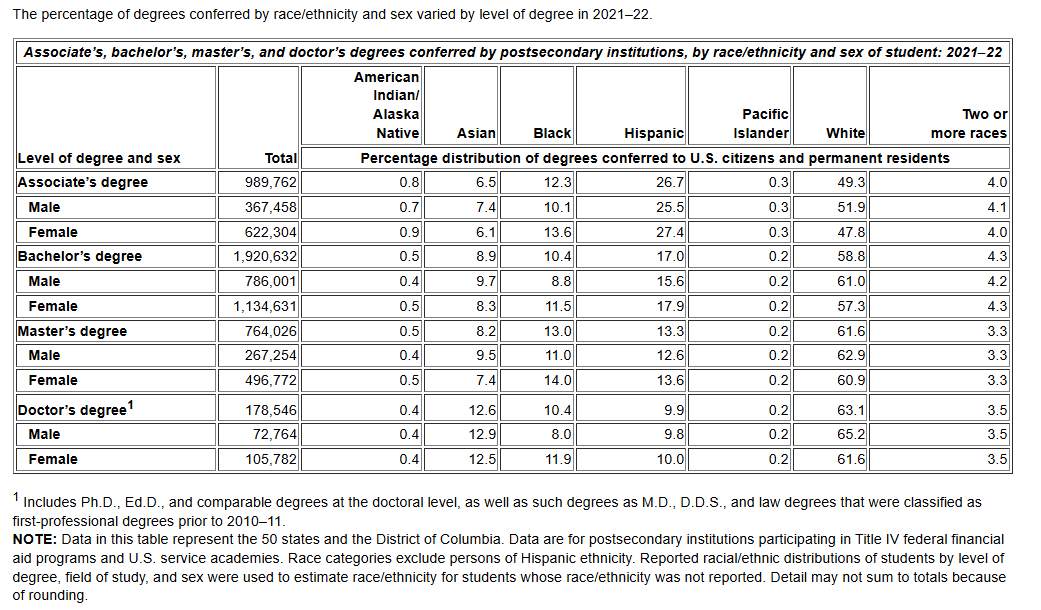
African Americans continue to be the only group where the women outnumber the men in terms of employment. The systemic reasons for this abound and not particularly the focus in this piece, but one of those areas is certainly educational obtainment. Whereas African American girls are in large part taught to focus on mental and academic achievement as a means of success, African American boys are taught to focus on physical and athletic achievement as a means of success. The two most notable gaps are at the Associate’s degree and Doctor’s degree levels where there is a difference of 350 basis points and 390 basis points, respectively. While it would be nice to see more African American young men getting Bachelor’s degrees, from an economic reality, simply getting more of them with an Associate’s is cheaper and faster in terms of return on investment for the community.

Enter the 10 HBCUs that are community or technical colleges along with UDC who has community college division while still being a 4-year institution. This collection of HBCUs represents a network of community and technical colleges dedicated to providing accessible, affordable education and workforce development opportunities. Focused on serving African American communities, these institutions offer associate degrees, certificates, and vocational training programs. There is also the opportunity to create a pipeline to four-year HBCUs or direct entry into the workforce. They emphasize community enrichment, economic mobility, and leadership development, often incorporating faith-based or mission-driven values. Collectively, they play a vital role in empowering individuals and strengthening the communities they serve.

As of 2021-2022 according to NCES, there is an approximately 50,000 Associate’s degree gap between African American Women and Men (Table Below) with women obtaining almost 85,000 Associate degrees annually and men obtaining just over 37,000 Associate degrees annually. The major obstacle to these 10 HBCUs closing the gap is what ails most systemic issues facing African America – finances. These 10 HBCUs have an average tuition cost of $6,500 and median tuition cost of $5,300. But in order cost of attendance is a far more accurate because it includes the ability to pay for residence be it on-campus or off-campus, meal plans, books, and other necessities of educational obtainment. The average and median for that related to these 10 HBCUs is approximately $20,000 which is inclusive of the tuition and fee cost. This cost of attendance is due to both the low cost of tuition at two-year institutions in general and these HBCUs being located in affordable towns as a whole. However, it maybe a lot to ask if the goal is to truly incentivize enough African American Men to take two years if they were not intending to and by the numbers many clearly are not intending to go to college even for an Associate’s degree without a cherry on top. Simply ensuring they have full tuition and room/board is enticing, but it is likely not enough. If we look at this as a salary, then paying African American Men $20,000 a year to be students is probably not going to cut it. However, pushing that number to say $30,000 a year with a disposable income of $10,000 per year could be enough to bring many into the fray.
Here is the math of getting to $30 billion. Assuming our endowment for this program can generate 5% annually, then it would take $600,000 in principal to generate the $30,000 necessary per student. That is $600,000 times the 50,000 gap we need to close annually or $30 billion. Enough to generate $1.5 billion in interest. At current, there are no African American institutions that are either non-profit or for-profit valued at $30 billion. Howard University has the largest African American non-profit endowment and it is just under $1 billion. World Wide Technology is the most valuable for-profit firm at $20 billion and its African American ownership in the firm at 59 percent makes his stake worth approximately $12 billion.

There is even an argument that should this miraculous endowment appear if it should be spent on African American men ages 18-40 or if it should be focused on African American boys where you could provide supplemental education and academic investment at a far earlier age where you would need to spend a fraction of the $30,000 to get impactful long-term results. While there is a firm argument for this, my answer is resoundingly no. It should and would need to be spent on the 18-40 year old age group. The reason why is simple. African American Women need help now. The gap that has existed for sometime now has caused a crisis in the community with African American women being unable to find African American men that are suitable partners, the overweight responsibility of economic burden they carry, and much more. The closing of the gap is worth $7,700 in increased earnings per African American man who upgrades from a high school diploma to an Associate’s degree or $385 million annually if simply brought in balance with the number of Associate’s that African American Women earn.

The burning question of course is where we get $30 billion in assets from that can produce $1.5 billion annually (a 5 percent return). Unless someone is secretly hiding 300,000 bitcoins, they bought for $0.01 many years ago that are now worth $30 billion there may be no real solid answers. Time is of the essence so the notion that we are going to slow roll our way there as we do with most everything else financially is a nonstarter and just more of the same issues. Government funding is also almost certainly not an option given that regardless of political party very little has been done to rectify systemic issues that face African America. One party would like to give us nothing despite the fact that we pay into the tax system and the other party gives us symbolic and lip service. For context, there are only 5 university endowments that are greater than $30 billion.

In the end, the truth of the matter is this will not be solved by a single endowment or a single organization. However, $30 billion in a collective effort across multiple organizations coordinating with this goal may in fact be possible and pragmatic. With almost $2 trillion in buying power in theory the resources are there – sort of. Buying power can be very misleading because it does not actually speak to disposable income of the African American community. The money that is leftover after the bills are paid. Much of African America’s $2 trillion has very little leftover once you account for needs and necessities of African American households. This actually speaks quite a bit to African America’s buying power only account for almost 11 percent of America’s $18.5 trillion in buying power, but accounting for almost 14.5 percent of the American population. The $2 trillion should be closer to $2.7 trillion. That is $700 billion essentially “missing” from the African American households. Needless to say, it would a lot easier to find that $30 billion there.

A collective and strategic effort is necessary to bridge the Associate’s degree gap between African American men and women. While a $30 billion endowment seems daunting, the solution lies not in a single source of funding but rather in a coordinated approach involving multiple organizations, institutions, and innovative financial strategies. Leveraging partnerships with HBCUs, African American financial institutions, and philanthropic networks can help mobilize the resources needed to generate meaningful change. Furthermore, targeted outreach to influential individuals, businesses, and community leaders can catalyze fundraising efforts.

The focus must remain on providing African American men with the financial support necessary to pursue educational opportunities. By directly investing in their economic advancement, the ripple effect will extend beyond individuals to families and communities. The $385 million annual increase in earnings resulting from closing the Associate’s degree gap underscores the profound economic impact of this initiative. Equally important, this investment addresses the broader social and relational imbalances that have burdened African American women for decades.

Achieving this ambitious goal will require innovative thinking, sustained advocacy, and bold financial commitment. However, with collaboration and purpose, empowering African American men through education can yield lasting benefits for the entire community, fostering stability, opportunity, and generational wealth.

Universal Pre-K Will Do More Harm Than Good To African American Children (Unless): A Critical Analysis

All kids need is a little help, a little hope and somebody who believes in them. – Magic Johnson

Universal Pre-K and early childhood development programs are something that is often lauded by the African American community as something that would assist our children and propel them academically in the future. Research shows that early childhood education has lasting long-term effects on children’s socioeconomic outcomes in almost every facet imaginable. However, currently quality early childhood education is largely reserved for more affluent communities. For good reason, the digital publication Prestige in their article ‘Inside the world’s most exclusive and expensive preschools’ noted, “We’re talking chef-made organic meals, sprawling campuses, and field trips to the Galapagos. Admission is highly competitive, often requiring interviews, assessments, and six-figure donations. For the one percent of the one percent, these exclusive early education experiences are less about ABCs and 123s and more about the connections and privilege.” The donations also do not remove one from the responsibility of the tuition which ranges annually from $20,000 to $30,000. These institutions offer art lessons, ballet classes, multiple languages, critical thinking and creativity, development of emotional intelligence, and much more. Things that many adults either get much later in life or never get at all. Having them instilled at three years old almost ensures a parabolic trajectory of success for the rest of life.

The notion that universal pre-k would close that gap is more wishful thinking that pragmatic reality. However, it is argued that something is better than nothing? It is also said that the road to hell is paved with good intentions and that is more likely the case for African American outcomes when it comes to universal pre-k than anything we wishfully hope would come from it. It may serve more as a de facto public day care experience than anything else where working class parents who need to be working and not able to afford day care and therefore caught in a vicious trap of working less and earning less because they cannot afford day care or working more and paying most of the additional income to day care to see a marginal income increase. African Americans in particular though should know by now that nothing is free even when it is said to be so.

We need only examine the outcomes of the public school system as it stands now for African Americans to realize what the outcomes of universal pre-k would produce. More of the same. Maybe worse because anti-indoctrination would essentially be happening immediately. While the argument for more early childhood education is a much needed one for African American children, it is also worth examining who would have the institutional ownership.

African American Schooling Post-Desegregation

Post-desegregation, African American education faced several challenges that have lingering effects today:

  1. Unequal Integration:
    • While desegregation aimed to provide equal opportunities, many African American students remain in segregated schools due to residential patterns and systemic inequities.
    • Even in integrated schools, African American students often experience lower expectations and unequal access to advanced coursework.
  2. Loss of Black Educators and Schools:
    • The closure of historically Black schools during desegregation displaced many Black educators, erasing culturally affirming spaces where African American students thrived.
    • This loss deprived students of role models who understood their cultural and community needs.
  3. Institutional Racism:
    • African American students in integrated schools often faced bias, tracking into lower-level courses, and disproportionate disciplinary actions. These patterns persist today, contributing to unequal educational outcomes.

Current Public School Outcomes for African American Students

The current state of public education reveals persistent inequities that universal pre-K could unintentionally exacerbate for African American children:

  1. Achievement Gaps:
    • African American students consistently score below their white peers on standardized tests, such as the National Assessment of Educational Progress (NAEP).
    • Contributing factors include under-resourced schools, limited access to advanced coursework, and a lack of culturally relevant curricula.
  2. Disciplinary Disparities:
    • African American students are disproportionately disciplined, with preschool-aged African American boys accounting for 43% of suspensions despite being only 19% of enrollment.
    • Early exposure to punitive measures increases the likelihood of negative long-term educational and social outcomes.
  3. Resource Inequities:
    • Schools serving predominantly African American communities are often underfunded, with larger class sizes, fewer qualified teachers, and outdated materials.
    • This lack of resources hinders early literacy, numeracy, and socio-emotional development.
  4. Cultural Disconnects:
    • Many public school curricula and teaching practices fail to reflect or affirm African American cultural identities, leading to disengagement and lower academic performance.

Afrocentric Pre-K in Partnership with HBCUs

To counteract these challenges, Afrocentric pre-K programs, implemented in partnership with Historically Black Colleges and Universities (HBCUs), present a transformative solution.

  1. Culturally Relevant Education:
    • Afrocentric curricula incorporate African and African American history, culture, and values, fostering a sense of identity and pride in young learners.
    • Lessons emphasize cooperative learning, creativity, and critical thinking, aligning with African cultural traditions.
  2. HBCU Involvement:
    • HBCUs have long been leaders in producing culturally competent educators and advancing African American scholarship. Partnering with HBCUs allows pre-K programs to draw on their expertise, resources, and community connections.
    • Education students at HBCUs can gain hands-on training through internships and practicum opportunities in Afrocentric pre-K settings.
  3. Teacher Training and Development:
    • HBCUs can offer professional development for pre-K educators, ensuring they are trained in culturally responsive teaching and child development.
    • Programs can also recruit and support Black educators, addressing the underrepresentation of African American teachers in early childhood education.
  4. Community Engagement:
    • Partnerships between Afrocentric pre-K programs and HBCUs can strengthen community ties, involving parents and local organizations in curriculum development and program governance.
    • Family engagement initiatives can provide parents with resources to support learning at home.
  5. Research and Evaluation:
    • HBCUs can lead research to assess the impact of Afrocentric pre-K programs on academic and social outcomes, ensuring continuous improvement.
    • Findings can inform policies to expand successful models nationally.

Key Features of Afrocentric Pre-K in Partnership with HBCUs

  1. Curriculum Highlights:
    • Focus on African diasporic history and cultural pride.
    • Integration of science, technology, engineering, arts, and mathematics (STEAM) with a culturally relevant lens.
    • Emphasis on social-emotional learning and conflict resolution rooted in community values.
  2. Accessible Locations:
    • Programs hosted on or near HBCU campuses to leverage facilities, staff, and community networks.
  3. Empowerment-Focused Funding:
    • Public and private funding to ensure accessibility for all African American families. This could be led by HBCU alumni creating endowments for these partnerships.
  4. Mentorship Opportunities:
    • Pairing pre-K students and their families with mentors from HBCU student bodies, fostering intergenerational learning and support.
  5. Holistic Approach:
    • Nutrition, healthcare, and family support services integrated into the program to address broader disparities impacting African American children.

Recommendations for Implementation

  1. Policy Advocacy:
    • Advocate for federal and state funding to establish Afrocentric pre-K programs in partnership with HBCUs.
    • Push for accountability measures to ensure equitable distribution of resources.
  2. Pilot Programs:
    • Launch pilot Afrocentric pre-K programs at selected HBCUs to refine the model and gather evidence of effectiveness.
  3. Community Collaboration:
    • Partner with African American community organizations, churches, and local businesses to support and sustain programs.
  4. Long-Term Expansion:
    • Use data from pilot programs to scale Afrocentric pre-K nationally, prioritizing areas with high African American populations and educational inequities.

Universal pre-K, if not carefully implemented and there is little reason to believe it would be, risks perpetuating systemic inequities faced by African American children. Afrocentric pre-K programs owned by the communities or even under a unified African American organization, developed in collaboration with HBCUs, offer a culturally affirming, high-quality alternative that addresses historical and contemporary challenges. By grounding education in cultural pride, community engagement, and academic rigor, these programs can equip African American children with the foundation they need to thrive academically and socially. This provides an opportunity for the African American education pipeline to be extended and strengthened from early childhood education through higher education in institutions of our own.

Our decisions at their core must revolve around the strengthening of the African American institutional ecosystem and educational pipeline. We are training the future leadership of our institutions and the work begins immediately.

The (What If) Merger of Fred Rogers Productions and Sesame Workshop: A New Era in Children’s Media

Play is often talked about as if it were a relief from serious learning. But for children play is serious learning. Play is really the work of childhood. – Fred Rogers

By William A. Foster, IV

The future of children’s media is a complicated world thanks to adults. Two pillar institutions long known for making the world a better place could both use massive infusions of capital and an invigoration of dynamism. It is quite possible they could find it in each other. At least, that is what we think here at HBCU Money. We explored just what the merger of two titans of children’s media production could look like and produce. As a child who was deeply rooted in the lessons and teachings of both hope they consider the possibility, because a world without even one of them is a place that would lose an immense compass of values, direction, and foundation that so many children need today.

At the heart of this merger lies a shared philosophy: the belief that children learn best in a nurturing, inclusive environment. Fred Rogers Productions, famous for “Mister Rogers’ Neighborhood,” has long emphasized emotional development, kindness, and community. Sesame Workshop, the creator of the iconic “Sesame Street,” has pioneered educational content that addresses complex topics like diversity, empathy, and resilience.

Both organizations have demonstrated a commitment to providing quality programming that resonates with children and parents alike. By joining forces, they aim to amplify their impact, reaching a broader audience with even more diverse and enriching content.

Financial Insights

Analyzing their financials from Form 990 provides insight into the scale of both organizations:

  • Fred Rogers Productions reported total revenue of approximately $12 million in its latest fiscal year, with a significant portion dedicated to content production and educational outreach programs. Its expenses were primarily focused on programming costs, which accounted for around 70% of total expenditures.
  • Sesame Workshop, on the other hand, reported revenues of about $40 million. This organization has a diverse funding model, including grants, sponsorships, and merchandising. Their expenditures reflect a robust investment in research and development, educational initiatives, and global outreach, with roughly 60% of their budget allocated to program development and production.

The merger will likely consolidate their financial strengths, allowing for more efficient resource allocation and broader fundraising opportunities. The combined financial stability can enhance their ability to produce innovative content and expand outreach efforts.

Expanding Educational Horizons

The merger is expected to leverage the strengths of both entities. Fred Rogers Productions brings its expertise in creating heartfelt, character-driven narratives that engage young viewers. In contrast, Sesame Workshop contributes its extensive research in early childhood education and its vast library of characters and stories that tackle real-world issues.

Together, they plan to develop new series that combine the emotional depth of Fred Rogers’ storytelling with the innovative educational strategies of “Sesame Street.” This collaboration promises to explore new themes, such as mental health, inclusivity, and environmental stewardship, all while maintaining the engaging format that children love.

A New Era of Collaboration

One of the most exciting aspects of the merger is the potential for collaboration between beloved characters from both organizations. Imagine a special where Mister Rogers interacts with Elmo and Big Bird, exploring the importance of kindness and friendship. Such crossovers could create unique opportunities for storytelling, allowing children to learn from multiple perspectives. Initiatives would not only attract existing fans but also engage new audiences, providing rich, multi-faceted learning experiences.

Commitment to Accessibility

Both Fred Rogers Productions and Sesame Workshop have a history of making their content accessible to all children, regardless of background or ability. The merger is set to enhance these efforts, with plans to expand reach into underserved communities and integrate diverse voices in content creation. By prioritizing accessibility, the organizations aim to ensure that all children have the opportunity to engage with their programming.

Looking Ahead

The merger between Fred Rogers Productions and Sesame Workshop represents a pivotal moment in children’s media. With a combined revenue of over $52 million and a shared commitment to enriching the lives of young children, they are poised to set new standards in educational programming. As they embark on this new chapter, their collaboration promises to foster an inclusive environment where every child can learn, grow, and thrive.

This strategic alliance not only honors the legacies of Fred Rogers and the creators of “Sesame Street” but also ensures their continued relevance in an ever-evolving media landscape. As they move forward, the focus will remain on nurturing the next generation with compassion, creativity, and a sense of community.

In the meantime, give a donation to FRP and SW by clicking on the links below.

Fred Rogers Productions: https://www.fredrogers.org/donate/

Sesame Workshop: https://sesameworkshop.org/support-us/

Disclosure: This article was assisted with by ChatGPT.