Tag Archives: a different world

The (Black) Power Couple & Family Business That Could Have Been: Entrepreneur Ron Johnson & Dr. Kimberly Reese, M.D.

By William A. Foster, IV

“Black love encompasses romantic partnerships, familial bonds, friendships, and a collective commitment to uplifting and empowering each other.” – Taylor Moorer & Alexander Dorsey

Generated image

Let me begin with this. There was no character on A Different World that held my attention the way Kimberly Reese did. Graceful. Brilliant. Driven. A woman on her way to becoming a doctor and never once apologizing for her intellect. I was mesmerized. And I still am. So forgive me if this article has a bit more heart than business metrics—though trust me, we’ll get to those too.

Kimberly Reese, played by Charnele Brown, was more than just the token “smart Black woman” character. She was a symbol. She was the dream our mamas prayed for us to meet and our daddies hoped we’d bring home. She was what happens when Black excellence meets Southern charm meets pre-med grit. And then there was Ron Johnson. Ronald Marlon Johnson. A whole enigma. Part clown. Part visionary. If Dwayne Wayne was Silicon Valley, Ron Johnson was Bed-Stuy with a business plan. He wasn’t just comic relief, he was a prototype. The first glimpse we got of the HBCUpreneur: the student hustler learning lessons in the real world as much as in the classroom. Ron Johnson was what every HBCU business school ought to teach: how to build from where you are with what you have.

But instead of marrying into mogulhood with Kimberly Reese and forming a real HBCU power couple like the Obamas of Black medicine and enterprise the writers took another route. A safe one. A disappointing one. This is the story that should have been written. This is the power couple and family business that could have been.

According to a 2023 report from the National Black Chamber of Commerce, over 70% of Black-owned businesses are sole proprietorships meaning they begin and end with one person. Fewer than 10% survive into the second generation. That’s not a flaw in ambition. It’s a failure in structure. We don’t often think in dynasties. In systems. In scaling. Now imagine a Ron Johnson who took that Hillman business degree and didn’t just open a club or restaurant, but built RJ Health Enterprises; an integrated chain of community health clinics, urgent cares, and medical real estate investments focused on underserved Black communities across the South. Imagine Kimberly Reese as co-founder and Chief Medical Officer. A respected OB/GYN on the board of Meharry, Howard Med, and Morehouse School of Medicine. Their flagship clinic, “Reese & Johnson Family Health,” could’ve become a cornerstone of African American healthcare.

We’re talking about a $500 million business in 15 years. Not hypothetical. Real math. According to IBISWorld, the U.S. urgent care market was valued at $38 billion in 2023. Black communities represent a disproportionate share of preventable hospitalizations due in part to lack of affordable, trusted, and culturally competent providers. The Reese-Johnson health business could have been both remedy and revolution.

There is something revolutionary about a Black man and woman building together not just emotionally, but economically. As of 2024, only 8% of all U.S. employer businesses are owned by Black Americans, and of that sliver, a mere 2% are co-owned by Black spouses or partners. Family businesses, when managed strategically, are intergenerational launchpads. Take the Hoffmann-Oeri family of Switzerland, owners of pharmaceutical giant Roche. Their company, founded in 1896, now generates over $70 billion annually. But more importantly, it has built economic moats and family wealth for six generations.

The Reese-Johnson duo had the potential blueprint: a physician’s vision for preventative and culturally attuned care, an entrepreneur’s eye for monetizing access, experience, and brand, and a shared identity rooted in the HBCU ethos of service and innovation. They weren’t just fictional characters. They were avatars for what could be real.

The fact that no HBCU business school has a “Ron Johnson Center for Entrepreneurship” or that no HBCU medical school offers a joint MD-MBA program named after fictional pioneers like Reese and Johnson is a shame. Not because we need to deify characters but because those characters gave us a canvas to imagine bigger for ourselves. HBCUs too often shape students to be labor. To integrate. To get the job. But not to create the job. And certainly not to imagine owning an empire with the person you love, built from the same institution that educated you both. If we are serious about economic empowerment, we must institutionalize HAO (HBCU Alumni Owned) companies as a KPI for alumni success. A different world wasn’t just the name of the show. It should have been the result.

By 2005, Reese and Johnson, both Hillman alums, launch RJ Med Group with three components: RJ Clinics, a chain of urgent care centers in HBCU cities: Jackson, Baton Rouge, Baltimore, Atlanta, Tallahassee, and Salisbury. Clinics cater to walk-ins and are integrated with digital records and telehealth by 2010. RJ Research Institute, a Black-led nonprofit focused on studying racial disparities in maternal health, hypertension, and mental health. Sponsored research partnerships with Xavier, Howard Med, and NIH. RJ Ventures, a holding company investing in HBCU med tech startups, pharmacy delivery services, and neighborhood health food stores. The group employs over 5,000 across the South and sponsors 200+ internships annually for HBCU students in medicine, public health, business, and tech. And of course, they endow the $10 million Hillman Health Equity Fellowship.

We’ve seen versions of this in real life: John and Nettie Singleton, co-founders of a Harlem-based pharmaceutical distribution company that grossed $22 million before being acquired. Dr. Patrice and Raymond Harris, founders of a network of Black-owned mental health clinics in Georgia. Michelle and Barack Obama—yes, yes, we know. But their synergy reminds us how intellect, ambition, and partnership can turn policy into legacy. Ron and Kimberly could’ve been the HBCU version of this—part CVS, part Kaiser Permanente, part Wakandan vision.

Because representation is not just about visibility. It’s about possibility. When the writers broke them up, it wasn’t just a romantic loss it was a missed opportunity to show Black America what family business could look like when rooted in love, purpose, and institution. Television shapes narratives. And narratives shape expectations. And expectations? They shape outcomes. If there were more shows modeling Black couples building businesses, maybe more Black MBAs and MDs would consider entrepreneurship as a couple’s journey. Maybe more HBCUs would invest in interdisciplinary labs between medicine and business schools. Maybe that “different world” we dreamed of would feel more like a blueprint than a slogan.

As HBCU alumni and stakeholders, we must write our stories forward. We must see every Kimberly Reese as not just a doctor, but a dynasty builder. Every Ron Johnson as more than a hustler, but an heir. And we must stop waiting for television to imagine our greatness. Let HBCUs teach love in their curriculum not just as poetry, but as partnership. Teach ownership as legacy. Teach entrepreneurship as service. Let our future Hillman couples dream bigger than GPAs and Greek life. Let them dream empires.

Kimberly Reese and Ron Johnson didn’t get the ending we hoped. But that doesn’t mean their story was pointless. It means we were given the tools. Now it’s on us to build.

A Letter To Malcolm

I’ve always been a poet. My dad went to Lincoln University with Gil-Scott Heron, so I came out of the womb listening to Gil-Scott Heron. – Malcolm Jamal-Warner

Dear Malcolm,

I will never forget where I was when the alert came on my phone. I was sitting in the woods for work. We were having a retreat of sorts in the Santa Fe National Forest for the morning. The cellphone service was spotty at best and most of the time my service said SOS. But every now and then I would get one bar and notifications would come pouring in. Around late morning early noon an alert from the Associated Press came in that you had passed and my entire insides collapsed. I had to find every way I could to hold it together. The disbelief helped. That cannot be right, but of course it coming from the Associated Press made it almost impossible for it to be an error. Yet, I hoped it was. My mind raced to find composure. I certainly could not shout out what I just saw on my phone. It would not make sense to anyone around me. While I am sure there are some around my age that work with me I cannot readily think of who. Even moreso, I am the only African American in my organization. It would not make sense to anyone to break down in tears at that moment. To have to explain why you are crying over a celebrity, but in a space of African Americans we know you were never that even if you were that.

It is complicated at times to understand cousins and play siblings AKA “Brother/Sister from another Mother” to those outside of our community. These connections are deep and I do mean DEEP. There are cousins who I have not spoken to in years who could call me right now and I would get on the first plane smoking to go defend them in whatever capacity they needed. They just need say the word. You became that to so many of us. A cousin and/or brother from another mother. You were an eclectic soul and that meant the world to me. You explored the world and your curiousities without feeling bound. Something I so deeply value in my own life. To explore your interests without worry of what anyone would think and say. Many wish they could live life without those restrictions and you did it effortlessly. You never “Sold Out” or went “Hollywood” on us. You were always willing to speak up and speak about the African American community in a manner that felt real and felt true. I appreciated that despite your own admitted struggles of feeling like enough you overflowed the cups of so many African American boys and girls who grew up with you.

Since you left us I kept thinking about how to describe you to the world as I saw you. You were a regular Brotha who was EXCEPTIONAL. That is all I keep thinking as I grapple with the tears of knowing another Brotha being gone far too soon. I took for granted that we would see you in our older years. That you would continue to impart your wisdom of how you saw the world and just the shining example of being an African American man, son, brother, husband, father, and all the complex layers that come with the lives we live.

There is no need to discuss your accomplishments. We all know them. We all lived them with you. I told a friend today you were someone who I wished I could meet one day and share ideas for our community and knew you would understand. They would be ideas you would love and embrace and support. For me, there are so few that I believe I could have those conversations with in the world and deeply saddens me that now there is one less person in this world I feel I can realte to and who would understand me. It took a lot to hold it together the rest of that day. Until I get home and sit with the stages of grief that it feels like the entirety of African America is trying to find the words for day after day right now. I think about your daughter and wife. How you really were the regular guy just enjoying a family vacation. The regular guy who loved being a father and put her flower in your fitted cap as you left us your final message. It still feels like one of the worst dreams I have ever had. For a community that needs good Brothas and often feels like we have too few this is a blow that I am uncertain we will ever an answer for anytime soon – if ever. I could go on, but there is no need. All I can do, all any of us can do from today forward is think of you, reminisce of you, and try each day to carry just a little of the light you showed to the world in our own way.

May the Ancestors welcome you home.

Your Cousin and Brother from Another Mother,

William

A Different World, Same Old Hierarchies: Colorism, Class, and the Untold Pairings of Hillman College

“Television doesn’t just reflect our world—it reinforces its unspoken rules. And sometimes, it’s in what’s left unsaid that the truth screams loudest.”

There is perhaps no show more foundational to African American Gen X and elder millennial identity than A Different World. Premiering in 1987 as a spinoff from The Cosby Show, the sitcom quickly found its own voice and purpose, blossoming into a cultural beacon that reflected the richness and complexity of Black college life at fictional Hillman College—an HBCU modeled after Spelman, Howard, and other elite institutions.

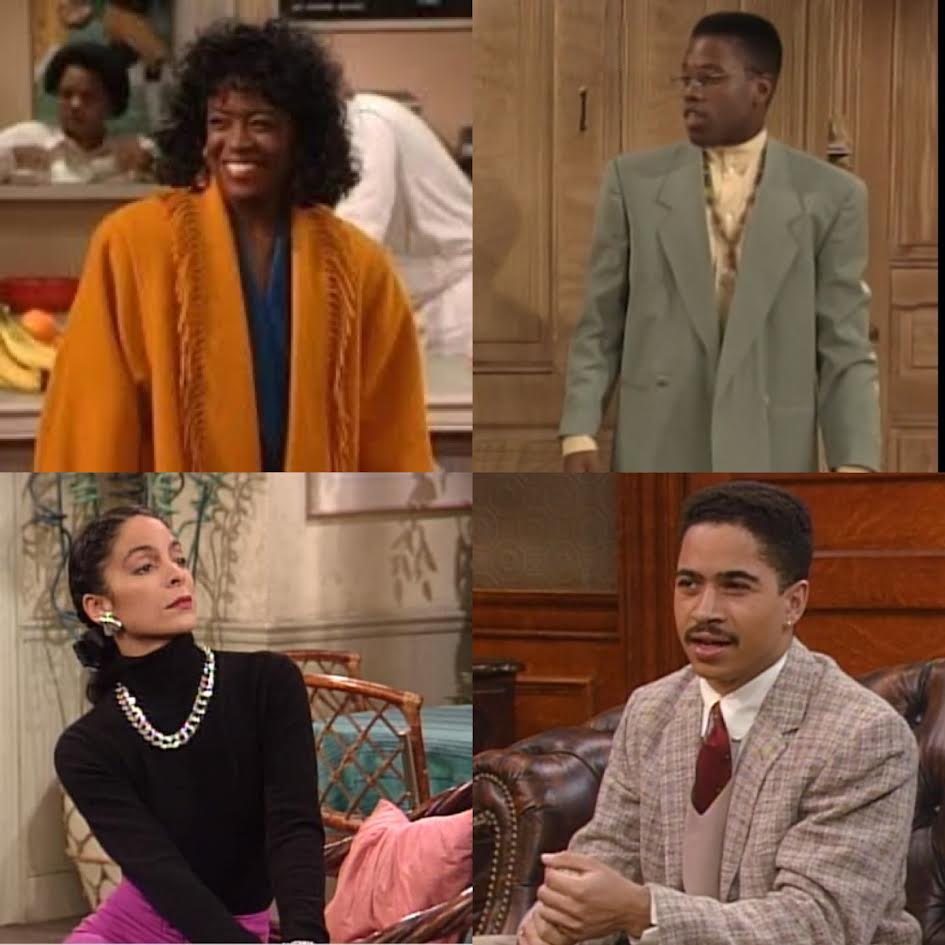
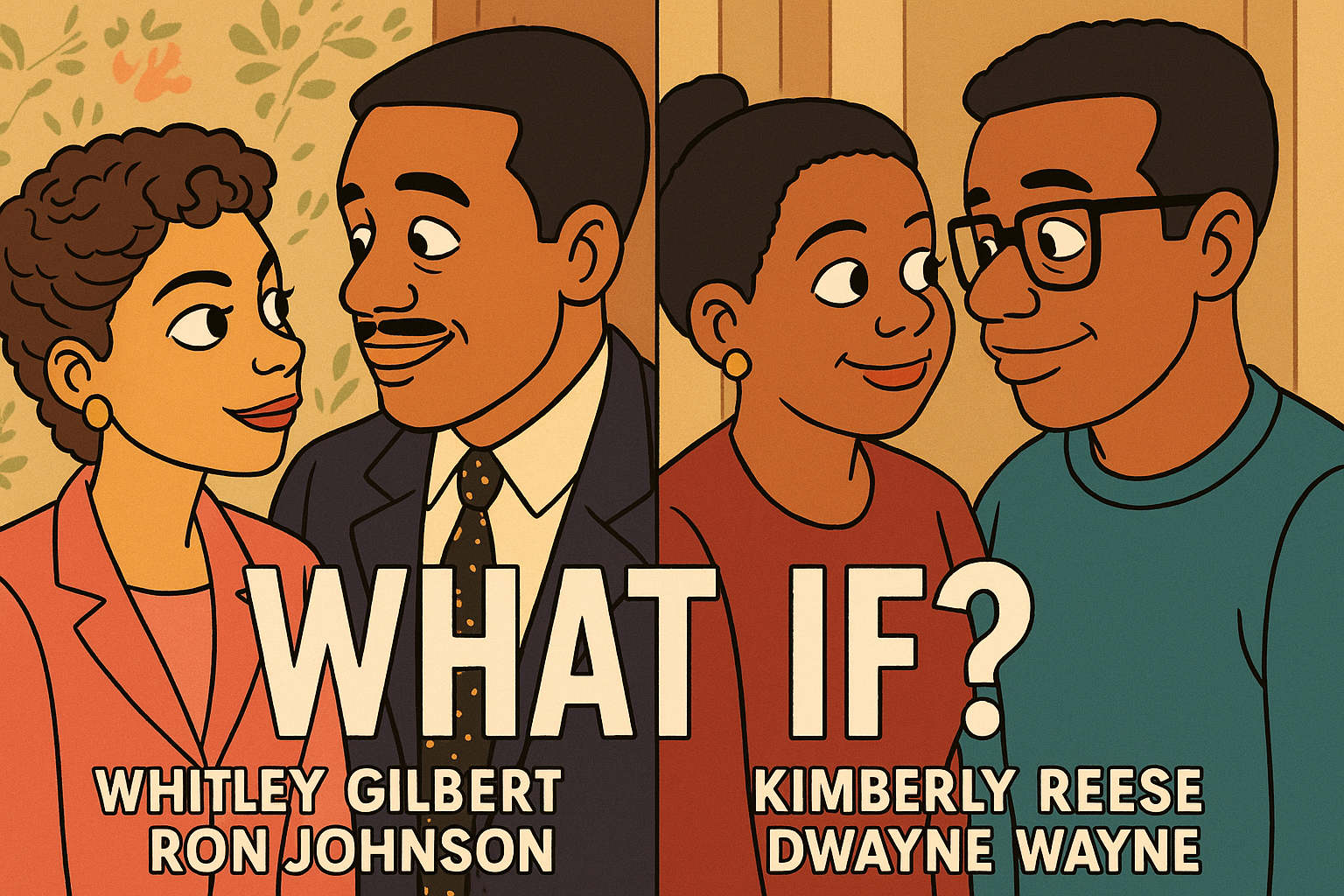
From apartheid and HIV awareness to campus politics and colorism, the show tackled subjects few mainstream programs dared to touch. But even within its groundbreaking storytelling, some narratives were never fully explored. Perhaps most glaring among these were the unexplored romantic pairings of Ron Johnson and Whitley Gilbert, and Kimberly Reese and Dwayne Wayne. Their absence is not simply a matter of creative choice, but rather a symptom of entrenched internalized hierarchies of colorism, class, and gendered desirability—even in Black-led creative spaces.

This isn’t merely nostalgia-fueled fan fiction. It’s a cultural audit.

Ron Johnson: Miscast by Archetype, Not Background

Ronald Johnson, Jr. was not some scrappy kid from the margins. He was a light-skinned, second-generation college student from Detroit, Michigan. His father owned a car dealership, and Ron worked summers there—signaling not just work ethic, but a proximity to Black wealth and business infrastructure. In fact, by Hillman’s standards, he and Whitley Gilbert were socioeconomically parallel: both came from upper-middle-class families, both had access to private social capital, and both had expectations of upward mobility baked into their upbringing.

And yet, Ron’s portrayal consistently tilted toward buffoonery. He was the punchline. The skirt-chaser. The guy you liked but didn’t take seriously. His aesthetic—flashy suits, jewelry, and New Jack Swing flair—was coded as nouveau riche and unserious, despite being emblematic of a generation of young Black men redefining business and culture.

Meanwhile, Whitley Gilbert, with her Southern debutante air, was elevated as aspirational. She was light-skinned, soft-spoken (when she wanted to be), and came from a family steeped in respectability politics. That she would end up with Dwayne Wayne—a Brooklyn-born, dark-skinned, ambitious math major with a heart of gold—was played as a triumph of emotional growth and opposites attracting. But the coupling obscured the more natural pairing: Whitley and Ron.

Why were two light-skinned, upper-middle-class, culturally fluent characters kept apart?

The answer lies in how class and colorism intersect with gender expectations in Black storytelling. Ron’s light skin and wealth didn’t earn him narrative maturity because he was not written as emotionally serious. Whitley’s light skin and wealth did, because Black women must still fit a limited spectrum of desirability to be seen as love-worthy.

The Subtle Rejection of Intra-Class, Intra-Color Love

Pairing Whitley and Ron could have offered a natural and compelling relationship arc, exploring how two Black elite youth—one from the industrial North, one from the genteel South—navigate love, identity, and social expectations. Ron was not without emotional depth. He showed loyalty, ambition (eventually co-owning a nightclub), and a genuine desire to be taken seriously.

But Whitley’s arc was preordained. She was meant to be elevated—refined through her relationship with Dwayne Wayne, whose dark skin, nerdy brilliance, and working-class roots made him both lovable and “in need of” polish. The show allowed Dwayne to evolve from a bumbling flirt into a serious partner, but that grace wasn’t extended to Ron. His business acumen was never valorized. His family wealth never framed as legacy-building. His light skin did not shield him from being typecast.

Why? Because Black masculinity on screen is often given limited templates: the hustler, the hero, or the helpmate. Ron didn’t fit any box neatly enough. He was light-skinned without gravitas, rich without respect, and flirtatious without the redemption arc. The result? He was denied the narrative dignity of love with someone in his actual social class.

Whitley Gilbert: The Chosen Debutante

Whitley’s character arc—from elitist to empathetic—was among the show’s most powerful. Her internal classism was challenged, her superficiality peeled away, and her vulnerability finally exposed. But she was also shielded by her presentation: light-skinned, poised, and conventionally attractive within Eurocentric standards.

This made her “worthy” of the show’s grandest romance—the epic, sometimes rocky, and ultimately redemptive love story with Dwayne Wayne. Their courtship wasn’t just about two young adults figuring it out; it was a narrative about respectability and romantic transformation, a staple of Black middle-class media.

But what if Whitley had fallen for Ron? It wouldn’t have been about transformation. It would have been about familiarity—two people from the same world finding common ground. That wasn’t the story the show wanted to tell. It wanted aspirational transformation, not intra-class reflection.

That choice reveals the quiet but powerful ways in which class and colorism combine to sculpt who gets to be complex, who gets to grow, and who gets chosen.

Kimberly Reese: The Invisible Anchor

If Whitley Gilbert was the show’s belle, Kimberly Reese was its backbone. Played by Charnele Brown, Kim was dark-skinned, hyper-focused, and working multiple jobs to stay afloat in pre-med. She represented a different kind of Black excellence: gritty, grounded, and God-fearing.

Yet, for all her virtues, Kim was largely ignored romantically. She had flings and moments, but never a grand love story. Her pairing with Ron was fleeting. Her moment with Matthew, a white medical student, felt more like a plot device than an earnest exploration of interracial love. She was never positioned as a leading lady in the way Whitley was.

But why not pair Kimberly with Dwayne?

Both were academically driven, socially awkward at times, and navigating the pressures of being exceptional. Both came from working-class families. A relationship between them could have explored what it means to build a future together—struggling to balance career goals, family expectations, and a desire to uplift each other.

Instead, the show doubled down on the colorist formula: dark-skinned man, light-skinned woman. Dwayne and Kimberly were emotionally compatible, but Kim was never allowed to be seen as “soft” or romantic enough to be chosen.

She was the strong Black woman. And in television, that often means being alone.

The Economics of On-Screen Desirability

At HBCUs, where the intersection of class and colorism is often most stark, these dynamics are not fiction. They are lived experience. Generational wealth, skin tone, regional culture—all shape who gets attention, who is seen as “wife material,” and who becomes invisible. A Different World was written by people who understood those dynamics intimately, which is why their omissions are so revealing.

The coupling of Dwayne and Whitley functioned not just as a love story, but as a marketing strategy. A light-skinned woman and dark-skinned man satisfied the public’s craving for aspirational integration—of class, color, and character. Ron and Kim, both of whom would’ve represented more internally coherent couplings with their respective counterparts, were left out not because they lacked chemistry, but because they challenged the marketable image of what Black love was supposed to look like on television.

The Reboot Hillman Needs

What if A Different World were rebooted with new eyes?

  • Ron and Whitley: two heirs to Black economic mobility navigating authenticity, ambition, and vulnerability.
  • Dwayne and Kim: two strivers, from humble beginnings, falling in love through academic rigor and emotional resilience.

Today’s Hillman could tell these stories. And it must. Because representation is not just about being on screen—it’s about how we are portrayed. Who is seen as lovable. Who gets growth. Who gets the happy ending.

If the goal is not just to show Black faces but to dismantle Black hierarchies, then these “what-ifs” are not trivial. They are necessary.

Love in the Shadow of Respectability

A Different World did for HBCUs what few shows have ever done for any institution. It made them aspirational. It brought them into the living rooms of millions. But it also brought with it the quiet assumptions of who gets to be desired, respected, and redeemed.

Ron Johnson was more than a clown. He was a young Black man with legacy wealth, light skin, and untapped emotional depth. Kimberly Reese was more than a study machine. She was the embodiment of strength and softness—if only the writers had allowed it.

The couples we never saw reveal as much about us as the ones we did. And in the silence of those omissions lies the challenge for future creators: will they continue to tell safe stories, or will they tell the stories that make us all feel seen?

Disclaimer: This article was assisted by ChatGPT.

Two Wrongs Do Not Make A Generational Wealth: Elvin, Sondra, The Huxtables – And A Wilderness Store

You are the bows from which your children as living arrows are sent forth. – Khalil Gibran

Building wealth in this country is hard. Building African American wealth in this country feels like trying to send a man to the moon, but airplanes have not even been invented yet, you are blind, your hands are tied behind your back, and there is a constant threat of someone threatening to kill you because you breathed wrong that day – as you try to send a man to the moon. This is not just hyperbolic speak. The Brookings Institution reported that European Americans in the bottom 20th percentile have a 500 percent greater chance of reaching the top than their bottom 20th percentile African American counterparts.

This is in large part rooted in two key economic moments in African America’s economic history. First, post Civil War when African Americans were supposed to be given what would be equivalent to 160 million acres of land, Andrew Johnson reneged in typical European American fashion as the Native Americans can attest to on seemingly every treaty they tried to agree to. The 160 million acres of land is impossible to truly value in some ways in today’s dollars because of opportunities for development and where exactly that land would have been is unknown. However, using the USDA’s land valuation as an elementary measuring stick, “The United States farm real estate value, a measurement of the value of all land and buildings on farms, averaged $3,800 per acre for 2022, up $420 per acre (12.4 percent) from 2021.” Based on that $3,800 per acre valuation holding constant, then African America’s 160 million acres would be worth $608 billion. Again, this is just a valuation of that land holding constant as farm land. Given the urbanization of the United States over the past 150 years, it is safe to say that a good portion of that 160 million acres would have been developed and could move the value of that land into the trillions. The $608 billion would be worth almost $15,000 per every African American man, woman, and child today. It is in fact almost 40 percent of African America’s $1.6 trillion in buying power alone and almost 25 percent of African America’s $2.6 trillion in real estate holdings today.

Then there is the grand slam policy that truly dug a grave for African America’s economic future, America’s post World War II G.I. Bill that Russell Huxtable, Dr. Huxtable’s father and army veteran in the 761st tank battalion (Season 3 Episode 11 “War Stories), would have been likely denied along the rest of the 1.5 million African American soldiers who served in World War II. The G.I. Bill arguably built the wealth gap today as we known it because it provided government funds in a way never seen before and not seen since to a group in this particular case to European American veterans to go to college, buy homes that today are alone worth trillions to their descendants, start companies which have created trillions in wealth. It should be noted that a good deal of that wealth has flowed back into PWIs coffers over the years, where there are today more PWI endowments with $1 billion or more in value than there are HBCUs – who have yet to see even one of our institutions reach such endowment value. The government sponsored leverage to European Americans and denial to African Americans contributes today to the institutional depletion of African American owned banks that have dwindled from 134 to just 16 left as of 2023, African American owned hospitals from 500 to 1, African American boarding schools from 100 to 4, and the list goes on and on. And while Russell and Anna Huxtable did well for their children, the denial of those early access to capital would show up generations later in the form of fear that would have Dr. and Mrs. Huxtable encouraging their child and her partner to choose security over risk. It also causes Sandra and Elvin to be irrationally independent and not look to the Huxtables as initial investors in their wilderness store.

It is one of the more memorable storylines told within The Cosby Show’s universe. Elvin Thibodeaux and his bride the former Sandra Huxtable inform Dr. Huxtable and Mrs. Huxtable, Esq. that they are both abandoning the tried and true formula of doctor and lawyer professions to be entrepreneurs. After Mrs. Huxtable talks Dr. Huxtable off the cliff from Elvin’s announcement, it is then Dr. Huxtable’s turn to do the same for Mrs. Huxtable, Esq. who learns that her daughter plans to join her husband in their entrepreneurial journey and to quote Mrs. Huxtable’s feelings about her daughter’s husband “dragging” her daughter into this endeavor, “and ruin what is potentially the greatest legal mind of this century”. Mrs. Huxtable demands that Sandra repay her $79,648.22, the amount the Huxtables paid for Sandra to attend Princeton. Today, that same Princeton education would cost $83,140 per year or $332,560 for four years for perspective. Not only do Sandra and Elvin push forward with extreme begrudging support the Huxtables they do so as Sandra is pregnant with what everyone believes is one child that we know turns out to be twins who are aptly named, Winnie and Nelson as an ode to the Mandelas. Sondra and Elvin refusal to ask for any help or initially take any help finds them living in a slum apartment with a slumlord where the water coming out of the faucet is brown and a myriad of other problems. Ironically, it is Denise who brings the warring parties together and both sides apologize, make amends, and Sondra and Elvin agree (for the sake of the babies) that they will seek new housing with financial assistance from the Huxtables.

However, The Thibodeaux Wilderness Store (TWS) viewed through the lens of a sporting goods store would be part of an industry in the United States alone that has grown from $15.6 billion in 1992 to $64.5 billion as of 2021 according to Statista. An increase of over 400 percent. Led by the U.S. largest publicly traded sporting goods store, Dick’s Sporting Goods valued at $10 billion. The largest individual shareholder is the son of the founder, Edward Stack who has a 10 percent ownership of the company and a net worth of $1.9 billion according to Forbes. Now imagine for a moment instead of Dick Stack’s grandmother giving him a loan of $300 to start Dick Sporting Goods that the Huxtables give Sandra and Elvin the amount needed to start The Thibodeaux Wilderness Store that becomes worth $10 billion and would be the most valuable publicly traded African American owned company. Whereby, the Huxtable-Thibodeaux family clan is worth $1.9 billion and making them solidly among African America’s wealthiest.

Thibodeaux Wilderness Store as a company is easily the largest employer of African Americans in the country employing over 50,000 workers. Dr. and Mrs. Huxtable, Esq. become Hillman’s largest donors with the Huxtable name adorning Hillman’s medical school and Hanks (Claire’s maiden name) adorning the Hillman law school transforming Hillman into the only second full service HBCU along with Howard University. They are taken public by an African American investment banking firm and a percentage of the company’s stock is purchased and held by Hillman and other HBCU endowments. Their corporate banking sits with an African American owned bank that allows the bank to in turn provide loans to thousands of small African American businesses and potential African American homebuyers. This is the power of transformative wealth – it quite literally can transform if it is in the hands of the right people. However, as we see it takes a family taking the risk to build a firm backed by the capital, security, and support of the family and community around them. The latter is exactly what the Huxtables had to offer Elvin and Sondra as they sought to build their company.

Encouraging firm building within African American/HBCU families is vital to build generational wealth. Dr. and Mrs. Huxtable, Esq.’s jobs as doctor and lawyer, respectively allows a family to build up the capital base and stability needed to take on the risk of starting a firm. To take the family to the next level requires both their stability and their willingness to see their children and grandchildren take risk the stability provides. We often lose sight of this in thinking that high paying jobs are the thing that will build generational wealth when they are still ultimately just that – jobs. In both respects the Huxtables are vital and Sondra and Elvin are vital in the evolution of a family’s resources. Fighting the urge to settle is hard for many African American families because stability has been and is still a generational fight for many African American families with over 20 percent of African American families still trying to climb out of poverty, the largest among any ethnic group in the U.S., is easy to understand the reluctance. Yet, that reluctance is costing us greatly in our ability to create generational wealth for our families and transformative wealth for African American institutions and communities. Sondra and Elvin ultimately needed to embrace the help of the Huxtables and the Huxtables needed to embrace the risk of Sondra and Elvin. This is how we move forward, this is how we close the gap, and this is how we change the lives of 40 plus million that make up African America.

Gaines & Johnson: A Different World Of A Lesson In HBCUpreneurship & Leadership

By William A. Foster, IV

A man must eat a peck of salt with his friend before he knows him. – Miguel de Cervantes

gainesjohnson

Recently Lou Meyers, the man who played Vernon Gaines on A Different World, passed away. As such it made me take some time and reflect on his character from the show. Awhile back I wrote that the characters Dwayne Wayne and Ron Johnson missed a golden opportunity to build a technology company together and instead Ron and Mr. Gaines would open what would be the “typical” show of African American ownership – a club. However, upon reflection even I must admit I missed a golden lesson about something even I experienced while I attended multiple HBCUs and something I believe to be very unique to HBCU culture.

Relationships matter. There is something amazing about the relationship at HBCUs with the students and groundskeepers, janitors, secretaries, cafeteria workers, and others who quietly make the college or university run also commonly referred to as staff. They are as integral and as invested often times in our students’ success as anyone. These unsung heroes provide the little things to HBCU students through their matriculation and was embodied by Mr. Gaines’ character on A Different World. Mr. Gaines was constantly providing words of encouragement and priceless wisdom to all that came through The Pit’s doors. He showed by example hard work and leadership to students who worked under his apprenticeship. They learned lessons from him that no classroom or schoolbook could teach. Oft times providing some of those lessons to faculty as well.

In the case of Ron and Mr. Gaines even I missed something vitally important. Mr. Gaines gave much of his life savings to obtain the club with Ron. It was a huge risk for him personally but what an amazing moment. We so often talk about how we lack access to resources especially financial ones and other expertise but it is often because we are not thinking outside of the box. Many times the resources are right under our nose. Ron and Mr. Gaines partnership was a match made in heaven. Ron was the consummate promoter, a risk taker, and full of youthful arrogance while Mr. Gaines was the steady hand of experience and wisdom along with being an operations guru making sure any ship under his care was going to be run efficiently and on time. Working at an HBCU he also could run anything on a tight budget squeezing every ounce of value out of every dollar. Ron came from a family that probably could have allowed him to bankroll it by himself but odds are he would have failed going alone. His weaknesses were Mr. Gaines strengths and vice versa. But it was years of relationship building between Mr. Gaines watching Ron mature from an immature freshman with promise to a driven young man that allowed their partnership to form in the first place. You see the “ivory” walls that exist between students and staff that exist at many colleges just do not exist at HBCUs and nor should they. Many of our students have parents and family who work in these type of jobs so they have a respect for the work that is tirelessly being done. It allows a wholistic development and humility for our students to be taught by everyone on the campus because everyone has something to offer to our students.

What eventually would come of the Gaines & Johnson partnership? That one club turned into a major food & events management and development company eventually going public on the Ghana Stock Exchange. They would continue to open clubs and eventually find their way into opening casinos, hotels, and restaurants using Hillman architecture, business, engineering, and hospitality graduates. The food & events management division would have the culture of The Pit. Run on a tight ship and on time. Its reputation throughout the industry would be unheralded. They would eventually secure contracts with multiple professional sports organizations and would be lead company managing the Super Bowl. Their development company would ultimately land a development deal in Tokyo, Japan for a major hotel and restaurant with the assistance of fellow alum and Senior Vice President Dwayne Wayne at Kenishewa who uses his influence to secure them favor.

This is the beauty you see on HBCU campuses. That our students and staff most often come from communities and families that allow them to relate to each other and see in each other the reminder of today and promise of tomorrow. Dr. Carter G. Woodson said in Miseducation of the Negro, African Americans would come from a family whose mother had been a maid washing clothing, they would go off to colleges and instead of them coming back and starting a chain of cleaners would rather become highbrow and go off to work in some company as still nothing more than fancy labor with a nice title. Missing an opportunity to truly build on the knowledge of the generation before and create ownership for the family and community. Most often because we were taught that only the “educated” have value instead of understanding that value is in the knowledge whatever it maybe and whomever it maybe coming from.

It is the unique relationship that often times HBCU staff see in the students the optimism for their own families. Something tangible which is why more than any other college or university I have visited during graduation, it is at HBCUs I most often see staff there and afterwards in pictures with students or students going to say those last goodbyes to the cafeteria worker who made sure they ate during finals. Or in the case of Mr. Gaines and Ron building on the expertise and knowledge of both even if it came via different sources. You see in that way on HBCU campuses there are opportunities everywhere and with everyone. There are lessons to be gained and leadership to be viewed from everywhere and everyone. There is much to be gained from the Mr. Gaines’ of HBCU campuses and as such their knowledge, value, and leadership must be respected and valued as much as any on our campuses. Lou Meyers you will be missed but the immortality of Mr. Gaines and all that his character embodied will live on.