Editor’s Correction: Broadway Federal Bank located in Los Angeles, California is also publicly traded and information added below (July 19, 2016)
“But not only that, we’ve got to strengthen black institutions. I call upon you to take your money out of the banks downtown and deposit your money in Tri-State Bank. We want a “bank-in” movement in Memphis. Go by the savings and loan association. I’m not asking you something that we don’t do ourselves at SCLC.”- Martin Luther King, Jr.
It has been noted here at HBCU Money that after every tragic death of an African American by a police officer our site spikes. The primary cause for that spike has been a search for African American owned banks and credit unions and it usually last for a few days, then there are marches, pacification, and all returns to normal as does our site’s traffic. After the recent deaths of Alton Sterling and Philando Castile though something changed and the current numbers say it may finally be the groundswell needed for a permanent paradigm shift in African America’s thought process of self-dependence and empowerment. Banks are the foundation of allowing a community, city, state, nation to control its money and circulate their dollars within the aforementioned entities. This has been at the root of African America’s problem with getting dollars to circulate within its community – simply put a lack of dollars within the financial institutions in the community. Deposits turn into loans and those loans turn into mortgages to increase African American home ownership, reduces predatory lending, and helps launch small businesses which translates into jobs and wealth in the community usually of the bank or credit union entity.
The shift has been profound as banks like Unity National Bank and Citizens Trust (featured here) are overwhelmed by the number of new accounts to the point that their staff simply can not process the volume. Lobbies are jam packed with African Americans moving their money. The seed is planted, but it can not stop there. Another leg of this has to be investing in these institutions from an ownership perspective. More demand for their shares will cause the institutions share prices to increase and increase the value of the company. This allows the company to expand, open new offices, hire more people, and eventually buy other banks. As it buys other banks, it can scale up and drive down cost, which it can then pass that savings on to customers. All of this is investment in our institutions leads to a cycle of economic independence and empowerment that begins to grow and feed on itself like a snowball rolling down hill.
Lastly, America has roughly 3,700 publicly traded companies, but there are only four African American owned public companies (0.1% of all American public companies) and three of them are banks. Below are their profiles. If you want to buy shares in these companies, visit our link on Opening A Brokerage Account.
_______________________________________________________
CITIZENS BANCSHARES CORPORATION
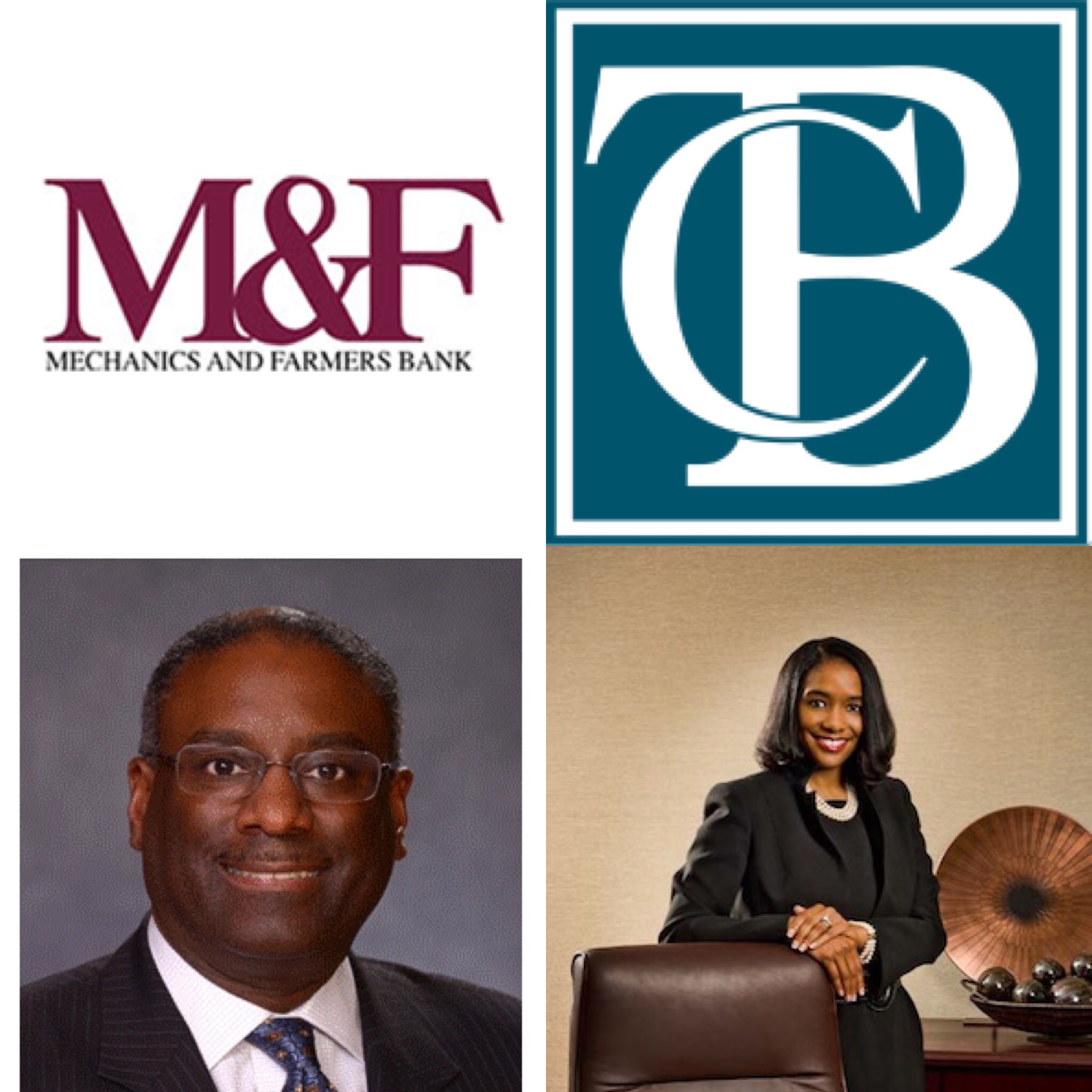
CEO: Ms. Cynthia N. Day, CPA (Above Right)
Ticker Symbol: CZBS
Citizens Bancshares Corporation operates as the holding company for Citizens Trust Bank that provides various commercial banking products and services. The company accepts commercial and consumer deposit accounts, such as non-interest bearing checking accounts, money market checking accounts, negotiable order of withdrawal accounts, individual retirement accounts, time certificates of deposit, sweep accounts, and regular savings accounts. Its loan products include consumer/installment loans, mortgage loans, home equity lines of credit, construction loans, commercial loans, and small business loans. The company operates seven full-service financial centers in metropolitan Atlanta, Georgia; one full-service branch in Columbus, Georgia; one full-service branch in Birmingham, Alabama; and one full-service branch in Eutaw, Alabama. Citizens Bancshares Corporation was founded in 1921 and is based in Atlanta, Georgia.
M&F BANCORP
CEO: Mr. James H. Sills, III (Above Left)
Ticker Symbol: MFBP
M&F Bancorp, Inc. operates as the bank holding company for Mechanics and Farmers Bank that provides consumer and commercial banking products and services in North Carolina. The company offers deposit products, including checking, savings, negotiable order of withdrawal, money market, and individual retirement accounts, as well as certificates of deposit. It also provides loans for real estate, construction, businesses, personal use, home improvement, and automobiles; and equity lines of credit, credit lines, consumer loans, and credit cards. In addition, the company offers safe deposit boxes, Internet and mobile banking services, travelers checks, notary services, and automated teller machine services, as well as electronic funds transfer services, such as wire transfers. It operates seven branch offices in Durham, Raleigh, Charlotte, Greensboro, and Winston-Salem, North Carolina. The company was founded in 1907 and is headquartered in Durham, North Carolina.
BROADWAY FEDERAL BANK
CEO: Wayne-Kent A. Bradshaw
Ticker Symbol: BYFC
Broadway Financial Corporation operates as the holding company for Broadway Federal Bank, f.s.b. that provides savings and loan business services for low to moderate income communities in Southern California. The company accepts various deposit products, such as passbook savings accounts, checking accounts, NOW accounts, money market accounts, and fixed-term certificates of deposits. It also provides loan products, including multi-family mortgage, commercial real estate, single family mortgage, church, construction, commercial, and consumer loans. It operates three full service branches comprising two in the city of Los Angeles and one in the city of Inglewood, California. The company was founded in 1946 and is headquartered in Los Angeles, California.
Source: Company profiles provided by Yahoo Finance.