Higher Minimum Wage: An Attack On African American Small Business Growth

By William A. Foster, IV

Labor is the great producer of wealth; it moves all other causes. – Daniel Webster
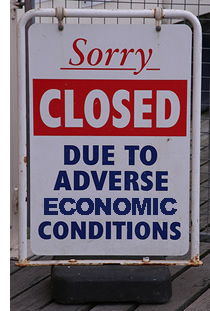
business_closed

As often is the case, anytime the populous conversation about raising the minimum wage comes around you will see a huge rallying from the African American community. This is primarily because the majority of African America is labor and not heavily invested in ownership. African American firms with paid employees represent an appalling 1.8 percent of American firms with paid employees and only 7 percent of all American firms. Not even close to an equitable representation since we comprise 15 percent of the country’s population. We are a far cry from the days of Black Wall Street. These days we spend our time begging for employment and entrance into firms controlled by other communities. Then we appear baffled as to why our unemployment rate is constantly double that of the national average and three times that of Asian America or why all of the capital is leaving our communities.

Despite African America only comprising 1.8 percent of American firms with paid employees, these firms employ almost 6 percent of African America’s working population. In comparison, Asian America has 7 percent of all American firms with paid employees and employs almost 34 percent of Asian America’s employed population. The correlation is obvious that businesses started by a community tend to hire their community. This is true in terms of community defined by ancestry, gender, geography, education level, or socioeconomic status. As a result of this more citizens within that community are earning income, buying power increases, unemployment decreases, and social issues decrease. Psychology 101 tells us that people like to associate with people whom they believe have similar values and interest. The very first thing that every person with eyesight uses to make this judgement is a person’s appearance. The politically correct police will argue that is what we have to work against, but while we are waiting on Utopia the rest of us have to work in reality.

President Obama and his administration are bent on a one size fits all America approach to income inequality. However, it is no secret that high levels of asset ownership increases the level of income that a group can accumulate and it certainly benefits them in terms of lessening their tax liability allowing them to keep more of their money. An example is hedge fund owners who pay 20 percent while making hundreds of millions and LeBron James pays 40 percent for earning tens of millions. Also highlighting that even well paid labor is still just that – labor and does not enjoy the privileges that the tax code bequeaths to ownership. The increase in minimum wage will not make that easier for African Americans, but harder.  According to Keeley Mullis of the National Federation of Independent Business, “Big corporations do not have to absorb the cost of minimum wage increases because most minimum-wage jobs are offered by small businesses.” Given the education reality of African America, only 18 percent of African Americans 25 and older hold college degrees which is second lowest in the country and a 62 percent high school graduation rate which ranks lowest in the country, most of our labor force is low-skilled labor and more likely to work minimum wage jobs than almost any other group per capita.

There is also the acute compounding problem of wealth. African America’s median net worth, according to the Pew Research Center is $5,677 leaving us with 24 times less wealth than European Americans and 14 times less than Asian Americans. Is it no wonder then that in our own communities we tend to only see small businesses owned by outsiders. That is to say nothing of the ownership of medium-sized companies and we are virtually non-existent in large company ownership. To the best of my research thus far, there are no African American owned companies that make up the Forbes’ Largest Private American Companies list. A list that requires a minimum of $2 billion in annual revenues. For an African American family starting a small business, they are already facing the challenge of limited resources at their disposal. Both in terms of wealth to get started, access to support capital which is a result of poorly capitalized African American owned banks & credit unions, and even training which has its own cost to acquire both in terms of human capital and economic capital.

Real power and real wealth in capitalism is created through ownership. A father or mother can not pass a job along to their child, but they can pass a business to them increasing the probability of income stability for generations. Why make that harder for a group that has limited wealth to get started by increasing the already largest burden most small businesses encounter? As a consequence, impacting communities which continue to struggle with acute levels of unemployment and thereby the domino effect toward social issues. You can not just magically expect job creation to come to communities. It is communities who create their own job creation. As a result, it must be made obvious that while an increased minimum wage will not hurt other groups who are wealthier, this will have an adverse impact on African America’s wealth and employment growth prospects.

If Democrats and Republicans really want to do something about income equality, then the solution is to find a way to increase the access for entrepreneurship training through HBCU initiatives and create incentive programs to African American owned banks and credit unions to focus on small business lending. The latter should decrease the amount of predatory lending that African Americans historically have faced with banks like Wells Fargo, Bank of American, and others. It is true that the president is not just president of African America, but all of America. However, African America should be slow to support populous policies just for the sake of without realizing the potential of their cascading effect on our own community.

The 20 Year Review: 1993 & 2013 HBCU Endowments Then & Now

By William A. Foster, IV

dangling

The 2013 HBCU Top 10 Endowments list is out. Going forward we will review where HBCUs are today and where they were 20 years ago. NACUBO’s list this year included 849 reporting institutions from the U.S. and Canada. So here are a few fast facts of then and now in regards to HBCUs place in the whole of the endowment conversation.

  • Of the 849 reporting institutions in 2013, only 1.5 percent were HBCUs. HBCUs comprise 3 percent of American colleges and universities. In 1993, Of the 437 reporting institutions in 1993, only 0.9 percent were HBCUs.
  • 20 years ago, the 4 HBCUs who were present on the list had a combined endowment value of $329 135 000 versus the top 4 HWCUs who had a combined endowment value of $15 137 350 000.
  • The endowment wealth gap between the top HWCUs/HBCUs in 2013 was 103:1. In 1993, it was 46:1.
  • In 1993, 16 HWCUs reported endowments over $1 billion and 2 HBCUs reported endowments over $100 million. There were 83 HWCUs in 2013 with reported endowments over $1 billion or an increase of 518 percent. HBCUs increased their ranks of $100 million endowments from 2 to 5 or an increase of 150 percent.

The numbers are disturbing. There are a number of contributing factors to the institutional wealth gap increase. Because institutional wealth factor tends to directly correlate with individual wealth gap, then it should be no surprise that the wealth gap has ballooned and not closed as often perceived. Shrinking HBCU alumni pools are a major factor for this growing gap. An increased pressure in the coming generation will be present as alumni of HBCUs are more likely to graduate with student loan debt and higher student loads making it even harder for development offices to ask for contributions. Fiscal trends are not currently in HBCUs favor unless a real turnaround happens among its ability to recruit more African American high school graduates. Currently, only 10-13 percent of African American high school graduates are choosing HBCUs. A problem compounded with African Americans having the lowest high school graduation rate in the country among all groups. The arms race to increase student bodies and in turn alumni pools is largely based on the aforementioned issues of alumni having less to give because of the student debt loads of the current generation of graduates. There are of course other factors, but at the very heart of this matter this can not be understated in the contribution to the widening gap between HWCU/HBCU endowments.

HBCU Money’s 2013 Top 10 HBCU Endowments

Piggy-Bank-w-Blackboard

The keyword for  2013’s HBCU endowments – rebound. In the past twelve months, the top ten HBCU endowments recouped the $100 million they lost in 2012. Meanwhile, the top ten HWCU endowments increased by $12.5 billion. The institutional wealth gap between HWCU/HBCU endowments increased from 102:1 to 103:1 times between top ten endowments over the past twelve months.

There was some real shakeup among the HBCU top ten this year with Morehouse School of Medicine and Bethune-Cookman University falling out of the top ten making room for newcomers. It is unclear whether the two institutions simply failed to report on time or had significant enough declines to drop out of the top ten. The top five remains unchanged and they remain the only in the $100 million endowment club for HBCUs. Tennessee State University makes the biggest leap in the top ten going from the nine spot up to six. Winston-Salem State University finds their way back on the list at number ten after being booted last year by Virginia State University. The new kid on the block is North Carolina A&T State University at number nine, and led all reporting HBCUs with the highest return on investment with an amazing 17.5 percent. Spelman’s endowment rebounded, but concerns are present as they returned only 5.8 percent on their endowment which is the lowest among the top ten. This comes after having the third worst return last year among the top ten and raises real questions on whether they can challenge Howard for the first to the $1 billion mark. The MEAC continues its domination with four institutions among the top ten for the second year in a row, while the CIAA holds two spots and Fayetteville State University sits just outside of the top ten. Despite a minute endowment of $2.2 million, Texas College for the second year in a row returns a stellar return at 16.7 percent.

As always if you do not see your HBCU in the top 10 – DONATE!

Endowment in millions (Return On Investment)

1. Howard University

$513 667 (11.5%)

2. Spelman College

$327 171 (5.8%)

3. Hampton University

$254 103 (9.3%)

4. Meharry Medical College

$124 965 (11.1%)

5. Florida A&M University

$115 281 (7.0%)

6. Tennessee State University

$42 970 (13.4%)

7. Texas Southern University

$42 179 (11.1%)

8. Virginia State University

$38 192 (15.3%)

9. North Carolina A&T State University

$32, 959 (17.5%)

10. Winston-Salem State University

$29 543 (13.8%)

Take a look at how an endowment works. Not only scholarships to reduce the student debt burden but research, recruiting talented faculty & students, faculty salaries, and a host of other things can be paid for through a strong endowment. It ultimately is the lifeblood of a college or university to ensure its success generation after generation.

Understanding_University_Endowments[1]

Additional Notes:
NACUBO Average Endowment – $537 213 (10.0%)
NACUBO Median Endowment – $101 192 (12.3%)
Top 10 HWCU Endowments combined – $154.7 billion
Top 10 HBCU Endowments combined – $1.5 billion
Source: National Association of College & University Business Officers

HBCU Money™ Business Book Feature – Black Horizons: One Aviator’s Experience in the Post-Tuskegee Era

71LfYKe5fWL._SL1000_

Black Horizons is the memoir of an orphan who went from the bottom to become a pioneering aviator, businessman and politician in the post-Tuskegee Airmen era.

As a poor African-American youngster picking cotton in a 1930s Tennessee field, U.L. Rip Gooch would look to the sky as airplanes flew overhead and think about escaping to a better life. Soon after World War II, he earned his pilot’s license with “Chief” C. Alfred Anderson, but found that racist hiring practices among airlines and other companies did not allow employment of black aviators, even those who gained fame as Tuskegee Airmen.

Rip fought back using business principles instead of violence. In time he built a million-dollar aviation business selling Mooney Aircraft in the Air Capital of the World (Wichita, Kansas), accrued 20,000 flight hours, and became one of the few black politicians in one of the most conservative states in the nation.

HBCU Money™ Dozen 1/27 – 1/31

high-noon

Did you miss HBCU Money™ Dozen via Twitter? No worry. We are now putting them on the site for you to visit at your leisure. We have made some changes here at HBCU Money™ Dozen. We are now solely focused on research and central bank articles from the previous week.

Research

Astronomy’s carbon footprint is shocking: Let’s reduce it with some green sky thinking l New Scientist http://ow.ly/t9CJI

Stand back Earth. The star next door – Alpha Centauri B – may host a ‘superhabitable’ world l New Scientist http://ow.ly/t9CVb

The amazing inside story of the Texas library with no books l NetworkWorld http://ow.ly/t9DyE

How do flame retardants affect children’s health? l US EPA Research http://ow.ly/t9DTR

A Cryptocurrency Backed By Solar Energy l Clean Technica http://dlvr.it/4qKPNG

Watch HIV spread inside a mouse’s gut l New Scientist http://youtu.be/eT0mQEjepLs (related story http://ow.ly/t9Eg0 )

Federal Reserve, Central Banks, & Financial Departments

Volatility of household income increased about 30%, on average, between 1970s and 2000s l Richmond Fed http://ow.ly/t9Etd

Half the world cooks with solid fuels and faces health risks. l World Bank http://wrld.bg/t86X2

Mexico holds rate, but keeps eye on inflationary pressures l Central Bank News http://dlvr.it/4qJryG

Notes from the Field: Wealth Building–Keeping it Local l Cleveland Fed http://ow.ly/t9F73

Global economic growth acceleration tempered by deflation risks l Dallas Fed http://bit.ly/1edoI9o

In last 30 years, world lost $3.8 trillion to natural disasters. l World Bank http://wrld.bg/t6UwM

Thank you as always for joining us on Saturday for HBCU Money™ Dozen. The 12 most important research and finance articles of the week.