The HBCU Money™ Weekly Market Watch

Our Money Matters /\ November 7, 2014

A weekly snapshot of African American owned public companies and HBCU Money™ tracked African stock exchanges.

NAME TICKER PRICE (GAIN/LOSS %)

African American Publicly Traded Companies

Citizens Bancshares Georgia (CZBS) $8.75 (0.00% UNCH)

M&F Bancorp (MFBP) $5.20 (0.00% UNCH)

Radio One (ROIA) $2.34 (0.00% UNCH)

African Stock Exchanges

Bourse Regionale des Valeurs Mobilieres (BRVM)  234.41 (0.60% DN)

Botswana Stock Exchange (BSE)  9 528.59 (0.02% UP)

Ghana Stock Exchange (GSE)  2 228.85 (3.90% UP)*

Nairobi Stock Exchange (NSE)  159.48 (N/A)

Johannesburg Stock Exchange (JSE) 50 079.44 (0.99% UP)

International Stock Exchanges

New York Stock Exchange (NYSE) 10 864.68 (0.19% UP)

London Stock Exchange (LSE)  3 510.98 (0.15% UP)

Tokyo Stock Exchange (TOPIX)  1 363.67 (0.54% UP)

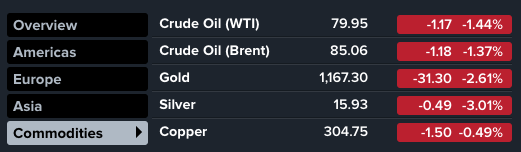
Commodities

Screen Shot 2014-11-07 at 2.01.33 PM

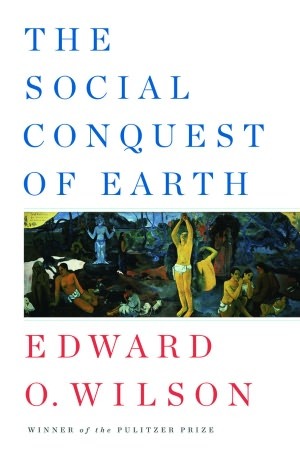
HBCU Money™ Business Book Feature – The Social Conquest Of Earth

12918295

From the most celebrated heir to Darwin comes a groundbreaking book on evolution, the summa work of Edward O. Wilson’s legendary career.

Sparking vigorous debate in the sciences, The Social Conquest of Earth upends “the famous theory that evolution naturally encourages creatures to put family first” (Discover). Refashioning the story of human evolution, Wilson draws on his remarkable knowledge of biology and social behavior to demonstrate that group selection, not kin selection, is the premier driving force of human evolution. In a work that James D. Watson calls “a monumental exploration of the biological origins of the human condition,” Wilson explains how our innate drive to belong to a group is both a “great blessing and a terrible curse” (Smithsonian). Demonstrating that the sources of morality, religion, and the creative arts are fundamentally biological in nature, the renowned Harvard University biologist presents us with the clearest explanation ever produced as to the origin of the human condition and why it resulted in our domination of the Earth’s biosphere. 90 illustrations

HBCU Money™ Dozen 10/27 – 10/31

12

Did you miss HBCU Money™ Dozen via Twitter? No worry. We are now putting them on the site for you to visit at your leisure. We have made some changes here at HBCU Money™ Dozen. We are now solely focused on research and central bank articles from the previous week.

Research

Cleveland Clinic uses IBM’s Watson in the cloud to fight cancer l Network World http://ow.ly/DA5nK

How to figure out if a data breach is a hoax l Network World http://ow.ly/DA5QJ

Prescriptions for Cleaner Waterways l US EPA Research http://go.usa.gov/7TdF

Sorry boys. Bird divorces are good news for the females l New Scientist http://ow.ly/DA6pz

Healthcare CIOs Can’t Be Afraid to Innovate l CIOonline http://ow.ly/DA6zv

Writing letters by hand produces measurable changes in brain activity compared with typing l New Scientist http://ow.ly/DA6I5

Federal Reserve, Central Banks, & Financial Departments

Are record-low interest rates masking high-cost mortgage lending? l Housing Wire http://hwi.re/7MqG7v

How empowering women can tackle malnutrition l World Economic Forum http://wef.ch/1zN9BP5

Africa’s urban population growth: what are some trends and projections? l World Bank http://wrld.bg/Dz1V8

Are men more emotional about money? l World Economic Forum http://wef.ch/1q30rEx

Dodd-Frank: Proposed records retention requirements for FDIC as receiver l St. Louis Fed http://bit.ly/1wE4Qne

On the Economy explores rising share of borrowers with more than $100,000 in student loan debt l St. Louis Fed http://bit.ly/1mm1KwI

Thank you as always for joining us on Saturday for HBCU Money™ Dozen. The 12 most important research and finance articles of the week.

The HBCU Money™ Weekly Market Watch

Our Money Matters /\ October 31, 2014

A weekly snapshot of African American owned public companies and HBCU Money™ tracked African stock exchanges.

NAME TICKER PRICE (GAIN/LOSS %)

African American Publicly Traded Companies

Citizens Bancshares Georgia (CZBS) $8.75 (0.00% UNCH)

M&F Bancorp (MFBP) $5.06 (0.00% UNCH)

Radio One (ROIA) $2.38 (0.15% UP)

African Stock Exchanges

Bourse Regionale des Valeurs Mobilieres (BRVM)  238.40 (0.29% DN)

Botswana Stock Exchange (BSE)  9 563.75 (0.02% UP)

Ghana Stock Exchange (GSE)  2 249.27 (4.85% UP)*

Nairobi Stock Exchange (NSE)  159.23 (N/A)

Johannesburg Stock Exchange (JSE) 49 722.88 (2.18% UP)

International Stock Exchanges

New York Stock Exchange (NYSE) 10 815.66 (0.97% UP)

London Stock Exchange (LSE)  3 503.46 (1.29% UP)

Tokyo Stock Exchange (TOPIX)  1 333.64 (4.28% UP)

Commodities

Screen Shot 2014-10-31 at 12.13.05 PM

HBCU Money™ B-School: 14 Little Known Facts About The Federal Reserve

federal-reserve

Just 14 things that you may or may not know about the Federal Reserve Bank that were shared by FederalReserveEducation.org’s outreach to teach citizens more and more about how and what the Federal Reserve role actually is in their day to day lives. Our Editor-In-Chief William A. Foster, IV got 10 out of 15 correct on their quiz. Looks like he may need to go back to business school and take a few refresher courses.

  1. The profit (revenues in excess of costs) of the Federal Reserve is given to the U.S. Treasury.
  2. Managing the federal deficit is NOT a function of the Federal Reserve.
  3. The Board of Governors, the governing body of the Federal Reserve System, is set up to consist of 7 members.
  4. Congress is the organization that established the Federal Reserve System.
  5. 38 percent of commercial banks in the U.S. are members of the Federal Reserve System.
  6. 12 districts make up the Federal Reserve System.
  7. The San Francisco Federal Reserve district serves the largest number of states.
  8. Member banks are NOT required to hold stock in Reserve Banks.
  9. Federal Reserve head offices each have a 9 member board of directors. 
  10. Federal Reserve Bank employees are NOT considered to be government employees.
  11. State Advisory Council is NOT an advisory council to the Federal Reserve Board of Governors.
  12. Each Federal Reserve District president reports to the board of directors. 
  13. The Federal Reserve is the 3rd attempt at our nation’s central bank.
  14. The Federal Reserve’s primary source of income is interest on government securities.