HBCU Money’s 2015 African American Owned Bank Directory

For the most current African American Owned Bank Directory visit the 2022 link by clicking here.

All banks are listed in alphabetical order. In order to be listed in our directory the bank must have at least 51 percent African American ownership. You can click on the bank name to go directly to their website.
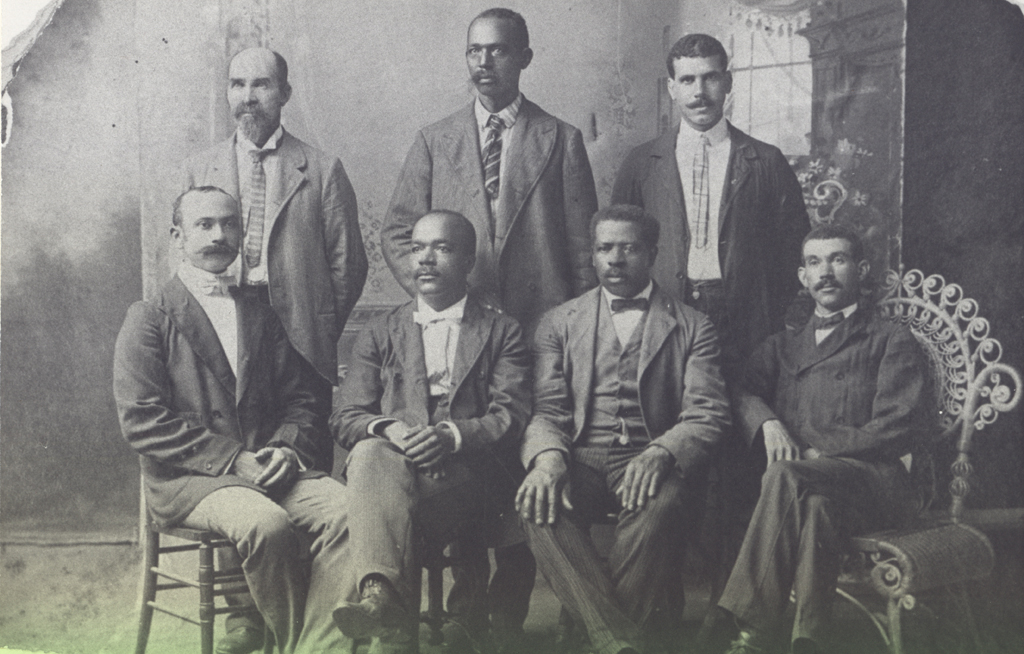
bank_men

(Founders of Merchants & Farmers Bank in Durham, North Carolina)

OTHER KEY FINDINGS:

  • AAOBs are in 17 states. Key states absent are Florida, Mississippi, New York, and Ohio.
  • Alabama leads the way with 3 AAOBs. Georgia and Illinois had 3 last year, but each saw a bank fail to begin 2015.
  • 2014 Median AAOBs Aseets: $113 470 000 ($117 869 000)*
  • 2014 Average AAOBs Assets: $233 583 000 ($206 932 000)*
  • African American bank assets saw a 2.0 percent decrease or net loss of approximately $100 million in assets in 2014.
  • AAOBs control 0.03 percent of America’s $15.2 trillion Bank Owned Assets.
  • AAOBs control 2.6 percent of FDIC designated Minority-Owned Bank Assets
  • In 2014, there were 25 AAOBs, this year there are 23 or a decrease of almost 8 percent.
  • There has not been an AAOB started in 15 years.
  • Only 10 of 2013’s 23 AAOBs saw increases in assets.
  • For comparison, Asian American Owned Banks have approximately $42.1 billion in assets spread over 75 institutions. They control 5.9 percent of Asian America’s buying power.

*Previous year in parentheses

There are 23 African American owned banks (AAOBs) with assets totaling approximately $4.8 billion in assets or approximately 0.43 percent of African America’s $1.1 trillion in buying power.

ALAMERICA BANK

Location: Birmingham, Alabama

Founded: January 28, 2000

FDIC Region: Atlanta

Assets: $40 946 000

Asset Change (2014): Up 11.5%

BROADWAY FEDERAL BANK FSB

Location: Los Angeles, California

Founded: February 26, 1947

FDIC Region: San Francisco

Assets: $345 574 000

Asset Change (2014): Down 2.2%

CARVER STATE BANK

Location: Savannah, Georgia

Founded: January 1, 1927

FDIC Region: Atlanta

Assets: $43 263 000

Asset Change (2014): Up 6.1%

CITIZENS SAVINGS B&T COMPANY

Location: Nashville, Tennessee

Founded: January 4, 1904

FDIC Region: Dallas

Assets: $99 050 000

Asset Change (2014): Up 1.9%

CITIZENS TRUST BANK

Location: Atlanta, Georgia

Founded: June 18, 1921

FDIC Region: Atlanta

Assets: $400 759 000

Asset Change (2014): Up 2.3%

CITY NB OF NEW JERSEY

Location: Newark, New Jersey

Founded: June 11, 1973

FDIC Region: New York

Assets: $287 222 000

Asset Change (2014): Down 8.3%

COLUMBIA SAVINGS & LOAN ASSOCIATION 

Location: Milwaukee, Wisconsin

Founded: January 1, 1924

FDIC Region: Chicago

Assets: $24 345 000

Asset Change (2014): Up 0.9%

COMMONWEALTH NATIONAL BANK

Location: Mobile, Alabama

Founded: February 19, 1976

FDIC Region: Atlanta

Assets: $58 719 000

Asset Change (2014): Down 1.2%

FIRST INDEPENDENCE BANK

Location: Detroit, Michigan

Founded: May 14, 1970

FDIC Region: Chicago

Assets: $247 106 000

Asset Change (2014): Up 6.7%

FIRST STATE BANK

Location: Danville, Virginia

Founded: September 08, 1919

FDIC Region: Atlanta

Assets: $39 226 000

Asset Change (2014): Up 1.1%

FIRST TUSKEGEE BANK

Location: Tuskegee, Alabama

Founded: October 11, 1991

FDIC Region: Atlanta

Assets: $55 515 000

Asset Change (2014): Down 12.1%

HARBOR BANK OF MARYLAND

Location: Baltimore, Maryland

Founded: September 13, 1982

FDIC Region: New York

Assets: $233 583 000

Asset Change (2014): Down 3.7%

ILLINOIS SERVICE FEDERAL SAVINGS & LOAN

Location: Chicago, Illinois

Founded: January 01, 1934

FDIC Region: Chicago

Assets: $113 470 000

Asset Change (2013): Down 3.7%

INDUSTRIAL BANK

Location: Washington, DC

Founded: August 18, 1934

FDIC Region: New York

Assets: $365 179 000

Asset Change (2014): Up 6.6%

LIBERTY BANK & TRUST COMPANY

Location: New Orleans, Louisiana

Founded: November 16, 1972

FDIC Region: Dallas

Assets: $552 081 000

Asset Change (2014): Down 1.8%

MECHANICS & FARMERS BANK

Location: Durham, North Carolina

Founded: March 01, 1908

FDIC Region: Atlanta

Assets: $289 202 000

Asset Change (2014): Down 0.9%

NORTH MILWAUKEE STATE BANK

Location: Milwaukee, Wisconsin

Founded: February 12, 1971

FDIC Region: Chicago

Assets: $77 115 000

Asset Change (2014): Down 11.2%

ONEUNITED BANK

Location: Boston, Massachusetts

Founded: August 02, 1982

FDIC Region: New York

Assets: $619 908 000

Asset Change (2014): Up 1.2%

SEAWAY BANK & TRUST COMPANY

Location: Chicago, Illinois

Founded: January 02, 1965

FDIC Region: Chicago

Assets: $522 353 000

Asset Change (2014): Down 5.2%

SOUTH CAROLINA COMMUNITY BANK

Location: Columbia, South Carolina

Founded: March 26, 1999

FDIC Region: Atlanta

Assets: $61 783 000

Asset Change (2014): Down 11.2%

TRI-STATE BANK OF MEMPHIS

Location: Memphis, Tennessee

Founded: December 16, 1946

FDIC Region: Dallas

Assets: $126 661 000

Asset Change (2014): Down 15.7%

UNITED BANK OF PHILADELPHIA

Location: Philadelphia, Pennsylvania

Founded: March 23, 1992

FDIC Region: New York

Assets: $60 531 000

Asset Change (2014): Down 3.1%

UNITY NB OF HOUSTON

Location: Houston, Texas

Founded: August 01, 1985

FDIC Region: Dallas

Assets: $75 516 000

Asset Change (2013): Up 8.2%
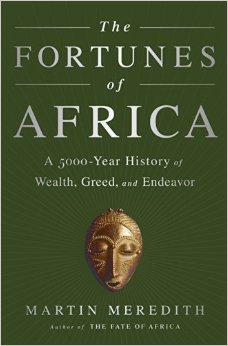
HBCU Money™ Business Book Feature – Fortunes of Africa: A 5000-Year History of Wealth, Greed, & Endeavor

41bJGJWEwTL._SY344_BO1,204,203,200_

Africa has been coveted for its riches ever since the era of the Pharaohs. In past centuries, it was the lure of gold, ivory, and slaves that drew fortune-seekers, merchant-adventurers, and conquerors from afar. In modern times, the focus of attention is on oil, diamonds, and other valuable minerals.

Land was another prize. The Romans relied on their colonies in northern Africa for vital grain shipments to feed the population of Rome. Arab invaders followed in their wake, eventually colonizing the entire region. More recently, foreign corporations have acquired huge tracts of land to secure food supplies needed abroad, just as the Romans did.

In this vast and vivid panorama of history, Martin Meredith follows the fortunes of Africa over a period of 5,000 years. With compelling narrative, he traces the rise and fall of ancient kingdoms and empires; the spread of Christianity and Islam; the enduring quest for gold and other riches; the exploits of explorers and missionaries; and the impact of European colonization. He examines, too, the fate of modern African states and concludes with a glimpse of their future.

His cast of characters includes religious leaders, mining magnates, warlords, dictators, and many other legendary figures—among them Mansa Musa, ruler of the medieval Mali empire, said to be the richest man the world has ever known. “I speak of Africa,” Shakespeare wrote, “and of golden joys.” This is history on an epic scale.

HBCU Money™ Dozen 2/23 – 2/27

12step

Did you miss HBCU Money™ Dozen via Twitter? No worry. We are now putting them on the site for you to visit at your leisure. We have made some changes here at HBCU Money™ Dozen. We are now solely focused on research and central bank articles from the previous week.

Research

Fly with a drone as it buzzes South America’s first wildlife bridge l New Scientist ow.ly/JJzbG

The FCC’s new net neutrality rules: What we know so far l Computerworld ow.ly/JJziC

We knew the #oceaneconomy was big. But it’s actually bigger! #GeoZone blog breaks it down l NOAA 1.usa.gov/1G0wHUw

Apple Watch will start your car one day, Tim Cook says l MacWorld dlvr.it/8m9lV9

What are the ethics of head transplants? We’d better start thinking about it l New Scientist ow.ly/JJBbX

SunEdison Aims To Bring Clean Energy To 20 Million l Clean Technica dlvr.it/8lp6jn

Federal Reserve, Central Banks, & Financial Departments

Income inequality isn’t growing at the same rate across the nation l St. Louis Fed bit.ly/1wlhFWz

American Impact Energy Buys 18,000 Acres In #Permian Basin l Oil & Gas Investor bit.ly/1AbrHEv

How will #LatinAmerica be affected by low #oil prices? l World Economic Forum wef.ch/1AgmBXx

The impact on school performance of No Child Left Behind program sanctions l NBER bit.ly/1wqhHqk

How to maintain the entrepreneur mindset l World Economic Forum wef.ch/1BlKbYg

In a 6-minute video, authors summarize their study on race and wealth accumulation l St. Louis Fed bit.ly/1Evwasa

Thank you as always for joining us on Saturday for HBCU Money™ Dozen. The 12 most important research and finance articles of the week.

The HBCU Money™ Weekly Market Watch

Our Money Matters /\ February 27, 2015

A weekly snapshot of African American owned public companies and HBCU Money™ tracked African stock exchanges.

NAME TICKER PRICE (GAIN/LOSS %)

African American Publicly Traded Companies

Citizens Bancshares Georgia (CZBS) $8.70 (0.00% UNCH)

M&F Bancorp (MFBP) $4.70 (0.00% UNCH)

Radio One (ROIA) $2.62 (0.00% UNCH)

African Stock Exchanges

Bourse Regionale des Valeurs Mobilieres (BRVM)  260.71 (0.13% UP)

Botswana Stock Exchange (BSE)  9 593.81 (0.16% DN)

Ghana Stock Exchange (GSE)  2 177.95 (3.67% DN)*

Nairobi Stock Exchange (NSE)  175.70 (N/A)

Johannesburg Stock Exchange (JSE) 53 344.20 (0.02% UP)

International Stock Exchanges

New York Stock Exchange (NYSE) 11 071.82 (0.09% DN)

London Stock Exchange (LSE)  3 744.26 (0.01% DN)

Tokyo Stock Exchange (TOPIX)  1 523.85 (0.14% UP)

Commodities

Screen Shot 2015-02-27 at 1.57.50 PM


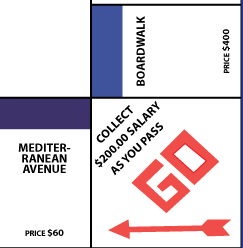
Buy Mediterranean Before Boardwalk: Real Estate Investment Lessons From Monopoly

Real estate investing, even on a very small scale, remains a tried and true means of building an individual’s cash flow and wealth. – Robert Kiyosaki

Screen Shot 2015-01-27 at 8.03.56 PM

For all those who have played Monopoly at anytime in life there is one thing for certain, Boardwalk holds an allure that most players simply can not resist. Me and my former roommate would often play the game and on the first few trips around the board as players are snatching up everything they land on, it became apparent to me that I was getting cash poor quickly and so was she. There was no liquidity strategy for either of us. I decided to change my approach and the key to that approach was to not buy Park Place or Boardwalk unless I needed to defensively prevent her from obtaining a monopoly. Even if she had obtained one of the properties I may not buy the other depending on her cash position. A tip in Monopoly, keep your money under the table.

boardwalk

The great sin of Monopoly and many beginner real estate investors is that they do not actually purview the reality of what they are starting with in relation to what they will potentially be buying during the game. Each Monopoly player starts with $1,500. Just a quick examination of why Boardwalk makes no sense for a period of time is that it cost $400 or almost 27 percent of your starting cash position. On each trip around the monopoly board there is a 2.5 percent chance you land on any one square. It would take your competition eight trips around the board before your property paid you back landing on it every single time just to get that money back. Now, let us say you get lucky and land Park Place as well, that is $750 or half your starting cash position to land the Ritz Carlton and Fifth Avenue equivalent. The problem is to get any true value out of them you need to develop them. To get them up to hotel level you first have to build four houses on each which are $200 a piece and then finally a hotel. You can not just build on one property in Monopoly. So if you put one on Boardwalk, then you have to put one on Park Place next. To get both properties up to hotel level it cost $2,000 or 10 trips around the board. In exchange, both properties now give you a 5 percent chance of landing rental income of $3,500. On the flip side, if you were to buy all five “cheap” properties of Mediterranean, Baltic, Oriental, Vermont, and Connecticut and develop them up to hotel level it would cost you $1,690 and give you a 12.5 percent chance for $2,400 in rental income. Again, think about where you are starting. In comparison, you gave up half your cash position to acquire Park Place and Boardwalk, and then need to circle the board at least seven more times to get to hotel level. Whereas for MBOVC properties, you can acquire and build all of them with your starting cash and one trip around the board. By the PPB owner’s sixth trip, you have had the potential of generating $14,400 in rental income at over twice the opportunity that they have, and in the process they will be potentially cash strapped. You on the other hand, just on passing go six times will have accumulated $1,200 in income, not including potential rental gains.

mediterraneanavenue

So how does this play out in the real world? Many start up real estate investors are just not honest with themselves. They want to buy properties that endanger their cash position and not add to it. There are really two types of investment properties in real estate regardless of whether it is commercial or residential; they are cash flow or appreciation. Cash flow properties tend to be the MBOVC properties. They offer little in the way of appreciation, but kick off enormous amounts of cash. On the flip side, PPB are appreciation properties, meaning the cash flow on them will be tight (maybe negative), but over the long-term the property will rise appreciably in value. The problem with the latter for start up real estate investors is that nothing can go wrong. Razor thin margins (if any) means that maintenance and repairs are all coming out of your pocket instead of the properties revenues. In a cash flow property you are looking to keep it standing and functional as opposed to a Miss Universe competition. As such, even basic repairs and maintenance can be kept up with the revenues of the property because of the acute profit margins.

So what are MBOVC properties? It is all relative to your own starting cash position. Things you should keep in mind are how much is your current income, financing options, down payments, estimated repairs and ongoing maintenance, and taxes. In essence, these are properties that will not strain your cash position and have high profit margins. If you can purchase and repair the property and still have a 100 percent profit margin, then that is the bulls eye. Often these are properties that have Section 8 potential or Class D multifamily properties. The latter are usually in low-income and working class areas where tenants have higher eviction rates, more likely to pay rent in cash/money order, and where maintaining a quality standard of the property will not be costly.

Given the rise of renters in the United States with credit still very tight for potential home buyers’, there is a sweet spot available for investors who can offer affordable housing, especially among millennials saddled with student loan debt. Les Christie of CNN Money reports, “The median rent for all types of rental homes hit $1,350 a month in March (2014), up from a median of $1,285 a month 12 months ago, Trulia reported.” You may have to search smaller towns with growing demographics or areas of the big city that are hidden gems, but still offer an affordable purchase option. Thinking outside of the box of where you purchase your rental properties is key. It may be in a small town in Arkansas, but wherever it is be sure you do your homework and not be afraid to take on a project.

sony

Cash is king, as my entrepreneurship teacher Charles Reed would always say and without it you are out of oxygen in business. In Monopoly, I would often buy the red, yellow, and green properties, but would not build on them unless someone landed on my MBOVC properties. This allowed me to grow and keep my cash position sound in case I had landed on someone else’s property. These lessons are the same I am applying to my rental property portfolio. Maybe one day I will own or build a Boardwalk property like the NYC Sony Building (pictured above) where a triplex in the building is on the market for a record $150 million and probably would fetch easily $800,000 to $1 million per month in rental income. Monopoly, it is just a game, but take heed to its lessons and you may just win in real life.