HBCU Money™ Dozen 9/7 – 9/11

600px-i-12-svg

Did you miss HBCU Money™ Dozen via Twitter? No worry. We are now putting them on the site for you to visit at your leisure. We have made some changes here at HBCU Money™ Dozen. We are now solely focused on research and central bank articles from the previous week.

Research

What’s the BEST way to ensure most kids get access to #SchoolBreakfast? l Hunger Task Force http://bit.ly/1LmhYRI

What is the best way to make Mars livable? Drop bombs, melt ice and create atmosphere. Sort of. l CNET http://ow.ly/S3zXj

Renewable Energy Progress Eclipsing Capitol Hill l Renewable Cities http://ow.ly/S2Uzd

Many Americans would need to re-allocate their food budgets to meet Dietary Guidelines. l USDA http://go.usa.gov/3MsUw

The Changing U.S. Role in Agricultural Markets in the Middle East and North Africa. l USDA http://go.usa.gov/3MsnR

Australia Commits $350 Million To Large-Scale Solar Development l Clean Technica http://dlvr.it/C6X4gy

Federal Reserve, Central Banks, & Financial Departments

Starting a business & helping the poor. In #India #women organize & transform a community l World Bank http://wrld.bg/S2yoK

Labor market conditions continue to improve, according to our Labor Market Conditions Indicators. l KC Fed http://ow.ly/S3ypn

Are older workers less productive? l World Economic Forum http://wef.ch/1LlJQ8H

#Africa continues to make progress towards gender equality but more can be done l World Bank http://ow.ly/S1BCk

School choice systems and their effect on house prices and neighborhood incentives l NBER http://bit.ly/1Fzquec

26 habits of highly successful leaders l World Economic Forum http://wef.ch/1LlJRt9

Thank you as always for joining us on Saturday for HBCU Money™ Dozen. The 12 most important research and finance articles of the week.
The HBCU Money™ Weekly Market Watch

Our Money Matters /\ September 11, 2015

A weekly snapshot of African American owned public companies and HBCU Money™ tracked African stock exchanges.

NAME TICKER PRICE (GAIN/LOSS %)

African American Publicly Traded Companies

Citizens Bancshares Georgia (CZBS) $9.25 (0.00% UNCH)

M&F Bancorp (MFBP) $4.00 (1.72% DN)

Radio One (ROIA) $2.61 (0.38% UP)

African Stock Exchanges

Bourse Regionale des Valeurs Mobilieres (BRVM)  293.74 (0.29% DN)

Botswana Stock Exchange (BSE)  10 786.93 (0.35% DN)

Ghana Stock Exchange (GSE)  2 089.03 (7.61% DN)*

Nairobi Stock Exchange (NSE)  146.19 (N/A)

Johannesburg Stock Exchange (JSE) 48 930.64 (1.21% DN)

International Stock Exchanges

New York Stock Exchange (NYSE) 10 006.96 (0.12% DN)

London Stock Exchange (LSE)  3 372.85 (0.54% DN)

Tokyo Stock Exchange (TOPIX)  1 480.23 (0.05% UP)

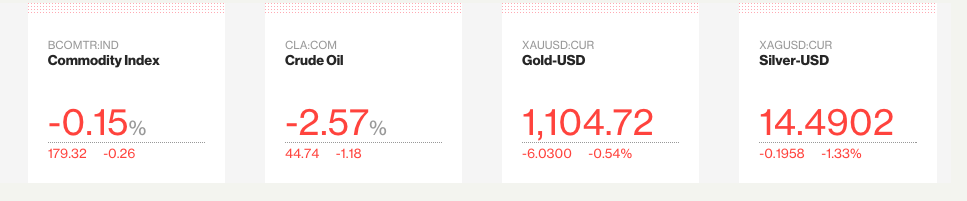
Commodities

Screen Shot 2015-09-11 at 12.03.26 PM

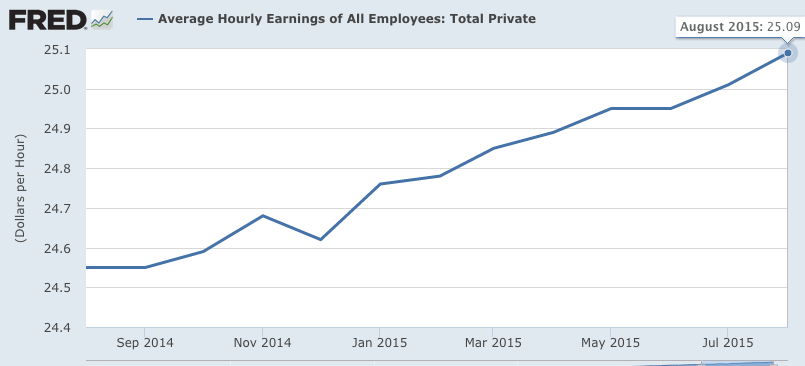
August 2014 To August 2015 Average Earnings – Up 2.2 Percent

augustShot 2015-09-08 at 9.59.24 PM

August 2014 Average Earnings: $24.55

August 2015 Average Earnings: $25.09

Month Change: Up 0.32 Percent

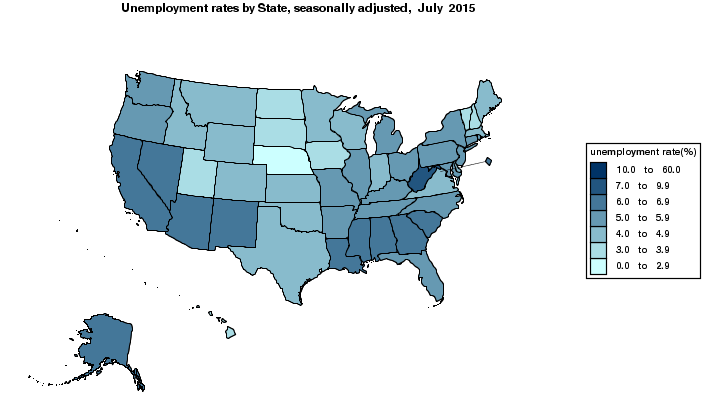
Unemployment Rate By HBCU State – July 2015

Screen Shot 2015-09-07 at 4.11.30 PM

STATES WITH RISING UNEMPLOYMENT: 4

STATES WITH DECLINING UNEMPLOYMENT: 13

STATES WITH UNCHANGED UNEMPLOYMENT: 7

MEDIAN UNEMPLOYMENT (HBCU TERRITORIES) – 5.7%

LOWEST: TEXAS – 4.2%

HIGHEST – DISTRICT OF COLUMBIA – 6.8%

STATE – UNEMPLOYMENT RATE (PREVIOUS)*

ALABAMA –  6.2% (6.1%)

ARKANSAS – 5.6% (5.7%)

CALIFORNIA – 6.2% (6.3%)

DELAWARE – 4.7% (4.7%)

DISTRICT OF COLUMBIA – 6.8% (7.0%)

FLORIDA – 5.4% (5.5%)

GEORGIA – 6.0% (6.1%)

ILLINOIS – 5.8% (5.9%)

KENTUCKY – 5.2% (5.1%)

LOUISIANA – 6.2% (6.4%)

MARYLAND – 5.2% (5.2%)

MASSACHUSETTS – 4.7% (4.6%)

MICHIGAN – 5.3% (5.5%)

MISSISSIPPI – 6.5% (6.6%)

MISSOURI –  5.8% (5.8%)

NEW YORK – 5.4% (5.5%)

NORTH CAROLINA – 5.9% (5.8%)

OHIO – 5.0% (5.2%)

OKLAHOMA – 4.5% (4.5%)

PENNSYLVANIA – 5.4% (5.4%)

SOUTH CAROLINA – 6.4% (6.6%)

TENNESSEE – 5.7% (5.7%)

TEXAS – 4.2% (4.2%)

VIRGINIA – 4.8% (4.9%)

*Previous month in parentheses.

African America’s August Jobs Report – 9.5%

jobs

Overall Unemployment: 5.1% (5.3%)

African America Unemployment: 9.5% (9.1%)

Latino America Unemployment: 6.6% (6.8%)

European America Unemployment: 4.4% (4.6%)

Asian America Unemployment: 3.5% (4.0%)

Previous month in parentheses.

Analysis: Overall unemployment neared the Federal Reserve’s full employment mandate after dropping another 20 basis points. Asian America led the way with a 50 basis point drop in unemployment rate. European and Latino America both saw 20 basis point declines. African America was the only group to see an increase in its unemployment rate with a 40 basis point increase.

African American Male Unemployment: 9.2% (8.8%)

African American Female Unemployment: 8.1% (8.0%)

African American Teenage Unemployment: 31.3% (28.7%)

African American Male Participation: 67.1% (67.0%)

African American Female Participation: 62.5% (62.1%)

African American Teenage Participation: 27.8% (28.1%)

Previous month in parentheses

Analysis: African American males unemployment rate increased by 40 basis points and 10 basis point increase in their participation rate. African American females had an increase in their unemployment rate of 10 basis points and 40 basis point increase in their participation rate. African American teenagers had a 260 basis point increase in their unemployment rate and 30 basis point decrease in their participation rate.

CONCLUSION: The overall economy added 173 000 jobs in August. African America added 22 000 jobs in August. While all other groups saw declines in their unemployment rate African America saw an uptick. This was largely due to an increase in the African American labor force by 100 000. Unfortunately, the increase was not matched by a parallel increase in jobs. The participation rate has gone virtually unchanged over the year although African American women have made significant strides in employment gains, currently at their highest number of employed. African American teenagers as a group continue to be in a state of crisis. The coming rate increase could see significant employment reductions across the board as public companies try to maintain their stock prices. Business creation remains the most viable option for dealing with the employment stagnation in African America, but limited resources make business creation and job expansion very limited. Currently, African America needs 844 000 jobs to match the nation’s unemployment rate.