Category Archives: Lists

HBCU Money™ Business Book Feature – Debt: The First 5,000 Years

debt

Before there was money, there was debt

Every economics textbook says the same thing: Money was invented to replace onerous and complicated barter systems—to relieve ancient people from having to haul their goods to market. The problem with this version of history? There’s not a shred of evidence to support it.

Here anthropologist David Graeber presents a stunning reversal of conventional wisdom. He shows that for more than 5,000 years, since the beginnings of the first agrarian empires, humans have used elaborate credit systems to buy and sell goods—that is, long before the invention of coins or cash. It is in this era, Graeber argues, that we also first encounter a society divided into debtors and creditors.

Graeber shows that arguments about debt and debt forgiveness have been at the center of political debates from Italy to China, as well as sparking innumerable insurrections. He also brilliantly demonstrates that the language of the ancient works of law and religion (words like “guilt,” “sin,” and “redemption”) derive in large part from ancient debates about debt, and shape even our most basic ideas of right and wrong. We are still fighting these battles today without knowing it.

Debt: The First 5,000 Years is a fascinating chronicle of this little known history—as well as how it has defined human history, and what it means for the credit crisis of the present day and the future of our economy.

Student Debt Profile By Conference (School By School) – The SWAC

Theswac

Alabama A&M University

Average debt of graduates, 2011 – $33 038

Proportion of graduates with debt, 2011 – 95%

Nonfederal debt, % of total debt of graduates, 2011 – 16%

2010-11 Pell Grant recipients – 66%

Alabama State University

Average debt of graduates, 2011 – $29 975

Proportion of graduates with debt, 2011 – 79%

Nonfederal debt, % of total debt of graduates, 2011 – 0%

2010-11 Pell Grant recipients – 71%

Alcorn State University

Average debt of graduates, 2011 – $28 786

Proportion of graduates with debt, 2011 – 90%

Nonfederal debt, % of total debt of graduates, 2011 – 2%

2010-11 Pell Grant recipients – 80%

University of Arkansas at Pine-Bluff

Average debt of graduates, 2011 – N/A

Proportion of graduates with debt, 2011 – N/A

Nonfederal debt, % of total debt of graduates, 2011 – N/A

2010-11 Pell Grant recipients – 70%

Grambling State University

Average debt of graduates, 2011 – N/A

Proportion of graduates with debt, 2011 – N/A

Nonfederal debt, % of total debt of graduates, 2011 – N/A

2010-11 Pell Grant recipients – 69%

Jackson State University

Average debt of graduates, 2011 – N/A

Proportion of graduates with debt, 2011 – N/A

Nonfederal debt, % of total debt of graduates, 2011 – N/A

2010-11 Pell Grant recipients – 75%

Mississippi Valley State University

Average debt of graduates, 2011 – N/A

Proportion of graduates with debt, 2011 – N/A

Nonfederal debt, % of total debt of graduates, 2011 – N/A

2010-11 Pell Grant recipients – 81%

Prairie View A&M University

Average debt of graduates, 2011 – N/A

Proportion of graduates with debt, 2011 – 69%

Nonfederal debt, % of total debt of graduates, 2011 – N/A

2010-11 Pell Grant recipients – 64%

Southern University-Baton Rouge

Average debt of graduates, 2011 – N/A

Proportion of graduates with debt, 2011 – N/A

Nonfederal debt, % of total debt of graduates, 2011 – N/A

2010-11 Pell Grant recipients – N/A

Texas Southern University

Average debt of graduates, 2011 – $36 296

Proportion of graduates with debt, 2011 – 84%

Nonfederal debt, % of total debt of graduates, 2011 – 2%

2010-11 Pell Grant recipients – 71%

Source: The Project on Student Debt

The Uninsured Rates By HBCU State

They always say when America catches cold, African America catches pneumonia. So while the uninsured rate nationally for all Americans is 15.6 percent, the percentage of African America uninsured is approximately 20 percent. An almost 30 percent premium over the national average. The rates below are the overall state’s uninsured and not specifically for African Americans. However, in parentheses we have put the rate for a 30 percent increase to potentially show what the African American uninsured rate could be. It should be noted that this number is not definitive as it is just based on using the national numbers as an estimating base.

hbcustates

State      Uninsured Rate   (Estimated African American Uninsured Rate)

Massachusetts – 3.3% (4.3%)

Washington D.C. – 8.4% (11%)

Delaware – 9.9% (13%)

Pennsylvania – 10.8% (14%)

New York – 12.1% (15.7%)

Michigan – 12.2% (15.9%)

Alabama – 12.9% (16.8%)

Tennessee – 13.1% (17%)

Virginia – 13.2% (17.2%)

Ohio – 13.4% (17.4%)

Maryland – 13.8% (18%)

Kentucky – 14.2% (18.5%)

Illinois – 14.6% (19%)

Missouri – 14.6% (19%)

Mississippi – 16% (20.8%)

North Carolina – 16.1% (21%)

Oklahoma – 16.8% (21.9%)

Arkansas – 17.3% (22.5%)

South Carolina – 18.7% (24.3%)

Georgia – 19% (24.7%)

Florida – 19.8% (25.8%)

Louisiana – 20.5% (26.7%)

Texas – 23.7% (30.8%)

Notes:

Overall 14 out of 24  mainland states and territory where HBCUs are located fall below the national uninsured rate.

Only 4 out of 24 mainland states and territory where HBCUs are located have the estimated African American uninsured rate below the national average.

The average overall uninsured rate for the 24 mainland states and territory where HBCUs are located is 14.8 percent while the median is 14.4 percent.

The average estimated African American uninsured rate for the 24 mainland states and territory where HBCUs are located is 19.2 percent while the median is 18.8 percent.

Source: Bloomberg Visual Data (December 2012); States used as designated by HBCUs recognized by HBCU Endowment Foundation

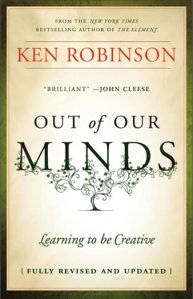
HBCU Money™ Business Book Feature – Out of Our Minds: Learning to be Creative

Ken_Robinson-Out_of_Our_minds

In this extensively revised and updated version of his bestselling classic, Out of Our Minds, Ken Robinson offers a groundbreaking approach to understanding creativity in education and in business. He argues that people and organizations everywhere are dealing with problems that originate in schools and universities and that many people leave education with no idea at all of their real creative abilities. Out of Our Minds is a passionate and powerful call for radically different approaches to leadership, teaching and professional development to help us all to meet the extraordinary challenges of living and working in the 21st century.

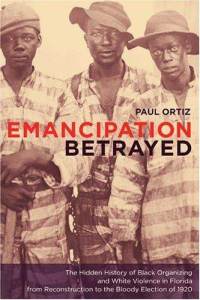
HBCU Money™ Business Book Feature – Emancipation Betrayed: The Hidden History of Black Organizing and White Violence in Florida from Reconstruction to the Bloody Election of 1920

emancipation-betrayed-hidden-history-black-organizing-white-violence-paul-ortiz-hardcover-cover-art

In this penetrating examination of African American politics and culture, Paul Ortiz throws a powerful light on the struggle of black Floridians to create the first statewide civil rights movement against Jim Crow. Concentrating on the period between the end of slavery and the election of 1920, Emancipation Betrayed vividly demonstrates that the decades leading up to the historic voter registration drive of 1919-20 were marked by intense battles during which African Americans struck for higher wages, took up arms to prevent lynching, forged independent political alliances, boycotted segregated streetcars, and created a democratic historical memory of the Civil War and Reconstruction. Contrary to previous claims that African Americans made few strides toward building an effective civil rights movement during this period, Ortiz documents how black Floridians formed mutual aid organizations–secret societies, women’s clubs, labor unions, and churches–to bolster dignity and survival in the harsh climate of Florida, which had the highest lynching rate of any state in the union. African Americans called on these institutions to build a statewide movement to regain the right to vote after World War I. African American women played a decisive role in the campaign as they mobilized in the months leading up to the passage of the Nineteenth Amendment. The 1920 contest culminated in the bloodiest Election Day in modern American history, when white supremacists and the Ku Klux Klan violently, and with state sanction, prevented African Americans from voting. Ortiz’s eloquent interpretation of the many ways that black Floridians fought to expand the meaning of freedom beyond formal equality and his broader consideration of how people resist oppression and create new social movements illuminate a strategic era of United States history and reveal how the legacy of legal segregation continues to play itself out to this day.