Category Archives: Lists

C.R.E.A.M. – 2014’s Top 10 Billionaires With Most Cash On Hand

money_wallpaper_by_samuelcool8-d57dmyd

This group of billionaires is redefining “Cash is King” in cash allocation to their portfolio. Who loves cash the most? See Russians, again. They love their cash and comprise half of the list. Bill Gates is a surprise on this year’s list holding as much cash as the next four on the list combined. Despite a horrible interest rate environment for cash with real interest rates being virtually negative around the world this group believes their is value in keeping their powder dry.

1. Bill Gates
Cash On Hand: $46.8 Billion
Cash As A Percentage of Portfolio: 53.6%
The world’s wealthiest billionaire is the king of cash among the top 100 billionaires in the world. His cash alone would make him the world’s seventh richest man.

2. Ernesto Bertarelli
Cash On Hand: $13.5 Billion
Cash As A Percentage of Portfolio: 90%
A Switzerland citizen who attributes the majority of his wealth to a drug manufacturer he and his sister inherited, and then sold to Merck.

3. Hans Rausing
Cash On Hand: $12 Billion
Cash As A Percentage of Portfolio: 96%
The cash king in terms of portfolio percentage inherited his 50% stake of the world’s largest maker of juice and milk cartons over three decades ago. Sold his stake in 2013 and now raises deer in Britain.

4. Mikhail Prokhorov
Cash On Hand: $10.1 Billion
Cash As A Percentage of Portfolio: 80.8%
Prokhorov holds a sizeable stake in the world’s largest aluminum producer and an eighty percent stake in the America’s Brooklyn Nets basketball franchise.

5. Michael Dell
Cash On Hand: $9.5 Billion
Cash As A Percentage of Portfolio: 55.9%
The man whose company started in his college dorm room has seen his company recently go from one of America’s largest public company back to being privately held.

6. Roman Abramovich
Cash On Hand: $8.7 Billion
Cash As A Percentage of Portfolio: 63%
Russia’s third wealthiest man owns a stake in the world’s largest nickel producer.

7. Mikhail Fridman
Cash On Hand: $8.6 Billion
Cash As A Percentage of Portfolio: 63.2%
Fridman has control of Russia’s largest closely held bank and second biggest food retailer.

8. Alisher Usmanov
Cash On Hand: $7.3 Billion
Cash As A Percentage of Portfolio: 48.3%
Arguably Russia’s technology finance guru. Has ownership stakes in Twitter, AirBnB, and Spotify. He invested in Facebook before ever meeting Mark Zuckerberg.

9. Viktor Vekselberg
Cash On Hand: $7.2 Billion
Cash As A Percentage of Portfolio: 50%
He controls Russia’s largest power supply company.

10. Phil Knight
Cash On Hand: $6.2 Billion
Cash As A Percentage of Portfolio: 27%
Mr. Just Do It, also known as the owner of Nike and sometimes labeled eccentric billionaire. Still pays Michael Jordan $60 million annually in royalties for Nike’s ownership of the Jordan brand that brings in revenues north of $500 million for the company.

Source: Bloomberg Billionaire Index


HBCU Money™ Business Book Feature – Pichon: Race and Revolution in Castro’s Cuba: A Memoir

51Xfuez30hL._SL500_PIsitb-sticker-arrow-big,TopRight,35,-73_OU01_AA300_

Revolutionary black nationalist Carlos Moore breaks three decades of silence to challenge Castro’s legacy in this controversial, behind-the-scenes memoir that explores the Revolution from a perspective of a pichón, the racist Cuban term for a black of Haitian or West Indian descent. After more than thirty years in exile, continually under the threat of retribution from the Cuban regime, Moore steps forward to reveal the truth: Fidel’s Revolution was a success for white Marxists. But for Cuban blacks, the Revolution was basically business as usual, a cover-up of their ongoing struggle for racial, political, and social enfranchisement. Fidel Castro and his men rose from the ranks of the patriarchal, white Spanish-Cuban elite, and the Revolution did not weaken those ties.

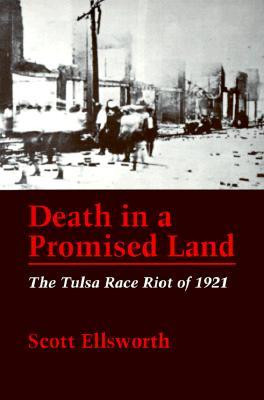
HBCU Money™ Business Book Feature – Death in a Promised Land: The Tulsa Race Riot of 1921

483891

When a crows began to gather outside the jail in Tulsa, Oklahoma, on the evening of May 31, 1921., the fate of one of its prisoners, a young black male, seemed assured. Accused of attempting to rape a white woman, Dick Rowland was with little doubt about to be lynched.

But in another part of town, a small group of black men, many of them World War I veterans, decided to risk lives for a different vision of justice. Before it was all over, Tulsa had erupted into one of America’s worst racial nightmares, leaving scores dead and hundreds of homes and businesses destroyed.

Exhaustively researched, ‘Death in a Promised Land’ is compelling story of racial ideologies, southwestern politics, and yellow journalism, and of an embattled black community’s struggle to hold onto its land and freedom. More than just the chronicle of one of the nation’s most devastating race riots, this critically acclaimed study of American race relations is, above all, a gripping story of terror and lawlessness, and of courage, hedonism, and human perserverance.

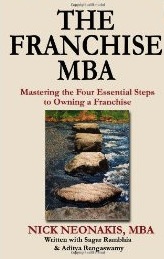
HBCU Money™ Business Book Feature – The Franchise MBA

51sgbAW5jNL._SL500_PIsitb-sticker-arrow-big,TopRight,35,-73_OU01_AA300_

This comprehensively researched and deftly written franchise guide brings together experience and fact to give you the tools you need to understand which franchise is right for you. With insights from respected franchise leaders and a thorough understand of franchising, this book will help you understand and master the 4 Critical Steps to finding the Ideal Franchise:
1. The Introspective Self
2. The Franchisor
3. The Franchisees
4. The Legal and Financial

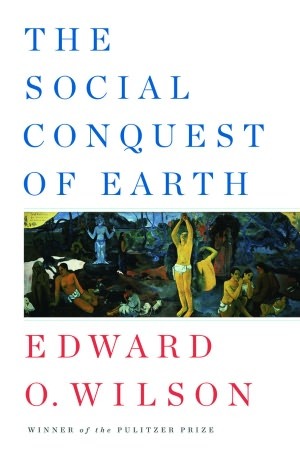
HBCU Money™ Business Book Feature – The Social Conquest Of Earth

12918295

From the most celebrated heir to Darwin comes a groundbreaking book on evolution, the summa work of Edward O. Wilson’s legendary career.

Sparking vigorous debate in the sciences, The Social Conquest of Earth upends “the famous theory that evolution naturally encourages creatures to put family first” (Discover). Refashioning the story of human evolution, Wilson draws on his remarkable knowledge of biology and social behavior to demonstrate that group selection, not kin selection, is the premier driving force of human evolution. In a work that James D. Watson calls “a monumental exploration of the biological origins of the human condition,” Wilson explains how our innate drive to belong to a group is both a “great blessing and a terrible curse” (Smithsonian). Demonstrating that the sources of morality, religion, and the creative arts are fundamentally biological in nature, the renowned Harvard University biologist presents us with the clearest explanation ever produced as to the origin of the human condition and why it resulted in our domination of the Earth’s biosphere. 90 illustrations