Category Archives: Lists

HBCU Money™ B-School: Active Management

An investment strategy that seeks to outperform the average return of the financial markets. Active managers rely on research, economic and market forecasts, and their own skill and experience in selecting securities to buy and sell.

HBCU Money’s 2015 African American Owned Bank Directory

For the most current African American Owned Bank Directory visit the 2022 link by clicking here.

All banks are listed in alphabetical order. In order to be listed in our directory the bank must have at least 51 percent African American ownership. You can click on the bank name to go directly to their website.
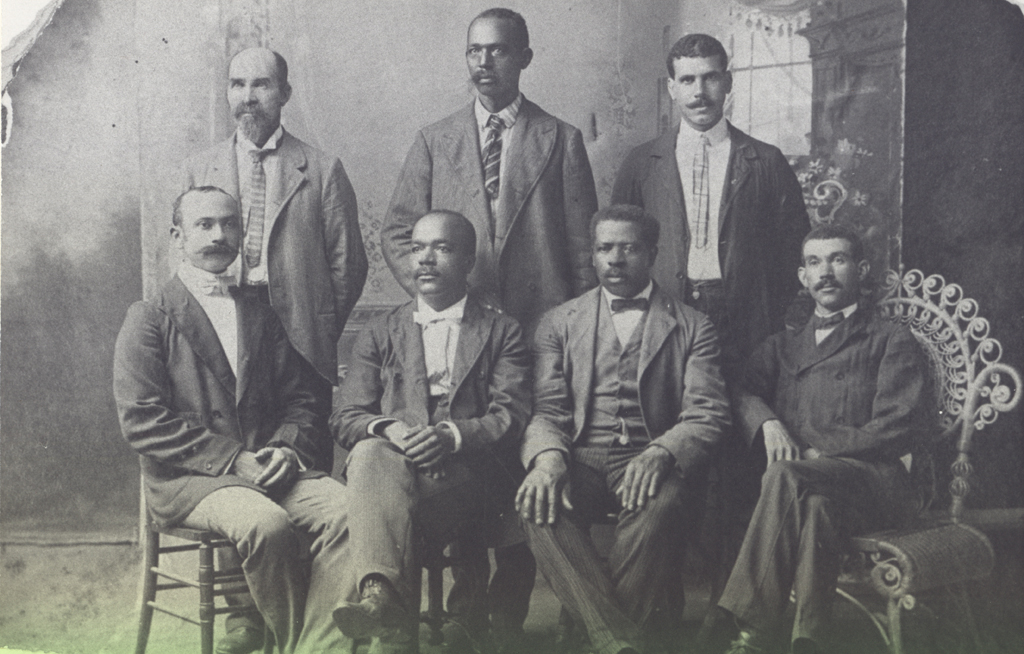
bank_men

(Founders of Merchants & Farmers Bank in Durham, North Carolina)

OTHER KEY FINDINGS:

  • AAOBs are in 17 states. Key states absent are Florida, Mississippi, New York, and Ohio.
  • Alabama leads the way with 3 AAOBs. Georgia and Illinois had 3 last year, but each saw a bank fail to begin 2015.
  • 2014 Median AAOBs Aseets: $113 470 000 ($117 869 000)*
  • 2014 Average AAOBs Assets: $233 583 000 ($206 932 000)*
  • African American bank assets saw a 2.0 percent decrease or net loss of approximately $100 million in assets in 2014.
  • AAOBs control 0.03 percent of America’s $15.2 trillion Bank Owned Assets.
  • AAOBs control 2.6 percent of FDIC designated Minority-Owned Bank Assets
  • In 2014, there were 25 AAOBs, this year there are 23 or a decrease of almost 8 percent.
  • There has not been an AAOB started in 15 years.
  • Only 10 of 2013’s 23 AAOBs saw increases in assets.
  • For comparison, Asian American Owned Banks have approximately $42.1 billion in assets spread over 75 institutions. They control 5.9 percent of Asian America’s buying power.

*Previous year in parentheses

There are 23 African American owned banks (AAOBs) with assets totaling approximately $4.8 billion in assets or approximately 0.43 percent of African America’s $1.1 trillion in buying power.

ALAMERICA BANK

Location: Birmingham, Alabama

Founded: January 28, 2000

FDIC Region: Atlanta

Assets: $40 946 000

Asset Change (2014): Up 11.5%

BROADWAY FEDERAL BANK FSB

Location: Los Angeles, California

Founded: February 26, 1947

FDIC Region: San Francisco

Assets: $345 574 000

Asset Change (2014): Down 2.2%

CARVER STATE BANK

Location: Savannah, Georgia

Founded: January 1, 1927

FDIC Region: Atlanta

Assets: $43 263 000

Asset Change (2014): Up 6.1%

CITIZENS SAVINGS B&T COMPANY

Location: Nashville, Tennessee

Founded: January 4, 1904

FDIC Region: Dallas

Assets: $99 050 000

Asset Change (2014): Up 1.9%

CITIZENS TRUST BANK

Location: Atlanta, Georgia

Founded: June 18, 1921

FDIC Region: Atlanta

Assets: $400 759 000

Asset Change (2014): Up 2.3%

CITY NB OF NEW JERSEY

Location: Newark, New Jersey

Founded: June 11, 1973

FDIC Region: New York

Assets: $287 222 000

Asset Change (2014): Down 8.3%

COLUMBIA SAVINGS & LOAN ASSOCIATION 

Location: Milwaukee, Wisconsin

Founded: January 1, 1924

FDIC Region: Chicago

Assets: $24 345 000

Asset Change (2014): Up 0.9%

COMMONWEALTH NATIONAL BANK

Location: Mobile, Alabama

Founded: February 19, 1976

FDIC Region: Atlanta

Assets: $58 719 000

Asset Change (2014): Down 1.2%

FIRST INDEPENDENCE BANK

Location: Detroit, Michigan

Founded: May 14, 1970

FDIC Region: Chicago

Assets: $247 106 000

Asset Change (2014): Up 6.7%

FIRST STATE BANK

Location: Danville, Virginia

Founded: September 08, 1919

FDIC Region: Atlanta

Assets: $39 226 000

Asset Change (2014): Up 1.1%

FIRST TUSKEGEE BANK

Location: Tuskegee, Alabama

Founded: October 11, 1991

FDIC Region: Atlanta

Assets: $55 515 000

Asset Change (2014): Down 12.1%

HARBOR BANK OF MARYLAND

Location: Baltimore, Maryland

Founded: September 13, 1982

FDIC Region: New York

Assets: $233 583 000

Asset Change (2014): Down 3.7%

ILLINOIS SERVICE FEDERAL SAVINGS & LOAN

Location: Chicago, Illinois

Founded: January 01, 1934

FDIC Region: Chicago

Assets: $113 470 000

Asset Change (2013): Down 3.7%

INDUSTRIAL BANK

Location: Washington, DC

Founded: August 18, 1934

FDIC Region: New York

Assets: $365 179 000

Asset Change (2014): Up 6.6%

LIBERTY BANK & TRUST COMPANY

Location: New Orleans, Louisiana

Founded: November 16, 1972

FDIC Region: Dallas

Assets: $552 081 000

Asset Change (2014): Down 1.8%

MECHANICS & FARMERS BANK

Location: Durham, North Carolina

Founded: March 01, 1908

FDIC Region: Atlanta

Assets: $289 202 000

Asset Change (2014): Down 0.9%

NORTH MILWAUKEE STATE BANK

Location: Milwaukee, Wisconsin

Founded: February 12, 1971

FDIC Region: Chicago

Assets: $77 115 000

Asset Change (2014): Down 11.2%

ONEUNITED BANK

Location: Boston, Massachusetts

Founded: August 02, 1982

FDIC Region: New York

Assets: $619 908 000

Asset Change (2014): Up 1.2%

SEAWAY BANK & TRUST COMPANY

Location: Chicago, Illinois

Founded: January 02, 1965

FDIC Region: Chicago

Assets: $522 353 000

Asset Change (2014): Down 5.2%

SOUTH CAROLINA COMMUNITY BANK

Location: Columbia, South Carolina

Founded: March 26, 1999

FDIC Region: Atlanta

Assets: $61 783 000

Asset Change (2014): Down 11.2%

TRI-STATE BANK OF MEMPHIS

Location: Memphis, Tennessee

Founded: December 16, 1946

FDIC Region: Dallas

Assets: $126 661 000

Asset Change (2014): Down 15.7%

UNITED BANK OF PHILADELPHIA

Location: Philadelphia, Pennsylvania

Founded: March 23, 1992

FDIC Region: New York

Assets: $60 531 000

Asset Change (2014): Down 3.1%

UNITY NB OF HOUSTON

Location: Houston, Texas

Founded: August 01, 1985

FDIC Region: Dallas

Assets: $75 516 000

Asset Change (2013): Up 8.2%

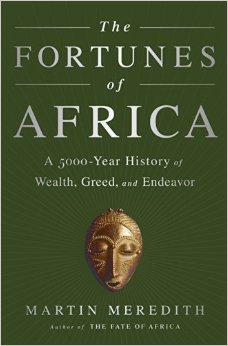
HBCU Money™ Business Book Feature – Fortunes of Africa: A 5000-Year History of Wealth, Greed, & Endeavor

41bJGJWEwTL._SY344_BO1,204,203,200_

Africa has been coveted for its riches ever since the era of the Pharaohs. In past centuries, it was the lure of gold, ivory, and slaves that drew fortune-seekers, merchant-adventurers, and conquerors from afar. In modern times, the focus of attention is on oil, diamonds, and other valuable minerals.

Land was another prize. The Romans relied on their colonies in northern Africa for vital grain shipments to feed the population of Rome. Arab invaders followed in their wake, eventually colonizing the entire region. More recently, foreign corporations have acquired huge tracts of land to secure food supplies needed abroad, just as the Romans did.

In this vast and vivid panorama of history, Martin Meredith follows the fortunes of Africa over a period of 5,000 years. With compelling narrative, he traces the rise and fall of ancient kingdoms and empires; the spread of Christianity and Islam; the enduring quest for gold and other riches; the exploits of explorers and missionaries; and the impact of European colonization. He examines, too, the fate of modern African states and concludes with a glimpse of their future.

His cast of characters includes religious leaders, mining magnates, warlords, dictators, and many other legendary figures—among them Mansa Musa, ruler of the medieval Mali empire, said to be the richest man the world has ever known. “I speak of Africa,” Shakespeare wrote, “and of golden joys.” This is history on an epic scale.

HBCU Money™ Business Book Feature – China’s Second Continent: Building a New Empire in Africa

china

An exciting, hugely revealing account of China’s burgeoning presence in Africa—a developing empire already shaping, and reshaping, the future of millions of people.

A prizewinning foreign correspondent and former New York Times bureau chief in Shanghai and in West and Central Africa, Howard French is uniquely positioned to tell the story of China in Africa. Through meticulous on-the-ground reporting—conducted in Mandarin, French, and Portuguese, among other languages—French crafts a layered investigation of astonishing depth and breadth as he engages not only with policy-shaping moguls and diplomats, but also with the  ordinary men and women navigating the street-level realities of cooperation, prejudice, corruption, and opportunity forged by this seismic geopolitical development. With incisiveness and empathy, French reveals the human face of China’s economic, political, and human presence across the African continent—and in doing so reveals what is at stake for everyone involved.

We meet a broad spectrum of China’s dogged emigrant population, from those singlehandedly reshaping African infrastructure, commerce, and even environment (a self-made tycoon who harnessed Zambia’s now-booming copper trade; a timber entrepreneur determined to harvest the entirety of Liberia’s old-growth redwoods), to those just barely scraping by (a sibling pair running small businesses despite total illiteracy; a karaoke bar owner–cum–brothel madam), still convinced that Africa affords them better opportunities than their homeland. And we encounter an equally panoramic array of African responses: a citizens’ backlash in Senegal against a “Trojan horse” Chinese construction project (a tower complex to be built over a beloved soccer field, which locals thought would lead to overbearing Chinese pressure on their economy); a Zambian political candidate who, having protested China’s intrusiveness during the previous election and lost, now turns accommodating; the ascendant middle class of an industrial boomtown; African mine workers bitterly condemning their foreign employers, citing inadequate safety precautions and wages a fraction of their immigrant counterparts’.

French’s nuanced portraits reveal the paradigms forming around this new world order, from the all-too-familiar echoes of colonial ambition—exploitation of resources and labor; cut-rate infrastructure projects; dubious treaties—to new frontiers of cultural and economic exchange, where dichotomies of suspicion and trust, assimilation and isolation, idealism and disillusionment are in dynamic flux.

Part intrepid travelogue, part cultural census, part industrial and political exposé, French’s keenly observed account ultimately offers a fresh perspective on the most pressing unknowns of modern Sino-African relations: why China is making the incursions it is, just how extensive its cultural and economic inroads are, what Africa’s role in the equation is, and just what the ramifications for both parties—and the watching world—will be in the foreseeable future.

HBCU Money™ Business Book Feature – Castro, the Blacks, and Africa

61n1ddf8prL

Professor Carlos Moore, an Afro-Cuban of Barbadian and Jamaican origin gives an informed view of race relations in post-revolutionary Cuba. Though not the usual made-in-Miami anti-Castro harangue, Professor Moore is harsh on Castro’s ruling class and attempts to shatter many of the romanticized myths of the colour blind Revolution. In fact, Moore argues that the Revolutionary leaders already imbued with their own prejudices and racialist values applied them in their dealings with Afro-Cubans. Professor Moore writes that the Revolution made no allowances for negritude and that it was policy to decry all attempts at African awareness and preservation of African culture and values.
Interestingly, Professor Moore argues that Castro’s internationalist forays into Africa were self-serving. The writer perceives these as as attempts to placate the increasingly disaffected, disenchanted Afro Cubans and build third world solidarity to counterbalance isolation from the developed world. Of interest also are the appendices to Castro, The Blacks and Africa. Scholars of race and the sociology of the Caribbean and Latin America discuss race issues and ethnology in Latin America. These appendices serve to underscore Professor Moore’s premise that the Revolution did not attempt to solve the racial issues in Cuba.
Professor Carlos Moore’s work is well written, with interesting photographs and makes for good reading. It also serves as a useful reference text not only on the Cuban Revolution, but also on race relations in the Caribbean and Latin America.