Category Archives: Lists

HBCU Money™ Business Book Feature – Pushout: The Criminalization of Black Girls in Schools

pushout_final

Fifteen-year-old Diamond stopped going to school the day she was expelled for lashing out at peers who constantly harassed and teased her for something everyone on the staff had missed: she was being trafficked for sex. After months on the run, she was arrested and sent to a detention center for violating a court order to attend school.

Just 16 percent of female students, Black girls make up more than one-third of all girls with a school-related arrest. The first trade book to tell these untold stories, Pushout exposes a world of confined potential and supports the growing movement to address the policies, practices, and cultural illiteracy that push countless students out of school and into unhealthy, unstable, and often unsafe futures.

For four years Monique W. Morris, author of Black Stats, chronicled the experiences of black girls across the country whose intricate lives are misunderstood, highly judged—by teachers, administrators, and the justice system—and degraded by the very institutions charged with helping them flourish. Morris shows how, despite obstacles, stigmas, stereotypes, and despair, black girls still find ways to breathe remarkable dignity into their lives in classrooms, juvenile facilities, and beyond.

The Highest Paying Dividend Index ETFs For Your 2017 Portfolio – Sector By Sector

stock-mutual-fund-etf

Investing can be a daunting affair for first timers or newbies and yes, even experts, but the rise of ETFs (exchange traded funds) have made the access to traditionally expensive mutual funds much easier to secure for those with smaller accounts or limited investment knowledge. How can I be invested while reducing my risk? This both a financial question and a knowledge one. We believe the answer is to own every sector through an index ETF. Indexes are passively managed, meaning they are set and left to the fundamentals of the markets and economies they serve. These index ETFs usually have much cheaper expense ratios because of their passive management making it easier for investors, beginners and experts alike, to not see their gains eaten away by inundated fees often tacked on by active managers. There is now enough research after decades of tracking to show by the likes of John Bogle, founder of Vanguard, and others in the passively managed space that index ETFs and mutual funds far outperform their actively managed counterparts.

On top of that, there is the consideration of dividend or investment income. Dividends are money paid out by companies usually on a quarterly basis from a company’s ongoing operating income. It should be noted that not all companies pay dividends. However, in ETFs because they hold a myriad of companies there is a higher probability that there will be dividends present. Dividends help households reduce the income risk of job loss. This is how many wealthy households even during recessions are able to maintain and how many pay far less in taxes. Of the three incomes (earned, passive, investment), it is earned income, or the income we get up and go to work for everyday that is taxed at the highest rate. No matter how much you earn, your dividend tax rate is never above 20 percent versus a high of almost 40 percent in earned income tax rate, so more income from dividends is always advantageous.

Our list was calculated by taking the three lowest expense ratios of ETFs by sector according to the website ETF Database’s screener. Once those were identified we looked at the dividend yield that each ETF was paying and subtracted the expense ratio. This would appear in a calculation as nominal dividend yield minus expense ratio equals real dividend yield and there would be our winner for 2017. It should be noted that dividends are not fixed and companies can reduce or increase them as they sit fit, usually based on a company’s financial health.

You can buy this list and know that you are well diversified across every sector of the economy and will be receiving dividend payments along the way. If you really want to simply things, just head over to the Motif Investing platform and buy the All-Sector ETF of ETFs Motif, which is each of these ETFs below in one security and constructed by HBCU Money. Click here to find out more.

BASIC MATERIALS

Ticker Symbol: XLB

Issuer: State Street

Real Annual Dividend Yield: 1.80%

Annual Dividend: $0.97 / share

consumer goods

Ticker Symbol: FSTA

Issuer: Fidelity

Real Annual Dividend Yield: 2.45%

Annual Dividend: $0.79 / share

financial

Ticker Symbol: FNCL

Issuer: Fidelity

Real Annual Dividend Yield: 1.73%

Annual Dividend: $0.63 / share

healthcare

Ticker Symbol: XLV

Issuer: State Street

Real Annual Dividend Yield: 1.45%

Annual Dividend: $1.11 / share

industrial goods

Ticker Symbol: XLI

Issuer: State Street

Real Annual Dividend Yield: 1.92%

Annual Dividend: $1.29 / share

services

Ticker Symbol: XLY

Issuer: State Street

Real Annual Dividend Yield: 1.56%

Annual Dividend: $1.39 / share

technology

Ticker Symbol: XLK

Issuer: State Street

Real Annual Dividend Yield: 1.61%

Annual Dividend: $0.84 / share

utilities (tIE)

Ticker Symbol: XLU

Issuer: State Street

Real Annual Dividend Yield: 3.27%

Annual Dividend: $1.66 / share

Ticker Symbol: FUTY

Issuer: Fidelity

Real Annual Dividend Yield: 3.27%

Annual Dividend: $1.06 / share

real estate

Ticker Symbol: VNQ

Issuer: Vanguard

Real Annual Dividend Yield: 4.70%

Annual Dividend: $3.98 / share

Disclaimer: This article is in no way financial or investment advice. Each person’s investment and tax needs vary. Please consult your financial adviser or CPA before making any decisions. HBCU Money, its staff, or ownership has no holdings in any of the aforementioned investments. 

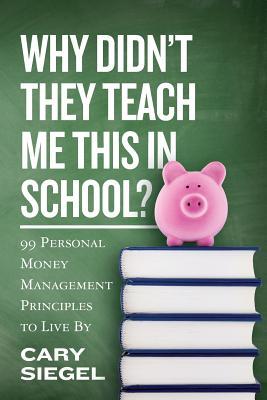
HBCU Money™ Business Book Feature – Why Didn’t They Teach Me This in School?: 99 Personal Money Management Principles

17590703

Bestselling 5 Star Graduation Gift for both College and High School grads! Why do high schools and colleges require students to take courses in English, math and science, yet have absolutely no requirements for students to learn about personal money management? Why Didn’t They Teach Me This in School? 99 Personal Money Management Lessons to Live By was initially developed by the author to pass on to his five children as they entered adulthood. As it developed, the author realized that personal money management skills were rarely taught in high schools, colleges and even in MBA programs. Unfortunately, books on the subject tend to be complicated, lengthy reads. The book includes eight important lessons focusing on 99 principles that will quickly and memorably enhance any individual’s money management acumen. Unlike many of the personal money management books out there, this book is a quick, easily digested read that focuses more on the qualitative side than the quantitative side of personal money management. The principles are not from a text book. Rather, they are practical principles learned by the author as he navigated through his financial life. Many are unorthodox in order to be memorable and provoke deeper thought by the reader. Not only an excellent graduation gift for high school and college students but also a great read for any adult! ALSO AVAILABLE IN SPANISH – “POR QUE NO ME ENSENARON ESTO EN LA ESCUELA?”

Baker Hughes December Rig Count – HBCU Territories

screen-shot-2017-01-16-at-12-36-07-pm

HBCU states and territories are vital to the energy production of United States and the world these days. The latest Baker Hughes rig count shows that the U.S. currently has 659 active rigs, with 489 or 74.2 percent of those being in HBCU territories. Energy continues to be a vital part of the economic landscape where HBCUs are located and is a barometer for how the economies of those states may very well be doing now and going forward.

Gas rigs are denoted by an orange triangle. – 79

Oil rigs are denoted by a blue triangle. – 410

November HBCU Count – 478

HBCU Money™ Business Book Feature – The Ascent of Money: A Financial History of the World

2714607-_uy424_ss424_

Niall Ferguson follows the money to tell the human story behind the evolution of our financial system, from its genesis in ancient Mesopotamia to the latest upheavals on what he calls Planet Finance. What’s more, Ferguson reveals financial history as the essential backstory behind all history, arguing that the evolution of credit and debt was as important as any technological innovation in the rise of civilization. As Ferguson traces the crisis from ancient Egypt’s Memphis to today’s Chongqing, he offers bold and compelling new insights into the rise–and fall–of not just money but Western power as well.