
Category Archives: Books

HBCU Money™ Business Book Feature – Chicago Defender (Images of America)

9780738561240_p0_v1_s260x420

In 1905, what was to be the largest and most influential black newspaper in the country was born. The Chicago Defender began as a weekly newspaper and led an entire race to leave the oppressive South for a better life in the North. At the helm was one man with a vision and purpose and a slogan that said it all: American race prejudice must be destroyed. Robert Sengstacke Abbott began the Chicago Defender with 25¢ and a dream in his landladys kitchen. The Defender boasted a circulation of more than 230,000 nationally as the newspaper was secretly delivered by Pullman porters to cities everywhere. Almost overnight, Abbott became one of the few black millionaires of his time. By 1920, the Defender tagline was the Worlds Greatest Weekly. The story of the Defender is one of inspiration, struggles, and triumphs and of dreams coming true. It became a beacon and voice for those who for years had no voice. The Defender produced talents such as Langston Hughes, Gwendolyn Brooks, and W. E. B. DuBois. In 1940, Abbotts nephew John H. H. Sengstacke took over as publisher, and by 1956, the Defender was a daily newspaper.

HBCU Money™ Business Book Feature – Language: The Cultural Tool

13129592

A bold and provocative study that presents language not as an innate component of the brain—as most linguists do—but as an essential tool unique to each culture worldwide.

For years, the prevailing opinion among academics has been that language is embedded in our genes, existing as an innate and instinctual part of us. But linguist Daniel Everett argues that, like other tools, language was invented by humans and can be reinvented or lost. He shows how the evolution of different language forms—that is, different grammar—reflects how language is influenced by human societies and experiences, and how it expresses their great variety.

For example, the Amazonian Pirahã put words together in ways that violate our long-held under-standing of how language works, and Pirahã grammar expresses complex ideas very differently than English grammar does. Drawing on the Wari’ language of Brazil, Everett explains that speakers of all languages, in constructing their stories, omit things that all members of the culture understand. In addition, Everett discusses how some cultures can get by without words for numbers or counting, without verbs for “to say” or “to give,” illustrating how the very nature of what’s important in a language is culturally determined.

Combining anthropology, primatology, computer science, philosophy, linguistics, psychology, and his own pioneering—and adventurous—research with the Amazonian Pirahã, and using insights from many different languages and cultures, Everett gives us an unprecedented elucidation of this society-defined nature of language. In doing so, he also gives us a new understanding of how we think and who we are.

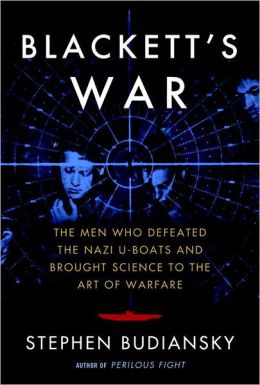
HBCU Money™ Business Book Feature – Blackett’s War: The Men Who Defeated the Nazi U-Boats and Brought Science to the Art of Warfare

9780307595966_p0_v2_s260x420

The exciting history of a small group of British and American scientists who, during World War II, developed the new field of operational research to turn back the tide of German submarines—revolutionizing the way wars are waged and won.

In March 1941, after a year of unbroken and devastating U-boat onslaughts, the British War Cabinet decided to try a new strategy in the foundering naval campaign. To do so, they hired an intensely private, bohemian physicist who was also an ardent socialist. Patrick Blackett was a former navy officer and future winner of the Nobel Prize; he is little remembered today, but he and his fellow scientists did as much to win the war against Nazi Germany as almost anyone else. As director of the World War II antisubmarine effort, Blackett used little more than simple mathematics and probability theory—and a steadfast belief in the utility of science—to save the campaign against the U-boat. Employing these insights in unconventional ways, from the washing of mess hall dishes to the color of bomber wings, the Allies went on to win essential victories against Hitler’s Germany.

Here is the story of these civilian intellectuals who helped to change the nature of twentieth-century warfare. Throughout, Stephen Budiansky describes how scientists became intimately involved with what had once been the distinct province of military commanders—convincing disbelieving military brass to trust the solutions suggested by their analysis. Budiansky shows that these men above all retained the belief that operational research, and a scientific mentality, could change the world. It’s a belief that has come to fruition with the spread of their tenets to the business and military worlds, and it started in the Battle of the Atlantic, in an attempt to outfight the Germans, but most of all to outwit them.

HBCU Money™ Business Book Feature – Smuggler Nation: How Illicit Trade Made America

9780199746880_p0_v2_s260x420

America is a smuggler nation. Our long history of illicit imports has ranged from West Indies molasses and Dutch gunpowder in the 18th century, to British industrial technologies and African slaves in the 19th century, to French condoms and Canadian booze in the early 20th century, to Mexican workers and Colombian cocaine in the modern era. Contraband capitalism, it turns out, has been an integral part of American capitalism.

Providing a sweeping narrative history from colonial times to the present, Smuggler Nation is the first book to retell the story of America–and of its engagement with its neighbors and the rest of the world–as a series of highly contentious battles over clandestine commerce. As Peter Andreas demonstrates in this provocative and fascinating account, smuggling has played a pivotal and too often overlooked role in America’s birth, westward expansion, and economic development, while anti-smuggling campaigns have dramatically enhanced the federal government’s policing powers. The great irony, Andreas tells us, is that a country that was born and grew up through smuggling is today the world’s leading anti-smuggling crusader.

In tracing America’s long and often tortuous relationship with the murky underworld of smuggling, Andreas provides a much-needed antidote to today’s hyperbolic depictions of out-of-control borders and growing global crime threats. Urgent calls by politicians and pundits to regain control of the nation’s borders suffer from a severe case of historical amnesia, nostalgically implying that they were ever actually under control. This is pure mythology, says Andreas. For better and for worse, America’s borders have always been highly porous.

Far from being a new and unprecedented danger to America, the illicit underside of globalization is actually an old American tradition. As Andreas shows, it goes back not just decades but centuries. And its impact has been decidedly double-edged, not only subverting U.S. laws but also helping to fuel America’s evolution from a remote British colony to the world’s pre-eminent superpower.

HBCU Money™ Business Book Feature – Alone Together: Why We Expect More from Technology and Less from Each Other

1353088148Turkle-Alone_Together_pb

Technology has become the architect of our intimacies. Online, we fall prey to the illusion of companionship, gathering thousands of Twitter and Facebook friends and confusing tweets and wall posts with authentic communication. But, as MIT technology and society specialist Sherry Turkle argues, this relentless connection leads to a new solitude. As technology ramps up, our emotional lives ramp down. Alone Together is the result of Turkle’s nearly fifteen-year exploration of our lives on the digital terrain. Based on hundreds of interviews, it describes new unsettling relationships between friends, lovers, parents, and children, and new instabilities in how we understand privacy and community, intimacy, and solitude.