Category Archives: Books

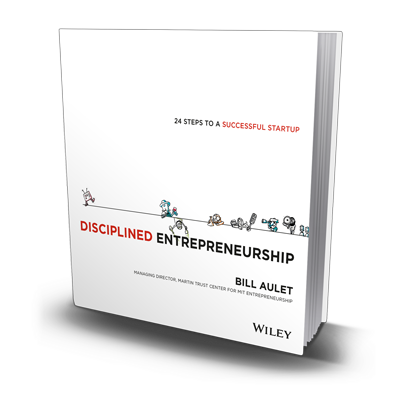
HBCU Money™ Business Book Feature – Disciplined Entrepreneurship: 24 Steps to a Successful Startup

book-clear-300

24 Steps to Success!

Disciplined Entrepreneurship will change the way you think about starting a company. Many believe that entrepreneurship cannot be taught, but great entrepreneurs aren’t born with something special – they simply make great products. This book will show you how to create a successful startup through developing an innovative product. It breaks down the necessary processes into an integrated, comprehensive, and proven 24-step framework that any industrious person can learn and apply.

You will learn:

  • Why the “F” word – focus – is crucial to a startup’s success
  • Common obstacles that entrepreneurs face – and how to overcome them
  • How to use innovation to stand out in the crowd – it’s not just about technology

Whether you’re a first-time or repeat entrepreneur, Disciplined Entrepreneurship gives you the tools you need to improve your odds of making a product people want.

Author Bill Aulet is the managing director of the Martin Trust Center for MIT Entrepreneurship as well as a senior lecturer at the MIT Sloan School of Management.

HBCU Money™ Business Book Feature – The African American Entrepreneur: Then and Now


9780313351112_500X500

African American entrepreneurship has been an integral part of the American economy since the 1600s. On the eve of the Civil War, the collective wealth of free blacks was approximately $50 million. In 2006, African Americans earned a whopping $744 billion, a figure that exceeds the gross domestic product of all but 15 nations of the 192 independent countries in the world. As W. Sherman Rogers so ably demonstrates, African Americans have achieved these economic gains under difficult circumstances. Slavery, segregation, and legally limited access to property, education, and other opportunities have taken a heavy toll, even to this day. Besides providing a penetrating glimpse into the world of black entrepreneurship both past and present, this book urges African Americans to gain financial independence as entrepreneurs. Business ownership, Rogers argues, will bring security, wealth that can be passed to successive generations, and educated offspring with much greater earning power.

The African American Entreprenuer: Then and NoW</i> explores the lower economic status of black Americans in light of America’s legacy of slavery, segregation, and rampant discrimination. Its main purpose is to shine a light on the legal, historical, sociological and political factors that together help to explain the economic condition of black people in America from their arrival in America to the present. In the process, the book spotlights the many amazing breakthroughs made by black entrepreneurs even before the Civil War and Emancipation. Profiles of business people from the Post-civil War period through today include Booker T. Washington, pioneer banker and insurer A.G. Gaston, hair care entrepreneur Madame C.J. Walker, Ebony publisher John H. Johnson, Black Entertainment Television founder Robert L. Johnson, publisher Earl Graves, music producer Damon Dash, rapper Sean Combs, former basketball stars Dave Bing and Magic Johnson, food entrepreneur Michelle Hoskins, broadcast personality Cathy Hughes, former Beatrice Foods head Reginald Lewis, Oprah Winfrey, and many more. As Rogers points out, reading about remarkable African American entrepreneurs can inspire readers to adopt an entrepreneurial mindset. To further that goal and help readers take the plunge, he outlines many of the skills, tools and information necessary for business success-success that can help chart a new path to prosperity for all African Americans.

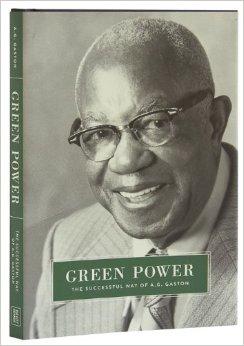
HBCU Money™ Business Book Feature – Green Power: The Successful Way of A.G. Gaston

51tkZSZeDQL._SY344_BO1,204,203,200_

“Green Power” is the story of Arthur George Gaston, a man who became one of the greatest entrepreneurs of the 20th century. His is the classic story of the American Dream, but what he achieved came not merely in the face of poverty or challenging circumstances. Dr. Gaston also had to overcome the hope-crushing segregation of the Jim Crow South. At the time of this republishing of “Green Power,” 50 years have come and gone since the height of the struggle for civil rights in his hometown of Birmingham, Ala. As we commemorate the strength of those who struggled for equality a half century ago, we should include Dr. Gaston in that discussion.

HBCU Money™ Business Book Feature – Money Well Spent: A Strategic Plan for Smart Philanthropy

06112012_Books_Grabell

Winner of the 2009 Skystone Ryan Prize for Research, Association of Fundraising Professionals Research Council

“All outstanding philanthropic successes have one thing in common: They started with a smart strategic plan,” say authors Paul Brest, president of the William and Flora Hewlett Foundation, and Hal Harvey, president of ClimateWorks.

Money Well Spent explains how to create and implement a strategy that ensures meaningful results.  Components of a smart strategy include:

  • Achieving great clarity about one’s philanthropic goals
  • Specifying indicators of success before beginning a project
  • Designing and implementing a plan commensurate with available resources
  • Evidence-based understanding of the world in which the plan will operate
  • Paying careful attention to milestones to determine if you are on the path to success or if midcourse corrections are necessary

Drawing on examples from over 100 foundations and non-profits, Money Well Spent gives readers the framework they need to design a smart strategy, addressing such key issues as:

  • Effective use of tools—education, science, direct services, advocacy—that can achieve your objectives.
  • How to choose the forms of funding to achieve stated goals
  • How to measure the impact of grants or programs
  • When to be patient and stick with a winning strategy and when to abandon a strategy that isn’t working

This is a book for everyone who wants to get the most from a philanthropic dollar: donors, foundations, and non-profits.

HBCU Money™ Business Book Feature – Brainwashed: Challenging the Myth of Black Inferiority

7738383

“Black people are not dark-skinned white people,” says advertising visionary Tom Burrell. In fact, they are a lot more. They are survivors of the Middle Passage and centuries of humiliation and deprivation, who have excelled against the odds, constantly making a way out of “no way!” At this point in history, the idea of black inferiority should have had a “Going-Out-of-Business Sale.” After all, Barack Obama has reached the Promised Land.

Yet, as Brainwashed: Erasing the Myth of Black Inferiority testifies, too much of black America is still wandering in the wilderness. In this powerful examination of “the greatest propaganda campaign of all time”—the masterful marketing of black inferiority—Burrell poses 10 provocative questions that will make black people look in the mirror and ask why, nearly 150 years after the Emancipation Proclamation, so many blacks still think like slaves.

Brainwashed is not a reprimand; it is a call to deprogram ourselves of self-defeating attitudes and actions. Racism is not the issue; how we respond to racism is the issue. We must undo negative brainwashing and claim a new state of race-based self-esteem and self-actualization. Provocative and powerful, Brainwashed dares to expose the wounds so that we, at last, can heal.