Category Archives: Books

HBCU Money™ Business Book Feature – Diamonds, Gold, and War: The British, Boers, & Making of South Africa

2864321

Southern Africa was once regarded as a worthless jumble of British colonies, Boer republics, and African chiefdoms, a troublesome region of little interest to the outside world. But then prospectors chanced upon the world’s richest deposits of diamonds and gold, setting off a titanic struggle between the British and the Boers for control of the land. The result was the costliest, bloodiest, and most humiliating war that Britain had waged in nearly a century, and the devastation of the Boer republics. The New Yorker calls this magisterial account of those years “[an] astute history.… Meredith expertly shows how the exigencies of the diamond (and then gold) rush laid the foundation for apartheid.”

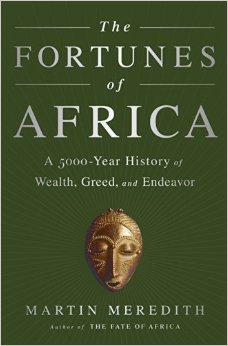
HBCU Money™ Business Book Feature – Fortunes of Africa: A 5000-Year History of Wealth, Greed, & Endeavor

41bJGJWEwTL._SY344_BO1,204,203,200_

Africa has been coveted for its riches ever since the era of the Pharaohs. In past centuries, it was the lure of gold, ivory, and slaves that drew fortune-seekers, merchant-adventurers, and conquerors from afar. In modern times, the focus of attention is on oil, diamonds, and other valuable minerals.

Land was another prize. The Romans relied on their colonies in northern Africa for vital grain shipments to feed the population of Rome. Arab invaders followed in their wake, eventually colonizing the entire region. More recently, foreign corporations have acquired huge tracts of land to secure food supplies needed abroad, just as the Romans did.

In this vast and vivid panorama of history, Martin Meredith follows the fortunes of Africa over a period of 5,000 years. With compelling narrative, he traces the rise and fall of ancient kingdoms and empires; the spread of Christianity and Islam; the enduring quest for gold and other riches; the exploits of explorers and missionaries; and the impact of European colonization. He examines, too, the fate of modern African states and concludes with a glimpse of their future.

His cast of characters includes religious leaders, mining magnates, warlords, dictators, and many other legendary figures—among them Mansa Musa, ruler of the medieval Mali empire, said to be the richest man the world has ever known. “I speak of Africa,” Shakespeare wrote, “and of golden joys.” This is history on an epic scale.

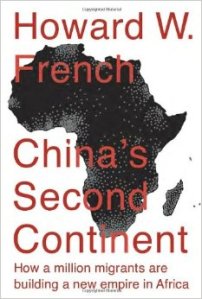
HBCU Money™ Business Book Feature – China’s Second Continent: Building a New Empire in Africa

china

An exciting, hugely revealing account of China’s burgeoning presence in Africa—a developing empire already shaping, and reshaping, the future of millions of people.

A prizewinning foreign correspondent and former New York Times bureau chief in Shanghai and in West and Central Africa, Howard French is uniquely positioned to tell the story of China in Africa. Through meticulous on-the-ground reporting—conducted in Mandarin, French, and Portuguese, among other languages—French crafts a layered investigation of astonishing depth and breadth as he engages not only with policy-shaping moguls and diplomats, but also with the  ordinary men and women navigating the street-level realities of cooperation, prejudice, corruption, and opportunity forged by this seismic geopolitical development. With incisiveness and empathy, French reveals the human face of China’s economic, political, and human presence across the African continent—and in doing so reveals what is at stake for everyone involved.

We meet a broad spectrum of China’s dogged emigrant population, from those singlehandedly reshaping African infrastructure, commerce, and even environment (a self-made tycoon who harnessed Zambia’s now-booming copper trade; a timber entrepreneur determined to harvest the entirety of Liberia’s old-growth redwoods), to those just barely scraping by (a sibling pair running small businesses despite total illiteracy; a karaoke bar owner–cum–brothel madam), still convinced that Africa affords them better opportunities than their homeland. And we encounter an equally panoramic array of African responses: a citizens’ backlash in Senegal against a “Trojan horse” Chinese construction project (a tower complex to be built over a beloved soccer field, which locals thought would lead to overbearing Chinese pressure on their economy); a Zambian political candidate who, having protested China’s intrusiveness during the previous election and lost, now turns accommodating; the ascendant middle class of an industrial boomtown; African mine workers bitterly condemning their foreign employers, citing inadequate safety precautions and wages a fraction of their immigrant counterparts’.

French’s nuanced portraits reveal the paradigms forming around this new world order, from the all-too-familiar echoes of colonial ambition—exploitation of resources and labor; cut-rate infrastructure projects; dubious treaties—to new frontiers of cultural and economic exchange, where dichotomies of suspicion and trust, assimilation and isolation, idealism and disillusionment are in dynamic flux.

Part intrepid travelogue, part cultural census, part industrial and political exposé, French’s keenly observed account ultimately offers a fresh perspective on the most pressing unknowns of modern Sino-African relations: why China is making the incursions it is, just how extensive its cultural and economic inroads are, what Africa’s role in the equation is, and just what the ramifications for both parties—and the watching world—will be in the foreseeable future.

HBCU Money™ Business Book Feature – Castro, the Blacks, and Africa

61n1ddf8prL

Professor Carlos Moore, an Afro-Cuban of Barbadian and Jamaican origin gives an informed view of race relations in post-revolutionary Cuba. Though not the usual made-in-Miami anti-Castro harangue, Professor Moore is harsh on Castro’s ruling class and attempts to shatter many of the romanticized myths of the colour blind Revolution. In fact, Moore argues that the Revolutionary leaders already imbued with their own prejudices and racialist values applied them in their dealings with Afro-Cubans. Professor Moore writes that the Revolution made no allowances for negritude and that it was policy to decry all attempts at African awareness and preservation of African culture and values.
Interestingly, Professor Moore argues that Castro’s internationalist forays into Africa were self-serving. The writer perceives these as as attempts to placate the increasingly disaffected, disenchanted Afro Cubans and build third world solidarity to counterbalance isolation from the developed world. Of interest also are the appendices to Castro, The Blacks and Africa. Scholars of race and the sociology of the Caribbean and Latin America discuss race issues and ethnology in Latin America. These appendices serve to underscore Professor Moore’s premise that the Revolution did not attempt to solve the racial issues in Cuba.
Professor Carlos Moore’s work is well written, with interesting photographs and makes for good reading. It also serves as a useful reference text not only on the Cuban Revolution, but also on race relations in the Caribbean and Latin America.

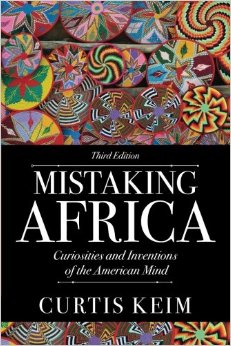
HBCU Money™ Business Book Feature – Mistaking Africa: Curiosities and Inventions of the American Mind

51V36fu133L._SY344_BO1,204,203,200_

For many Americans the mention of Africa immediately conjures up images of safaris, ferocious animals, strangely dressed “tribesmen,” and impenetrable jungles. Although the occasional newspaper headline mentions genocide, AIDS, malaria, or civil war in Africa, the collective American consciousness still carries strong mental images of Africa that are reflected in advertising, movies, amusement parks, cartoons, and many other corners of society. Few think to question these perceptions or how they came to be so deeply lodged in American minds. Curtis Keim’s Mistaking Africa looks at the historical evolution of this mind-set and examines the role that popular media plays in its creation. Keim addresses the most prevalent myths and preconceptions and demonstrates how these prevent a true understanding of the enormously diverse peoples and cultures of Africa.

Updated throughout, the third edition includes a new chapter, “Where Is the Real Africa,” discussing the multifaceted nature of the question and the importance of not grasping onto stereotypes of Africa’s mythical past. Keim also includes new examples and new images to expand the visual narrative of western views about Africa. Mistaking Africa is an important book for African studies courses and for anyone interested in unraveling American misperceptions about the continent.