Category Archives: Histronomics

Currencies Of The African Diaspora – Jamaica

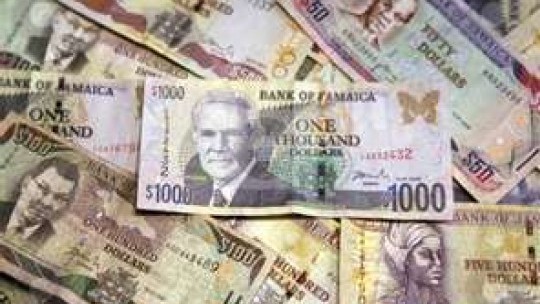
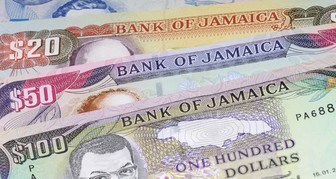
Up until the early 16th century, when the Spaniards colonized Jamaica, there had been little occasion for the use of a regular currency. Although there was a small amount of gold on the; island, the Taino Indians, Jamaica’s first inhabitants, used it; for decorative purposes rather than for trade, which was conducted by barter.

CHRISTIAN QUATTIES

The Negroes, who had become devout Christians did not think it appropriate to offer copper coins for collection. Because of their poverty, however, they could not afford the higher denominations and there was a shortage of lower denomination silver coins. In accordance with a resolution of the House of Assembly of 4 July 1834, British silver three pence and penny ha’penny pieces were imported in that year. The penny ha’penny became known as a ‘quartile’ or quarter real, and if we accept the value of the real as six-pence, we can easily see how the penny ha’penny came to be known as a ‘quattie’. Because of the specific need which these coins filled, they became known as “Christian quatties.”

THE FIRST JAMAICAN COINS

Following emancipation in 1838, when the freed slaves became wage earners, there was a greater need for ready cash, especially for values smaller than penny ha’penny. The copper and bronze coins of the British Imperial coinage were still unpopular among the Negro population who refused to use them, so an acceptable metal had to be found for coins of these denominations. Cupro-nickel, which was just gaining popularity as a metal for coinage was to provide the answer.

By the Order in Council and Proclamation of 11 November 1869, and by local laws, the penny and half-penny made of cupro-nickel were authorized to be struck for use in Jamaica. They weighed the same as the English coins of similar value, but had the Jamaican coat of arms on the reverse. As the British silver coins were accepted, there was no need for higher denominations of Jamaican coinage.

The pennies and half-pennies minted in 1869 constitute the first truly Jamaican coins. In 1880, the range of denominations was extended when a farthing was introduced. In 1937, when the worn coins were being replaced, the metal content was changed to nickel-brass. By this time, old fears and distrust had disappeared and there were no problems associated with this change. The farthing, first issued in 1880 was issued for the last time in 1952.

Alterations in the designs of these first Jamaican coins were made when British sovereigns changed, the sizes were reduced in 1937 and an up-dated version of the coat of arms was used in 1964 following independence in 1962.

images

images-1

jam50

jamaican_bank_notes7

plid_1995_Money_plid_1995_ii_dt_5458826 Jamaica_1_article

Source: Bank of Jamaica

HBCU Money™ Histronomics: The Berlin Conference 1884 – Scramble For Africa

africa2

The Berlin Conference:
The General Act of Feb. 26, 1885

Chap. I [relating to the Kongo River Basin and adjacent territories]

I. The trade of all nations shall enjoy complete freedom

II. All flags, without distinction of nationality, shall have free access to the whole of the coast-line of the territories . . .

III. Goods of whatever origin, imported into these regions, under whatsoever flag, by sea or river, or overland, shall be subject to no other taxes than such as may be levied as fair compensation for expenditure in the interests of trade . . .

IV. Merchandise imported into these regions shall remain free from import and transit duties [subject to review after 20 years]

V. No power which exercises or shall exercise sovereign rights in the . . regions shall be allowed to grant therein a monopoly or favour of any kind in matters of trade…

VI. All the powers exercising sovereign rights or influence in the aforesaid territories bind themselves to watch over the preservation of the native tribes, and to care for the improvement of the conditions of their moral and material well-being and to help in suppressing slavery, and especially the Slave Trade. They shall, without distinction of creed or nation, protect and favour all religious, scientific, or charitable institutions and undertakings created and organized for the above ends, or which aim at instructing the natives and bringing home to them the blessings of civilization.
Christian missionaries, scientists, and explorers, with their followers, property, and collections, shall likewise be the objects of especial protection.
Freedom of conscience and religious toleration are expressly guaranteed to the natives, no less than to subjects and to foreigners . . .

Chap. II Documents relative to the Slave Trade

IX. …………the Powers which do or shall exercise sovereign rights or influence in the territories forming the .. basin of the Congo declare that these territories may not serve as a market or means of transit for the trade in slaves, of whatever race they may be. Each of the Powers binds itself to employ all the means at its disposal for putting an end to this trade and for punishing those who engage in it.

Chap. IV Act of Navigation for the Kongo

XIII. The navigation of the Kongo, without excepting any of its branches or outlets, is, and shall remain, free for the merchant ships of all nations equally . . . the subjects and flags of all nations shall in all respects be treated on a footing of perfect equality . . . no exclusive privilege of navigation will be conceded to Companies, Corporations, or private persons whatsoever . . .

Chap. V Act of Navigation for the Niger.

XXVI. The navigation of the (River) Niger, without excepting any of its branches and outlets, is and shall remain entirely free for the merchant ships of all nations equally . . .[both Britain and France which had parts of the region of the Niger under protectorate status also undertook to apply the principle of free trade in their territories]

Chap. VI [Regarding new occupations on the coasts of Africa]

XXXIV. Any power which henceforth takes possession of a tract of land on the coasts of the African Continent outside of its present possessions, or which, being hitherto without such possessions, shall acquire them and assume a protectorate. . . shall accompany either act with a notification thereof, addressed to the other Signatory Powers of the present Act, in order to enable them to protest against the same if there exists any grounds for their doing so.

XXXV. The Signatory Powers of the present Act recognize the obligation to insure the establishment of authority in the regions occupied by them on the coasts of the African Continent sufficient to protect existing rights, and, as the case may be, freedom of trade and of transit under the conditions aggreed upon.

XXXVII. The Powers signatory to the present general Act reserve to themselves the right of eventually, by mutual agreement, introducing therein modifications or improvements the utility of which has been shown by experience

Berlin Act Article 43

Article 34 of the Berlin Act states that any European nation that took possession of an African coast, or named themselves as “protectorate” of one; had to inform the signatory powers of the Berlin Act of this action.  If this was not done then their claim would not be recognized. This article introduced the “spheres of influence” doctrine, the control of a coast also meant that they would control the hinterland to an almost unlimited distance.  Article 35 determined that in order to occupy a coastal possession, the nation also had to prove that they controlled sufficient authority there to protect existing rights such as freedom of trade and transit.  This was called the doctrine of “effective occupation” and it made the conquest of Africa a less bloody process.

Currencies Of The African Diaspora – Rwanda

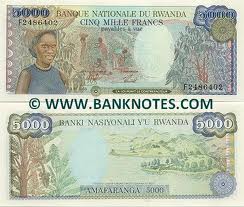
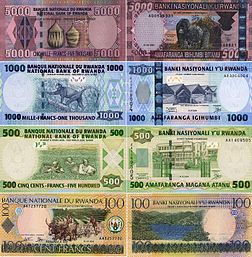
The franc became the currency of Rwanda in 1916, when Belgium occupied the previously German colony and the Belgian Congo franc replaced the German East African rupie. Rwanda used the currency of Belgian Congo until 1960, when the Rwanda and Burundi franc was introduced. Rwanda began issuing its own francs in 1964. There are plans to introduce a common currency, a new East African shilling, for the five member states of the East African community.

RW7

rwf_500_ft

RW21

images

252px-Rwanda_francs

Source: Wikipedia

HBCU Money™ Histronomics: The 1st African American Started & Owned Bank – Capital Savings Bank

Washington1890

After the demise of Freedman’s Savings and Trust Company, it would take 14 years for African Americans to rally behind another bank. The first bank organized and operated by African Americans was Capital Savings Bank in Washington, D.C. Just four years after it opened, its deposits had grown to over $300,000.

Capital Savings Bank provided the capital essential to the growth of black businesses, capital that white-owned banks were unwilling to lend. The community proudly deposited its money in Capital Savings Bank. The public’s confidence in Capital was rock solid in the early days, enabling the bank to exert a strong, positive economic impact on the community it served. During the Panic of 1893, the bank rode out the tide and was able to honor every obligation on demand. Capital Savings Bank helped many African-American businesses and property owners until it closed in 1902.

Early on, African Americans realized the necessity of accumulating wealth and the subsequent benefits of collective financial security. The Free African Society, the Free Labor Bank, and the Freedman’s Savings and Trust Company laid the groundwork for black capitalism in America. Capital Savings Bank gave African Americans a venue in which to learn about and participate in the business of banking. It was set up to reach all classes of the community so that everyone could learn the valuable economic lessons of being industrious, seeking employment, saving their money, and getting homes.

African-American churches and fraternal organizations built further on that foundation by serving as pooling places for the capital needed to open a bank that was sensitive to the needs of the African-American community. Between 1888 and 1934, 134 black banks were established, while from 1867 through 1917, the number of black businesses increased from 4,000 to 50,000.

Source: Fedpartnership.gov

HBCU Money™ Histronomics: The Bayh-Dole Act

Excerpt from The Great American University by Dr. Jonathan Cole explaining the impact of the Bayh-Dole Act on colleges and universities:

“The change in the law that this act engendered was simple but of profound significance: In the past, intellectual property rights resulting from federally sponsored research at universities had been assigned to the federal government; they would now be assigned to the universities themselves. The universities would be able to patent discoveries and license the patented material to businesses interested in developing marketable products. Universities could even sponsor start-up companies based on the intellectual property that they owned and hold an equity stake in them.”

scotus-1

The Bayh-Dole Act

It is the policy and objective of the Congress to use the patent system to promote the utilization of inventions arising from federally supported research or development; to encourage maximum participation of small business firms in federally supported research and development efforts; to promote collaboration between commercial concerns and nonprofit organizations, including universities; to ensure that inventions made by nonprofit organizations and small business firms are used in a manner to promote free competition and enterprise without unduly encumbering future research and discovery; to promote the commercialization and public availability of inventions made in the United States by United States industry and labor; to ensure that the Government obtains sufficient rights in federally supported inventions to meet the needs of the Government and protect the public against nonuse or unreasonable use of inventions; and to minimize the costs of administering policies in this area.