Category Archives: Histronomics

HBCU Money™ Histronomics: Booker T. Washington’s Atlanta Compromise

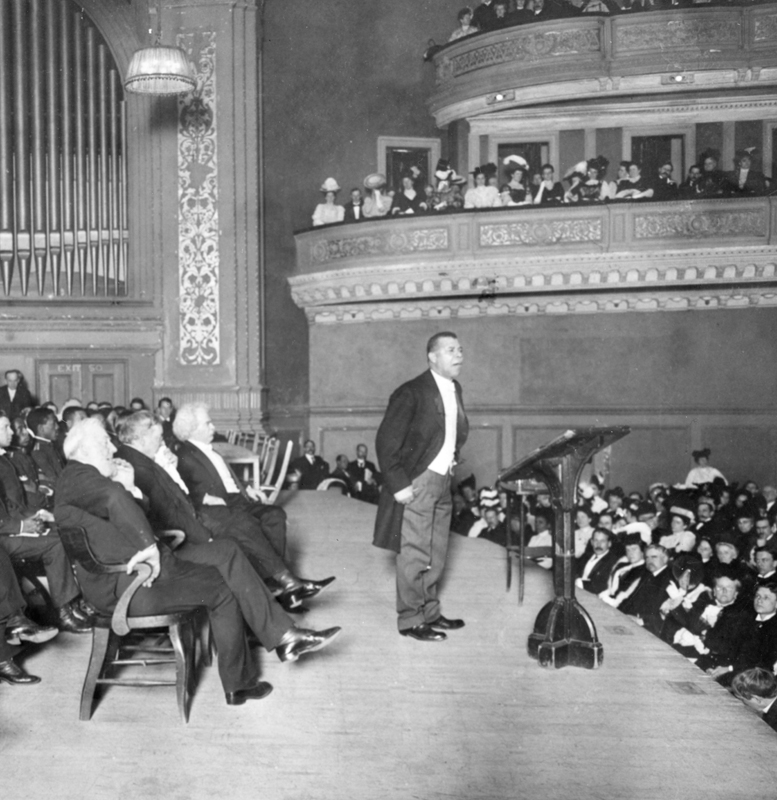
Booker_T._Washington_Lecture,_1906

Mr. President and gentlemen of the Board of Directors and citizens. One third of the population of the South is of the Negro race. No enterprise seeking the material, civil, or moral welfare of this section can disregard this element of our population and reach the highest success. I must convey to you, Mr. President and Directors, and Secretaries and masses of my race, when I say that in no way have the value and manhood of the American Negro been more fittingly and generously recognized, than by the managers of this magnificent exposition at every stage of its progress. It is a recognition that will do more to cement the friendship of the two races than any occurrence since the dawn of our freedom. Not only this, but the opportunities here afforded will awaken among us a new era of industrial progress.

Ignorant and inexperienced, it is not strange that in the first years of our new life we began at the top instead of the bottom, that a seat in Congress or the state legislature was more sought than real estate or industrial skill, that the political convention of some teaching had more attraction than starting a dairy farm or a stockyard.

A ship lost at sea for many days suddenly sighted a friendly vessel. From the mast of the unfortunate vessel was seen a signal: “Water, water. We die of thirst.” The answer from the friendly vessel at once came back: “Cast down your bucket where you are.” A second time, the signal, “Water, send us water!” went up from the distressed vessel. And was answered: “Cast down your bucket where you are.” A third and fourth signal for water was answered: “Cast down your bucket where you are.” The captain of the distressed vessel, at last heeding the injunction, cast down his bucket and it came up full of fresh, sparkling water from the mouth of the Amazon River.

To those of my race who depend on bettering their condition in a foreign land, or who underestimate the importance of preservating friendly relations with the southern white man who is their next door neighbor, I would say: “Cast down your bucket where you are.” Cast it down, making friends in every manly way of the people of all races, by whom you are surrounded.

To those of the white race who look to the incoming of those of foreign birth and strange tongue and habits for the prosperity of the South, were I permitted, I would repeat what I have said to my own race: “Cast down your bucket where you are.” Cast it down among the eight millions of Negroes whose habits you know, whose fidelity and love you have tested in days when to have proved treacherous meant the ruin of your fireside. Cast down your bucket among these people who have without strikes and labor wars tilled your fields, cleared your forests, builded your railroads and cities, brought forth treasures from the bowels of the earth, just to make possible this magnificent representation of the progress of the South.

Currencies Of The African Diaspora – Benin

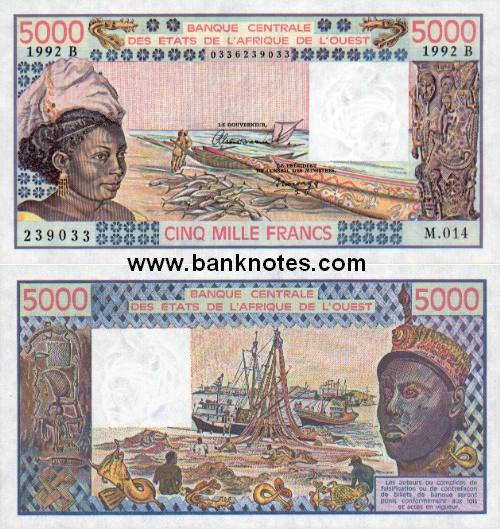
The economy of Benin remains underdeveloped and dependent on subsistence agriculture, cotton production, and regional trade. Growth in real output had averaged almost 4% before the global recession and it has returned to roughly that level in 2011-12. Inflation has subsided over the past several years. In order to raise growth, Benin plans to attract more foreign investment, place more emphasis on tourism, facilitate the development of new food processing systems and agricultural products, and encourage new information and communication technology. Specific projects to improve the business climate by reforms to the land tenure system, the commercial justice system, and the financial sector were included in Benin’s $307 million Millennium Challenge Account grant signed in February 2006. The 2001 privatization policy continues in telecommunications, water, electricity, and agriculture. The Paris Club and bilateral creditors have eased the external debt situation with Benin benefiting from a G-8 debt reduction announced in July 2005, while pressing for more rapid structural reforms. An insufficient electrical supply continues to adversely affect Benin’s economic growth though the government recently has taken steps to increase domestic power production. Private foreign direct investment is small, and foreign aid accounts for the majority of investment in infrastructure projects. Cotton, a key export, suffered from flooding in 2010-11, but high prices supported export earnings. The government agreed to a 25% increase in civil servant salaries in 2011, following a series of strikes, increasing pressure on the national budget. Benin has appealed for international assistance to mitigate piracy against commercial shipping in its territory.

Benin tourism destinations

WAS207B

WAS208B

WAS215B

ben-200f

Source: Economy overview provided by CIA Factbook

Currencies Of The African Diaspora – Angola

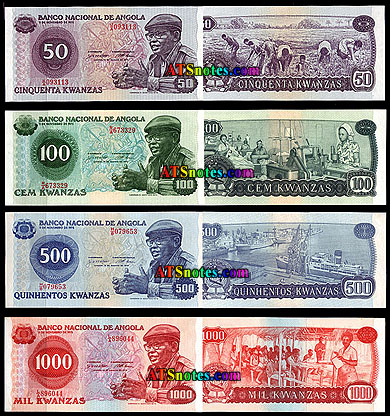
Angola’s high growth rate in recent years was driven by high international prices for its oil. Angola became a member of OPEC in late 2006 and its current assigned a production quota of 1.65 million barrels a day (bbl/day). Oil production and its supporting activities contribute about 85% of GDP. Diamond exports contribute an additional 5%. Subsistence agriculture provides the main livelihood for most of the people, but half of the country’s food is still imported. Increased oil production supported growth averaging more than 17% per year from 2004 to 2008. A postwar reconstruction boom and resettlement of displaced persons has led to high rates of growth in construction and agriculture as well. Much of the country’s infrastructure is still damaged or undeveloped from the 27-year-long civil war. Land mines left from the war still mar the countryside, even though peace was established after the death of rebel leader Jonas SAVIMBI in February 2002. Since 2005, the government has used billions of dollars in credit lines from China, Brazil, Portugal, Germany, Spain, and the EU to rebuild Angola’s public infrastructure. The global recession that started in 2008 temporarily stalled economic growth. Lower prices for oil and diamonds during the global recession slowed GDP growth to 2.4% in 2009, and many construction projects stopped because Luanda accrued $9 billion in arrears to foreign construction companies when government revenue fell in 2008 and 2009. Angola abandoned its currency peg in 2009, and in November 2009 signed onto an IMF Stand-By Arrangement loan of $1.4 billion to rebuild international reserves. Consumer inflation declined from 325% in 2000 to about 10% in 2012. Higher oil prices have helped Angola turn a budget deficit of 8.6% of GDP in 2009 into an surplus of 12% of GDP in 2012. Corruption, especially in the extractive sectors, also is a major challenge.

Angola tourism destinations

angola-114

AO139

AngolaKwanzas1995

ang-5-99

Source: Economy overview provided by CIA Factbook

Currencies Of The African Diaspora – Algeria

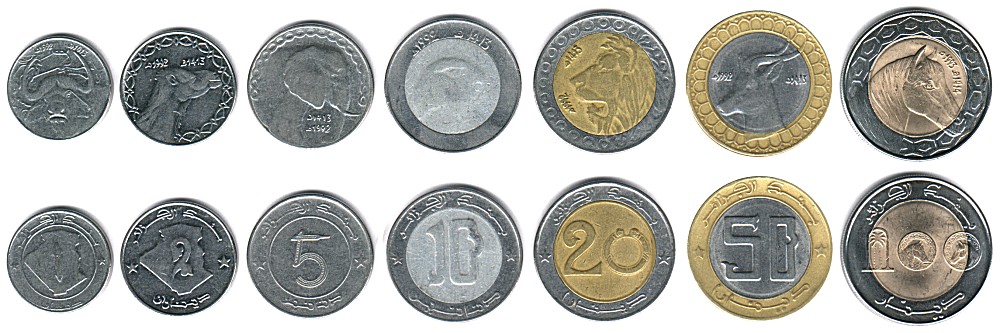
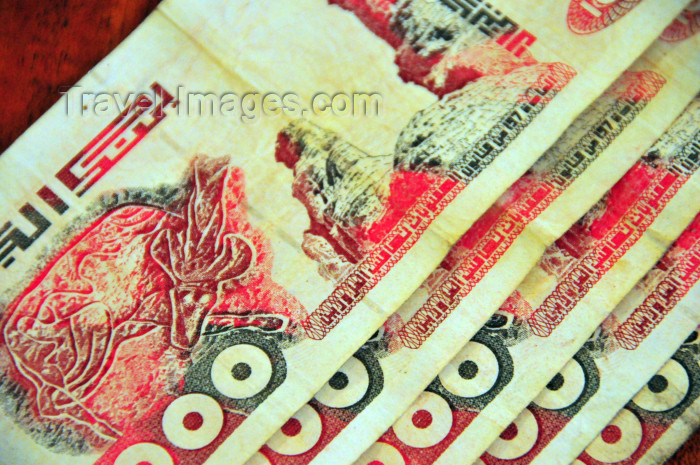
Algeria’s economy remains dominated by the state, a legacy of the country’s socialist post-independence development model. In recent years the Algerian Government has halted the privatization of state-owned industries and imposed restrictions on imports and foreign involvement in its economy. Hydrocarbons have long been the backbone of the economy, accounting for roughly 60% of budget revenues, 30% of GDP, and over 95% of export earnings. Algeria has the 10th-largest reserves of natural gas in the world and is the sixth-largest gas exporter. It ranks 16th in oil reserves. Strong revenues from hydrocarbon exports have brought Algeria relative macroeconomic stability, with foreign currency reserves approaching $200 billion and a large budget stabilization fund available for tapping. In addition, Algeria’s external debt is extremely low at about 2% of GDP. However, Algeria has struggled to develop non-hydrocarbon industries because of heavy regulation and an emphasis on state-driven growth. The government’s efforts have done little to reduce high youth unemployment rates or to address housing shortages. A wave of economic protests in February and March 2011 prompted the Algerian Government to offer more than $23 billion in public grants and retroactive salary and benefit increases, moves which continue to weigh on public finances. Long-term economic challenges include diversifying the economy away from its reliance on hydrocarbon exports, bolstering the private sector, attracting foreign investment, and providing adequate jobs for younger Algerians.

algeria-2006-circulating-coins

Algeria-currency

Algeria77b5francs1941front

MC3_0960 Algiers.jpg

images

Source: Economy overview provided by CIA Factbook

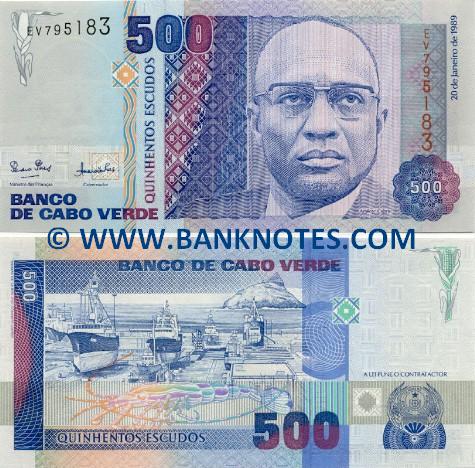
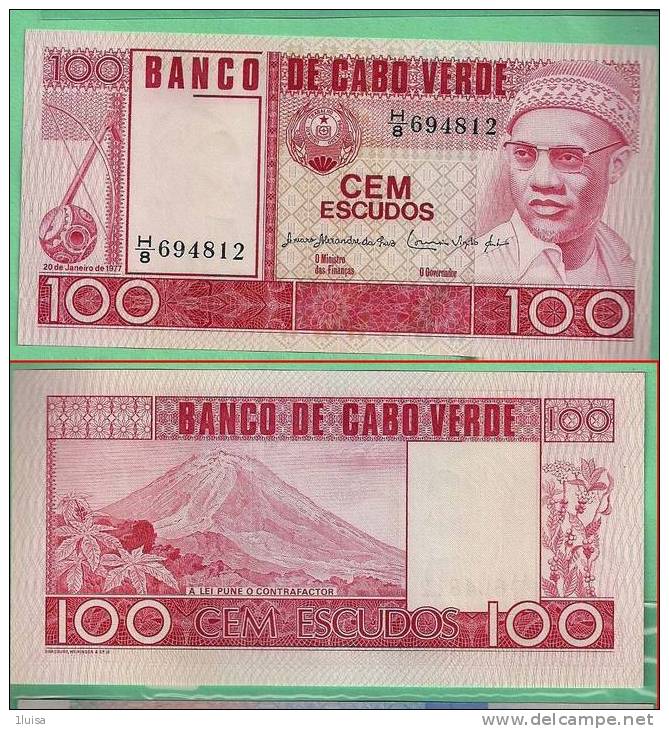
Currencies Of The African Diaspora – Cape Verde

The economy is service-oriented with commerce, transport, tourism, and public services accounting for about three-fourths of GDP. This island economy suffers from a poor natural resource base, including serious water shortages exacerbated by cycles of long-term drought and poor soil for agriculture on several of the islands. Although about 40% of the population lives in rural areas, the share of food production in GDP is low. About 82% of food must be imported. The fishing potential, mostly lobster and tuna, is not fully exploited. Cape Verde annually runs a high trade deficit financed by foreign aid and remittances from its large pool of emigrants; remittances supplement GDP by more than 20%. Despite the lack of resources, sound economic management has produced steadily improving incomes. Continued economic reforms are aimed at developing the private sector and attracting foreign investment to diversify the economy and mitigate high unemployment. Future prospects depend heavily on the maintenance of aid flows, the encouragement of tourism, remittances, and the momentum of the government’s development program. Cape Verde became a member of the WTO in July 2008.

CV59

546_001

images

cape-verde---2000-5000cve-note---front

CVcoins

Source: Economy overview provided by CIA Factbook