Category Archives: Entrepreneurs

Four HBCU Cities Among List Of Best Startup Cities In America

“No disrespect to San Francisco or Brooklyn, but we wanted to identify the next wave of cities building an ecosystem to turn innovators into entrepreneurs.” – Poplar Mechanics Editors

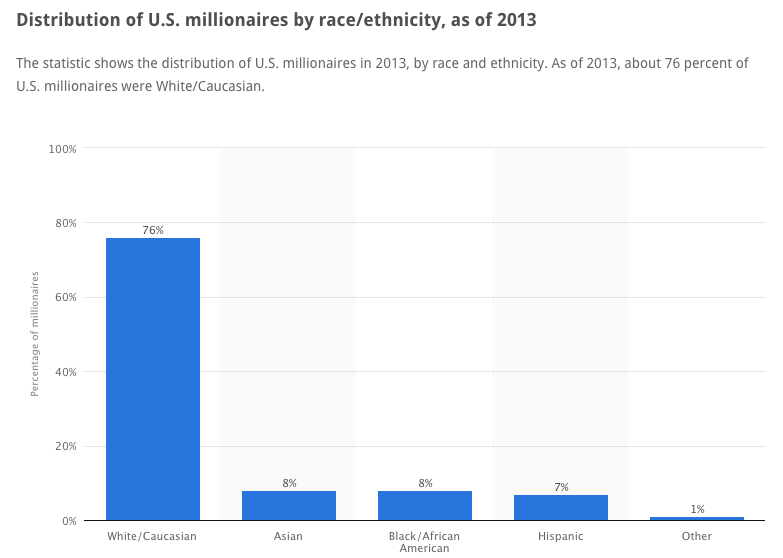
It is no secret that if HBCU citizens are going to close the wealth gap for their families and institutions, then it will happen through enterprise. Fifteen of the twenty wealthiest people in the world on Bloomberg’s Billionaires Index have their sources of wealth noted as self-made. A term that many would argue could have a broad interpretation. For instance Jeff Bezos, founder of Amazon with a net worth of $33.1 billion, received a $300 000 loan from his father to launch his company. A reality that is unimaginable by well over 95 percent of HBCU citizens and their families. According to Statista (graph below), of the 9.63 million households in America that are millionaires, excluding their homes, only 8 percent are African American or 770 400. With approximately 15.5 million African American households that means the chance you have of having parents who can write you a $300 000 check is approximately 5 percent at best. 

Screen Shot 2015-02-05 at 9.12.52 AM

However, having familial money is not everything when it comes to startups today. It helps a lot definitely, but there are other variables that are vital as well. What is the ecosystem for business like in your city? Is there a cluster of entrepreneurs? The old adage that iron sharpens iron would be very poignantly applied here. Part of Silicon Valley’s success is because of the number of ideas flying around nonstop. The hardest thing to find in Silicon Valley is someone who is not an entrepreneur, but a recent article in Popular Mechanics suggest that there are a budding number of hot spots across the country for startups. A term that should not just be confused with technology companies, although it has become almost synonymous with them and Silicon Valley.

Screen Shot 2015-02-05 at 11.29.18 AM

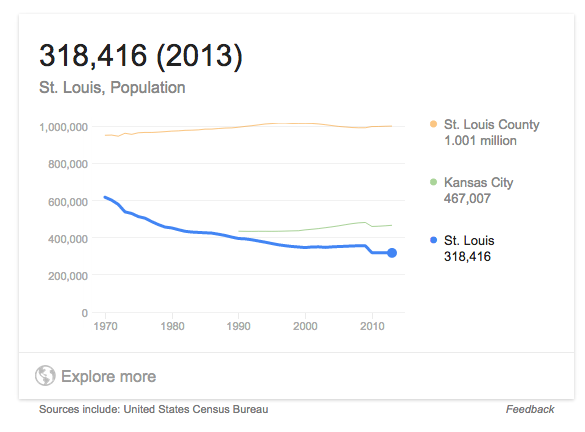
The first is St. Louis, Missouri which ranked number one overall in the article, home of Harris-Stowe State University. Recent reports have Harris-Stowe just above 1 700 students. The city has been struggling to revive its population (graph above) over the past 45 years, with an almost 50 percent decline in population this new startup boom could be just what it needs. So how is the city turning itself around? By returning to its entrepreneurial roots and reinventing itself or as Popular Mechanic editors put it, “St. Louis is a place where people come to make things—always has been. It was founded by enterprising fur traders and thrived on the wealth of railroad barons and beer moguls.” After the Great Recession that saw the city’s flagship company Anheuser-Busch sale itself off, the city took a step back and reinvented itself, “From 2011 to 2013 the ecosystem supporting entrepreneurs more than doubled in size with the launch of eight makerspaces (shops with tools like 3D printers and laser cutters), accelerators (early-stage investors and mentors), and coworking spaces (a shared office for startups, with low rent)”. The city and St. Louis Chamber of Commerce is really getting behind the movement, backing such startup hubs as T-Rex, which revitalized an 80 000 square feet 1898 building that gives startups a place to put down their initial roots. One of T-Rex’s tenants that Popular Mechanics highlights is from a local university, “Betaversity, the brainchild of biology student Blake Marggraff, 22, and two of his associates. The company’s main product is the BetaBox Mobile Prototyping Lab, a work space with 3D printers, laser cutters, CNC routers, and more—all cleverly wedged into a shipping container.” It appears that the Gateway Arch is shining itself up for its second act.

Number five on Popular Mechanics list of best startup cities in America was Baltimore, Maryland. It is home to three HBCUs. Coppin State University, Morgan State University, and Sojourner-Douglass College all call Baltimore home. The institutions between them are home to almost 12 000 students. According to Popular Mechanics, “One thing that helps all startups in Baltimore—a low cost of doing business, including reasonable rents.” A low cost of business is vital, especially for African American entrepreneurs who are not likely coming from deep family pockets or may lack access to capital via investor networks or bank loans. Under Armour, which was launched in Baltimore three years after graduation by former college football player Kevin Plank. It has grown to become one of Nike’s thorns in less than twenty years and has made Plank a multi-billionaire. It has also allowed him to become one of his colleges biggest donors and boosters. The city has also produced two notable HBCU owned media companies. One, Carter Media Enterprises founded by Morgan State University alumnus Jarrett Carter, Sr., owns HBCU Digest and has been at the vanguard of a new generation of HBCUpreneurs. The city’s Emerging Technology Centers also has been vital according to Popular Mechanics, “In 15 years the business incubator and accelerator has aided more than 350 companies that have attracted $1.6 billion in investments.” In other words, Baltimore is booming.

HBCUs and the cities they are in must and should take similar steps to creating incubators within their town. Baltimore HBCUs really have an opportunity to make a splash with 12 000 students if they created a joint incubator. Schools like Texas A&M have even gone so far as to start a program called Startup Aggieland, which  per their website, “student startup offices and co-working spaces for student collaboration, as well as free business resources, professional training and networking events.” The university does not take any equity in these businesses or their intellectual property, but by offering them the space they know if any of them are successful there is a strong chance that these students will become high-quality or transformative donors. Something all HBCUs desperately need. It also gives these students work experience before graduations, which is becoming even more of an issue for many graduates entering the work force.

These incubators and ecosystems must also take advantage of geographic and academic strengths. HBCUs in the DMV should be focused on government and defense related entrepreneurship or more specifically in Baltimore, the STEM research being conducted at America’s largest research institutions, John Hopkins. Nosy around and see what research they are developing that may have commercial application. Or if your HBCU is an 1890 school, focus on agricultural businesses. Gulf coast HBCUs should definitely be looking at aquaculture given its recent boom. Again, we have to push this as not only important, but absolutely strategically vital to our long-term survival and success.

From big cities to small towns, HBCUs should be engaged with their civic counterparts to see how they can create opportunities for their students to engage the role of owner, founder, and entrepreneur. It is vital that we create a stronger HBCU private sector that can grow enough companies and actually provide wealth creation, more immediate employment for graduates, and opportunities to start their own companies. It is also crucial that alumni play a role in this as well. Either through creating an endowment that can give the school monetary funds to award to students who engage in on-campus HBCUpreneurship or if they are HBCUpreneurs themselves providing time to mentor budding HBCUpreneurs at their alma mater. Capital is ultimately the KEY component that can unlock a lot of HBCU startup potential. Without it, these are just fancy cars parked in the driveway with no gas. We beat this horse constantly, but this is where the advent of the HBCU Credit Union would be extremely vital in HBCU startups accessing capital.

At this points we have three options: innovate, stay on life support, or die.

The other two HBCU cities on the list: 

Detroit, Michigan, home of Lewis College of Business, ranked number thirteen on the list. An HBCU and city badly in need of a makeover.

Austin, Texas, home of Huston-Tillotson College, ranked number fourteen on the list. An HBCU that sits in the looming shadow of the state’s largest public institution. Dell is based there and Twitter made its public debut at the SXSW Interactive festival that is held annually there.


The HBCUpreneur Corner™ – Spelman College’s Morgan France-Johnson & Aesthetically Spoken; Lux Creative

AestheticallySpokenLogo2013 LuxLogo

Name: Morgan France-Johnson

Alma Mater: Spelman College C’07

Business Name & Description: Aesthetically Spoken, LLC is a greeting card line that caters to the LGBTQ community; Lux Creative, LLC is a graphic design company that specializes in branding development and marketing materials.

What year did you found your company? Aesthetically Spoken, LLC – January 2012; Lux Creative, LLC – November 2012

What has been the most exciting and/or fearful moment during your HBCUpreneur career? It’s hard for me to list just one moment, as the entrepreneurial journey is one of the most exhilarating roller coasters I have ever been on! However, if I were forced to pick just one exciting moment for Lux Creative, it would be when I secured a business deal with an international brand while living in Dubai, UAE. This accomplishment affirmed that I am as good as I know and believe I am.

Exciting moments for Aesthetically Spoken are centered around the positive feedback I receive from other members of the LGBTQ community whenever they are able to share the perfect heartfelt greeting. As my overarching purpose is to positively impact lives, knowing that people truly appreciate what I do is very exciting for me.

Fear, like excitement, pokes its head up every once in a while. The most fearful moments always occur before my team and I made our most pivotal changes. The common reminder that fear projects lies in the basic concept of Newton’s Law of Relativity: For every action, there is an equal but opposite reaction. At times, we have found that increased vision is met with low visibility, growth with set backs, and opportunity with void. However, the converse is also true— opposition is met with formidability, loss precedes gain and most importantly fear is met with faith!

What made you want to start your own company? Since I could remember I wanted to “start something.” I distinctly remember at the age of 6, watching a news story with my mother about homelessness in Baltimore and afterwards saying, “Mommy, I’m going to ask God to bless me with money so I can build a place for all of the homeless people to live.”

At 6, I knew my purpose. I didn’t know what that was called back then, but I knew I was going to change the world with my ideas. Spelman cultivated my seed and honed the skills that I would need to make my mark on the world.

Who was the most influential person/people for you during your time in college? Honestly, all of my Spelman Sisters. As a native of Baltimore, I had very few experiences with African-Americans with such diverse perspectives and experiences; they gave me glasses to see a world I never knew existed. I’m forever grateful to Spelman and the women I call “Sister.”

How do you handle complex problems? I spend 20% of my effort on the problem. What’s the real issue here? What other areas does this problem affect? And so on. Then I spend 80% of my effort on the solution. I call mentors, read books, search the web, call my attorney. I do what’s necessary to ensure I’ve neutralized the problem and do my best to prevent any recurrences.

What is something you wish you had known prior to starting your company? This journey isn’t for the faint hearted, expect opposition. Stay vigilant and build your personal networks wisely as you’ll need a support system outside of business to ease the disappointments that will occur along the way.

You are the first HBCUpreneur we have had that is operating not one, but two companies at the same time. As an HBCUpreneur operating multiple companies at the same time and those considering it; what can you tell us about the experience, challenges, and advantages of being a multi-CEO? Balancing the complexities of “normal” life while owning and operating one business is difficult. Two businesses requires an intense level of focus, having great teams in place, and having a good support system. I’m reminded of the Shonda Rhimes Stanford graduation speech in which she stated: when you are in charge of multiple entities, home/multiple businesses, you will have to sacrifice. Everything can’t have your attention 100% of the time. You will mess up. You will make mistakes. But it’s all worth it.

What do you believe HBCUs can do to spur more innovation and entrepreneurship while their students are in school either as undergraduate or graduate students? As a freshman at Spelman, I attended a seminar that prompted me to change my major from Child Development to Economics. That one seminar ultimately changed my entire life. I believe that HBCUs can spur innovation and entrepreneurship by hosting meaningful events that spark creativity while simultaneously educating and supporting individuals who are considering entrepreneurship.

Given the LGBTQ community has an estimated $830 billion in buying power; what are some of the blooming opportunities you believe are on the horizon to HBCUpreneurs looking to provide goods or services to the LGBTQ community in particular? I believe that it is the responsibility of those in the LGBTQ community to assess the market for needs and meet them. Aesthetically Spoken, a card line created specifically for the LGBTQ community was born simply out of need. I found myself in need of a Valentine’s Day greeting card fitting for my same sex significant other. Heteronormative pronouns and insinuations were not fitting; and, as a graphic designer, the inspiration to create an LGBTQ greeting card company derived from this disheartening deficit.

How do you deal with rejection? (chuckle) I keep moving. The year I graduated from Spelman, I joined a network marketing company. (Pre-Paid Legal. Now, Legal Shield) Network marketing is FULL of rejection. We were taught to not take it personally. Once you realize you can take a no and keep moving. You can do anything.

When you have down time how do you like to spend it? Down time?!?! What’s that? I really enjoy spending time with my girlfriend, friends, and family. I enjoy the outdoors, traveling, being active, yet I also enjoy staying in and reading a good book. You’re liable to catch me enjoying life in a variety of ways.

as_founder

What was your most memorable HBCU memory? Again, there are so many. Most memorable would have to go to standing on the grass on the Spelman Oval, holding the hands of my other Spelman Sisters and speaking my name to the Universe like so many other Spelman Women before me. It was a spiritual experience. That’s when I knew I had made the right choice.

In leaving is there any advice you have for budding HBCUpreneurs? Don’t quit.

Love Grows Founder/President Misha Granado Talks Entrepreneurship On Today’s Leading Women Show

10612763_10205211058656594_6155669126795381453_n

HBCUpreneur Misha Granado recently sat down with Today’s Leading Women host Marie Grace Berg to discuss her firm Love Grows, entrepreneurship, work-life balance, and a host of other related topics.

An excerpt from the interview where Ms. Granado talks about her willingness to learn as one of her strengths and how it helps her as an HBCUpreneur, “I am willing to learn. I realized that I don’t have all the answers with this entrepreneur journey or with my business or even in life and so I am willing to learn from others. I am willing to make the investment if I need to take the class or  to obtain a mentor or take a workshop or something like that. Not to go to Miami for the weekend or long weekend which I would want to do – hang out on the beach, absolutely. But as an entrepreneur to transfer those funds, invest those funds into something that will help me grow my business and become stronger. To read a lot of other experts in my field. What’ s going on, I want to be abreast of what other people are doing. How do they see the world? How do they address relationships and love? All of those things, again because we are all connected can spark something within me or maybe even shift a way I have seen a particular situation.”

For the full interview click HERE.

Read Misha Granado & Love Grows’ feature on HBCU Money’s The HBCUpreneur Corner HERE.

The HBCUpreneur Corner™ – Norfolk State University’s Harold Blackwell & Chestnut Hollow Farms, LLC

chestnut-hollow-farms-basic-logo-for-web (1)

Name: Harold L. Blackwell

Alma Mater: Norfolk State University

Business Name & Description: Chestnut Hollow Farms, LLC grows hydroponic leafy greens (kale, lettuce, spinach, etc.) and culinary herbs in an indoor controlled environment year round in Fairfield County, CT.

What year did you found your company? In late 2011 and we have been going strong ever since.

What has been the most exciting and/or fearful moment during your HBCUpreneur career? The most exciting moment was when we picked up our first grocery store/wholesale account. It was at that moment the realization set in we were onto something great. My most fearful moment was when it became apparent demand started to outstrip our capacity. A great problem to have, but definitely scary.

What made you want to start your own company? I have always had an ‘entrepreneurial bug’ inside of me. I realized early in life that I wanted to call the shots and not take orders. Obviously you still take orders in some form, but when you own your own business you also control your destiny (for the most part). Based on these internal feelings it was a natural progression to incorporate and do what I enjoy as a business.

GreenAwards2014 (3)

Who was the most influential person/people for you during your time in college? The most influential person was not a professor, but a cousin who was also a HBCU graduate. He explained to me about self-employment and how he built his own real estate empire. My conversations with him helped fill in the gaps of what I did not learn in class. To this day, he is a trusted advisor and has given me gems of wisdom ever since.

How do you handle complex problems? My approach is to always take a step back and make sure I understand all of the facts and think of possible solutions. In each solution, I review whether or not I have accounted for all possible factors (pros and/or cons). Then I do simple benefit analysis and choose my solution.

What is something you wish you had known prior to starting your company? To not delay starting my business because I assumed more money was needed. It was quite the opposite.

What do you believe HBCUs can do to spur more innovation and entrepreneurship while their students are in school either as undergraduate or graduate students? More incubators on campus and partnerships with innovative, private companies looking for the next biggest/best idea.

African American farmland ownership is at an all-time low controlling only 0.4% of America’s farmland. What do you believe HBCUs can do to reverse this trend? I believe HBCUs can help reverse the trend by purchasing farmland and build out beginning/new farmer programs on the purchased farmland. Ideally this would create new African American farmers. The hope would be for these new farmers to eventually move on to purchase additional farmland.

How do you deal with rejection? Constructively. It forces you to rethink your strategy and approach to certain tasks.

When you have down time how do you like to spend it? I spend my down time either reading or doing some farm related activity. I also maintain a day job so these activities serve to relax my mind and spirit.

What was your most memorable HBCU memory? Oh wow, there are so many to choose from! I would have to say graduating. My mother, father, brother, aunt, and some friends were there to show support. One of my proudest days.

In leaving is there any advice you have for budding HBCUpreneurs? Read and be open to ideas that do not necessarily align with your thinking. I believe these factors help you think outside of the proverbial box. Read current events and anything that interests you. Especially books/periodicals related to your industry or a field you wish to become establish a business.

The HBCUpreneur Corner™ – Florida A&M’s Makya Renée & Mareta Creations

MaretaCreations-Logo

Name: Makya Renée

Alma Mater: Florida A&M University

Business Name & Description: Mareta Creations; specializing in Fine Invitations, Corporate Design, Photography, and Graphic Snob® Apparel

graphicsnob-profilepic-1

What year did you found your company? 2005

What has been the most exciting and/or fearful moment during your HBCUpreneur career? Most exciting AND fearful moment was participating in my first bridal show. It was the first time I took samples of my work out of my home and exposed them to complete strangers. Although I was hand-selected to participate in the show, I wasn’t sure how the public would react to my work. I was in awe of and honored by the caliber of other participating vendors and the fact the show’s executives believed I was on their same level.

What made you want to start your own company? An internal desire to create while calling my own shot. To pursue what I was passionate about without any restrictions. To see my clients smile and know that I had a part in that. This is happiness to me.

Who was the most influential person/people for you during your time in college? My mentor Wallace W. Johnson, the first person to give me a job and expose me to the field of graphic design.

How do you handle complex problems? I always strive to have a plan – and a plan to back-up the back-up plan. I remain calm, pray without ceasing, research, and take things one day at a time. I demand more of myself than anyone else, but recognize when I need help and humble myself to accept it. I don’t tolerate stress or drama, so once addressed, I keep it moving.

What is something you wish you had known prior to starting your company? I wish I knew that although you should be passionate about your profession and have a desire to serve others, you must also have a desire to serve and protect yourself. Several people will take advantage of you if you allow them to, so it is extremely important to establish business policies, practices, and boundaries that allow you to serve your clients while protecting yourself. Business relationships are a lot like personal relationships and if you don’t ensure that you receive a return on your investment of time, talent, effort, and energy, you will get burned out and be unable to serve anyone.

What do you believe HBCUs can do to spur more innovation and entrepreneurship while their students are in school either as undergraduate or graduate students? I believe each program offered at HBCUs should offer business-centered courses that align with their respective fields. Learning and practicing how to develop contracts; research industry rates and set pricing; interact with clients, vendors, sub-contractors; network with other industry professionals and professional organizations; brand and market company services; and apply ethics to ensure longevity as it relates to that field will spur more innovation and entrepreneurship among HBCU college students. Successful entrepreneurial alumni should be encouraged to return and address students on a consistent basis to provide insight and exposure. Unfortunately, black students as a whole aren’t encouraged to work for themselves as much as students of other cultures and don’t have the opportunity to observe many successful black-owned business. If we don’t pass these experiences down and encourage this option for our children, this cultural and economic divide will continue for generations to come.

African American banks struggle to attract African American small and start-up businesses. Is there something you believe that can be done to improve the relationships between African American business institutions? Exposure and marketing. African-American banks should establish relationships with HBCUs and target entrepreneurially- minded students through speaker series and event sponsorship. People can’t seek relationships and opportunities they don’t know exist. You have to meet people where they are, and HBCUs are the best breeding grounds for future entrepreneurs of color.

How do you deal with rejection? As an Architecture major (initially) and a Graphic Design major, critiques were a daily part of my training in undergrad. I learned at a young age how to separate my personal value from the opinions of others. Everyone has different taste and I put more emphasis in trying to capture my clients’ style than trying to force my own upon them. Therefore “rejection” to me isn’t personal, its merely a statement that I need to do a better job of learning my client and communicating their vision.

When you have down time how do you like to spend it? Travel and spend time with friends. I hardly ever watch TV or go the movies, so a day of vegging out and catching up on Scandal is always nice as well.

MakyaRenee

What was your most memorable HBCU memory? SGA Bus Trips! FAMU’s SGA, Presidential Ambassadors, and Royal Court traveling to cities all over the country to support our football team, host recruitment fairs, and represent our beloved university to prospective students. These trips bonded us for life and gave me the best network an HBCU graduate could ever have -Priceless!

In leaving is there any advice you have for budding HBCUpreneurs?Do your research, align yourself with other entrepreneurs, build plans knowing there is always a “subject to change” footnote. Pray about your passions and ask the Lord to guide you where He wants you to be. He will place people in your path who will help you get there and you will have joy working in your purpose. Remain humble and accept help from people who have a genuine desire to help you. No one makes it to where they need to be alone. Be patient with yourself and your dream, but set milestones to encourage yourself along the way. Be slow to take offense, but know when to end the pursuit of certain opportunities and clients that drain you. A sinking ship saves no one.

Fear will be something you constantly have to overcome. Don’t be afraid to make a “wrong” decision as long as you know how to follow up with a decision to correct it…for this is how you learn what works and doesn’t work. Not everyone has the stomach for entrepreneurship life, but you have to learn how to listen to and follow your gut. There will be periods of discomfort, but as long as you apply commonsense and wisdom, they won’t last forever. Align your sights as best you can and pull the trigger. The only way to test your wings is to jump, but make sure your wings are in the best condition before you do.

HBCU MONEY™ wants to sincerely thank Ms. Makya Renée for taking the time with us here at The HBCUpreneur Corner™.