Category Archives: Banking & Credit Unions

2015 HBCU-Based Credit Unions: Alabama A&M’s Councill Credit Union Leads A Weak Pack

Opportunity has power over all things. – Sophocles

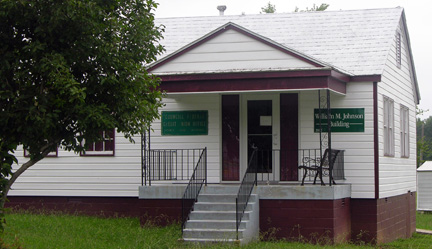
CFCU

(Pictured Above: Councill Federal Credit Union at Alabama A&M University)

The release of the second annual HBCU Money African American Credit Union Directory allowed us to uncover two more HBCU-based credit unions. A total of eleven HBCU-based credit unions that control a combined $87 million in assets and have 17 099 in members. For comparison, Navy Federal Credit Union, America’s largest credit union has $63.7 billion in assets and 5.3 million members. Three years ago, I wrote on what forming a national HBCU credit union would look like and why it should be a reality. As it turns out, much of the infrastructure for this reality is already in place. Now the question is, what is holding us back?

  1. Southern Teachers & Parents (LA) – $28 million ($29 million)
  2. Florida A&M University (FL) – $19.6 million ($20.6 million)
  3. Howard University Employees (DC) – $11.3 million ($11.4 million)
  4. Virginia State University (VA) – $9.6 million ($10.6 million)
  5. Prairie View (TX) – $4.8 million ($5 million)
  6. Savastate Teachers (GA) – $3.6 million ($3.6 million)
  7. Councill (AL) – $3.4 million ($3.1 million)
  8. Xavier University (LA) – $2.4 million (N/A)
  9. Arkansas A&M College (AR) – $2.3 million (N/A)
  10. Tennessee State University (TN) – $1.4 million ($1.4 million)
  11. Shaw University (NC) – $0.5 million ($0.5 million)

If the eleven merged it would the eleventh largest credit union by assets and by members, and would be only the second African American financial institution with a national footprint. The other being OneUnited Bank, which covers Massachusetts, Florida, and California.The lack of products at HBCU-based credit unions continues to be a chief complaint of why so little deposits seem to remain in them. Everything from better web-presence, mobile banking, investment products, and small business loans could be rolled out in scale if the eleven merged.

Instead, six of the nine HBCU-based credit unions we reported from last year saw their assets drop. Median and average assets fell 1.7 percent and 1.4 percent, respectively among last year’s group of nine. In terms of membership, membership also declined in six of the nine HBCU-based credit unions as well. Membership overall fared into the red with median and average membership down 2.3 percent and 6.3 percent, respectively. Two trends you want to desperately avoid if you are any institution. The best performer was Councill Credit Union at Alabama A&M University who saw an increase of 8.5 percent in assets, this despite the second worse drop among the group in membership decline with a 17 percent drop. Tennessee State University’s Credit Union had the largest increase in membership with a 6.3 percent increase from 2014. However, it only resulted a 1.7 percent increase in assets. One of only three HBCU-based credit unions to see an increase of any sort in assets from the previous year so I guess the cup is half full if you want to see it as such.

Unfortunately, there also seems to be no urgency by these credit unions to do the things necessary to increase their membership and assets. Students entering into HBCUs today may be more financially illiterate than a generation ago, but they have more complex financial needs thanks in large part to student loans playing such a large role into today’s higher education finance. Not to mention the reduced role that social security will play in their long-term retirement planning. An issue that should be prompting more HBCU-based credit unions to find ways to help students reduce student loan debt and start retirement planning while in college. A hard task to give this group given the limited financial products and services they offer leave HBCU-based credit unions minute opportunity to serve the needs of students, faculty, campus organizations, or even the HBCUs themselves. These limited products and services are largely an issue of lacking scale. Instead of a credit union with at least $87 million in assets, the median is $3.6 million amongst eleven with declining assets and membership. Instead of students, faculty, and institutions who travel more today than ever to conferences, tournaments, etc. being able to access their money at one of the eleven branches or through mobile app banking along the way, they are limited to just one insular branch with technology that at best reminds you of AOL dial-up. Holding onto students is even more difficult with most returning to their hometowns or nearest major city upon graduation and only returning to the campus at most once a year for homecoming. Incentive to keep banking beyond graduation? None.

Lauryn Hill has a wonderful song called the Ex-Factor that I think often describes African America institutional strategic behavior and with HBCU-based credit unions it seems no different. “It could all be so simple, but you’d rather make it hard. Loving you is like a battle and we both end up with scars.” I still believe with the right vision, an HBCU credit union could rival the Navy Federal Credit Union and give African America a place of financial safety instead of the scars we constantly end up with from predatory financial services that come into communities because we are left with such meager choices from our own financial institutions. It really all could be so simple, but more than likely we will continue to make it hard.

Two African American Banks Fail To Begin 2015

Screen Shot 2015-02-18 at 2.54.39 PM

The African American banking system suffers major setbacks to begin the year. Highland Community Bank (press release below) which had assets of approximately $73.4 million 2013. The bank was founded November 09, 1970 in Chicago, Illinois. Over the past two years it witnessed double digit asset declines on its books.

Screen Shot 2015-02-18 at 2.53.30 PM

Also seeing its doors close is Capital City Bank & Trust Company in Atlanta, Georgia. Capitol City, was the ninth largest African American owned bank, with $291 million in assets or 5.7 percent of African American bank owned assets. The bank was only 20 years old, meaning it had seen explosive growth in its short time.

These two closures reduce the number of African American owned banks down to 23 ahead of the HBCU Money’s 2015 African American Bank Owned Directory release, and a combined loss of 7.2 percent of African American bank owned assets. For perspective in 1994, there were 54 African American owned banks.

For the FDIC’s Failed Bank List click here.

Southern University Dominates HBCU Credit Unions; National Opportunity Continues To Be Missed

By William A. Foster, IV

Capacity never lacks opportunity. It cannot remain undiscovered because it is sought by too many anxious to use it. — Bourke Cockran

logo

The recent release of HBCU Money’s inaugural African American Credit Union Directory gave us some very unexpected information. There are nine HBCU-based credit unions that control a combined $82.2 million in assets and 15 885 in members. For comparison, Navy Federal Credit Union, America’s largest has $56 billion in assets and 4 million members. Some time ago, I wrote on what forming a national HBCU credit union would look like and why it should be a reality. As it turns out, much of the infrastructure for this reality is already in place.

  1. Southern Teachers & Parents (LA) – $29.0 million
  2. Florida A&M University (FL) – $20.6 million
  3. Howard University Employees (DC) – $11.4 million
  4. Virginia State University (VA) – $10.6 million
  5. Prairie View (TX) – $5.0 million
  6. Savastate Teachers (GA) – $3.6 million
  7. Tennessee State University  (TN) – $1.4 million
  8. Shaw University (NC) – $0.5 million
  9. Langston (OK) – $0.1 million

If the HBCU Credit Union became a reality and the nine merged, then instantly it becomes the eleventh largest African American credit union in the United States by both assets and membership. This is before Prairie View’s credit union even opens its doors to taking on student accounts, which it is set to do in the next year or two and could potentially push the deposit base close to a combined $90 million. Even more important, the HBCU Credit Union would be the only African American deposit financial institution with a multi-state footprint other than One United Bank. With a solid deposit base underneath it, product expansion could be felt across all nine credit unions and done so at a cheaper cost than going at it alone. The lack of products at HBCU-based credit unions has been a chief complaint of why so little deposits seem to remain in them. Everything from better web-presence, mobile banking, investment products, and small business loans could be rolled out in scale.

The most important part of the formation of this credit union remains the HBCUs themselves. Not one HBCU currently banks with an African American financial institution to the best of my knowledge. If the institutions themselves were to come on board, then the deposit base could easily be in the billions. Especially, if one includes the possibility of bringing in organizational accounts like the Divine 9, UNCF, Thurgood Marshall Fund, and other HBCU-related organizations. For HBCUs, this would have the benefit of actually increasing its ability to maintain a financial connection with their alumni and increase alumni giving. The alumni giving platform could be connected with their account. A move such as this would also create opportunities for graduates, internships, and HBCUs becoming more integrated into the African American institutional ecosystem, and not continuing to act independent of it.

Economies of scale. Economies of scale. Economies of scale. Maybe, if I repeat it three times it will take root. This is something that the African American economy has lacked and continues to lack with any of its businesses or organizations. Scale allows you to drive down repetitive cost while being able to offer more because you are no longer paying for nine CEOs just one. And there in lies the hurdle that must be overcome. Many in African American organizations, because opportunities are so limited outside of our ecosystem hold on tightly anytime they achieve a position of prominence within our ecosystem. We are more than excited to stroke our ego to be a big fish in a little pond, when we could be a part of building something that could put us in the middle of an ocean of opportunities for everyone. Despite its aborting impact on the development of our community’s economic health it seems willingness to take such a bold and courageous step is hard to find. The dream of a national HBCU credit union will march on because the need and opportunities it could create are perpetual. However, like a dream deferred I hope it will not dry up like a raisin in the sun.

The Most Powerful Women in African American Owned Banks

The true worth of a race must be measured by the character of its womanhood. – Mary McLeod Bethune

Headshot-Cynthia-Day-2011

African American owned banks might be on the decline, down to 21 from 54 over the past 20 years, but the ranks of African American women in positions of power continues to rise. Our list includes 3 CEOs, 1 President, 2 CFOs, 13 Vice-Presidents, and 7 board of directors. A sign that the playing field for African American women within African American organizations is much friendlier than their counterparts. African American women comprise almost 15 percent of African American owned banks CEO positions, while European American women make up only 5 percent of European America’s top 20 banks.

We have done our best to find out just who are some of the amazing African American women serving as executives and directors at African American owned banks around the country. Some banks do not have their management or board of directors listed so we are sure we missed some, but for now here is who we found and some of their stories.

Broadway Federal Bank

Mildred Cayton is the Controller for Broadway Federal Bank, making her the number two in charge at the California-based bank.

Commonwealth National Bank

Jacquitta Powell Green is the Vice President of Northside Exchange. She has served on the boards of Volunteer Mobile, the National Check Cashier Association, the City of Prichard Chamber, Leadership Mobile and as the Nominations Chair of Delta Sigma Theta, Inc. and Services to Youth Chair/Greater Mobile Chapter of the LJNKS, Inc. Jacquitta Powell Green is a graduate of Alabama A & M University and Springhill College.

Citizens Trust Bank

Cynthia N. Day, President and CEO (pictured above) – assumed the presidency of the Company and Citizens Trust Bank on February 27, 2012. Day joined Citizens Trust Bank in February 2003 as Executive Vice President of Management Services after the Bank acquired Citizens Federal Savings Bank of Birmingham, where she served as the Executive Vice President & Chief Operating Officer and in other capacities since 1993. Two years after the acquisition, she became the Senior Executive Vice President & COO of the Company and the Bank. Prior to becoming a banker, Ms. Day, who is a certified public accountant, worked for KMPG as an audit manager, managing audit engagements for companies across several different industries including banking, insurance, manufacturing and educational institutions. Ms. Day has been recognized for her leadership and mentorship in various community and professional organizations including being named one of “Atlanta’s Top 100 Black Women of Influence” by the Atlanta Business League and one of Atlanta Tribune’s “Wonder Women”. She currently serves on the board of The National Banker’s Association and Aarons, Inc. She is also a member or has actively served in various organizations such as the Georgia Society of CPAs, The University of Alabama Continuing Education Advisory Board, the American Liver Foundation and Alpha Kappa Alpha Sorority Inc. Ms. Day’s insight into the day-to-day operations of the Bank and her expertise in the banking industry adds value to the board and qualifies her to serve as a director.

Mercy P. Owens, began her service as a director in 2004Ms. Owens retired as Senior Vice President of Wachovia Bank with more than 30 years of banking experience, primarily in the area of compliance.  Ms. Owens is the President of Resource Consulting, which has been engaged by Fortune 500 companies, small businesses, and non-profit organizations to provide training and development for her constituents.  She serves on the St. Augustine’s College Falcon Foundation Board and Emory Hospital Winship Cancer Center Advisory Board.  We believe Ms. Owens’ previous years of banking experience are very valuable to the board and qualify her to serve as a director.

Industrial Bank

Patricia A. Mitchell, EVP, Retail and Sales Operation, is also a member of the board of directors. For Ms. Mitchell, Industrial Bank is more than a job, it is a legacy. She is the granddaughter of the bank’s founder and had fate not had its hand she would have never entered the family business. Luckily, she did and the rest has been history.

Massie S. Fleming has been a Director of IBW Financial Corp., since 1985. Mrs. Fleming retired at the end of 1997 from her position as Executive Vice President of the Industrial Bank, N.A. Prior to that date, she served in various executive and administrative positions at the bank since 1959, including as Chief Executive Officer from 1985 to mid 1997.

Pamela King has been a Director of IBW Financial Corp., since June 2001. Ms. King serves as President of the accounting firm of King, King, and Associates. Ms. King was one of the first African-American women to serve on the Maryland Board that certifies CPA’s.

Liberty Bank

Rhonda M. McMillan, Senior Vice President & Chief Credit Officer, Ms. McMillan is responsible for credit administration, mortgage operations, Visa and risk management for Liberty. She has an MBA in Finance from Clark Atlanta University and a graduate degree in banking from Southern Methodist University’s Southwestern Graduate School of Banking. With over 15 years in banking and credit administration, Ms. McMillan has held numerous positions within the credit administration and risk management areas.

Mechanics  & Farmers Bank

Connie White serves as Vice Chairman of Mechanics and Farmers Bank. Ms. White has been a Director of Mechanics and Farmers Bank since 2002. She serves on the boards of the Durham County ABC Board and the NC Legislative Black Caucus Foundation. Ms. White has a total of 8 years of banking experience. Ms. White earned a Bachelors of Science Degree from Hampton University and a Masters in Business Administration from the University of Wisconsin-Madison.

Kim D. Saunders has been the CEO and President of M&F BanCorp. Inc. since 2007. Prior, she served as the Chief Executive Officer and President of Consolidated Bank & Trust Company. She also holds appointments as a Vice Chair of the Richmond Renaissance and member of the Virginia Fair Housing Board. A rich professional career as she has more than 20 years of commercial banking experience. She has been Director of M&F BanCorp. Inc. and Mechanics & Farmers Bank since 2009 and 2007 respectively. Ms. Saunders serves on the boards of the Greater Richmond Chamber of Commerce, the Virginia Biotech Research Park Corporation, Saint Catherine’s School, World Affairs Council (VA), and the Bon Secours Richmond Health System (Joint Hospitals). Ms. Saunders holds a Bachelor of Science Degree in Economics from the Wharton School of Finance and Commerce at the University of Pennsylvania and Honorary Doctorate in Humane Letters from Shaw University in 2007.

OneUnited Bank

Deloris Pettis-Donaldson serves as a director at OneUnitedBank. served as Director of Internal Audit at Harvard University and was instrumental in transforming the internal audit function into a risk management department. Ms. Pettis-Donaldson has extensive finance and internal audit experience. She served for four years as Group Audit Manager of North American, Latin American, and Caribbean operations at Digital Equipment Corp. She also helped to develop and implement a risk-based operating model. Before Digital, she served as Director of Internal Audit for Massachusetts Bay Transit Authority (MBTA). In addition to working at Digital and MBTA, she worked at BankBoston Corp., National Association of Securities Dealers and the accounting firm of Peat Marwick Mitchell. At BankBoston, she held a range of senior finance positions, including Manager of Regulatory Reporting and Manager of Internal Control. At Digital, she served on the Advisory Board for the Financial Development Program. She serves as Director of Harvard School of Public Health. She is a Certified Public Accountant and Certified Internal Auditor. She has an MBA from Tulane University’s Graduate School of Business Administration and a Bachelor’s degree in Political Science from the State University of New York, Buffalo.

Teri Williams serves as President and Chief Operating Officer of OneUnited Bank (formerly, Boston Bank of Commerce). Ms. Williams is responsible for implementation of OneUnited Bank’s strategic initiatives, as well as its day to day operations. She has 25 years of financial services experience from premier institutions such as Bank of America and American Express TRS Company, where Ms. Williams served as a youngest Vice President. She served as a Senior Vice President of OneUnited Bank. She serves as Director of OneUnited Bank. She served as a Director at Carver Bancorp Inc. since 2000. She has been Treasurer of Dimock Community Health Center for over 5 years and is its Vice Chairperson. Ms. Williams is involved in community projects, including Treasurer of UNICEF/New England and the Board of Overseers for WGBH (public tv). Ms. Williams has received numerous notations and awards for her contribution to urban communities including from the Urban League, NAACP and the National Black MBA Association. Ms. Williams holds an M.B.A. with honors from Harvard Graduate School of Business Administration and a B.A. with distinctions in Economics from Brown University.

Sherri Brewer is Senior Vice President, Chief Retail Officer of OneUnited Bank. She has been in the banking industry for 30 years.

Cecilia Isaac serves as Senior Vice President and Chief Lending Officer of OneUnited Bank. Ms. Isaac is responsible for OneUnited Bank’s lending operations including loan origination (sales and production), loan service and asset management. Ms. Isaac has over 30 years of banking experience – beginning with Security Pacific and including First Interstate Bancorp and Bank of California. Ms. Isaac has retail banking and extensive lending expertise in single family lending, commercial lending, commercial real estate lending, portfolio management, loan work out, mortgage sales and credit administration. Ms. Isaac holds a bachelor’s degree, a master’s in public administration and a certificate in tax administration from the University of Southern California.

Seaway Bank and Trust Company

Phyllis Davis serves as President of Phyllis Davis Real Estate. Phyllis Davis serves as Director of Seaway Bank And Trust Company.

Gail L. Bahar, Vice President/Human Resources Officer

Lois B. Jenkins, Vice President/Trust Officer

Claudette Harris, Vice President/Marketing Officer

Trina E. Phelps, Vice President/Internal Auditor/Loan Review Officer

Denise Weaver, Senior Vice President/Operations

Arlene Williams, Senior Executive Vice President/Lending

United Bank of Philadelphia

Marionette Y. Wilson joined the Board of Directors of United Bank of Philadelphia in  1992 as a founding director. She is now retired but was formerly the Co-Founder/Partner, John Frazier, Inc., Philadelphia, PA from 1981-2002.

Evelyn F. Smalls has been the President and Chief Executive Officer of the United Bank of Philadelphia since June of 2000.  Prior to this appointment, she was the Senior Vice President of Human Resources and Compliance.

Brenda M. Hudson-Nelson serves as United Bank of Philadelphia’s Executive Vice President and Chief Financial Officer. Mrs. Hudson-Nelson’s responsibilities include directing financial planning, financial reporting, implementing, managing the Bank’s investment portfolio, and managing the Bank’s sensitivity to interest rate risk.  Prior to joining United Bank of Philadelphia, Ms. Hudson-Nelson was an Audit Manager for Ernst & Young, a ”Big 6” accounting firm serving clients in the financial services industry.

Dimitria Davenport is an Assistant Vice President of Compliance and Administration. Ms. Davenport’s responsibilities are to ensure that the Bank adheres to all applicable consumer protection laws, and federal and state regulations. In her eighteen-year tenure in the financial services industry, she has held key roles within Human Resources, Training and Retail Administration.

Juliette L. Holmes is the Assistant Vice President of Retail Banking and Business Development. In this capacity, she is responsible for overseeing branch operations and business development for the Bank’s three branches. Ms. Holmes has many years of experience in retail banking and has coached and mentored branch personnel to provide exceptional customer service.