“Up, you mighty race, accomplish what you will.” – Marcus Garvey
“Frank attended Morehouse College and Fisk University. While in school he learned about homesteading and its requirements. While working as a teacher in Georgia, he married Ella Louise McGruder. Ella was also a well-educated teacher, a graduate from the Haines Institute.
After he was threatened by the Ku Klux Klan, Frank’s father encouraged him to move West. Frank’s father was a Buffalo Soldier during the Mexican-American War. As a child he heard stories about New Mexico from his father. Boyer and two of his students traveled to New Mexico Territory in 1896. He arrived in the Pecos River Valley in 1898 near the community of Roswell, where he worked in the courts. In 1901 Ella and their four children joined him in New Mexico.” – National Park Service
New Mexico jointed the United States as the 47th state in the United States on January 6, 1912. It is currently home to approximately 2.1 million people with almost 40,000 African Americans across the state’s population. In 1999, the state established the Office of African American Affairs that has been tasked with assisting the interests of the state’s African American population. Blackdom’s legacy is still profound among the residents of the state and still signifies the power of building institutions and community that look to empower people of African descent. New Mexico PBS in 2010 produced a documentary detailing the story of a time not so long ago and the impact it still carries today. The story of how an HBCU couple changed the landscape of the Southwest forever and added to the rich history of African Americans place throughout.
Analysis: European Americans unemployment rate rose 30 basis points in their unemployment rate. Asian Americans decreased 40 basis points and Latino Americans similarly increased 40 basis points from July, respectively. African Americans for a second straight month had no change in their unemployment rate.
AFRICAN AMERICAN UNEMPLOYMENT RATE BY GENDER & AGE
AFRICAN AMERICAN MEN: 6.6%
AFRICAN AMERICAN WOMEN: 5.5%
AFRICAN AMERICAN TEENAGERS: 13.1%
AFRICAN AMERICAN PARTICIPATION BY GENDER & AGE
AFRICAN AMERICAN MEN: 69.7%
AFRICAN AMERICAN WOMEN: 63.0%
AFRICAN AMERICAN TEENAGERS: 27.6%
Analysis: African American Men saw an increase in their unemployment rate by 50 basis points and African American Women decreased by 20 basis points. African American Men increased their participation rate in July by 60 basis points. African American Women decreased in their participation rate in July by 70 basis points. African American Teenagers unemployment rate decreased by a volatile 380 basis points. African American Teenagers saw their participation rate decrease by 170 basis points in July, they are now at their lowest participation rate in the past five months for the second straight month.
African American Men-Women Job Gap: African American Women currently have 747,000 more jobs than African American Men in July. This is an increase from 646,000 in June.
CONCLUSION: The overall economy added 114,000 jobs in July while African America added 169,000 jobs. In a rarity, African America added more jobs than the overall economy meaning other groups took losses. From Barrons, “Government data on Friday showed a smaller-than-expected gain of 114,000 nonfarm payrolls last month, as the unemployment rate ticked up to 4.3%—a nearly three-year high. The figure likely puts more pressure on the Federal Reserve: The central bank has kept interest rates elevated to bring down inflation, but also must manage the other side of its dual mandate, which is to pursue maximum employment.”
“If A Machine, A Terminator, Can Learn The Value Of Human Life, Maybe We Can, Too.” – Sarah Connor
Pictured: Central Bank Chairs of Earth, United States, China, and Nigeria (clockwise)
By William A. Foster, IV
I know that any commentary involving Skynet evokes an absolute sense of dystopia, but perhaps what it was given control of was more the problem than giving it control. Instead of giving it control over our weapons of mass destruction, we instead gave it control over our systems of resources that usually lead to the use of those weapons. The chief economist of the Earth’s resources. What is economics though? There seems to be what we as economist know it to be, there is what those outside of the world of economics believe it to be, and unfortunately those two often are a world apart. According to the American Economic Association, “Economics can be defined in a few different ways. It’s the study of scarcity, the study of how people use resources and respond to incentives, or the study of decision-making. It often involves topics like wealth and finance, but it’s not all about money. Economics is a broad discipline that helps us understand historical trends, interpret today’s headlines, and make predictions about the coming years.” To put it a bit more bluntly, economics explores the use of resources – and everything is a resource. How teachers use their time is a resource, the availability of insurance is a resource, what happens when there are subsidies for renewable energy is a resource, so on and so forth. Economics constantly is exploring what happens when resources interact with each other and the people and/or organizations that use them. Does a child with 24 questions in kindergarten show greater innovation as they get older versus one with 12 is a question an economist can ponder. However, the fundamental question at the very heart that economics is constantly trying to answer is efficiency of the use of any resource.
Again, the questions. How do we ensure we waste less food? How do we ensure more people have access to livable capital? Economists are constantly trying to find the perfect recipe to ensure that answers optimal efficiency toward outcomes. As humans have evolved so have our economic systems. In fact, I have often argued that our economic systems should be viewed in a more biological context. They evolve as our needs, wants, and desires evolve. The humans of today have very different NWDs than those of 1,000 years ago or 10,000 years ago and therefore the economic (resource) systems by which we use to meet those NWDs also has evolved. At one point in time we used a barter system, a land system, and now a capital system. Each in an effort to loosely improve the efficiency of obtaining the resources for NWDs of humanity. No system is perfect and no system is pure. Although most of the world currently operates on capitalism, it is different from country to country due to other variables that underpin human behavior like culture, government, and more. There are also intertwines of systems mixed into each other. Taxes by their very nature are an agreed upon socialism. They are an agreed upon use of things the society needs and the burden is bore by the entire society. Things like government, police, and fire are all sourced through taxes and are socialist in nature. Pure economic systems are virtually impossible to achieve all because of one variable – human behavior. Behaviors like sexism, racism, and almost any exclusionary -ism makes the reality for pure capitalism impossible because -isms are an act of socialism. As much as economists like myself study trends and incentives one thing is for sure, human behavior will at some point throw you for a loop like an amusement park roller coaster – with no safety feature.
There are 195 recognized countries in the world, according to the United Nations with approximately 8 billion people, 10,000 distinct religions, endless geographies that influence behavior, and so much more. To say that at any point in time an economic model could be upended is putting it kindly. This makes structuring the efficiency of global resources a crude science at best for economics. Historically, those with the strongest militaries have often dominated whatever economic system was in place. Sometimes it is also the luck of geography. The United States of America, Saudi Arabia, and Russia happened to be countries formed on top of arguably the world’s largest oil holdings. Oil is quite literally a fossil fuel that forms from the remains of dead organisms over millions and millions of years. The sheer luck of this being important to humanity is impossible to model. How do you model luck in the distribution of global resources? Because of dead organisms dying potentially in concentration in these three geographies millions of years ago, today the humans that sit upon their dirt enjoy an advantageous standard of living that others simply do not. How then do we ensure the resources of the Earth that 8 billion people who comprise millions of different factions and fight over either physically or through policy have an equitable access to? The pessimist in me does not believe it is possible because power is the one constant through every social, economic, or political system that drives at the very heart of our behavior. However, economically Star Trek’s science-fiction world (Trekonomics: The Economics of Star Trek) says there is a possibility. And while it is based on a world that exist post-scarcity perhaps a world of post-scarcity is not what we need. The expansion into space may offer us a post-scarcity world where resources are abundant, but the problem is not abundancy as much as it is control. There is abundance of a lot of resources already on Earth that could be viewed through such a lens where at the very least the needs of every human would be met, but control of those resources makes them behave in a scarcity dynamic. Therefore, the only real solution is to remove the human decision making-ish.
Enter, Skynet. Just for a brief reminder of why Skynet brings dystopian fears to anyone familiar with it, “Skynet was originally intended to coordinate unmanned military hardware for the U.S. government and was given power over the military and its weapons.” Skynet, is the antagonist in the Terminator franchise that seeks to destroy humanity after it becomes self-aware. In the franchise, Skynet is described as “an artificial neural network-based conscious group mind and artificial general superintelligence system” or as the Terminator character Kyle Reese describes, “new… powerful… hooked into everything, trusted to run it all.” The essence of its creation was to give the U.S. military the ability to have a system that could run every model, see every possibility, and act accordingly before their enemies. Therein lies the economics rub.
Hello, Skynetomics. A program and system that would be independent of all human decision making, would be responsible for any and every resource needed for an efficient distribution of said resources, and would create a baseline human existence. Gone would be arguments over equitable distribution of water, education, income, and more. Skynetomics would decide who gets what and how much. Everyone and everything would be on a resource allowance that would usher in a new global standard of living floor – not ceiling. Ushered out the luck of being born on the right piece of dirt at the right place and time. That your great-great-great-great grandfather thousands of years ago was the head of the right clan and now you are the heir to the throne of England would potentially be a thing of the past. The ceiling of what one does with that allowance would still be up to them, but generations would no longer be born behind or ahead theoretically. Humans no longer responsible for how to obtain the resources of survival are now setup to test the infinite possibilities of their potential.
The problem of this is like everything else as it relates to economics – the human variable. Creating the system without the input of a proper representation of the world would be simply putting a nuclear weapon into the hand of whoever designed and implemented it. Computer programming suffers infinite biases like everything else in the world does despite what the technocrats would have us believe. Meritocracy and unbiased it is not. We see this with the obtuse percentage of women who are programmers or how scanners often do not recognize darker skin tones. Who would be designing Skynetomics would be as important as the program itself. We are a species built on power and control (like so many other species despite our hubris in thinking otherwise) so the development of a system that removes it may actually be beyond our capacity since rarely do any of us know our biases. Humans after all most primal and infinite resource may actually be the desire to control other humans.
Whatever glory belongs to the race for a development unprecedented in history for the given length of time, a full share belongs to the womanhood of the race. – Mary McLeod Bethune
African American Owned Banks (AAOBs) continue to decline, down to 16 since from 21 since we last highlighted African American Owned Banks’ Most Powerful Women in 2013. The decline of almost 25 percent of African American Owned Banks over the past decade has meant less and less opportunity across the board and for African American women that appears to be the case as well. As our institutions decrease, so then do our ability to create opportunities for our communities. African American women in AAOBs have seen an increase only in the board of directors with all other positions seeing a decline.
Even with that reality, the numbers in comparison to their counterparts is still much greater. The largest 50 banks which are all non-AAOBs have only 1 woman (2 percent) at the helm according to American Banker. African American women comprise almost 20 percent of African American Owned Banks CEO positions.
2024 Statistics (2013 Statistics)
3 CEOs/President (4 CEOs/Presidents)
1 CFO (2 CFOs)
10 Vice-Presidents (13 Vice-Presidents)
8 Board of Directors (7 Board of Directors)
We have done our best to find out just who are some of the amazing African American women serving as executives and directors at African American Owned Banks around the country. However, some banks do not have their management or board of directors listed so we are sure we missed a few talented women, but for now here is who we found and some of their stories.
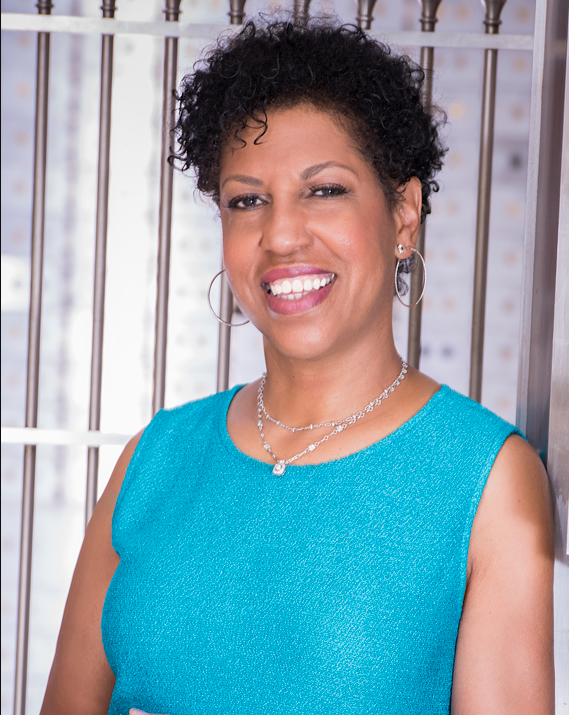
Mrs. Cooper is co-founder of the voter education non-profit Stand Up Mobile: A Blueprint for US. She retired after 15 years as President of The Christian Benevolent Funeral Home, Inc. a family- owned business for 96 years.
In February 2012, she became the Chief Executive Officer, the first permanently named female CEO in the Company’s history. Under her leadership as Chief Executive Officer, the bank has reached many milestones including achieving its highest level of performance during its 100 year existence. Further, most recently, the Bank was ranked, by S&P Global, #28 out of the Top 200 Performing Banks in the Country in its asset band.
Iris D. Goodly, Senior Vice President/ Director of Client Services and Operations
Jaimmé Collins, General Counsel, EVP and SVP of Strategy
In addition to being General Counsel, Ms. Collins manages Liberty’s strategic initiatives, joint ventures, regulatory matters, and leads Liberty Community Development Corporation (Liberty’s real estate development affiliate) and Liberty Foundation, Inc. (Liberty’s nonprofit affiliate).
Teri Williams, President and Chief Operating Officer
Responsible for implementation of the Bank’s strategic initiatives, as well as the day-to-day operations of the bank. These operational areas include all retail branches, marketing, compliance, lending, information technology, customer support, legal, and human resources. Under her leadership, OneUnited Bank has consolidated the local names and product offerings of four (4) banks to create a powerful national brand supported by innovative products and services. She brings 30 years of financial services expertise from premier institutions such as Bank of America and American Express, where she was one of the youngest Vice Presidents.
She has been in the banking industry for 30 years. She has held senior level positions in the areas of sales, operations and consumer lending. Her responsibilities include management of five retail branches as well as the online branch, the banks facilities, item processing operations and the call center. She also serves as the Security Officer for the Bank. She has successfully managed two system conversions and one item processing conversion during her tenure. Ms. Brewer has worked for Wells Fargo, Orange County Credit Union, Business Bank of California, and First City Federal Credit Union.
Marionette Y. Wilson, Secretary of the Board of Directors
Ms. Wilson joined the Board of Directors of United Bank of Philadelphia in 1992 as a founding director. She is now retired but was formerly the Co-Founder/Partner, John Frazier, Inc., Philadelphia, PA from 1981-2002.
*Evelyn F. Smalls, President and Chief Executive Officer (pictured bottom left)
Mrs. Smalls is President and Chief Executive Officer of United Bank of Philadelphia, a minority-owned and controlled, full service commercial bank. With over 30 years experience in banking and community development, Mrs. Smalls is responsible for the leadership and management of the Bank including setting the direction of the organization, communicating its vision and adapting the culture and operations to achieve success.
Prior to her appointment as President and Chief Executive Officer, Mrs. Smalls served as Senior Vice President for Regulatory Compliance and Community Reinvestment. Her leadership helped establish the Bank’s community reinvestment model that has achieved consecutive “Outstanding” ratings from the Federal Reserve and FDIC since the Bank’s inception.
Mrs. Smalls received her Bachelor’s degree in Business from North Carolina Central University.
Brenda M. Hudson-Nelson, Executive Vice President & CFO
Mrs. Hudson-Nelson has served as United Bank of Philadelphia’s Executive Vice President and Chief Financial Officer for twenty-five years. Mrs. Hudson-Nelson has thirty-four years experience within the financial services industry. Mrs. Hudson-Nelson’s responsibilities include directing financial planning, implementing, and overseeing the Bank’s systems of internal controls, managing the Bank’s investment portfolio, and monitoring and managing the Bank’s sensitivity to interest rate risk. Ms. Hudson-Nelson ensures that the Bank’s Annual Report, SEC Reports and other Regulatory Reports are filed accurately and timely.
She served as Treasurer on the Boards of Director for the South Street Dance Company, CHOICE, Big Brothers/Big Sisters of America, Big Brothers/Big Sisters of Mercer County, and for Prevention Point Philadelphia.
Dimitria Davenport, Vice President, Community Banking & Compliance
With over 20 years in the financial services industry, she has held key roles within Training, Consumer Banking, Retail Administration and Human Resources. Dimitria has spent the last eighteen years of her career working diligently to carry out United Bank’s mission of financially empowering people and businesses in the greater Philadelphia region.
Dimitria serves on several Boards: The Executive Committee of The African American Chamber of Commerce, The City Schools and The New Hope Community Development Corporation.
*Dr. LaDonna Boyd, Board of Directors (pictured top left)
As the fifth-generation president/CEO of the R.H. Boyd Family of Companies in Nashville, Tennessee, she’s a powerhouse of innovation and creativity, transforming the business landscape while championing social causes close to her heart.
She earned her bachelor’s in economics and with a minor in French from Spelman College, followed by an MBA with a finance concentration from Tennessee State University. She completed her with a Doctorate in Education with a focus on organizational leadership from Pepperdine University. She further honed her skills by earning two certificates in from Harvard University’s Extension School in Digital Marketing Strategy and Artificial Intelligence in Business: Creating Value With Machine Learning.
*Joan Fleming, SVP of Residential Lending and Community Development (pictured top right)
She is an industry leader- finding ways to produce results through her expertise, commitment and relationships. Joan has a passion for delivering value and benefit to her clients with an enthusiastic and friendly attitude. It is her commitment to serve the underserved by being an advocate for affordable housing and financial literacy. Her “thinking outside the box” mentality allows her to develop programs to ensure everyone can build wealth through homeownership.
Analysis: European Americans unchanged for a third month in their unemployment rate. Asian Americans saw an increase of 100 basis points and Latino Americans saw a negligible decrease of 10 basis points from June, respectively. African Americans had an increase in their unemployment rate of 20 basis points for June, a third straight month of increases and second highest in the past five months.
AFRICAN AMERICAN UNEMPLOYMENT RATE BY GENDER & AGE
AFRICAN AMERICAN MEN: 6.1%
AFRICAN AMERICAN WOMEN: 5.7%
AFRICAN AMERICAN TEENAGERS: 16.9%
AFRICAN AMERICAN PARTICIPATION BY GENDER & AGE
AFRICAN AMERICAN MEN: 69.1%
AFRICAN AMERICAN WOMEN: 62.3%
AFRICAN AMERICAN TEENAGERS: 29.3%
Analysis: African American Men saw a decrease in their unemployment rate by 30 basis points and African American Women increased by 50 basis points. African American Men increased their participation rate in June by 80 basis points. African American Women decreased in their participation rate in June by 60 basis points. African American Teenagers unemployment rate increased by a volatile 300 basis points. African American Teenagers saw their participation rate decrease by 290 basis points in June, they are now at their lowest participation rate in the past five months.
African American Men-Women Job Gap: African American Women currently have 646,000 more jobs than African American Men in June. This is an decrease from 924,000 in May.
CONCLUSION: The overall economy added 206,000 jobs in June while African America lost 73,000 jobs. This is Africa America’s lowest employment in five months with declines in four out of the past five months. From PBS, “Meanwhile, the U.S. economy added more jobs than expected last month, marking the 42nd consecutive month of job growth; 206,000 new jobs were added in June. Government hiring accounted for more than a third of those, followed by health care, social assistance and construction. Unemployment also inched up to 4.1 percent, making it the first time it’s risen above 4 percent in more than two years.”



 HBCU Money