Author Archives: hbcumoney

The HBCU Money™ Weekly Market Watch

Our Money Matters /\ October 4, 2013

A weekly snapshot of African American owned public companies and HBCU Money™ tracked African stock exchanges.

NAME TICKER PRICE (GAIN/LOSS %)

African American Publicly Traded Companies

Citizens Bancshares Georgia (CZBS) $5.98 (0.00% UNCH)

M&F Bancorp (MFBP) $2.85 (5.56% UP)

Radio One (ROIA) $2.75 (0.73% UP)

African Stock Exchanges

Bourse Regionale des Valeurs Mobilieres (BRVM)  204.51 (1.17% DN)

Botswana Stock Exchange (BSE)  8 593.48 (0.02% UP)

Ghana Stock Exchange (GSE)  2 015.77 (67.82% UP)*

Nairobi Stock Exchange (NSE)  129.90 (N/A)

Johannesburg Stock Exchange (JSE) 43 925.68 (0.18% DN)

International Stock Exchanges

New York Stock Exchange (NYSE) 9 672.60 (0.56% UP)

London Stock Exchange (LSE)  3 437.93 (0.06% UP)

Tokyo Stock Exchange (TOPIX)  1 163.82 (0.87% DN)

Commodities

Gold 1 308.70 (0.66% DN)

Oil 103.79 (0.46% UP)

*Ghana Stock Exchange shows current year to date movement. All others daily.

All quotes reported as of 2:00 PM Eastern Time Zone
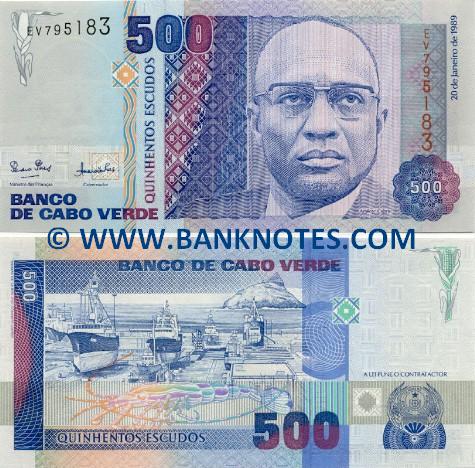
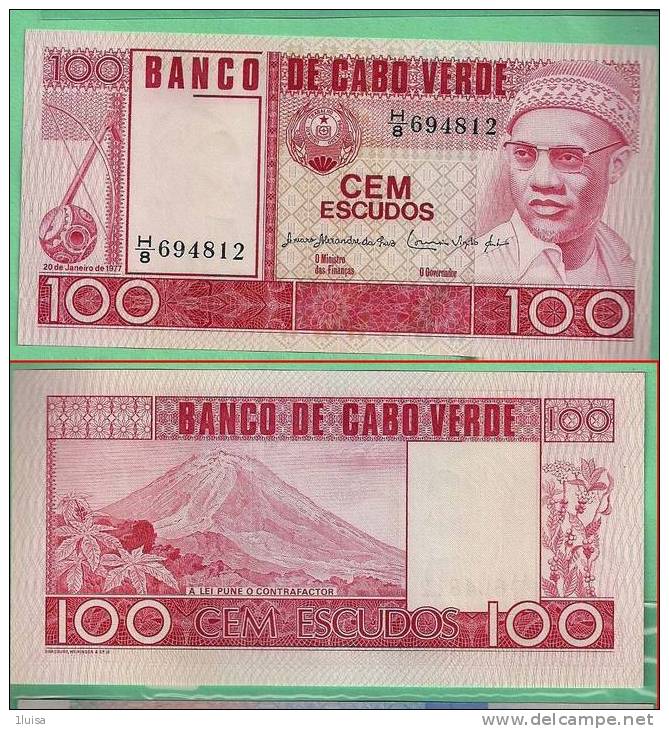
Currencies Of The African Diaspora – Cape Verde

The economy is service-oriented with commerce, transport, tourism, and public services accounting for about three-fourths of GDP. This island economy suffers from a poor natural resource base, including serious water shortages exacerbated by cycles of long-term drought and poor soil for agriculture on several of the islands. Although about 40% of the population lives in rural areas, the share of food production in GDP is low. About 82% of food must be imported. The fishing potential, mostly lobster and tuna, is not fully exploited. Cape Verde annually runs a high trade deficit financed by foreign aid and remittances from its large pool of emigrants; remittances supplement GDP by more than 20%. Despite the lack of resources, sound economic management has produced steadily improving incomes. Continued economic reforms are aimed at developing the private sector and attracting foreign investment to diversify the economy and mitigate high unemployment. Future prospects depend heavily on the maintenance of aid flows, the encouragement of tourism, remittances, and the momentum of the government’s development program. Cape Verde became a member of the WTO in July 2008.

CV59

546_001

images

cape-verde---2000-5000cve-note---front

CVcoins

Source: Economy overview provided by CIA Factbook

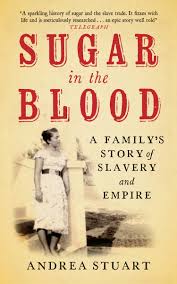
HBCU Money™ Business Book Feature – Sugar In The Blood: A Family’s Story of Slavery and Empire

images

In the late 1630s, lured by the promise of the New World, Andrea Stuart’s earliest known maternal ancestor, George Ashby, set sail from England to settle in Barbados. He fell into the life of a sugar plantation owner by mere chance, but by the time he harvested his first crop, a revolution was fully under way: the farming of sugar cane, and the swiftly increasing demands for sugar worldwide, would not only lift George Ashby from abject poverty and shape the lives of his descendants, but it would also bind together ambitious white entrepreneurs and enslaved black workers in a strangling embrace. Stuart uses her own family story—from the seventeenth century through the present—as the pivot for this epic tale of migration, settlement, survival, slavery and the making of the Americas.

As it grew, the sugar trade enriched Europe as never before, financing the Industrial Revolution and fuelling the Enlightenment. And, as well, it became the basis of many economies in South America, played an important part in the evolution of the United States as a world power and transformed the Caribbean into an archipelago of riches. But this sweet and hugely profitable trade—“white gold,” as it was known—had profoundly less palatable consequences in its precipitation of the enslavement of Africans to work the fields on the islands and, ultimately, throughout the American continents. Interspersing the tectonic shifts of colonial history with her family’s experience, Stuart explores the interconnected themes of settlement, sugar and slavery with extraordinary subtlety and sensitivity. In examining how these forces shaped her own family—its genealogy, intimate relationships, circumstances of birth, varying hues of skin—she illuminates how her family, among millions of others like it, in turn transformed the society in which they lived, and how that interchange continues to this day. Shifting between personal and global history, Stuart gives us a deepened understanding of the connections between continents, between black and white, between men and women, between the free and the enslaved. It is a story brought to life with riveting and unparalleled immediacy, a story of fundamental importance to the making of our world.

HBCU Money™ Dozen Links 9/23 – 9/27

newbig12logo_crop_north_crop_north

Did you miss HBCU Money™ Dozen via Twitter? No worry. We are now putting them on the site for you to visit at your leisure. We have made some changes here at HBCU Money™ Dozen. We are now solely focused on research and central bank articles from the previous week.

Research

Iran accused of hacking into U.S. Navy computers l ComputerWorld

Expect tech glitches when Obamacare launches Oct. 1 l NetworkWorld

Lowering The Resilient Soft Costs Of Solar l Clean Technica

In race against time, NSF grants fund research on Earth’s threatened biodiversity l NSF

Best practices that North Atlantic USA communities are using for climate adaptation l CT Sea Grant

Lifeless planet: Just for fun, we’ve imagined what would happen if all life on Earth died tomorrow l New Scientist

Federal Reserve, Central Banks, & Financial Departments

Learn how Louisville, Ky., transitioned from an industrial economy to a service economy l St. Louis Fed

Why are U.S. firms holding record amounts of cash? l St. Louis Fed

Home Depot overcomes financial crisis l Housing Wire

Government shutdown seeps into overall economic growth l Housing Wire

A video shows how households & businesses interact and explains how money keeps the process moving l St. Louis Fed

Efforts to monitor risks in the shadow banking system, such as by the Financial Stability Board l NY Fed

Thank you as always for joining us on Saturday for HBCU Money™ Dozen. The 12 most important research and finance articles of the week.

HBCU Money™ Presents: 2013’s HBCU Alumni NFL Players’ & Salaries

mathisjpg-5915c05f81e62761_large

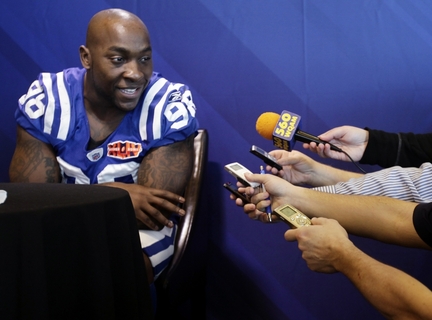
The top earning HBCU NFL player is Alabama A&M’s Robert Mathis (pictured above)

HBCU Money™ FACTS:

  • NFL teams spent $3.5 billion of 2013’s $4 billion available.
  • HBCU NFL players combine for $59.2 million in salaries or 1.7 percent of salaries spent. Estimated take home after taxes and agent/lawyer fees is $29. 6 million.
  • Hampton University leads the way with 4 NFL players.
  • 19 HBCUs are represented in the NFL.
  • SWAC/MEAC conferences both have 6 schools represented.
  • HBCU NFL players represent approximately 1.7 percent of roster positions available.
  • Average salary for HBCU NFL players is $2.1 million. In 2011, the average NFL salary was $1.9 million according to Bloomberg Businessweek.
  • Median salary for HBCU NFL players is $895 000. In 2011, the median NFL salary was $777 000 according to Bloomberg Businessweek.
  1. Robert Mathis – DE – Indianapolis Colts – $10 750 000
    (Alabama A&M)

  2. Kendall Langford – DE – St. Louis Rams – $6 000 000
    (Hampton)

  3. Antoine Bethea – S – Indianapolis Colts – $5 750 000
    (Howard)

  4. Jacoby Jones – WR – Baltimore Ravens – $4 900 000
    (Lane)

  5. Dimitri Patterson – CB – Miami Dolphins – $4 600 000
    (Tuskegee)

  6. Greg Toler – CB – Indianapolis Colts – $4 333 333
    (St. Paul’s)

  7. D. Rodgers-Cromartie – CB – Denver Broncos – $2 900 000
    (Tennessee State)

  8. Sammie Hill – DT – Tennessee Titans – $2 766 666
    (Stillman)

  9. Jason Hatcher – DT – Dallas Cowboys – $2 600 000
    (Grambling State)

  10. William Hayes – DE – St. Louis Rams – $2 050 000
    (Winston-Salem State)

  11. Junior Galette – OLB – New Orleans Saints – $1 700 000
    (Stillman)

  12. Eric Weems – WR – Chicago Bears – $1 415 000
    (Bethune-Cookman)

  13. Chris Baker – NT – Washington Redskins – $1 323 000
    (Hampton)

  14. Justin Durant – LB – Dallas Cowboys – $950 000
    (Hampton)

  15. Tavaris Jackson – QB – Seattle Seahawks – $840 000
    (Alabama State)

  16. Kenrick Ellis – DT – New York Jets – $707 500
    (Hampton)

  17. Don Carey – S – Detroit Lions – $680 000
    (Norfolk State)

  18. Phillip Adams – CB – Oakland Raiders – $630 000
    (South Carolina State)

  19. Terron Armstead – T – New Orleans Saints – $559 359
    (Arkansas Pine-Bluff)

  20. Rafael Bush – S – New Orleans Saints – $555 000
    (South Carolina State)

  21. Rashean Mathis – DB – Detroit Lions – $555 000
    (Bethune-Cookman)

  22. Joe Anderson – WR – Chicago Bears – $480 000
    (Texas Southern)

  23. Anthony Levine – S – Baltimore Ravens – $480 000
    (Tennessee State)

  24. Larry Donnell – TE – New York Giants – $405 000
    (Grambling State)

  25. Marquette King – P – Oakland Raiders – $405 000
    (Fort Valley State)

  26. Kevin Elliot – WR – Buffalo Bills – $303 000
    (Florida A&M)

  27. Adrian Hamilton – OLB – Baltimore Ravens – $303 000
    (Prairie View A&M)

  28. Saeed Lee – CB – Atlanta Falcons – $288 000
    (Alabama State)

Sources: NFL.com, The Guardian, Spotrac