Author Archives: hbcumoney

42 Million African Americans Own Only 0.33 Percent Of America’s Lands

By William A. Foster, IV

A nation may be said to consist of its territory, its people and its laws. The territory is the only part which is of certain durability. Laws change, people die, the land remains. — Abraham Lincoln

ronnie-armstrong-black-farmer-indiana-070701jpg-e632bb337a6a37a1_large-1

The Land Report recently released its annual 100 largest landowners in America. To no one’s surprise there was not one African American individual or family present on the list.  The apex of African American land ownership was over 100 years ago in 1910 when African America owned almost 20 million acres. A far cry from the 160 million acres that should have been owned had Special Order 15 been honored by the U.S. government which is also known as “40 acres and a mule” to most African Americans. By the numbers we have lost over 50 percent of our land ownership the past 100 years and the number continues to drop at an alarming rate for a myriad of reasons. Given that land is the foundation for all social, economic, and political development it could be argued that you can measure a group’s power based on their land ownership. This has been true no matter the economic system in place throughout history. If this is the case then African America is seeing itself getting weaker and weaker generation after generation.

The largest landowner in the country is John Malone, owner of Liberty Media and something few know is he was the second largest shareholder in Black Entertainment Television behind the founders Bob and Sheila Johnson. His initial investment in the company was $180 000 in equity and a $320 000 loan. Eventually, the loan would be paid back but he retained his equity stake, which by the time of the company’s sale would see him receive a return of $700 million. Yes, the man made $700 million on a $180 000 investment. Needless to say, that can buy you a lot of land. In 2010, it allowed him to purchase the Bell Ranch, 290 000 acres of land in New Mexico, and as a result jumping Ted Turner as America’s largest landowner. Just between John Malone and Ted Turner they own over 50 percent of the amount of land that African America owns as a whole.

HBCU business schools have a unique opportunity to change the paradigm of African American land ownership for future generations. This is even more so true at HBCU 1890 schools where agriculture still comprises a major component within the institutions. A class designed around African American land ownership would go a long way to educating graduates, who will typically be in a much better financial position to accumulate land than those with less education. The classes themselves could teach among others things but not limited to; how to implement “poison pills” into their community to prevent gentrification, how to finance land, history of land ownership, timberland investments, and a myriad of other land-related subjects.

Gentrification alone is a problem plaguing a number of African American communities across the nation. This has been especially true for African American neighborhoods located near city centers as many in the suburbs are starting to move back inward. There is also the issue facing African American farmers in this country. Healthy Solutions reports that less than 2 percent of farms today are operated by African Americans in comparison to 14 percent in 1920. There is no doubt that if one examines African America as a nation that its food security and food dependence would have alarm bells ringing for decades now as this situation grows more dire. The USDA in 2010 settled an almost $1.3 billion discrimination lawsuit with 70 000 African American farmers. However, land ownership and African American farms continue to decline further compounding African America capability to have access to quality food options and increasing long-term health issues. I could go into how land ownership influences rezoning of political lines but then I might need to turn this into a book.

Unfortunately, it begs the question as many HBCUs move to a focus on “diversity” whether or not African American economic issues are even on the minds of many HBCU business school leadership. Our situation can not be handled as a “minority” situation. It requires a more targeted strategy to our social, economic, and political state. We can not continue to be the group who has the least but shares the most unless we are content with perpetually being in last and institutionally dependent on others. Land, it remains kind of a big deal.
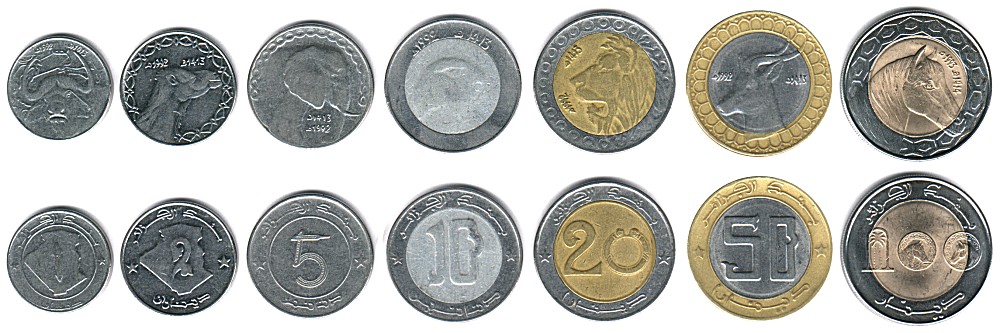
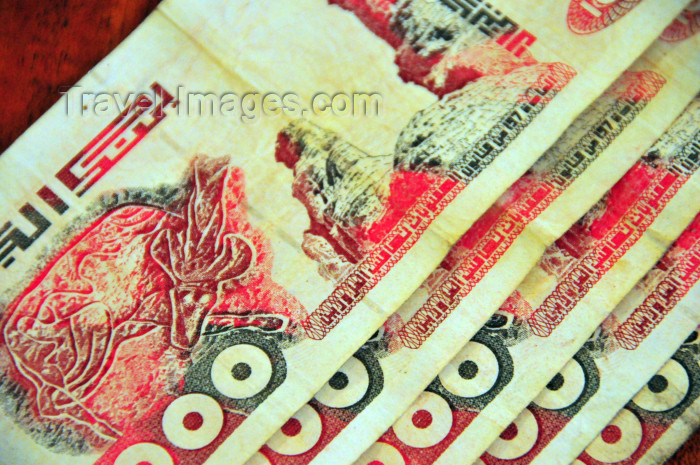
Currencies Of The African Diaspora – Algeria

Algeria’s economy remains dominated by the state, a legacy of the country’s socialist post-independence development model. In recent years the Algerian Government has halted the privatization of state-owned industries and imposed restrictions on imports and foreign involvement in its economy. Hydrocarbons have long been the backbone of the economy, accounting for roughly 60% of budget revenues, 30% of GDP, and over 95% of export earnings. Algeria has the 10th-largest reserves of natural gas in the world and is the sixth-largest gas exporter. It ranks 16th in oil reserves. Strong revenues from hydrocarbon exports have brought Algeria relative macroeconomic stability, with foreign currency reserves approaching $200 billion and a large budget stabilization fund available for tapping. In addition, Algeria’s external debt is extremely low at about 2% of GDP. However, Algeria has struggled to develop non-hydrocarbon industries because of heavy regulation and an emphasis on state-driven growth. The government’s efforts have done little to reduce high youth unemployment rates or to address housing shortages. A wave of economic protests in February and March 2011 prompted the Algerian Government to offer more than $23 billion in public grants and retroactive salary and benefit increases, moves which continue to weigh on public finances. Long-term economic challenges include diversifying the economy away from its reliance on hydrocarbon exports, bolstering the private sector, attracting foreign investment, and providing adequate jobs for younger Algerians.

algeria-2006-circulating-coins

Algeria-currency

Algeria77b5francs1941front

MC3_0960 Algiers.jpg

images

Source: Economy overview provided by CIA Factbook

HBCU Money™ Business Book Feature – The Color of the Land: Race, Nation, and the Politics of Landownership in Oklahoma, 1832-1929

9780807833650

The Color of the Land brings the histories of Creek Indians, African Americans, and whites in Oklahoma together into one story that explores the way races and nations were made and remade in conflicts over who would own land, who would farm it, and who would rule it. This story disrupts expected narratives of the American past, revealing how identities–race, nation, and class–took new forms in struggles over the creation of different systems of property.

Conflicts were unleashed by a series of sweeping changes: the forced “removal” of the Creeks from their homeland to Oklahoma in the 1830s, the transformation of the Creeks’ enslaved black population into landed black Creek citizens after the Civil War, the imposition of statehood and private landownership at the turn of the twentieth century, and the entrenchment of a sharecropping economy and white supremacy in the following decades. In struggles over land, wealth, and power, Oklahomans actively defined and redefined what it meant to be Native American, African American, or white. By telling this story, David Chang contributes to the history of racial construction and nationalism as well as to southern, western, and Native American history.

HBCU Money™ Dozen Links 10/7 -10/11

MDM_12-12-2012_ROP_03_candles_t460

Did you miss HBCU Money™ Dozen via Twitter? No worry. We are now putting them on the site for you to visit at your leisure. We have made some changes here at HBCU Money™ Dozen. We are now solely focused on research and central bank articles from the previous week.

Research

Energy-Efficient Lighting Strategies At Solar Decathlon l Clean Technica

Carbyne — Strongest Material Yet Known, Possesses A Number Of Useful Properties l Clean Technica

Users flock to anonymizing services after NSA snooping reports l ComputerWorld

New airborne technology automatically finds whales l CA Sea Grant

Will cloud services be traded just like stocks and bonds one day? l NetworkWorld

Researcher argues for open hardware to defend against NSA spying l CSOnline

Federal Reserve, Central Banks, & Financial Departments

Ever wonder how GDP is calculated? Get the basics l St. Louis Fed

High School ATM Proposal Passes to Teach Students About Personal Finance l Council for Econ Ed

Multifamily finance gains steam l Housing Wire

Ohio foreclosure filings fell 22.2% in September l Housing Wire

New report asks if cuts in state aid during the recession led to changes in local property taxes l NY Fed

77% of America’s textile workforce has been lost. Is the industry ready to rise again? l World Economic Forum

Thank you as always for joining us on Saturday for HBCU Money™ Dozen. The 12 most important research and finance articles of the week.

The HBCU Money™ Weekly Market Watch

Our Money Matters /\ October 11, 2013

A weekly snapshot of African American owned public companies and HBCU Money™ tracked African stock exchanges.

NAME TICKER PRICE (GAIN/LOSS %)

African American Publicly Traded Companies

Citizens Bancshares Georgia (CZBS) $5.68 (0.00% UNCH)

M&F Bancorp (MFBP) $2.75 (0.00% UNCH)

Radio One (ROIA) $2.75 (1.85% UP)

African Stock Exchanges

Bourse Regionale des Valeurs Mobilieres (BRVM)  209.94 (0.68% UP)

Botswana Stock Exchange (BSE)  8 643.57 (0.22% UP)

Ghana Stock Exchange (GSE)  2 056.27 (71.40% UP)*

Nairobi Stock Exchange (NSE)  131.87 (N/A)

Johannesburg Stock Exchange (JSE) 43 620.57 (0.69% UP)

International Stock Exchanges

New York Stock Exchange (NYSE) 9 747.06 (0.55% UP)

London Stock Exchange (LSE)  3 457.89 (0.82% UP)

Tokyo Stock Exchange (TOPIX)  1 197.17 (1.63% UP)

Commodities

Gold 1 268.00 (2.21% DN)

Oil 101.47 (1.49% DN)

*Ghana Stock Exchange shows current year to date movement. All others daily.

All quotes reported as of 2:00 PM Eastern Time Zone