Author Archives: hbcumoney

Schools For Husbands and Wives: Preparing African American Couples for Partnership and Institutional Power

“The family is the nucleus of civilization.” — Will Durant

When news broke from Senegal that so-called “schools for husbands” were being used to lower maternal and newborn mortality rates, the headlines focused on the novelty of men being taught to wash dishes, attend prenatal visits, and support women’s healthcare. Yet beneath the surface, Senegal’s program is not just about chores or even just about health, it is about reshaping cultural norms so that households operate as functional units rather than fractured spaces of authority and neglect. In a country where patriarchal structures often keep women from making life-saving decisions without a man’s permission, Senegal’s government and community leaders recognized that sustainable change had to address the power imbalance between men and women.

This insight carries an important lesson for African America. The African American family is facing a structural crisis. Only 38 percent of African American children grow up in two-parent households compared to 78 percent of white children, and the numbers are even more stark when considering households of generational stability, wealth accumulation, and transmission of institutional knowledge. The decline of the two-parent household in African America has had profound consequences not just for children, but for adults who often enter adulthood without ever having witnessed sustained partnership between equals.

What if African America had its own version of Senegal’s schools expanded to include both husbands and wives, and designed for straight couples and LGBTQ couples alike? A “School for Husbands and Wives” could become a powerful cultural and institutional lever, equipping African Americans with the skills, expectations, and frameworks to build households that are not only emotionally healthy but also institutionally productive.

Why African America Needs Schools for Husbands and Wives

African Americans live in a paradox: on the one hand, they are among the most religiously active groups in the country, with churches historically serving as community hubs. On the other hand, African American households are disproportionately fragmented. The reasons are historical and structural—slavery destroyed family continuity, Jim Crow restricted marriage rights, mass incarceration and discriminatory welfare policies tore apart families, and modern labor and housing policies continue to erode family stability.

The consequence is that too many African Americans enter relationships without having observed healthy models of partnership. This absence manifests itself in multiple ways:

  • Gender distrust: Many African American men and women view each other as competitors rather than partners, shaped by economic inequality and media stereotypes.
  • Power imbalances: Without clarity on roles, relationships often collapse under stress: financial, emotional, or social.
  • Institutional gaps: Families are the basic units of institutions. When African American families are weak, African American institutions remain undercapitalized and undercoordinated.

This reality is not confined to heterosexual couples. LGBTQ African Americans, who face both external discrimination and internal cultural tension, often have even fewer family blueprints to draw upon. Whether in straight or queer relationships, the challenge remains: how do two people form a sustainable partnership when their models are fragmented, mistrust abounds, and institutional frameworks are weak?

A School for Husbands and Wives would take on this challenge directly, teaching the mechanics of partnership in the same way Senegal’s program teaches men the mechanics of maternal health support. But instead of focusing solely on chores or permissions, the African American model would expand to include economics, conflict resolution, institution building, and cultural grounding.

The Senegalese Model: A Starting Point

Senegal’s schools for husbands use respected community figures like imams, former soldiers, and elders to teach men about women’s rights, maternal health, and shared responsibilities. The success lies in reframing: chores are not humiliating, they are acts of love; women’s health decisions are not threats, they are family investments; shared authority is not weakness, it is strength.

For African Americans, a School for Husbands and Wives could use a similar approach: respected voices drawn from the community like professors, entrepreneurs, cultural leaders, and married couples who have sustained long-term partnerships would teach relationship and family skills as community investments. The aim would be to destigmatize conversations about partnership and create new models where none exist.

Curriculum for Partnership

What would a School for Husbands and Wives look like in African America?

  1. Economics of Partnership
    • Teaching couples how to pool resources effectively, manage debt, invest in assets, and prioritize institutional wealth over individual consumption.
    • Lessons on real estate, life insurance, trusts, and estate planning—so that households become wealth anchors, not debt traps.
  2. Conflict Resolution and Communication
    • Many couples replicate cycles of mistrust they observed growing up. Training in conflict resolution, active listening, and equitable compromise would be central.
    • Both straight and LGBTQ couples would benefit from structured conversations on navigating cultural stigma, managing extended family expectations, and sustaining emotional intimacy.
  3. Household Labor Distribution
    • Senegal emphasizes men helping with chores to reduce women’s burdens. In African America, the conversation must extend further: both partners share responsibility for cooking, cleaning, parenting, and professional ambitions.
    • The school would also address how unpaid labor at home directly connects to economic outcomes, productivity, and career success for both partners.
  4. Cultural and Historical Grounding
    • African American couples would be taught the history of the African American family as an institution under assault—from slavery to mass incarceration.
    • By understanding the intentionality of these assaults, couples would better grasp the importance of intentional partnership as resistance.
  5. Parenting as Institutional Strategy
    • Children should be raised not just with love, but with strategy: to become contributors to African American institutional wealth and culture.
    • Parents would learn to combine elements of “tiger” and “gentle” parenting—discipline and nurture balanced toward the goal of institutional power.

Straight and LGBTQ Couples Together

Too often, discussions of African American family structure exclude LGBTQ couples, reinforcing division where there should be solidarity. A School for Husbands and Wives would explicitly include both straight and LGBTQ couples, recognizing that the core challenges of partnership communication, trust, economic strategy, cultural grounding are universal.

In fact, LGBTQ couples often demonstrate resilience in building intentional families under hostile conditions, a skillset that all African Americans can learn from. By including diverse couple models, the school would normalize different family structures while emphasizing the shared goal: strong, functioning partnerships that build institutions.

Institutional Implications

African American institutions such as HBCUs, banks, businesses, nonprofits are only as strong as the families that sustain them. Wealth is built in households before it is transferred to institutions. If African American households remain fragmented, then institutions will remain weak.

A School for Husbands and Wives could therefore be sponsored or housed by HBCUs, serving both as a community program and as a research lab. Partnerships with African American financial institutions could integrate financial literacy into the curriculum. Faith institutions, cultural centers, and civic organizations could all play roles in teaching and sustaining graduates of the program.

The benefits would ripple:

  • Higher marriage stability rates among African Americans.
  • Greater pooling of household income, increasing wealth accumulation.
  • Stronger parenting, producing children with higher educational attainment and cultural grounding.
  • Increased institutional giving and investment, as families with stability contribute more to churches, HBCUs, and community organizations.

Policy and Public Health Dimensions

A School for Husbands and Wives should not be seen only as a cultural innovation, but also as a public health and policy strategy. The lack of stable households directly correlates with higher rates of poverty, incarceration, and health disparities. Policymakers could frame such schools as preventative investments, much like job training or nutrition programs.

Public funding, alongside philanthropic investment from African American institutions, could help establish pilot programs in cities with large African American populations. These schools could even be tied to existing healthcare infrastructure such as community health clinics so that relationship education is linked to wellness checkups, parenting support, and financial literacy programs.

If Senegal can link male training to maternal survival, African America can link couple training to family survival.

Lessons from Senegal’s Caution

Senegal’s experience shows that change is incremental and contested. Some men embrace new roles; others resist. Likewise, in African America, not everyone will accept the idea of formal schools for partnership. Some will argue that love is natural and cannot be taught. Others will resist LGBTQ inclusion. Some will see the program as unnecessary “therapy culture.”

But institutions are built through intentionality, not accident. Just as one studies law to become a lawyer or finance to become a banker, so too must African Americans study partnership if they are to build families that function as institutional engines.

A Vision Forward

Imagine a future where every African American couple, before or after marriage, participates in a School for Husbands and Wives. They leave not only with a deeper love for each other but with tools for building wealth, resolving conflict, and raising children with purpose. They learn to see themselves as not just individuals, but as co-founders of a household institution.

The Senegalese model shows us that cultural change is possible when men are trained to view equality as strength. African America can expand that vision: training both husbands and wives, straight and queer, to view partnership as the foundation of institutional survival.

Just as Senegal’s schools for husbands aim to save lives, African America’s schools for husbands and wives would aim to save legacies.ve legacies.

China v. United States Is Not The Only Great Power Competition – Make No Mistake About It, HBCUs v. PWIs Are At War

“Today, the United States and China, often with Russia at its side, are competing to shape security architectures, as well as norms and practices worldwide, including trade and investment regimes and the development and regulation of new technological infrastructures. These frictions will play out over decades, not only in Beijing, Washington, and Moscow, but in Africa and Europe, the Arctic, outer space, and cyberspace.” – The Wilson Center

There are no African or Caribbean countries considered to be part of the Great Power Competition, only pawns in it. – William A. Foster, IV

In global affairs, the geopolitical rivalry between the United States and China captures headlines as the preeminent competition shaping the 21st century. However, closer to home, another fierce contest is unfolding—one that, while lacking the military and economic ramifications of the U.S.-China rivalry, is no less significant in the battle for resources, prestige, and influence. This is the ongoing conflict between Historically Black Colleges and Universities (HBCUs) and Predominantly White Institutions (PWIs). This battle is not just about educational preference; it is a struggle for survival, legacy, and the future of Black intellectualism and empowerment in America.

The Historical Context: Foundations of an Educational Divide

HBCUs were born out of necessity in an era when Black students were systematically excluded from white institutions due to segregation and racism. Established primarily in the late 19th and early 20th centuries, HBCUs provided a sanctuary for Black education and upliftment. Schools such as Howard University, Morehouse College, and Spelman College became powerhouses in producing Black professionals, thinkers, and leaders, who otherwise would have been denied access to quality education.

In contrast, PWIs, traditionally serving white students, eventually opened their doors to Black students following the Civil Rights Movement and the dismantling of Jim Crow laws. Integration, while a monumental victory, led to unintended consequences for HBCUs, including a decline in enrollment as Black students increasingly sought the prestige, resources, and opportunities associated with PWIs. The playing field, however, was never level. PWIs had centuries of endowments, expansive alumni networks, and government backing, whereas HBCUs remained underfunded and underappreciated.

The War Over Resources

One of the most glaring disparities in the HBCU vs. PWI competition is financial resources. The average endowment of an HBCU pales in comparison to that of even a mid-tier PWI. Take, for example, Harvard University, whose endowment surpasses $50 billion, while the combined endowments of all HBCUs struggle to reach a fraction of that amount.

This disparity has real consequences: outdated facilities, limited scholarships, fewer research opportunities, and struggles in faculty retention. Meanwhile, PWIs attract Black students with lucrative scholarships, state-of-the-art facilities, and networking opportunities that are difficult to resist. The financial battle is one that HBCUs, despite their resilience, continue to fight uphill.

Cultural Significance: A Battle for Identity

Beyond money, the HBCU vs. PWI war is a cultural one. HBCUs offer a unique and nurturing environment where Black students can thrive without the pressures of being minorities in predominantly white spaces. The culture of HBCUs is rich with tradition, homecomings, Greek life, and an emphasis on communal upliftment. These institutions foster Black pride, empowerment, and a curriculum centered around Black history and achievement.

PWIs, on the other hand, often relegate Black culture to a sub-narrative. While diversity and inclusion initiatives have increased, many Black students at PWIs report feeling isolated, encountering microaggressions, and struggling to find representation among faculty and administration. However, PWIs offer certain advantages—larger research budgets, extensive alumni networks, and higher-ranked programs—which make them attractive options for students seeking a competitive edge in the job market.

The Sports Arena: Where the Battle is Most Visible

Athletics is one of the most publicized battlegrounds in the HBCU vs. PWI war. For decades, Black athletes from HBCUs like Grambling State, Jackson State, and Southern University dominated professional sports. However, the integration of PWIs led to the siphoning of Black athletic talent away from HBCUs. Today, powerhouse programs at schools like Alabama, Ohio State, and Duke recruit Black athletes with multi-million dollar facilities, exposure, and professional pipeline programs that HBCUs struggle to match.

The recent resurgence of attention toward HBCU sports—highlighted by figures like Deion Sanders coaching at Jackson State—signals a potential shift in the paradigm. Sanders’ tenure not only brought visibility but also reignited discussions about the significance of Black athletes playing at HBCUs rather than generating billions of dollars for PWIs, which often fail to reinvest in Black communities.

The Corporate and Political Battlefield

Beyond academia and sports, HBCUs and PWIs compete in the corporate and political realms. HBCU graduates have historically faced challenges breaking into elite circles of power, where PWIs hold dominance. Fortune 500 companies and government institutions have historically recruited from Ivy League and top-tier PWIs, often overlooking the rich talent pools at HBCUs.

One of the starkest indicators of racial economic disparity is the near-total absence of Black-owned Fortune 500 companies. As of recent years, there have been fewer than five Black CEOs in the entire Fortune 500, and the number of Black-owned companies on the list is virtually nonexistent. Systemic barriers, including access to capital, investor bias, and exclusion from influential business networks, continue to hinder Black entrepreneurs from scaling their enterprises to the level of major corporate giants.

The lack of Black-owned Fortune 500 companies is particularly concerning when viewed against the backdrop of political and economic shifts. The rise of Donald Trump and his brand of economic nationalism underscored a shift toward policies that often ignored or outright disadvantaged minority-owned businesses. Trump’s tax policies largely benefited large corporations and the wealthiest Americans, while minority entrepreneurs saw little in the way of targeted support. His administration’s rollback of diversity initiatives in government and business further exacerbated the existing racial wealth gap.

However, recent movements advocating for diversity and equity have shifted some focus back to HBCUs. The Biden administration’s historic investment in HBCUs, as well as corporate pledges following the George Floyd protests, indicate an acknowledgment of these institutions’ significance. Still, whether these commitments translate into long-term systemic changes remains uncertain.

The Future of the Battle

The war between HBCUs and PWIs is not one of violence but of strategy, resilience, and adaptation. HBCUs must innovate, leveraging their cultural significance and legacy to attract top Black talent. Alumni engagement, corporate partnerships, and increased state funding are crucial to leveling the playing field. Simultaneously, Black students and families must weigh the long-term benefits of choosing an HBCU over a PWI, recognizing that their decision impacts the future viability of these historic institutions.

PWIs, while dominant in many areas, must confront their own racial disparities and reckon with their histories of exclusion. Recruiting Black students without providing adequate support systems leads to high dropout rates and dissatisfaction. For genuine equity, PWIs must go beyond optics and foster environments where Black students can thrive academically, culturally, and socially.

Conclusion: A War for Legacy

The United States and China battle for global supremacy in economics, technology, and military might. But within the U.S., the war between HBCUs and PWIs is a struggle for Black excellence, institutional power, and legacy. The outcome of this battle will determine the future of Black education and leadership. Will HBCUs regain their prominence and secure the funding and recognition they deserve? Or will PWIs continue to dominate, drawing Black talent into historically exclusive spaces while leaving HBCUs to struggle?

Make no mistake about it—this is a war. And like all wars, the victors will shape history. The question is: who will ensure that Black institutions not only survive but thrive in the centuries to come?

Can Military Strategy Save HBCUs? “The Estimate of the Situation” Approach

Strike an enemy once and for all. Let him cease to exist as a tribe or he will live to fly in your throat again. – Shaka Zulu, Advice to King Dingiswayo on the treatment of the defeated Ndwanwes

The Battle for the Black Mind

At the beginning of the 20th century, African American higher education was a mission of survival. By the end of the century, it had become a struggle for relevance. Today, the nation’s Historically Black Colleges and Universities (HBCUs) face a different kind of warfare—one not waged on battlefields but in boardrooms, budget hearings, and data dashboards. Declining endowments, limited research funding, a shrinking pool of Black male students, and encroachment by Predominantly White Institutions (PWIs) on their traditional demographic base has left many HBCUs strategically adrift.

But what if the remedy lies not in education reform think tanks or philanthropic patchwork, but in the unlikeliest of quarters—military strategy?

In the art of war, commanders engage in a disciplined process known as the “Estimate of the Situation.” Codified in U.S. military doctrine, this method assesses terrain, adversaries, capabilities, and courses of action before deciding how to marshal forces to achieve objectives. It is a doctrine of clarity, decisiveness, and ruthless prioritization—traits HBCUs, long forced into reactive postures, desperately need. If deployed correctly, it may offer a blueprint for survival and supremacy.

Terrain and Threat Assessment

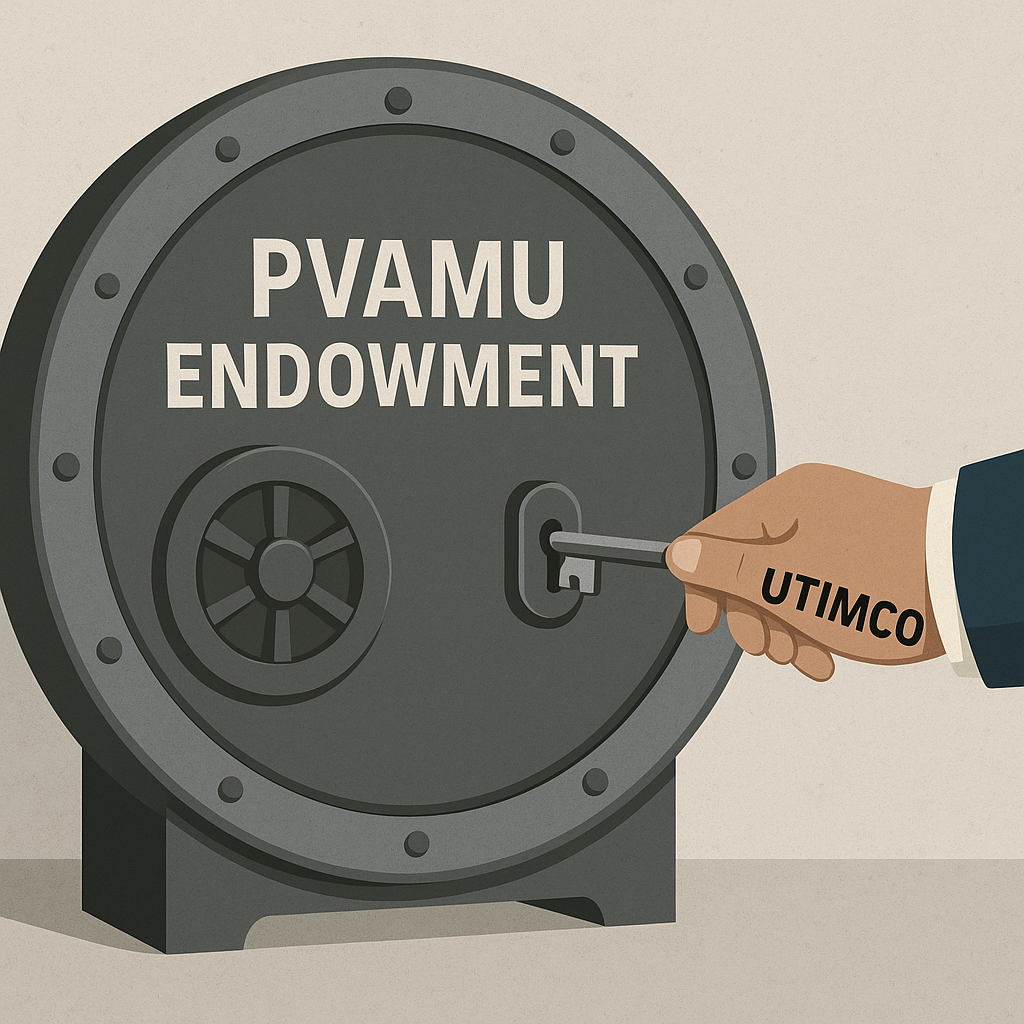
The educational terrain for HBCUs is marked by systemic deprivation. While the Ivies and flagship publics boast endowments in the billions—Harvard’s at over $50 billion and the University of Texas System’s UTIMCO fund at $66 billion—only a handful of HBCUs cross the $100 million threshold. In 2024, Howard University led with a $908 million endowment, trailed by Spelman College ($569 million) and Hampton University ($379 million). By contrast, many HBCUs hover in the single-digit millions, dependent on volatile tuition revenue and susceptible to enrollment shocks.

Their adversaries are both external and internal. PWIs, emboldened by racial reckoning post-George Floyd, have launched aggressive DEI (Diversity, Equity, and Inclusion) marketing campaigns targeting high-achieving Black students, faculty, and even entire academic programs traditionally incubated within HBCUs. These institutions are mimicking HBCU cultural strengths while wielding superior infrastructure, funding, and media amplification.

Internally, decades of underfunding by state legislatures, inconsistent leadership pipelines, and fractured alumni giving have made coordination among HBCUs difficult. Public HBCUs often answer to politically hostile boards or governors who see their growth as optional, not imperative. In some Southern states, Black institutions are funded at levels far below their white counterparts, even while serving disproportionately more first-generation and low-income students.

The question then is: what does victory look like?

Mission Analysis: Existential or Expansionist?

In military parlance, the mission must be clear: is it to survive or to dominate? Too many HBCUs adopt a minimalist, survivalist mindset—hoping to keep doors open, retain accreditation, and attract enough enrollment to balance the books. But such passivity is tantamount to strategic surrender. If the mission is redefined as expansionist—growing endowments, poaching research talent, building technology hubs, or acquiring other institutions—then a different posture is required. One of preemption, consolidation, and power projection.

The underlying assumption should be this: the war for Black minds will intensify in the next decade as the U.S. becomes more diverse and the global competition for brainpower increases. If HBCUs do not act like insurgent militaries—nimbly, strategically, and with unified doctrine—they risk being romantic relics rather than revolutionary institutions.

Center of Gravity: The Black Intellectual Capital Base

In military strategy, the “center of gravity” is the source of an entity’s strength. For HBCUs, that center is their unparalleled social trust within the African American community and their historical mandate to serve as the custodians of Black intellectual capital.

Every great military power identifies its core asset. Rome had its legions. Britain its navy. The Soviet Union its armored divisions. For HBCUs, it is their alumni networks, faculty thought leadership, and cultural currency. But this center is fragile—threatened by underinvestment and neglect.

HBCUs should protect and project this strength. This means doubling down on producing future Black PhDs, engineers, doctors, and diplomats not as an accidental byproduct, but as a stated national security imperative for Black America. It also means developing internal think tanks and war colleges of their own—places where institutional planning, scenario modeling, and leadership development are continuous and sophisticated.

Logistics and Lines of Communication: The Endowment as Supply Chain

No army survives without logistics. In the higher education battlefield, the logistics trail is the endowment. It funds scholarships, shields against state austerity, allows for faculty recruitment, and finances long-term infrastructure. Currently, the Black educational front is malnourished.

A military-style “Operation Supply Line” could change this. Instead of chasing microgrants from corporations and philanthropies, a war doctrine would focus on concentrated, large-scale capital campaigns to create state-level or regional endowment federations.

Imagine, for example, if North Carolina’s five public HBCUs—North Carolina A&T, Fayetteville State, Elizabeth City State, Winston-Salem State, and North Carolina Central—pooled assets and donor bases into a centralized fund similar to UTIMCO. This would enable sophisticated portfolio strategies, risk mitigation, and scale advantages. Donors could give once, and see those funds managed professionally and distributed strategically.

The same could apply to private HBCUs, with alliances organized around geographic or academic complementarities. But like military alliances, these federations must be underpinned by mutual accountability and binding mission coherence.

Command Structure and Unity of Effort

Another hallmark of successful military strategy is clarity of command. At present, the HBCU landscape resembles a coalition of militias—each acting autonomously, sometimes duplicating efforts or even competing for the same resources. This is operationally inefficient.

There is precedent for unity. During World War II, Allied forces coordinated through joint command centers and mission directives despite national differences. HBCUs must do the same, perhaps through the reimagining of the Thurgood Marshall College Fund and UNCF as strategic command centers with teeth—not just fundraising conduits but institutions empowered to set joint priorities, coordinate lobbying efforts, and deploy institutional reinforcements to weaker allies.

This would mean acting less like separate colleges and more like battalions of a unified liberation force. Leadership exchanges, shared procurement, collaborative curriculum design, and a universal strategic plan should all be part of the doctrine.

War Games: Scenario Planning for a Disruptive Future

In military planning, exercises and simulations are key to testing preparedness. HBCUs need war games of their own—scenarios that model enrollment collapse, cyberattacks, political defunding, or rival university encroachments.

How would an HBCU survive if its primary state funding was cut 30% overnight? What if a prominent PWI began offering free tuition to Black students within its region? Could it recruit, retrain, and digitally educate at scale in response?

Scenario planning should not be theoretical. HBCUs could embed these exercises into board retreats, trustee meetings, and presidential onboarding. Just as generals must war-game an invasion, university leaders must anticipate disruption and know their mobilization plans.

Counteroffensive: Reclaiming the Intellectual Offensive

Finally, no military campaign is complete without a counteroffensive. HBCUs must stop playing defense. They should reclaim the offensive by launching campaigns that define what Black excellence is—not as an assimilationist ideal, but as an autonomous civilization-building agenda.

This could include opening campuses abroad in Africa and the Caribbean, creating a Black Fulbright equivalent to rotate scholars through HBCU-led global programs, or establishing “colonies of influence” in major American cities through cultural centers and satellite campuses.

The ultimate strategic goal is deterrence: to make it clear to the philanthropic sector, the corporate elite, and rival institutions that HBCUs are not simply cultural landmarks but geopolitical actors in the knowledge economy. Their preservation, therefore, is not charity—it is strategic alignment with the future.

Final Estimate: Can Military Strategy Save HBCUs?

The Estimate of the Situation is a cold, analytical process. It recognizes no nostalgia, entertains no sentimentality. It demands clarity, precision, and ruthless self-appraisal. For HBCUs, the time for reactive strategies and wistful memory is over. What is required is a war doctrine.

The adversaries are organized. The battlefield is asymmetric. And time is not on the side of the disorganized.

Yet, there is hope. Unlike in war, HBCUs do not need to annihilate their enemies. They need only to out-strategize them. With the right command structure, pooled resources, rigorous planning, and cultural clarity, they can turn the tide.

As Shaka Zulu warned: to spare a weakened enemy is to invite a future war. For HBCUs, the weakened enemy is irrelevance—and they must strike now to ensure it never flies at their throat again.


From Exclusion to Empowerment: How HOAs Can Protect Black Neighborhoods

“Revolution is based on land. Land is the basis of all independence. Land is the basis of freedom, justice, and equality.” – Malcolm X 

Few institutions have carried the weight of controversy in American housing like the homeowners’ association (HOA). For much of the 20th century, HOAs were weaponized as a tool of institutional racism restricting African Americans from buying into White neighborhoods through deed covenants, enforcing exclusionary zoning, and serving as gatekeepers of generational wealth accumulation. The very mechanism of neighborhood governance became one more way African America was told “you do not belong.” Yet history has a way of flipping its instruments. The very structural force once used to keep us out may be one of the few institutional levers available to keep us in. As gentrification and predatory development rapidly encroach upon historically African American communities from Houston’s Third Ward to Atlanta’s West End, from Washington D.C.’s Shaw to New Orleans’ Tremé, the need for institutional tools of land sovereignty grows urgent. Civic associations, while noble, often lack teeth. It may be time for African American neighborhoods to rethink the HOA, not as a relic of exclusion but as a shield of survival.

Most African American neighborhoods today rely on civic clubs or neighborhood associations. These bodies are typically voluntary, underfunded, and lack the legal authority to enforce community decisions. They can advocate to city councils, organize block cleanups, and serve as a cultural glue, but when it comes to confronting a developer with millions in capital and legal teams, they are simply outgunned. Civic associations cannot foreclose properties when owners ignore rules or dues, build substantial war chests because dues are voluntary and non-enforceable, or control property transfers when long-time residents sell. This means that even when a neighborhood is organized and has strong social cohesion, it remains structurally weak in the face of predatory real estate activity. Developers exploit this weakness buying distressed properties, lobbying city officials for zoning changes, and rapidly altering the fabric of communities without consent.

Unlike civic clubs, HOAs are legally binding entities. When properly designed and governed, they give communities leverage that is otherwise impossible. The ability to foreclose ensures compliance and funding. If dues are unpaid, the HOA has a mechanism to protect the community’s collective interests. Mandatory dues create a stable revenue stream. A community with 200 homes each contributing $500 annually generates $100,000. Over five years, that becomes half a million which is enough to hire lawyers, challenge city zoning, and even purchase properties outright. This institutional capital transforms neighborhoods from reactive to proactive. HOAs can also insert right-of-first-refusal clauses, allowing them to buy homes before they go to outside investors, preventing predatory acquisitions and allowing neighborhoods to decide who their neighbors will be and what developments fit the collective vision. Rules around property maintenance, density, and usage can prevent developers from converting single-family homes into high-turnover rentals or Airbnbs. These standards are not just about aesthetics they are about protecting neighborhood identity and safety.

To advocate HOAs for African American communities is not to ignore their history. For decades, HOAs were bastions of exclusion. They operated in tandem with banks, appraisers, and city planners to enforce segregation. Deed restrictions openly barred African Americans and other minorities from ownership. Even when those covenants became unenforceable after Shelley v. Kraemer (1948), HOAs found new ways to enforce segregation through indirect mechanisms. But history also shows how institutions can be repurposed. Universities once denied African Americans; now HBCUs are among our strongest institutions. Banks once denied us credit; now Black-owned banks serve as pillars of community capital. The HOA, when reimagined under African American sovereignty, can become not a wall keeping us out, but a fortress keeping us in.

Houston’s Third Ward is emblematic. A historically Black neighborhood anchored by Texas Southern University, it has been ground zero for gentrification. Developers like TPC Endeavors LLC have defied city red tags, continued illegal construction, and ignored deed restrictions designed to protect single-family character. Residents organized, called 311, attended City Council meetings but the civic tools they had were insufficient. Enforcement by the city was lax. Meanwhile, developers were renting red-tagged properties as Airbnbs. Imagine if Third Ward had a robust HOA structure. With mandatory dues, it could hire legal counsel to file injunctions. With right-of-first-refusal, it could have purchased properties neighbors wished to sell, keeping them out of speculative hands. With codified rules, it could have legally enforced single-family restrictions, protecting housing stock for families rather than transient rentals. Instead, the community is stuck fighting asymmetrical battles, people with civic will against people with institutional power. The outcome, absent intervention, is predictable: displacement.

At its core, the case for African American HOAs is about institutional economics, the accumulation of collective capital to withstand systemic pressures. The median net worth of White households is nearly eight times that of Black households. Real estate is the largest component of wealth for African American families. When neighborhoods gentrify, this wealth is not preserved; it is extracted. HOAs serve as protectors of that capital by stabilizing community land values under African American governance. They enable neighborhoods to pool financial and legal resources to resist external exploitation. They foster long-term family residence, giving children environments with consistent community standards, building social and cultural capital alongside financial wealth. HOAs also enable neighborhoods to act like firms: they can engage developers on their own terms, negotiate concessions, or even partner in development deals that align with community interests.

Of course, HOAs are not a panacea. Poorly run HOAs can become abusive or corrupt, mirroring the very forces they are meant to resist. Mandatory payments can strain low-income residents, though creative structures such as sliding scales, subsidies, or partnerships with HBCUs and community foundations can mitigate this. Forming an HOA requires legal expertise and state recognition, which many African American communities lack immediate access to, though partnerships with HBCU law schools could be a solution. Neighborhoods may resist HOAs due to historical mistrust or fear of bureaucracy. Education campaigns and transparent governance are crucial.

The HBCU ecosystem has a unique role to play. Many HBCUs are surrounded by historically Black neighborhoods now under siege from gentrification. These institutions could provide the technical, legal, and financial scaffolding for community HOAs. Law schools could draft HOA charters and litigate against predatory developers. Business schools could train HOA boards in financial management. Architecture and urban planning programs could design neighborhood development standards. University endowments could provide seed capital to help HOAs acquire distressed properties. If HBCUs become the backbone of HOA development, they transform from being passive neighbors to active protectors of Black land sovereignty.

Imagine a network of African American HOAs across the country, each tied to local HBCUs, each building collective war chests, each controlling neighborhood development. Together, they form a patchwork of institutional sovereignty one block at a time, one neighborhood at a time. This is not just about resisting gentrification. It is about reclaiming agency over land, the foundational asset of all wealth and power. Without land sovereignty, African American communities will forever be tenants in someone else’s design. With HOAs, we have the chance to rewrite that story.

While HOAs have been historically tainted by their role in exclusion, African America must confront a hard truth: institutional problems require institutional solutions. Civic will, without institutional teeth, cannot withstand predatory capital. HOAs, properly structured and governed, give our neighborhoods enforcement power, financial capacity, and development control. Land sovereignty is not optional; it is existential. Gentrification is not just about higher rents or new coffee shops, it is about the slow erasure of African American communities from the map. If we are to remain, to build intergenerational wealth, and to strengthen our institutional power, then we must be willing to use every tool available. The HOA may have once been a weapon against us. It can now be the fortress that protects us.

Model HOA Framework for African American Communities


1. Charter Outline

A. Name and Purpose

  • Name: [Neighborhood Name] Community Land Trust HOA
  • Mission: To preserve and protect African American homeownership, stabilize property values, and foster community-driven development.
  • Objectives:
    1. Protect neighborhood land from predatory acquisition and gentrification.
    2. Maintain architectural and cultural integrity of the neighborhood.
    3. Build collective financial resources for legal, development, and maintenance initiatives.
    4. Empower residents with decision-making authority over neighborhood development.

B. Membership

  • All property owners within the HOA boundary are automatically members.
  • Membership is determined by the community.
  • Voting rights are proportional to ownership, with one vote per property.

C. Governance Structure

  • Board of Directors: 5–9 elected members serving staggered three-year terms.
  • Committees:
    • Finance & Investment Committee
    • Architectural & Community Standards Committee
    • Legal & Advocacy Committee
    • Outreach & Education Committee
  • Decision-making: Major decisions (property acquisition, legal action, development approvals) require a 2/3 majority vote of the board and approval by 50%+1 of voting members.

D. Covenants and Bylaws

  • Rules governing property use, maintenance, and modifications.
  • Right-of-first-refusal on property sales to maintain African American ownership and prevent predatory acquisitions.
  • Restrictions on commercial rental operations (e.g., short-term rentals like Airbnb) unless approved by the board.
  • Enforcement of community standards through fines, liens, and, if necessary, foreclosure.

2. Funding Structure

A. Mandatory Dues

  • Base dues calculated per household (example: $500–$1,000/year depending on neighborhood size and needs).
  • Sliding scale or hardship exemptions for low-income homeowners, with supplemental funding from foundations or HBCUs.

B. Special Assessments

  • Imposed for extraordinary needs such as legal battles, property acquisition, or infrastructure repairs.
  • Must be approved by majority vote of HOA members.

C. Reserve Fund / War Chest

  • 25–30% of annual dues set aside into a reserve fund for long-term projects or emergency legal needs.
  • Goal: Maintain liquidity to purchase at-risk properties and fund legal actions without delay.

D. Partnerships & Grants

  • Collaborate with HBCUs, local Black-owned banks, and philanthropic foundations for technical and financial support.
  • Seek grants specifically for community land trusts, anti-gentrification initiatives, or neighborhood revitalization.

E. The HOA Investment Fund

  • Neighborhood Endowment: A portion of dues is invested to build a long-term community fund. This endowment can invest in local African American businesses, the stock market, or other vetted opportunities. Returns are used to subsidize senior citizens and low-income residents, provide relief during emergencies, and strengthen the HOA’s financial independence.
  • Emergency Fund: A dedicated reserve for disasters, legal challenges, or community emergencies.
  • Special Assessments: Levied for large projects (legal defense, infrastructure, property acquisition).

3. Enforcement Mechanisms

A. Fines and Liens

  • Fines for non-compliance with HOA rules (maintenance, property use, etc.).
  • Unpaid fines converted into liens that attach to the property.

B. Legal Authority

  • Covenants provide authority to take legal action against violators, including:
    • Enforcing property use restrictions
    • Preventing unauthorized sales or rentals
    • Challenging predatory development through court injunctions

C. Foreclosure

  • In extreme cases of non-payment or serious violations, the HOA has the right to foreclose on the property to protect collective community interests.
  • Requires board approval and due process, with transparency to all members.

D. Right-of-First-Refusal

  • The HOA can purchase homes before they are sold to external buyers.
  • Maintains neighborhood ownership continuity and allows control over development aligned with community goals.

4. Community Engagement and Education

  • Regular town halls and workshops on:
    • Financial literacy and collective wealth building
    • Understanding HOA powers and responsibilities
    • Recognizing predatory developers and speculative practices
  • Partnerships with local HBCUs to provide pro bono legal clinics, urban planning advice, and leadership development for HOA board members.
  • Volunteer committees for property upkeep, neighborhood beautification, and cultural preservation.

5. Oversight and Accountability

  • Annual audits of finances by independent accountants.
  • Mandatory annual reporting to members detailing:
    • Income and expenses
    • Property acquisitions
    • Enforcement actions taken
    • Development approvals or denials
  • Board elections conducted transparently with all members notified in advance.

6. Strategic Objectives for Anti-Gentrification

  1. Property Acquisition Strategy
    • Identify at-risk properties before they are sold to outside investors.
    • Use reserve funds or special assessments to purchase and hold properties for resale to qualified African American buyers.
  2. Legal Defense Fund
    • Maintain a portion of the war chest specifically for litigation against predatory developers and enforcement of zoning codes.
  3. Cultural and Architectural Preservation
    • Set clear standards for renovations and new construction that reflect neighborhood heritage.
    • Ensure that new development aligns with the neighborhood’s long-term vision and identity.
  4. Economic Empowerment
    • Encourage local entrepreneurship and small business ownership within the HOA’s commercial spaces.
    • Partner with HBCUs and Black-owned banks to provide financing, mentorship, and business support.

Disclaimer: This article was assisted by ChatGPT.

When Intel Leaves: Endowments, NCCU, and the $2.5 Billion NBA Paradox

“I know I got it made while the masses of black people are catchin’ hell, but as long as they ain’t free, I ain’t free.” – Muhammad Ali

The recent news that Intel will discontinue its $1 million annual funding of North Carolina Central University’s (NCCU) Technology Law and Policy Center is more than just a line item in the university’s budget. It is a sharp reminder of how precarious institutional development becomes when African American colleges and universities rely on the European American corporate cycle of generosity and withdrawal. Where is African American corporate philanthropy is a pertinent question, but an article for another day.

Intel’s departure leaves a gap that must now be filled through other means. But the mathematics of filling it points to a broader truth: without substantial, permanent endowments, HBCUs will remain vulnerable to the political and financial whims of European American corporations. To replace $1 million in annual program funding, NCCU would need to raise between $20 million and $25 million in endowment principal assuming a 4–5% annual spending rate, the standard in higher education finance.

The fact that an entire academic pipeline, designed to produce future African American lawyers and policymakers, can be destabilized by a single corporate decision underscores the fragility of HBCU institutional power. And it raises a haunting contrast: while 66 African American NBA players will together earn $2.5 billion in salaries this upcoming season, not a single African American university controls an endowment robust enough to insulate it from the kind of disruption Intel’s withdrawal has now caused.

The mechanics are straightforward. Endowments work by pooling donated capital, investing it, and spending a sustainable portion of annual returns—usually 4–5%. To replace Intel’s $1 million annual gift, NCCU must therefore build an endowment of $20–25 million. This is not extraordinary by university standards. At most predominantly white institutions (PWIs), a $25 million endowment is considered modest. At Harvard, Yale, or Stanford, it would not even make the footnotes. Yet for NCCU, an institution with an endowment of $89 million as of December 2024, the sudden need for another $20–25 million underscores the gap between HBCUs and their white peers.

The underlying truth is that corporate funding is inherently unstable. It ebbs and flows with market cycles, political administrations, and corporate priorities. Endowments, however, endure across generations. The very act of raising such capital is itself an exercise in institutional power: it demonstrates to the world that the university and its community can stand on their own financial feet.

Intel did not single out NCCU maliciously. The company is undergoing a profound transformation, not least because the U.S. government has become its largest shareholder after a multi-billion-dollar deal with the Trump administration. Like other firms facing political scrutiny, Intel is quietly shedding high-profile DEI commitments. For NCCU, however, the effect is real. The Technology Law and Policy Center was designed to provide African American law students with training in emerging technology and policy—a space historically closed to Black lawyers. It also featured internships at Intel, summer placements, and the now-defunct “Intel Rule,” which required outside law firms to staff diverse teams if they wanted Intel’s business. Now, without a replacement funding mechanism, the Center risks contraction. Students will still enroll. Faculty will still teach. But the acceleration that Intel’s money provided—the ability to recruit nationally, to build cutting-edge programming, to give students exposure to high-tech legal practice—will slow.

Enter the paradox of the NBA’s 66 Black players earning $25 million or more in the upcoming season. Collectively, those 66 players will earn $2.5 billion in salary during the 2025–2026 season. Each of these players individually makes at least what NCCU would need to permanently replace Intel’s $1 million annual commitment through endowment. The collective sum is staggering: $2.5 billion in one season—enough to seed $25 million endowments at 100 HBCUs.

It is not about individual responsibility. No one player can be expected to save an institution. But collectively, the paradox points to the imbalance between African American individual wealth and African American institutional poverty. Even if just 10% of that wealth—$250 million—were organized and directed into HBCU endowments, the result could replace Intel’s contribution not only at NCCU but across multiple campuses. Yet there is no mechanism, no institutional strategy, no coordinated pipeline that directs such flows into African American universities. This is not new. For decades, African American excellence has been harvested at the level of the individual, while African American institutions have remained underfunded. The NBA is simply the latest, most visible example.

The Intel withdrawal reminds us of a hard truth: reliance on outside benevolence is not a strategy for power. It is, at best, a strategy for survival. Corporate giving is always the first budget item to shrink when recession looms or political winds shift. For HBCUs, this means programs rise and fall on decisions made in Silicon Valley or Wall Street boardrooms—far removed from Durham, Tallahassee, Baton Rouge, or Montgomery. The vulnerability is compounded when African American communities assume that the generosity of corporations will substitute for building our own endowments. The danger is not simply financial but cultural: it conditions us to believe that power comes from outside, not from within.

Intel’s $1 million a year was not charity—it was investment. It bought Intel goodwill, a trained pipeline of diverse lawyers, and reputational capital in the DEI era. Now that DEI is politically unpopular, the investment is deemed expendable. This is why endowments matter. They are not subject to the quarterly report or the election cycle. They anchor institutions in the long term.

Let’s be clear about the scale of the challenge. The combined endowments of all HBCUs hover around $4 billion, compared to more than $800 billion at PWIs. Harvard alone has an endowment of nearly $52 billion. NCCU’s endowment stands at $89 million. To raise an additional $20–25 million to replace Intel’s support would represent a 22–28% increase in its current endowment base. Such a leap is achievable—but it requires strategy. It means cultivating alumni giving systematically. It means leveraging African American wealth beyond alumni, drawing in professional athletes, entertainers, and entrepreneurs. It means creating vehicles—donor-advised funds, pooled endowments, institutional investment cooperatives—that make giving both efficient and impactful. Most of all, it means shifting mindset. We must stop thinking of endowments as luxuries reserved for Ivy League institutions. They are necessities. They are the only way to secure institutional independence.

The Intel decision can serve as a turning point, if we are willing to see it clearly. Corporations are not institutional guardians. They may play a role, but they will not underwrite our survival. Their goals are their own. When interests diverge, as they now have, funding vanishes. Individual wealth must be institutionalized. The contrast between NBA salaries and HBCU endowment poverty is not about shaming athletes. It is about building structures that make institutional giving the default, not the exception. Endowments are the only safety net. No government program, no corporate sponsorship, no philanthropic fad can substitute. Only endowments give institutions perpetual capacity to fund themselves.

What would it take, concretely, for NCCU to raise the $25 million needed? A handful of major gifts in the $2–5 million range from alumni, athletes, or African American business leaders could jump-start the campaign. NBA, NFL, and WNBA players could be recruited to create a pooled fund. Instead of individual gifts, imagine a collective “Athletes for HBCU Endowments” initiative. African American foundations and community funds could direct grants toward seed capital, matched by alumni. If every NCCU law graduate gave $1,000 a year for ten years, the cumulative effect would approach the tens of millions. NCCU could also partner with African American-owned banks and investment firms to maximize returns and circulate dollars within the community. The strategy would not only replace Intel but set a precedent: when outside money leaves, we do not shrink. We build.

The broader question is not whether NCCU will survive the loss of Intel’s support. It will. The real question is whether African American institutions will continue to live in the shadow of dependency—or whether we will use moments like this to chart a new course. The paradox of $2.5 billion in NBA salaries versus the need for a $25 million endowment is not just a rhetorical flourish. It is a mirror held up to African America. It asks whether we will continue to celebrate individual wealth while neglecting collective survival.

Every dollar of Intel’s withdrawal can be replaced. But only if African American wealth is organized. Only if alumni, athletes, and entrepreneurs see endowments not as gifts but as obligations. Only if we remember that the true measure of power is not what any one of us earns, but what we can build together.

Intel has reminded us of an uncomfortable truth: corporate giving is temporary. Endowments are permanent. To replace $1 million a year, NCCU needs $25 million in endowment. That number is not insurmountable. It is the equivalent of one NBA salary in a single season. There are 66 African American players earning at least that much this year alone, with combined salaries of $2.5 billion. The juxtaposition is stark: individuals flourish while institutions starve. The future of HBCUs—and the broader African American ecosystem—depends on closing that gap. Until African America learns to institutionalize its wealth, every Intel withdrawal will feel like a crisis. But the day we build our endowments, such exits will be footnotes. And our institutions will finally stand on the firm ground they have always deserved.

Disclaimer: This article was assisted by ChatGPT.