Monthly Archives: March 2015

HBCU Money™ Business Book Feature – Measuring and Improving Social Impacts: A Guide for Nonprofits & Impact Investors

measuring_and_improving_social_impacts_book_cover.-230x356

The world is beset with enormous problems. And as a nonprofit, NGO, foundation, impact investor, or socially responsible company, your organization is on a mission to solve them.

But what exactly should you do? And how will you know whether it’s working? Too many people assume that good intentions will result in meaningful actions and leave it at that. But thanks to Marc Epstein and Kristi Yuthas, social impact can now be evaluated with the same kind of precision achieved for any other organizational function.

Based on years of research and analysis of field studies from around the globe, Epstein and Yuthas offer a five-step process that will help you gain clarity about the impacts that matter most to you and will provide you with methods to measure and improve them. They outline a systematic approach to deciding what resources you should invest, what problem you should address, and which activities and organizations you should support. Once you’ve made those decisions, you can use their tools, frameworks, and metrics to define exactly what success looks like, even for goals like reducing global warming or poverty that are extremely difficult to measure. Then they show you how to use that data to further develop and increase your social impact.

Epstein and Yuthas personally interviewed leaders at over sixty different organizations for this book and include examples from nearly a hundred more. This is unquestionably the most complete, practical, and thoroughly researched guide to taking a rigorous, data-driven approach to expanding the good you do in the world.

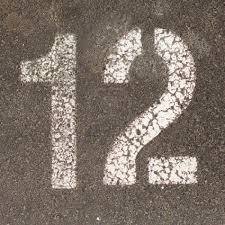
HBCU Money™ Dozen 3/9 – 3/13

12images

Did you miss HBCU Money™ Dozen via Twitter? No worry. We are now putting them on the site for you to visit at your leisure. We have made some changes here at HBCU Money™ Dozen. We are now solely focused on research and central bank articles from the previous week.

Research

Planning the best ever city comes down to four simple principles l New Scientist ow.ly/KgHUt

3 reasons to be wary of the Internet of Things l Network World bit.ly/1Ef13zJ

US Catholics More Worried About #globalwarming Than Other Christians l Yale Climate Project bit.ly/1AqAMJO

The meaning of Einstein’s most famous equation, animated l Symmetry Magazine ow.ly/KgIrN

Is anything in the universe random? Romeo thought so. What does quantum physics have to say? l New Scientist ow.ly/KgILF

Apple extends its public beta program to iOS l Macworld dlvr.it/8xLvRX

Federal Reserve, Central Banks, & Financial Departments

How the language you speak changes your brain l World Economic Forum wef.ch/1N7HONn

Report highlights #student financing models currently operating at scale in emerging markets l World Bankwrld.bg/KdjSm

Why you should listen more than talk in your new job l World Economic Forum wef.ch/1wCSZsC

AP economics teachers: Register for our AP economics conference in June l Econ Lowdown bit.ly/1FgcsPn

NAR: Millennials still want real estate agents l Housing Wirehwi.re/8xNQDH

Technology is changing how we approach disaster risk management l World Bank wrld.bg/Kg5At

Thank you as always for joining us on Saturday for HBCU Money™ Dozen. The 12 most important research and finance articles of the week.

The HBCU Money™ Weekly Market Watch

Our Money Matters /\ March 13, 2015

A weekly snapshot of African American owned public companies and HBCU Money™ tracked African stock exchanges.

NAME TICKER PRICE (GAIN/LOSS %)

African American Publicly Traded Companies

Citizens Bancshares Georgia (CZBS) $8.90 (0.00% UNCH)

M&F Bancorp (MFBP) $4.50 (0.00% UNCH)

Radio One (ROIA) $2.67 (7.66% UP)

African Stock Exchanges

Bourse Regionale des Valeurs Mobilieres (BRVM)  264.47 (0.31% UP)

Botswana Stock Exchange (BSE)  9 669.40 (0.01% UP)

Ghana Stock Exchange (GSE)  2 189.46 (3.17% DN)*

Nairobi Stock Exchange (NSE)  172.01 (N/A)

Johannesburg Stock Exchange (JSE) 51 798.74 (0.84% DN)

International Stock Exchanges

New York Stock Exchange (NYSE) 10 728.48 (0.85% DN)

London Stock Exchange (LSE)  3 648.24 (0.19% DN)

Tokyo Stock Exchange (TOPIX)  1 560.33 (0.89% UP)

Commodities

Screen Shot 2015-03-13 at 2.53.37 PM

HBCU Money’s 2015 African American Owned Credit Union Directory

short-2015 AA CU Dir Image

All credit unions are listed by state and in alphabetical order. In order to be listed in our directory the credit union must have an African American designation. Click on the state to view the full list available. If the credit union has a website you can click on the name and go directly to their website.

There are 334 African American designated credit unions with assets totaling approximately $5.6 billion in assets or approximately 0.51 percent of African America’s $1.1 trillion in buying power. African American credit unions have a total of 847 752 members.

ADDITIONAL NOTES:

  • African American credit unions comprise 49.9 percent of Minority Serving credit unions and 5.2 percent of all US credit unions
  • The total assets for all US minority credit unions is $37 billion, with AACUs controlling 15.1 percent of those assets. Total combined assets for all US credit unions are $1.1 trillion, with AACUs controlling 0.51 percent of total American credit union assets.
  • AACUs average assets: $16.8 million (2014 – $13.1 million)
  • AACUs average number of members 2 538 (2014 – 2 455)
  • AACUs median assets: $1.4 million (2014 – $1.64 million)
  • AACUs median members: 474 (2014 – 585)
  • For comparison, Asian American credit unions have approximately 360 000 members and $4.5 billion in assets. Average and median assets of $83.1 million and $32.3 million, respectively.
  • Religious affiliated credit union make up 5.6 percent of US credit unions. African American religious affiliated credit unions comprise approximately one-third of all African American credit unions and almost one-fourth of all US religious affiliated credit unions.

ALABAMA

ARKANSAS

CALIFORNIA

CONNECTICUT

DELAWARE

DISTRICT OF COLUMBIA

FLORIDA

GEORGIA

ILLINOIS

INDIANA

KENTUCKY

LOUISIANA

MARYLAND

MASSACHUSETTS

MICHIGAN

MISSOURI

NEW JERSEY

NEW YORK

NORTH CAROLINA

OHIO

OKLAHOMA

PENNSYLVANIA

SOUTH CAROLINA

TENNESSEE

TEXAS

VIRGINIA

VIRGIN ISLANDS

WASHINGTON

WISCONSIN

Moms, Daughters, and Money: A Mother’s Story Of Teaching Her Daughter Personal Finance

“Money is the opposite of the weather. Nobody talks about it, but everybody does something about it.” – Rebecca Johnson

little-girl-counting-money

Children never cease to amaze me in the way they analyze their world and my daughter is no different. So one day when she says to me, “Momma, how did Tee Tee get rich?” I was driving at the time and almost swerved into the other lane from laughing so hard at my daughter’s question. “Uhh, honey your Tee Tee is NOT rich, who told you she was?”

According to my colorful child with her rose tinted glasses, she understood that my sister was “rich” because she would buy her anything and everything she wanted no questions asked. My daughter continued to explain to me that she was the only person she knew who had two birthday parties a year (my sister also throws her a birthday party), and always gives her “pocket money”.

What my then six-year-old child did not understand, along with most adults was that she needed to save money in order to buy things she wanted and participate in the activities she deemed of value. From as far as I can remember, any money my daughter received went into a traditional piggy bank. I would catch her at times pulling out the money and counting just the bills. The highlight of her piggy bank “audits” would be when she came across a $10 or $20 bill. Trips to the bank to handle our monthly deposits were nothing more than a comedy show. My daughter wanted to talk with the manager to make sure no one would confuse her money from other people’s money.  She “knew” what her money looked like she would often tell the bank associates. They would offer her the Dum Dum lollipops in the candy bowl.  She would take them of course, but then asked if they would put an extra dollar in her account. They thought she was adorable and cute, but she was dead serious.

Trying to explain money and the importance of managing it properly would be a daunting task when it came to my daughter.  She takes everything literally, so I had to be mindful of what I said to her.  So I started my journey about teaching her about money with what I thought was the most important thing to do: Pay yourself first.

I first explained to her that she should save a minimum of 10 percent of any money she receives. We broke everything down in pennies to make it easier for her to grasp the concept or so I thought. I told her there are one hundred pennies in every dollar and that required her to save at least ten cents for every dollar.  Since her allowance is $5 a week, she is required to save $0.50 a week. According to her however, it would take much too long to buy anything with only saving $0.50 a week. Thankfully, she decided she should save more instead of pressing me for a higher allowance – for now. That is when the discussion of wants, needs and wishes came up.  Maslow’s hierarchy of needs: Physiological, Safety, Love/Belonging, Esteem, and Self –Actualization. My daughter’s hierarchy of needs:  Entertainment, Entertainment, Love/Junk Food, and then back to Entertainment.  

It was important to me as a mother to nurture my child to be well rounded.  I started off when she was very young about the importance of charity and her responsibility in her community by allowing her to join me in my various community activities: soup kitchens, neighborhood clean ups, etc.  She would be my “guest” speaker when I met with my high school mentees. I wanted to infuse in her social responsibility without being esoteric; also modeling how and where her money should be spent.  So how do you get a child of a 70’s baby to understand money: Play a round of Monopoly!

When I sat her down to play, I allowed her to be the banker.  I wanted her to understand that it’s a huge responsibility having to “pay” the players the correct amount of money and to stand “guard” of players who needed to borrow money from the bank. (I do not know about your household, but we gave small loans out to keep the game going at times).  Although she was excited about her responsibility as the banker, all she really wanted to do was roll the dice. It frustrated her to no end to have to stop and pay players $200 every time they passed GO, if they wanted to purchase a property, or any other transaction where the game had to pause to handle money transactions. She quickly said, “I don’t want to have to deal with money, I just want to save it and spend it only when I have to.”  Oh, out of the mouth of babies.

Fast-forwarding three years to the age of 9, my child has become a hoarder of money.  Unfortunately, I may have played an unintentional role in that.  My intentions were to teach my daughter the importance of saving money for the future. My daughter’s interpretation became I will save all of MY money while you spend yours.  She is so obsessed with how she can make money she has thought of schemes to outwit the tooth fairy and actually wants to resell her braces back to her orthodontist when her treatments are complete.

We continuously talk about money.  She is sensitive that our lifestyle has changed over the course of the last year. The largest impact of that change is not being able to visit her “Tee Tee” several times throughout the year.  The cost of an airline ticket for a minor to Michigan is not in my budget anymore, however, she could use some of her savings to visit.  When I asked her if seeing her aunt was a want, need, or wish, she looked me dead in the eye and said “I wish to see my Tee Tee, but I NEED my money”.  Oh, out of the mouth of babies.