
Yearly Archives: 2013

HBCU Money™ Dozen Links 4/1 – 4/5

???????????????????????????????????????

Did you miss HBCU Money™ Dozen via Twitter? No worry. We are now putting them on the site for you to visit at your leisure.

Government Departments

Discoveries: Scientist Studies How to Turn Cancer Drugs Into Their Own Delivery Systems l NSF http://t.co/cYyhlPK3Fo

Revised Security Question Helps Sexual Assault Victims l Joint Staff http://1.usa.gov/16BWwpEhttps://hbcumoney.wordpress.com/wp-admin/post-new.php

Solar panels are helping a family-owned yarn manufacturer save money on their energy bills l Energy http://go.usa.gov/2hxT

Study reveals major step toward potential HIV vaccine l Argonne http://1.usa.gov/17hNNKw

Bionic suit helps stroke survivors l NSF http://ow.ly/jGaKV

Read this for an overview of FSA Farm Loan Programs l USDA http://ow.ly/jHtXW

Federal Reserve, Central Banks, & Financial Departments

Mobile access to bank, credit card and other financial accounts “more prevalent” in 2012 l St. Louis Fed http://1.usa.gov/ZcKf4M

Civilian labor force participation rate dropped in March to 63.3 percent, the lowest since 1979 l St. Louis Fed http://bit.ly/ZcKkFJ

Penssylvania’s Marcellus Shale gas fee generated $198 million in 2012 l Philadelphia Fed http://ow.ly/jN4A9

How much do you need to save for retirement? l Richmond Fed http://ow.ly/jGbVJ

Will cities help save global public goods or be the source of their demise? l World Bank http://ow.ly/jKJw7

The latest on dozens of interest rates, on everything from swaps to corporate bonds to Treasuries l St. Louis Fed http://bit.ly/YyC6vW

Thank you as always for joining us on Saturday for HBCU Money™ Dozen. The 12 most important government and central bank articles of the week.

The HBCU Money™ Weekly Market Watch

Our Money Matters /\ April 5, 2013

NAME TICKER PRICE (GAIN/LOSS %)

African American Publicly Traded Companies

Citizens Bancshares Georgia (CZBS) $5.63 (0.00% UNCH)

Radio One (ROIA) $1.68 (6.15% DN)

African Stock Exchanges

Bourse Regionale des Valeurs Mobilieres (BRVM)  192.94 (0.88% UP)

Botswana Stock Exchange (BSE)  8 438.83 (0.10% UP)

Ghana Stock Exchange (GSE)  1 753.67 (46.17% UP)*

Nairobi Stock Exchange (NSE)  120.65 (N/A)

Johannesburg Stock Exchange (JSE) 38 500.21 (1.45% DN)

International Stock Exchanges

New York Stock Exchange (NYSE) 8 971.82 (0.63% DN)

London Stock Exchange (LSE)  3 292.67 (1.55% DN)

Tokyo Stock Exchange (TOPIX)  1 066.24 (2.74% UP)

Commodities

Gold 1 573.50 (1.36% UP)

Oil 92.86 (0.43% DN)

*Ghana Stock Exchange shows current year to date movement. All others daily.

All quotes reported as of 2:00 PM Eastern Time Zone

HBCU Money™ Histronomics: The Bayh-Dole Act

Excerpt from The Great American University by Dr. Jonathan Cole explaining the impact of the Bayh-Dole Act on colleges and universities:

“The change in the law that this act engendered was simple but of profound significance: In the past, intellectual property rights resulting from federally sponsored research at universities had been assigned to the federal government; they would now be assigned to the universities themselves. The universities would be able to patent discoveries and license the patented material to businesses interested in developing marketable products. Universities could even sponsor start-up companies based on the intellectual property that they owned and hold an equity stake in them.”

scotus-1

The Bayh-Dole Act

It is the policy and objective of the Congress to use the patent system to promote the utilization of inventions arising from federally supported research or development; to encourage maximum participation of small business firms in federally supported research and development efforts; to promote collaboration between commercial concerns and nonprofit organizations, including universities; to ensure that inventions made by nonprofit organizations and small business firms are used in a manner to promote free competition and enterprise without unduly encumbering future research and discovery; to promote the commercialization and public availability of inventions made in the United States by United States industry and labor; to ensure that the Government obtains sufficient rights in federally supported inventions to meet the needs of the Government and protect the public against nonuse or unreasonable use of inventions; and to minimize the costs of administering policies in this area.

The HBCUpreneur Corner – Morgan State’s Jarrett Carter, Sr. & Carter Media Enterprises

carterlogo

Name: Jarrett Carter Sr.

Alma Mater: Morgan State University, Class of 2003

Business Name & Description: Carter Media Enterprises, a new media development and consulting company with focus on coverage of African-American news and lifestyle.

What year did you found your company? 2008

What was the most exciting and/or fearful moment during your HBCUpreneur career? One of the most exciting highlights of my career thus far was the chance to give the keynote address to Hampton University’s Greer-Dawson-Wilson Student Leadership program. To take a stage at one of the nation’s most prestigious HBCUs headed by perhaps the greatest black college president in history, and to speak to students who will soon become esteemed leaders in a wide range of fields is something I will never forget. And I will be forever grateful to Hampton University for such a honor.
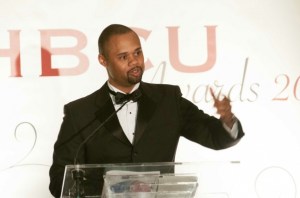
jcarter

What made you want to start your own company? Understanding that media was changing in a way that would give more black people a chance to have media leverage and credibility, I thought that I would bring a unique perspective to some underrepresented elements of our culture, and so I started a series of blogs focusing on HBCU news and issues, black images in mass media, and hip-hop culture from an artistic perspective. (StereotypeSquad.com and RapReservoir.com, respectively.)

Who was the most influential person/people for you during your time in college? Morgan gave me so many great role models. Among my professors was Frank Dexter Brown, the creator of YSB Magazine, Dr. Ruthe Sheffey, one of the world’s leading experts on William Shakespeare and Zora Neale Hurston, Dr. Michael Bayton, a brilliant scholar and professor of American literature, and Dr. Burney Hollis, my Dean Emeritus of the MSU College of Liberal Arts who to this day remains a source of humor, insight and inspiration as a Morgan Man. All of these people taught me, but also inspired me to think as a creator and observer, and not just as a student.

How do you handle complex problems? I talk to my wife constantly. She really is my best friend, my harshest critic, and the love of my life. Between her perspective and mine, we are frequently able to hash out solutions for difficult problems. I’m also blessed to have great mentors and friends, whom I can depend on to talk critical issues in my life, or even to have discourse on cultural problems and issues. Many times, the discourse is a good way to exercise the brain in such a way that complex personal problems often reveal simple answers.

What is something you wish you had known prior to starting your company? I wish I had established a larger network of media industry contacts and officials at schools. Hampton President William Harvey once told me that the key to running a college is to run it as a business with educational objectives. I set out to tell stories and to improve perceptions about HBCUs, but if I could do it over again, I would have managed my company to operate as a media brand with outreach objectives from Day One.

What do you believe HBCUs and colleges of the African Diaspora can do to spur more innovation and entrepreneurship with their students and the local community? – I think that if colleges and universities mandated for the major courses to examine ownership and business building, our students would have a different outlook on what it means to be a professional, a community member and philanthropist. They would approach work from what they could own one day, and not what company is most prestigious to work for. In turn, I think our alumni and supporters would buy into this concept enough to support by giving money and expertise.

How do you deal with rejection? When I first got started, not well. I would buy into the stereotype that black people were hesitant to support their own. But three years in, I understand that when you don’t have a lot of resources, and you are a great idea with low-level executions, our people are much more likely to invest in a personality and vision than they are an actual product. Paul Quinn President Michael Sorrell once told me that there’s no such thing as ‘no,’ only ‘not yet.’ I have found this to be true at a professional and personal level, if you invest a lot of time analyzing your vision and personality, and working to make those things come to the front of every approach you make in business or in life.

When you have down time how do you like to spend it? I’m a very simple guy, so I love being with my wife and two sons. Watching sports, playing video games, and reading are the ways I get away to think about new ideas, or to just take my mind off of overwhelming topics, requests or development strategies. I’ve learned that you have to incorporate time off to let your mind, body and spirit recover from fully investing in your calling. If you don’t, you can’t appreciate the work that you’re called to do, or the fact that you are called to do it.

What was your most memorable HBCU memory? Strangely enough, graduating from a PWI with my master’s in communication management. The five years it took me to finish that degree – a year and a half to do course requirements and three years to assemble a non-racist, supportive thesis committee, were the toughest times I ever encountered. Finishing the program made me realize several things – one, how much tougher it must have been for our forbearers to seek and endure integration in the throes of civil rights. Two, how spoiled I was by the HBCU experience of having faculty push and support you beyond the classroom. Three, how much harder I need to work for HBCUs to get fair representation in the media, so that they won’t have to endure potential scenarios of isolation, racism or discrimination at a PWI as they work towards college degrees.

In leaving is there any advice you have for budding HBCUpreneurs? – College is a professional development and networking haven. You are there to learn about an industry, and to find your place within it. If you aren’t a business major, take some business courses for electives, and learn all that you can through volunteering and internship about how to do a job and manage a product. Before you leave, make sure that you have incorporated an LLC, and even if you don’t know what product or service you can offer, create a business idea that can evolve into a business plan. In a down economoy, it is the person with the most creativity, the most innovation, and the one who finds a need to fill that will become wealthy, and will be able to give back to our people to build more entrepreneurship in our communities.

The HBCU Endowment Feature – Florida A&M University

200px-Florida_A&M_University_logo

School Name: Florida A&M University

Median Cost of Attendance: $25 888

Undergraduate Population: 11 180

Endowment Needed: $5 788 556 800

Analysis: Florida A&M University needs approximately a $5.8 billion endowment for all of its undergraduates to attend debt free annually. Its current endowment is approximately 1.7 percent of its endowment needed. One of the most intriguing HBCUs given its size. It is one of the larger HBCU undergraduates in terms of sheer number and does an excellent job of creating loyalty from its graduates which arguably means its endowment should be larger. There are some that would argue given Florida A&M University’s size, rivaling Howard University in population, that the school’s endowment should be at least twice its current size. With the number of undergraduates it puts out each year in the coming decade it could become a major competitor for the race to $1 billion among HBCU endowments assuming the college’s demographics continue on a steadily increasing trajectory. It also has one of the 5 HBCU law schools which allows for potential high quality donors. Unfortunately, Florida A&M could become its own worse enemy. Lawsuits and continuing issues with hazing could cost the school millions and become a major setback. It also could do serious damage to an otherwise stellar brand. There is also a void in leadership currently as the school seeks to fill its presidency. This will certainly have a capacious impact on the direction and vision of Florida A&M University in the coming decade. Florida A&M University’s competition with the “other” Tallahassee college could influence the school’s ability to grow its graduate school and produce higher quality donors so it is important to watch the strategy developed when the new leadership is installed. It can not be understated that it is the most high reward/high risk endowment currently in the HBCU landscape given that it has so much going for it but facing sobering headwinds. The Rattler nation’s resolve should not be underestimated but let us just hope they do not continue to make things harder for themselves. If Florida A&M University can focus the ship greater pastures await and if it can not it has the danger of becoming the Titanic.

As always it should be noted that endowments provide a myriad of subsidies to the university for everything from scholarship, faculty & administration salaries, research, and much more.