Yearly Archives: 2013

Just How Much Is Apple’s $137 Billion Cash Pile (Updated)

By William A. Foster, IV

“Cash is king.” – Unknown

total_gambler_1846_15

It was last July that I first did this narrative. At the time Apple, Inc. was sitting on $117 billion and has since added another $20 billion to its coffers. This has stirred a mass of controversy amongst shareholders who believe the company is simply hoarding the cash that could be put to better use.

Let’s compare the amount of Apple’s cash holdings to a few things:

If divided over all 300 million men, women, and children in America – each would receive a check for $456.67.

If divided over the 40 million men, women, and children who are African American – each would receive a check for $3 425.00 (it should be noted that coming out of the Great Recession the African American median net worth was $2 170 according to the Economic Policy Institute).

It is 4.5 times the size of Harvard’s endowment (largest HWCU endowment and largest U.S. college endowment) and 297.8 times the size of Howard’s endowment (largest HBCU endowment). In July, those numbers for Harvard and Howard were 3.7 and 216.7 times their endowments, respectively.

It is 304.4 times the size of all HBCU research budgets combined. Previously, 265.9 times the size of HBCU research budgets.

It is 9.1 times the size of Jamaica’s GDP (previously 7.8 times) and 18.6 times the size Haiti’s GDP (previously 15.9).

It is 8.6% of Africa’s entire GDP (previously 6.2%).

This is not to take any particular shot at Apple. It just happens to be the company with the largest corporate cash holdings at the time. U.S. companies last year had a record $1.45 trillion in cash sitting outside of the U.S., according to Moody’s. It is 91% of the GDP of entire Africa and larger than the buying power of African America which is currently $1.1 trillion.

We’re talking “straight cash, homey” as Randy Moss said once.

Disclaimer: There is no ownership of any of the companies mentioned in this article by myself, my business, or my family as of this article’s publishing.

The HBCUpreneur Corner – Delaware State University’s Chris Stevens & Stevens Communications & Consulting

StevensC&CFinal

Name: Chris Stevens

Alma Mater: Delaware State University, Class of 2007

Business Name & Description: Stevens Communications & Consulting (stevenscommcons.com), a multi-media business specializing in assistance with writing/editing, social media management and consulting for small businesses, as well as producing an internet radio show/podcast, “All Subjects Everything.” We also have advertising space open on the show, which is $10 per week or $40 per month for anyone who wants to advertise their business/organization/event on our show.

What year did you found your company? 2012

What was the most exciting and/or fearful moment during your HBCUpreneur career? Actually just getting started. It’s been an ongoing process these first 9 months as I’ve had to re-assess everything I thought I knew about the media industry and most important of all, myself. A social introvert starting a business that thrives on interpersonal communication has been a harrowing experience, but a necessary step.

What made you want to start your own company? I worked as a sports reporter for community newspapers for 5 years and I didn’t like the direction the business was going in as well as I wanted to do my own thing and not have to answer to anyone but myself and my clients/customers. So I took the things I knew best (social media, writing, editing) and decided to strike out on my own.

Who was the most influential person/people for you during your time in college? Two professors for different reasons. Dr. Yohuru Williams, who is now at Fairfield University, and DeWayne Wickham, a syndicated columnist with USA Today, who was a scholar-in-residence at DSU for a while. Dr. Williams gave me the courage and confidence to be a student of life, just to keep learning and incorporate what you’ve learned into whatever you’re doing in life while Professor Wickham showed me how vital networking is and I’m still putting those lessons about “who you know” into practice.

How do you handle complex problems? For me, asking questions is vital. You never want to have misunderstanding or miscommunication with a client or customer, so you always ask questions to make sure you have everything tailored to their needs and if you fall short, keep trying until you get it right. My first client, I did some serious re-writing for and it was a fun and challenging experience that let me know that this wasn’t going to be easy, but it would be rewarding.

What is something you wish you had known prior to starting your company? Never a good idea to start cold. If you’re starting a business, be sure to save some money and be in a position to weather some rough times. I left my job thinking I could apply my knowledge and start off well. I’ve had some lean periods because of that, but I wouldn’t change the journey because I get to share that experience now and hopefully someone else will learn from the mistakes I’ve made.

What do you believe HBCUs can do to spur more innovation and entrepreneurship while their students are in school either as undergraduate or graduate students? Certainly one way is to show them the perils of traditional employment. You can see it everyday – people who give their all to improve someone else’s bottom line can find themselves jobless at the drop of a hat. Depending on someone else signing your check to live life is so overrated. Also, HBCUs can draw on their own history as self-starters and self-reliant institutions to foster that spirit of entrepreneurship, that it’s “in the blood,” so to speak.

How do you deal with rejection? I hate rejection in ALL facets of my life, but surprisingly, business rejection is much easier to take because I know it’s not personal. It bothers me, but the key is to keep trying. The no’s are plentiful, but the one or two acceptances you get are your chance to make an impression and set yourself up for something bigger. The key is to keep plugging away. If you believe in your vision and what you’re offering, sooner or later, people will see that and will be willing to help and take a chance on you and your business.

When you have down time how do you like to spend it? I’m always reading, I just finished up “The Warmth of Other Suns” by Isabel Wilkerson which is a phenomenal book about the Great Migration of Blacks from the South to the Midwest, East and West Coasts. I love music also, I blog about music on my personal website (chrisstevenssite.com) from time to time and I love discussing/arguing sports with just about anyone.

What was your most memorable HBCU memory? It’s hard to pinpoint just one because I’ve had so many, so I’ll just say the experience of being a part of the HBCU experience. My own good times at Del State, visiting other HBCUs while working for the Hornet newspaper, it was a special time for me and I’m proud to be a part of HBCU tradition and I will stand for Black Colleges until I can’t stand up anymore. And even then I’ll be shouting for them from my bed or wheelchair.

HBCUPreneurHeadShot

In leaving is there any advice you have for budding HBCUpreneurs? A few things to note: Have a vision, be confident in that vision and go for it. You never want to spend the rest of your life wondering “Woulda, coulda, shoulda.” My mother always tells me “nothing beats a failure but a try,” so go for it. If there’s an idea that you have that you think people can benefit from and that you can execute for them, float it out there, prepare yourself for the road ahead and make it happen.


The HBCU Endowment Feature – Grambling State University

grambling_state_university

School Name: Grambling State University

Median Cost of Attendance: $17 894

Undergraduate Population: 5 277

Endowment Needed: $1 888 532 800

Analysis: Grambling State University needs approximately a $1.9 billion endowment for all of its undergraduates to attend debt free annually. Grambling also affectionately known as “The House That Eddie Built” referring to Eddie Robinson, Sr. who was the legendary football coach that in many ways put Grambling State University on the map. There is no accurate source to know just what GSU’s current endowment is but it is safe to say by best guess estimates it is smaller than its in-state arch rival. A frightening prospect when one considers just the shape its arch rival is in although for different reasons. Grambling has one of the most loyal alumni in HBCU nation but it is not translating into consistent giving. There is some sense that Grambling has never quite had an academic niche. That it was prominently known for and at times seems to be in the jack of all trades and master of none box. This can work to their advantage if a strategy is developed around it, but right now it feels more like a ship at sea with no destination. It is geographically located in a great area to develop its graduate school. Located in the northern part of Louisiana, it has above average access to three states which it could heavily recruit in for graduate talent. It is there they could create higher quality donors. It faces a major obstacle in the politics of Louisiana seem intent on dismantling HBCUs. Primarily, this comes in the form of current governor Bobby Jindal and while Louisiana trails in almost every major educational category in the nation, the governor continues to find cuts. Particular those cuts are coming at the expense of African Americans. A joint political strategy between Grambling State University and Southern University to elect a governor that is more HBCU friendly could go a long way, but in order to do that each must first get its economic house in order. Demographics suggest that Grambling State University could be a $50 million endowment without blinking. Whether or not leadership can formulate a unique plan that entices the purse strings of its rabid alumni over the next 5-10 years remains to be seen. Grambling’s importance in northern Louisiana to the strategic development of HBCUs can not be understated. The eye of the tiger must find 20/20 focus or be endangered of going blind.

As always it should be noted that endowments provide a myriad of subsidies to the university for everything from scholarship, faculty & administration salaries, research, and much more.

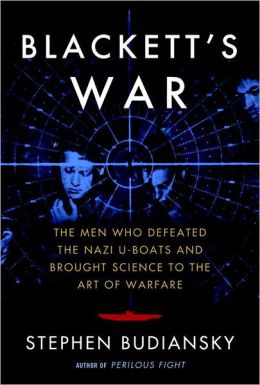
HBCU Money™ Business Book Feature – Blackett’s War: The Men Who Defeated the Nazi U-Boats and Brought Science to the Art of Warfare

9780307595966_p0_v2_s260x420

The exciting history of a small group of British and American scientists who, during World War II, developed the new field of operational research to turn back the tide of German submarines—revolutionizing the way wars are waged and won.

In March 1941, after a year of unbroken and devastating U-boat onslaughts, the British War Cabinet decided to try a new strategy in the foundering naval campaign. To do so, they hired an intensely private, bohemian physicist who was also an ardent socialist. Patrick Blackett was a former navy officer and future winner of the Nobel Prize; he is little remembered today, but he and his fellow scientists did as much to win the war against Nazi Germany as almost anyone else. As director of the World War II antisubmarine effort, Blackett used little more than simple mathematics and probability theory—and a steadfast belief in the utility of science—to save the campaign against the U-boat. Employing these insights in unconventional ways, from the washing of mess hall dishes to the color of bomber wings, the Allies went on to win essential victories against Hitler’s Germany.

Here is the story of these civilian intellectuals who helped to change the nature of twentieth-century warfare. Throughout, Stephen Budiansky describes how scientists became intimately involved with what had once been the distinct province of military commanders—convincing disbelieving military brass to trust the solutions suggested by their analysis. Budiansky shows that these men above all retained the belief that operational research, and a scientific mentality, could change the world. It’s a belief that has come to fruition with the spread of their tenets to the business and military worlds, and it started in the Battle of the Atlantic, in an attempt to outfight the Germans, but most of all to outwit them.

HBCU Money™ Dozen Links 4/8 – 4/12

???????????????????????????????????????

Did you miss HBCU Money™ Dozen via Twitter? No worry. We are now putting them on the site for you to visit at your leisure.

Government Departments

Joint Domestic Nuclear Detection Office – NSF: Academic Research Initiative l NSF Math & Physics http://ow.ly/k22af

Over 90% of #Industrial Assessment Center student participants have job offers before graduation l Energy http://go.usa.gov/Tgtw

Age is Just a Number for 100-Year-old Farmer l USDA http://ow.ly/k22Sy

Truman Fellow Jessie Daniels preaching the gospel of cybersecurity l Truman Project http://tru.mn/YQOkjL

‘Scary’ search engine can find millions of agency back doors l Government Computer News http://ow.ly/k14Y3

Find an SBA & AARP Encore Entrepreneur event near you l SBA http://ow.ly/jZaHx

Federal Reserve, Central Banks, & Financial Departments

How can we develop a sound rental housing market for the millions that need safe & affordable shelter? l World Bank http://bit.ly/WbrQtq

How many adults use mobile banking in sub-Saharan Africa? Dataviz l World Bank http://ow.ly/k1gxB

Opportunity for Youth is the Key to Haiti’s Future l US Treasury http://ow.ly/k25nF

Chart: Business inventories edged up 0.1 percent in February l St. Louis Fed http://bit.ly/YQMpvx

Charts show current credit, #risk & leverage conditions l Chicago Fed http://ow.ly/k0UtS

Video: See presentation about the effects of health and wealth shocks on retirement decisions l St. Louis Fed http://bit.ly/10OTuuB

Thank you as always for joining us on Saturday for HBCU Money™ Dozen. The 12 most important government and central bank articles of the week.