Yearly Archives: 2013

The HBCU Endowment Feature – Jackson State University

jackson-state-university_200x200

School Name: Jackson State University

Median Cost of Attendance: $22 328

Undergraduate Population: 6 844

Endowment Needed: $3 056 256 640

Analysis: Jackson State University needs approximately $3 billion for all of its undergraduates to attend debt free. The university is located in Jackson, MS which is the capital and largest city in the state. Home to almost 600 000 in the metropolitan area of which almost 80 percent are African American. Despite this population domination the rest of the demographics are not as kind. African Mississippians earn $0.51 for every dollar their European Mississippians earn according to the CPRP. The university appeared in 2009 among NACUBO’s top U.S. endowments with $12 million but has since disappeared from the rankings. If the school chose not to report is uncertain or if its endowment is being left behind is another possibility. Regardless, the 2009 endowment figure would represent only 0.4 percent of the needed endowment. However, Jackson State University announced at one point plans to break ground on a $200 million stadium. An amount over sixteen times the endowment’s value, leaving questions about priorities from leadership. On flip side the school has continued to be ranked one or two among HBCUs in research expenditures the past few years. An investment that could produce long-term wealth for the university and its alumni. It could be argued an even larger investment there could expedite that process. Noting that companies like Google and others were products of university research. Jackson State University has some of the most loyal alumni and recent donations have shown they are paying close attention to the longevity of their institution and its needs. If it can muscle up the economic firepower to compete with the HWCUs in the state then it should have no problem in the state’s capital to start to dominate the political machines. A move that could ultimately shift the dynamics of power for not only Jackson State University but all other HBCUs located in the state and ultimately for African Mississippians themselves.

As always it should be noted that endowments provide a myriad of subsidies to the university for everything from scholarship, faculty & administration salaries, research, and much more.

HBCU Money™ Business Book Feature – The Arab Invasion of Egypt: And the Last 30 Years of the Roman Dominion

1910279

It is significant that Alfred J, Butler’s book, The Arab Conquest of Egypt, and the Last Thirty Years of the Roman Dominion, first published in 1902, is being republished at this time. The African converts to Islam in Africa and those abroad have at last begun to lose some of their romanticism about the Arabs and Islam and are now asking some pertinent questions about this religion and it’s original propagators that they should have asked long ago.

HBCU Money™ Dozen Links 9/30 – 10/4

li-12-clock-istock

Did you miss HBCU Money™ Dozen via Twitter? No worry. We are now putting them on the site for you to visit at your leisure. We have made some changes here at HBCU Money™ Dozen. We are now solely focused on research and central bank articles from the previous week.

Research

Replacing silicon with nanotubes could revolutionize tech l ComputerWorld http://ow.ly/pwfhT

What is ocean acidification? l CA Sea Grant http://bit.ly/1hjojyB

Source code and 2.9 million accounts raided by attackers in Adobe breach l ComputerWorld http://ow.ly/pwfjr

Why Are There Still So Few Women in Science? l Science Makers http://nyti.ms/18ROWK9

US shutdown threatens response to disease outbreaks l New Scientist http://ow.ly/pwfmj

Kia To Make Electric Vehicle That Has Recyclable Materials l CleanTechnica http://dlvr.it/44tt08

Federal Reserve, Central Banks, & Financial Departments

Remittances to the developing world are projected to cross the half-trillion mark by 2016 l World Bank http://wrld.bg/pv1BH

How do family balance sheets affect the broader economy? l St. Louis Fed http://bit.ly/11rtx2r

Earnings of recent college grads have risen slower than those grads who started working decades ago l St. Louis Fed http://bit.ly/16eGfY1

Do you know, S. Africa & Namibia have no legal differences between men & women? l World Bank http://wrld.bg/ptv53

Government Shutdown Impact on Education l Council for Econ Ed http://ow.ly/pwfzC

GOP thwarts Dem move to force vote on ‘clean’ spending bill l Floor Action http://bit.ly/17CiZoS

Thank you as always for joining us on Saturday for HBCU Money™ Dozen. The 12 most important research and finance articles of the week.

The HBCU Money™ Weekly Market Watch

Our Money Matters /\ October 4, 2013

A weekly snapshot of African American owned public companies and HBCU Money™ tracked African stock exchanges.

NAME TICKER PRICE (GAIN/LOSS %)

African American Publicly Traded Companies

Citizens Bancshares Georgia (CZBS) $5.98 (0.00% UNCH)

M&F Bancorp (MFBP) $2.85 (5.56% UP)

Radio One (ROIA) $2.75 (0.73% UP)

African Stock Exchanges

Bourse Regionale des Valeurs Mobilieres (BRVM)  204.51 (1.17% DN)

Botswana Stock Exchange (BSE)  8 593.48 (0.02% UP)

Ghana Stock Exchange (GSE)  2 015.77 (67.82% UP)*

Nairobi Stock Exchange (NSE)  129.90 (N/A)

Johannesburg Stock Exchange (JSE) 43 925.68 (0.18% DN)

International Stock Exchanges

New York Stock Exchange (NYSE) 9 672.60 (0.56% UP)

London Stock Exchange (LSE)  3 437.93 (0.06% UP)

Tokyo Stock Exchange (TOPIX)  1 163.82 (0.87% DN)

Commodities

Gold 1 308.70 (0.66% DN)

Oil 103.79 (0.46% UP)

*Ghana Stock Exchange shows current year to date movement. All others daily.

All quotes reported as of 2:00 PM Eastern Time Zone

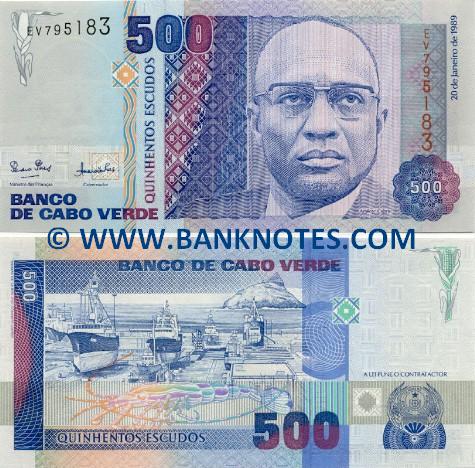
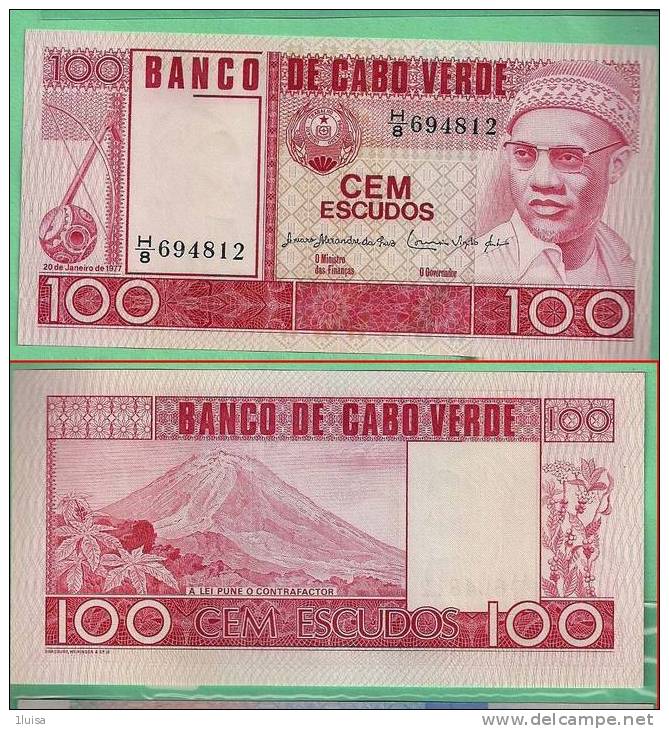
Currencies Of The African Diaspora – Cape Verde

The economy is service-oriented with commerce, transport, tourism, and public services accounting for about three-fourths of GDP. This island economy suffers from a poor natural resource base, including serious water shortages exacerbated by cycles of long-term drought and poor soil for agriculture on several of the islands. Although about 40% of the population lives in rural areas, the share of food production in GDP is low. About 82% of food must be imported. The fishing potential, mostly lobster and tuna, is not fully exploited. Cape Verde annually runs a high trade deficit financed by foreign aid and remittances from its large pool of emigrants; remittances supplement GDP by more than 20%. Despite the lack of resources, sound economic management has produced steadily improving incomes. Continued economic reforms are aimed at developing the private sector and attracting foreign investment to diversify the economy and mitigate high unemployment. Future prospects depend heavily on the maintenance of aid flows, the encouragement of tourism, remittances, and the momentum of the government’s development program. Cape Verde became a member of the WTO in July 2008.

CV59

546_001

images

cape-verde---2000-5000cve-note---front

CVcoins

Source: Economy overview provided by CIA Factbook