
Tag Archives: new york city

The Billionaire Families Of Harlem Nights’ Club Sugar Ray’s Empire

“Good morning, Revolution: You’re the very best friend I ever had. We gonna pal around together from now on.” – Langston Hughes

The year is 1938 in Harlem, New York and an entrepreneur and his son are about to make themselves and their six lieutenants’ families 86 years later the wealthiest African American families that nobody has ever heard of. Their fortune as a group is estimated to be worth a minimum $4.4 billion and upwards of $36 billion. How did it happen you ask? Some would say it was the result of a robbery 86 years ago and others would say it was restitution due.

IMDb’s summary of Harlem Nights goes as follows: “Sugar” Ray is the owner of an illegal casino, who contends with the pressures of vicious gangsters and corrupt policemen who want to see him go out of business. In the world of organized crime and police corruption in the 1930s, any dastardly trick is fair.” A bit more detail to the story (spoiler alert) is that as the European American mafia uses violence and police corruption to destroy “Sugar” Ray’s club, he then gets revenge by robbing the betting houses of the mafia and blowing up their most profitable club in the process. “Sugar” Ray promises each of his six most trusted employees turned lieutenants $50,000 a piece (equal to $1.1 million in 2024 dollars) for their participation in the caper. The group initially believes that there will be approximately $750,000 (equal to $16 million in 2024 dollars) in those betting houses, but through a bit of misdirection on the group’s part they get the mafia boss himself to unexpectedly add another $500,000 (equal to $10.7 million in 2024 dollars) of his own money into the stash for a total of $1.25 million (equal to $26.7 million in 2024 dollars). Beyond the group, there are two additional participants who play a vital but small role in the caper and are handsomely rewarded for it. It is not clear on how much, but just to keep the numbers clean let us assume they gave each a lesser amount and yet still quite significant of $25,000 a piece (equal to $532,500 in 2024 dollars). Enough to ensure their full silence forever on the matter certainly. With the robbery/restitution complete, exactly how does that turn their family lineages into billionaires 86 years later?

The Club Sugar Ray 8 consist of “Sugar Ray” Brown (Richard Pryor), Vernest “Quick” Brown (Eddie Murphy), Bennie Wilson (Redd Foxx), Vera Walker (Della Reese), Willie (Ray Murphy), Jerome (Robin Harris), and Jimmy (Charlie Murphy) who have $1.2 million left among them. As promised by “Sugar Ray” and “Quick” each of the six receive $50,000 a piece and the remaining $900,000 (equal to $19.1 million in 2024 dollars) is retained by father and son. The group decides to form the Sugar Hill Trust, an ode to the African American neighborhood in Harlem that was the heartbeat of the Harlem Renaissance during the 1920s, and deposits half of each of their proceeds into it which amounts to $600,000 (equal to $12.8 million in 2024 dollars) to be invested into the 15 year old S&P 500 which ended February 1939 trading at 281.79 (as of March 9, 2024 it was trading at 5,123.69). They agree that Sugar Hill Trust will invest in this and reinvest all dividends. By doing so, by February 2024, that initial $600,000 is now valued at $4.4 billion (see above) and producing annual dividends for the Sugar Hill Trust of $58.5 million. The next phase of their wealth follows the advice of Sugar Ray from dinner one evening when he says, “Yeah, you know that’s where its at – the gambling. If we make that move we should concentrate on that. Give up the joy houses, after hours spots, concentrate on gambling.”

This leads to the creation and founding of the Harlem Nights Corporation (ala Las Vegas Sands). According to Forbes, “Las Vegas Sands Corp. engages in the development of destination properties. Its properties feature accommodations, gaming, entertainment and retail, convention and exhibition facilities, celebrity chef restaurants, and other amenities. It operates through the following geographic segments: Macao, Singapore, and United States. The Macao segment handles the operations of The Venetian Macao; Sands Cotai Central; The Parisian Macao; The Plaza Macao and Four Seasons Hotel Macao; and Sands Macao. The Singapore segment includes the Marina Bay Sands. The United States segment consists of Las Vegas Operating Properties and Sands Bethlehem.” As of March 9, 2024 market close, Las Vegas Sands had a market capitalization of approximately $39 billion. The Adelson family, which founded the company, currently controls and owns 57 percent of the firm and has a net worth of approximately $32 billion controlled by its matriarch, Miriam Adelson. Instead of the company being named Las Vegas Sands and controlled by the Adelson Family, it is instead aptly named Harlem Nights Corporation and controlled by the lineages of the Sugar Hill Trust bringing its value to $36.4 billion when you include the $4.4 billion of S&P 500 holdings. In addition, Harlem Nights Corporation annual dividend pays Sugar Hill Trust $342.6 million which combined with their S&P 500 dividend gives the families an annual income of $401.1 million among them. The complexities by which the family may access that income is far too complex to get into in this article, but it is worth reading up on the strategy called ‘Buy, Borrow, Die’ if the reader should be so inclined.

In the years following, Bennie marries Vera and they become the patriarch and matriarch of the eight, “Sugar” Ray marries Annie, and “Quick” marries Sunshine who have children and begin the foundation of the legacy that transforms African American institutions near and far. They are a quiet force that is felt, but rarely heard. “Sugar” Ray and A.G. Gaston are friends and their friendship and business dealings together help A.G. Gaston’s bank, Citizens Federal Savings Bank, transform over time into one of the nation’s largest banks, which leads to African American homeownership skyrocketing after World War II despite African American soldiers being largely left out of the G.I. Bill. There is massive entrepreneurship expansion, African American towns like Rosewood and Tulsa are able to rebuild after long hard fought roads from their attempted massacres, HBCUs having endowments that are among the largest in the country, and ultimately a stability in African America that seems almost unimaginable to many of us today. It simply takes a few to be committed feverishly to the building of the institutions and the empowerment of a people. To imagine such a world would be as “Sugar” Ray Brown’s last words before leaving New York, “sweet as sugar.”

Bonus History: In one of Harlem Nights’ last scenes where “Sugar” Ray and “Quick” enter an abandoned bank building there is a sign above that says Dunbar National Bank as they enter. Sergeant Phil Cantone, a crooked cop who works for Bugsy Calhoun, ask “Sugar” Ray and “Quick” why they were breaking into a bank that has been closed for five years. According to Harlem World Magazine, “The Dunbar National Bank was the first bank in Harlem to be managed and staffed by African-Americans. The Dunbar National Bank was funded by John Davison Rockefeller Jr., specifically for the population of Harlem. The president of the Bank was Joseph D. Higgins, 36 years a banker, onetime Federal Reservist, former vice president of the American Exchange-Irving Trust Company.”

City Bus Stops: An Underutilized Force For Education

Users do not care about what is inside the box, as long as the box does what they need done. – Jef Raskin

By William A. Foster, IV

It was one evening some years ago that my father and I had a debate in my  parents living room about an article that I read in the New York Times concerning prep schools versus public schools and how much they spend per student. The New York Times stated that Philips Exeter Academy in 2008 spent $63,500 per student annually, while a report from the Organization for Economic Cooperation and Development shows that the U.S. as a whole spends about $12,000 per student annually. My father could not understand what PEA could possibly be spending over five times the amount on. I said to him it was the difference between showing a kid a map of India and taking them there. That being said, as someone who comes from a family of educators and being a community college professor for a period of time and seeing just what happens when an adult has had a weak K-12 experience, I often ponder ways in which communities can go about closing education gaps among groups and strengthening the education infrastructure.

Perhaps the worst kept secret is that groups who come from disadvantaged backgrounds have a chronic gap when it comes to education. By age three, children from lower income homes have heard 30 million fewer words. The national high school graduation rate for African Americans is 73 percent, which is almost 10 percentage points lower than the national average and 14 percentage points lower than European Americans. There have been calls for a universal Pre-K, which sounds good in theory but probably will ultimately do just as much harm as the current system. Many have argued that the U.S. does not spend enough on education, this despite the OECD saying that the U.S. actually spends more than any other country on education. The report according to CBS News that, “In 2010, the United States spent 7.3 percent of its gross domestic product on education, compared with the 6.3 percent average of other OECD countries.” This appears to be not a case of not spending too much, but spending it poorly. As an economist and investor myself, one of the most important things for my firm is capital allocation. It is not just a matter of how much we are spending, but where and how we are allocating that spending. Simply spending more is not always an answer to fixing problems as many on the political left suggest, but neither is allowing students to go to better schools through vouchers a sensible alternative as those on the political right suggest which would have devastating effects on the economics of poor and middle class communities. In essence, what is needed is a better creation of supplemental education for those communities. Supplemental education is the ability to access learning away from the four walls of a school.

For many upper income families, museums, summer camps, and private tutors provide the moonshot to the education they receive during their K-12 matriculation. These experiences and building blocks add to a substantive educational gap between the haves and have nots and while there are always many fascinating high brow proposals of how to fix education for underserved communities, we often ignore the simplest. Two things of note should be focused on to that respect. First, provide supplemental education where the people you hope to reach spend their time. Secondly, keep it simple. Academics, again I come from a family of them, while I admire their ability to convey information, they are at times too smart for their own good. In other words, they can make one plus one into the next coming of Einstein’s theory of relativity if you give them enough time. For underserved communities though it is often at the foundational level where they are most deficient. An issue that then cascades and compounds year after year as they progressed through secondary and then into adulthood. It was the simple foundation that they missed and that their kids are missing that could have moved their trajectory. So how do cities both meet the people where they are and more importantly where their time is “hostage” and and also keep it simple? Bus stops.

1 Million Milestone

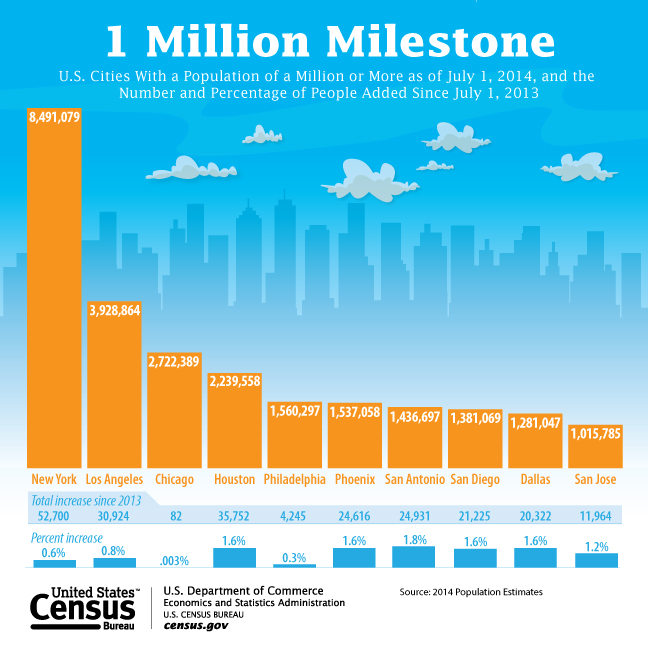
That is right, bus stops. New York City has 16,350 of them, Los Angeles has 15,967 bus stops, Chicago has 10,813 bus stops, and Houston has approximately 9,000 according to a Twitter inquiry. These are the four largest urban cities in the United States of America with a combined population of 17.5 million, a number equivalent to 5.4 percent of the entire U.S. population. The four cities ability to serve low income and middle class families is obviously magnified just by the probability of the sheer size of the populations they have that will fall within those confines. The poverty levels for the four aforementioned cities is also surprisingly inversely correlated to their public transpiration size with New York City’s 20.3 percent, L.A.’s 22 percent, Chicago’s 22.6 percent, and Houston’s 22.9 percent. According to Pew Research Center, “Americans who are lower-income, black or Hispanic, immigrants or under 50 are especially likely to use public transportation on a regular basis.” There is not enough research to show a correlation to public transportation’s reduction in poverty, but one can access that the easement of which labor can move farther distances allows for more economic opportunities to be gained. Therefore, if a low-income community has access to affordable public transportation and their own community lacks economic opportunity, the ease by which they can move into areas of stronger economic prowess may allow them work opportunities they may not otherwise have available. However, while there maybe no correlation, there is opportunity to educate and we know that correlates to reducing poverty.

Imagine for a moment that each bus stop, both children and adults, are introduced to a digital screen (think those annoying “commercials” at gas station pumps) that circulates a plethora of vocabulary words, basic mathematics problems,  and science and history clips. Just the basics, but again fundamental. If a city really wants to get out of the box, even introducing lessons in financial, health, and government literacy. If done in concert with the school districts in the city, teachers at the elementary through college levels could be featured in these videos and those teachers targeted in bus stops within their teaching area. This may also go a long way into reestablishing what many now complain about as the broken bond between parents, their children, and the teachers who educate them. The videos produce a familiarity for the teacher in the same way that people develop affinities for celebrities they have never met. Of course, in this age where municipals are tight on funds, just how does all of this get paid for? This is a financial journalism publication after all. The PPP (Private-Public Partnership) model would be most advantageous. Companies in the city, New York City, Houston, and Chicago have 143 Fortune 1000 companies combined, would foot the majority of the bill for the producing of the digital content and refitting of the bus stops. Just what those companies would receive in return beyond goodwill and basic advertising would be left up to the leadership of the city to negotiate.

I grew up in a household and family where education and learning was not only a family value and expectation, it was something I was immersed in as I reflect in what seemed like at all times. There were always books around, much of my life existed on a college campus as my mother has been a professor for almost four decades, trips to museums, engagement with the arts, and as a result me and my sister’s probability of succeeding was given a great advantage over many of our peers. Education is a wholistic lifestyle that one is immersed throughout their lives. The sooner that immersion, the more often that immersion, then probability of success is sure to follow. My sister and I were at an advantage, we were a privileged pair whose family can trace our educational heritage back four generations to my great-grandfather and great-grandmother who were college graduates. That is not the reality for most low income and middle class families. They are families trying to take that next step, even if they do not know which step to take often. In order to increase their probability towards that success, cities have to acknowledge that they are often in poor schools to begin with and that they need more, much more. The best return on investment is often achieved in using the infrastructure that already exist and that meets citizens where they are.

As Jef Raskin alludes to in his quote, communities will not care where quality education happens be it in a school or at a bus stop, so long as it happens.  The ability to convert bus stops into head start and continuing education facilities for a city is something that truly does what needs to be done.