Tag Archives: HBCUs

The Economics Of Playing HBCU Championships At Pro Stadiums – When Winners Still Lose

Essentially, economics is the science of determining whether the interests of human beings are harmonious or antagonistic. – Claude-Frédéric Bastiat

EPDZRZWPRBSRNUA.20130920175354

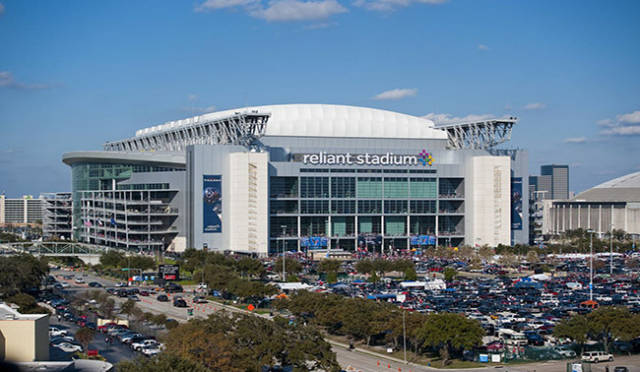
This past November, I attended the 2013 SWAC championship game with my father despite our family school, Prairie View A&M not being present. My father felt it was important to go out and support the SWAC. Our family annually attends the SWAC’s Labor Day Classic between Prairie View A&M University and Texas Southern University, which was eventually put out of Reliant it is rumored from poor attendance. A very sad indictment since Prairie View and Texas Southern are located 45 minutes and 15 minutes from the stadium, respectively. My father and I discussed why HBCUs have such a difficult time with attendance overall, save for a few select schools that travel really well. Even more importantly to me was whether the economics of playing the SWAC football championship in football at Reliant Stadium and the SWAC basketball championship at Toyota Center made dollars and sense. My father noted as he bought our tickets that the median ticket price was $35 that night and if the attendance came in well that the SWAC and both schools should do well. However, my question was could they do better?

The reported attendance at the game was 38 985 according to HBCU Digest. Calculated with the stated median price from above it equals out to approximately $1.37 million. Not a bad days haul on its first examination. Unfortunately, the SWAC does not own Reliant and therefore having a game there is not free. Based on the financial terms that were given for the UH-SMU game at Reliant, we can start to see just perhaps what that final figure might look like. There is a $75 000 license fee per game. Then there is the facility expense of $85 000 for 30 000 to attend plus $2 for every attendee over 30 000, bringing the total expense for the SWAC game to $177 970. All parking and concession revenue go to Reliant and 20 percent of merchandise sales also go to Reliant. Using a ratio of four people to a car, then the SWAC championship car attendance was 9 746 with parking cost at $10 or revenue of approximately $98 000. The median soda/beer cost at Reliant is $6.13 and a regular nacho (easily the most popular item at the SWAC championship – probably because it was the cheapest) was $7.00. Assuming that half of attendees will purchase at a minimum a drink and nacho that is worth approximately $256 000 based on the game’s attendance. This means that HBCUs are potentially only taking home 61 percent of the potential revenue (not including merchandise) when they play at professional stadiums if this is a standard deal. In the SWAC’s case a loss of revenue equal to $532 000 (not including merchandise) just for the football game.

My father’s argument was that if the game had not been played at the Reliant, then most fans would not come nor do most HBCU stadiums have the capacity for 40 000 fans. Prairie View’s stadium at best holds 5 000 comfortably. He argues that fans want to be in a nice venue, especially if you plan to get the fan who has no rooting interest to come to the game. There is some validity to this since the attendance for the SWAC championship when it was in Birmingham struggled mightily with attendance, even when Alabama A&M or Alabama State were in the game. There is also the issue of lodging, which for rural HBCUs tend to be lacking. That being said, I am not totally convinced.

I believe if the game was located in the central most urban geographic location to both schools playing in the championship, then an opportunity to collect a vast more of the pie could be accomplished. Could I be wrong in this? Absolutely. However, that we have not explored alternatives is an issue that we can ill afford. Given that conferences tend to share the revenues of these games throughout the conferencem it is worth an economic examination. Just as classics should be re-examined and the very questionable deal that HBCUs have with ESPN and the Disney SWAC/MEAC classic where attendance has consistently been less than stellar.

It often feels as if there is a lack of creativity to HBCU athletic departments. HBCU athletics will never be profitable because demographics simply do not allow for it. However, they can be less of a loss leader than they currently exhibit. Already underfunded, instead of trying out of the box scenarios that could draw larger crowds to generate higher revenues, we seem content to just mimic our counterparts who have vast resources and seven and eight figure boosters. Do we believe we can just walk by a penny on the ground? If we do, then we are in real denial about our financial crisis.

HBCUs Must Become More Afrocentric – Not Less

By William A. Foster, IV

You go busting’ your fist against a stone wall. You’re not usin’ your brain. That’s what the white man wants you to do. Look at you, what makes you ashamed of being black? – Excerpt from White Manz World by Tupac Shakur

Kwame_nkrumah

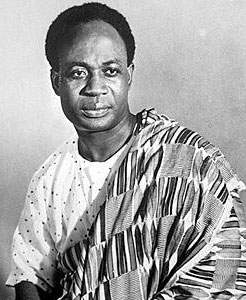
Kwame Nkrumah – HBCU Graduate, Pan-Africanist, & 1st President of Ghana

It seems more and more the desperation of HBCUs to survive and show they are “American” makes them want to distance themselves or even abandon our mission. That mission is to be part of the ecosystem that increases the institutional power of social, economic, and political assets for African America. Instead, more than a few are mimicking European American colleges or following the advice of those at European American colleges who have all the answers for how to fix HBCUs. Oddly, none of those “fixes” involve relinquishing the resources that have created the disproportionate institutional inequity between our communities. However, I do not expect them to provide those kind of answers. Their answers and solutions are not the ones that sadden  me. It is the leadership at many HBCUs that saddens me most. It often feels that African America more than any other group ignore the rules of engagement – the rules of war (for resources). I often tell friends that if this was a sporting field, African Americans are the group that spends all of its time chasing other groups around the field trying to remind the other groups of the rules and never scoring a single point. We are so focused on getting everyone to play by the perceived rules that we forget to actually score and forgetting that whoever has the most points (power) makes the rules and those rules are fluid (and sometimes they are just there to keep us preoccupied it seems).

Recently, a piece in the New York Times talked about how HBCUs (and African American institutions in general) paid the price for African American “equality”. Unfortunately, what we have perceived as equality has been nothing more than an illusion. There has been no American dream, just a never ending nightmare. Every social, economic, and political statistic you can use as a measurement finds us worse off after this achieved “equality”. Yet, our answer continuously is  to head down a path that has shown us without a doubt that it is not working. Our families are in disarray, land ownership at an all-time low, 50 percent of African American owned banks have disappeared over the past twenty years, predatory lending and payday loans rampant, and HBCUs have seen the HWCU/HBCU endowment gap grow from 46:1 to a staggering 103:1 in the past twenty years as well. Is this progress?

Power comes when a group’s ecosystem is strongly interlocked and circulating the assets within it while accumulating assets of other groups along the way. To this point, I have yet to get an answer if any HBCUs bank with African American owned banks. My guess – ZERO. HBCUs need to understand they are part of an African American ecosystem, not independent of it. They must do things that increase our social, economic, and political circulation of our other institutions within the ecosystem. We educate our students only to send them right back into someone else’s ecosystem to benefit. This is apparent in that under 6 percent of African Americans work for African American owned businesses.   Socially, why do we not play the African American national anthem? Economically, why do we not bank with African American owned banks? Politically, why do we not have a plan in place to make sure HBCU alums are elected on the state level up to governor where state funding truly impacts us.

We know one of the key problems facing HBCUs is lack of African Americans graduating from high school. The high school graduation rate is the second lowest among all groups in the country, only Native Americans are worse off. Our core demographic is not even graduating at a clip that allows them to enter our institutions. Instead of embracing the challenge to solve this, we want to abandon it for the sake of looking like everyone else? We took in others before others ever thought about taking us. We do not have anything to prove in our acceptance of others, but we do have more to prove that we can be the bearers of solving institutional issues that face African America and the African Diaspora. It begins to beg the question of whether we understand the purpose of institutions to a group’s ability to accumulate power. Note, I said power not acceptance.

If we truly believe moving toward the mimic of other institutions and not defining our own path is sound strategy, then I suspect a good deal of our institutions will be lost. This is because if we are trying to be like them and have nothing unique to offer, then all things being equal, students will go to the better school based on finances and social standing of the overall society. A choice we are sure to lose nine out of ten times. The thing that we actually have going for us is our heritage and catering to that heritage. HWCUs have not abandoned their core demographic no matter how many African American athletes they let in or pictures they put up showing one African American amongst a sea of others as “diversity”. They get it, but when will we? I truly hope before it is too late.

The HBCU Endowment Feature – Savannah State University

Savannah_State_University_seal

School Name: Savannah State University

Median Cost of Attendance: $19 703

Undergraduate Population: 4 386

Endowment Needed: $1 728 347 200

Analysis: Savannah State University needs an approximate $1.7 billion endowment for all of its undergraduates to attend debt free. Located in Savannah, Georgia, one of the South’s most historic cities with an estimated population of 142 000. The city’s population demographics are almost 60 percent African American giving it dominant social and political numbers. However, as in most cases the economics do not favor African Americans and null much of the social and political leverage. The most recent endowment numbers for Savannah State University show it to have a current endowment to needed endowment percentage of only 0.15 percent. Like almost all HBCUs the school needs enrollment growth, but for a peer-to-peer comparison it has a sizable population so the endowment size it somewhat a mystery. The halo effect that Atlanta should have on African American college graduates in Georgia should suggest a better fairing for their endowment. This suggest that there is possibly a disconnect between alumni and development. Savannah State University is in one of the premier locations in Georgia and the South. If location matters, then they need to make it a key point in their development strategy. It is one of those few schools that has the potential to skyrocket into the endowment conversation among HBCUs if it can find the right spigot to turn.

Hip-Hop, Philanthropy, & HBCUs – An Interview With Mississippi’s Own Young Malice & CHMA’s Jarrett Carter

It is often talked about the close relationship of HBCUs and hip-hop in the past. During the late 80s and 90s it was not uncommon to see hip-hop artist sporting HBCU gear. However, that time period seems like a distant memory and with the donation by Dr. Dre to the University of Southern California coupled with an editorial response by Dr. Walter Kimbrough of Dillard University essentially pointing out that if the $35 million he donated had been evenly spread across all 100 plus HBCUs it would have made a prodigious institutional impact. So what is the relationship of HBCUs and African American hip-hop artist today? Can a relationship be forged to raise much-needed funds and awareness? We sat down with two influential minds of hip-hop and philanthropy to get their thoughts on creating a more mutually beneficial relationship for HBCUs: Young Malice, a Jackson, Mississippi native, hip-hop artist, entrepreneur, and avid HBCU supporter. Jarrett Carter, executive director of the Center for HBCU Media Advocacy and owner of Carter Media Enterprises. We probed their thoughts on where we go from here.

We are sure both of you in some way or another heard, read, or talked about the Dr. Dre donation to the University of Southern California, which many in the HBCU community were not happy with it. What were your thoughts on the donation?

Young Malice: I heard about the donation and I think that a man’s earnings and what he chooses to do with them are HIS/HER business. He obviously had a reason, whatever that reason maybe and why he chose to give such a large amount to an institute, which is already one of the wealthier in the nation. There’s more to it than what meets the eye though, I can guarantee THAT. Headphone sales must be going well for Dre huh?! *laughs*

Jarrett Carter: It was disappointing, but not because he gave the money to a predominantly white college near where he grew up and lives; but disappointing in that we thought Dr. Dre somehow betrayed the HBCU community. I don’t know how many development officers have reached out to Dr. Dre or other rappers, athletes or actors, but the truth is that we have to reach out to young wealthy African Americans as our first and best targets for financial support. Many of these individuals have some connection to an HBCU – a relative or a friend, chances are, have been at or graduated from an HBCU. Being black is no longer a qualifier for attending or supporting an HBCU, and we would be wise to recognize this reality, expeditiously.

Do you believe there is disconnect between African American hip-hop artist and HBCUs? If there is disconnect, what could be done to fix it? If not, what could be done to strengthen the relationship? 

Young Malice: Well, there’s definitely a disconnect but like most problems in life we encounter it can be FIXED. As an artist, I’m forced to be capable of placing myself in another’s shoes and seeing ALL angles and not just my own view on things. With this being the case, I can understand why this “disconnect” between HBCUs and hip hop artists exists. I think that the HBCUs within our nation have worked so hard to shed this negative image, which has plagued us as black people for SO LONG that when anything or anyone does not conform to the standards that have been implemented they tend to be shunned. It’s deeply rooted and it will take a lot of work to understand and meet at a “common ground”.

Jarrett Carter: Absolutely. I think somewhere between controversial lyrics and the typical Ivory Tower arrogance mixed with the cultural obligation to “show others how to do better,” we totally ignored and ostracized hip-hop from HBCU culture. Which is particularly weird, since we have no problem inviting some of the more profane and controversial artists to campus to help sell homecoming concert tickets. The quickest way to build relationships with hip-hop is by genuinely drawing upon their skills and interests within the campus environment. How do you standout from others in the effort to be signed? (Career development) How do you market a product to vastly different audiences? (Personal branding) How do you stay grounded while financing so many people to manage your career? (Community empowerment) There are so many lessons to be learned from young sisters and brothers in the hip-hop community, if only we didn’t see ourselves as better or more enlightened then they are.

Some believe that hip-hop artist love HBCUs from a distance because the majority of the fans that buy the music are not African American and therefore do not want to alienate them. Do you believe this to be the case? Or misunderstanding?

Young Malice: Maybe some artists feel like they won’t be accepted by HBCUs and then again, maybe some desire no acceptance at all. I can recall many instances that shows that were booked at predominantly black colleges were canceled at the last minute mysteriously. It’s because certain artists represent EVERYTHING that the HBCUs are AGAINST…and that’s just the truth of the matter…period. It’s deeper than records sales and fans. End of the day, you just ARE who you ARE. I love my HBCUs from up close, never at a distance…but the relationships need work.

As someone who grew up in Mississippi you have a ground view of the history between HBCUs and TWIs in the state. The discrepancy between Alcorn State, Jackson State, and Mississippi Valley State (combined endowments of $23 million) versus Mississippi State, Ole Miss, and Southern Mississippi (combined endowments of $876 million) is overwhelming. It is hard to imagine institutional reparations being given by the Mississippi legislature but do you believe it is worth pursuing to even the field? Or do you see other ways HBCUs could even the resource playing field allowing them to effectively compete?

Young Malice: There won’t be any reparations. I have no complaints about growing up in Mississippi, because this place taught me so much. People will do whatever you LET them do and that’s my view on it. The HBCUs here have withstood the test of time, kept their dignity and class…even in the midst of blatant underfunding and being overlooked time and time again. Each one of those historically black colleges you named previously has something VERY special about them! I’ve visited them all and each has it’s own unique feel. You can feel the LOVE…and that’s something that money CAN’T buy. We know why the bigger colleges get the bigger funding. It’s not a hidden injustice, especially in Mississippi. The agenda is CLEAR and in your face. Time to come together – HBCUs and the hip-hop community…it’s bigger than US!

There are some who would say that because some of the negativity in the mainstream media about the images of hip-hop at times as violent and misogynistic that HBCU leaderships tend to prefer to not view these artist as potential donors or partners despite the potential impact it could have institutionally. Would you say that is an accurate statement?

Jarrett Carter: I think that is accurate, but if it is accurate, have HBCUs as the hubs of academic and cultural development reached out to these artists to give them new perspective on their artistry? Have we given them opportunities to travel, exposure to scholarly works and cultural information that helps them to grow?

Aside from the obvious financial support what are some ways that you believe hip-hop artist and the genre could best serve HBCUs philanthropically?

Jarrett Carter: I believe that before money, hip-hop artists could be some of our greatest and most influential brand ambassadors. By just wearing hats and t-shirts, or namedropping campuses in their songs, or consistently promoting their time spent on HBCU campuses, we could engage a totally new generation of HBCU enthusiasts across racial and economic lines.

What advice would you give to hip-hop donors new to the world of philanthropy?

Jarrett Carter: I would encourage hip-hop artists and executives to be open to hearing from HBCUs about opportunities for visiting lecture, specific opportunities to fund programmatic projects and initiatives, and to avail themselves to students working to enter fields of study in the performing arts – theater, opera, jazz, etc – thereby making themselves benefactors of historic and culturally important Black art forms.

In 2012, Forbes reported the top 20 earners in hip-hop pulled in an estimated $415 million in earnings and possibly hundreds of millions more by artist who choose to keep their earnings more private. All 100 plus HBCU endowments combined have combined endowments of only an estimated $2 billion with some HBCUs having no endowment at all. What do you envision being a win-win relationship between hip-hop and HBCUs that could see some of these earnings finding their way to HBCUs?

 Young Malice: I would say EMBRACE the hip-hop community or just try to embrace the elements of the culture that you are most comfortable with. Some artists tend to be a bit more extreme than others but then again so are some actors. If you wouldn’t turn Denzel Washington or Samuel L. Jackson away from your doors, then try to understand that most artists are just attempting to paint a picture…just so happens to be that it’s through your stereo. If the MONEY is good enough to be embraced, then the individual should be also. In my opinion – EMBRACE the hip-hop community with open arms – don’t be so quick to “judge”.

Jarrett Carter: In my mind, a mutually beneficial opportunity for HBCUs and hip-hop is if rappers are recording and publishing music from HBCU campuses with shared publishing and distribution rights. That students are involved in every step of a produced project – from A&R, to production, to marketing, to distribution. This ensures that the artist can build individual wealth, and that the schools can build endowments and scholarship opportunities.

In closing, both of you grew up as the rise of hip-hop was taking place. What was your favorite hip-hop memory as it related to an HBCU?

Young Malice: My favorite moments will be when I rock the HBCU crowds around the nation!

Jarrett Carter: The legend of Jay Z being scheduled to perform at Morgan’s homecoming concert in 1996, showing up late, and upon arriving, saying into the microphone, “I’m not coming out until ya’ll pay me my f*cking money.”

Thank you to Mr. Young Malice and Mr. Jarrett Carter for participating in this interview. 

The HBCU Endowment Feature – Mississippi Valley State University

MVSU VS Logo

School Name: Mississippi Valley State University

Median Cost of Attendance: $12 872

Undergraduate Population: 2 090

Endowment Needed: $538 049 600

Analysis: Mississippi Valley State University needs an endowment of approximately $540 million for all of its undergraduates to attend debt free. The university is located in Itta Bena, Mississippi which is part of the Greenwood Micropolitan area and has a population of almost 50 000 with over 60 percent of the population being African American. Like all public HBCUs located in Mississippi its income demographics push against the school building a stout endowment. African Mississipians have one of the lowest median incomes in the nation. It has the lowest endowment need of all of the public HBCUs in Mississippi, but it also has the reported lowest current endowment. Despite having access to Jerry Rice’s millions the school has seemingly been unable to garner a large donation commitment from the former alum. The school boast one of the most affordable options in the state and begs the question why its undergraduate population is not more in line with the other two public HBCUs. Population growth is badly needed to deal with the low percentage of alumni giving that all HBCUs face. The university has gotten rid of out of state tuition, which should make it a more favorable destination for surrounding state prospects if it can leverage it. There is much work done to create a healthy endowment for Mississippi Valley State University and while it seems to have the tools at its disposal, it remains to be seen if there will be a strategy implemented to take advantage of them.

As always it should be noted that endowments provide a myriad of subsidies to the university for everything from scholarship, faculty & administration salaries, research, and much more.